australia spirits market
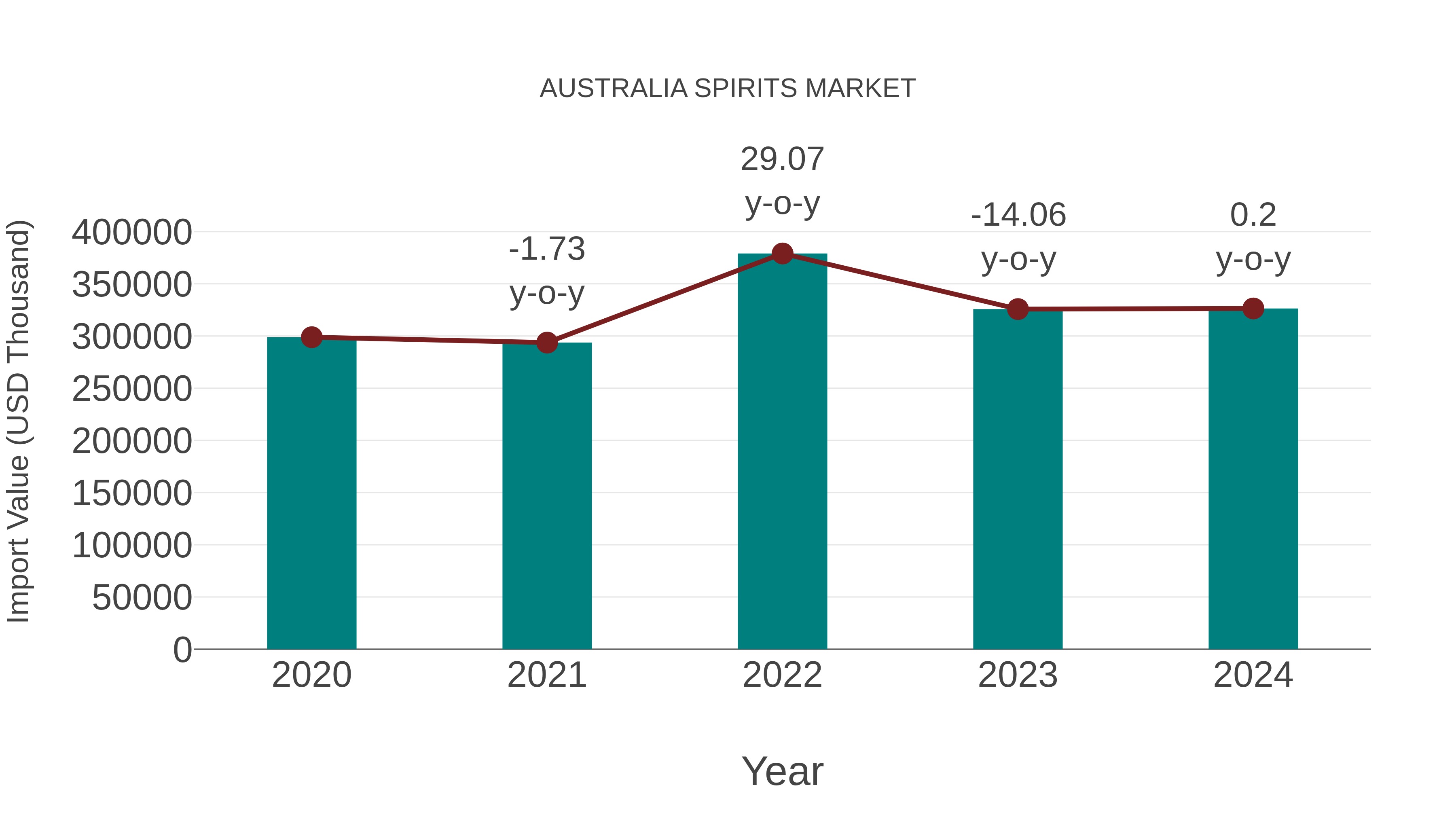
Australia Spirits Market Growth Rate
According to 6Wresearch internal database and industry insights, the Australia Spirits Market is projected to grow at a compound annual growth rate (CAGR) of 5.9% during the forecast period (2026-2032).
Five-Year Growth Trajectory of the Australia Spirits Market with Core Drivers
Below mentioned is the evaluation of year-wise growth rate along with key growth drivers:
| Year | Est. Annual Growth (%) | Growth Drivers |
| 2021 | 3.1 | Rising premium spirit consumption and expanding urban nightlife culture |
| 2022 | 3.8 | Growing popularity of craft distilleries and local spirit brands |
| 2023 | 4.4 | Increased on-trade consumption across bars, pubs, and restaurants |
| 2024 | 4.9 | Expansion of e-commerce alcohol platforms and home delivery services |
| 2025 | 5.3 | Premiumization trend and rising demand for aged and flavored spirits |
Topics Covered in the Australia Spirits Market Report
The Australia Spirits Market report thoroughly covers the market by product type and distribution channel. The report provides an unbiased and detailed analysis of current market trends, high-growth opportunities, and key drivers supporting premium and mass-market spirits. It helps stakeholders align strategies with evolving consumer preferences, regulatory frameworks, and distribution dynamics shaping the Australia Spirits Market.
Australia Spirits Market Highlights
| Report Name | Australia Spirits Market |
| Forecast period | 2026-2032 |
| CAGR | 5.9% |
| Growing Sector | On-Trade (Bars, Pubs, Clubs & Restaurants) |
Australia Spirits Market Synopsis
Australia Spirits Market is anticipated to witness steady growth as more people are drinking high-end alcoholic drinks, rising disposable incomes and a strong culture of social drinking. The market is growing by the quick development of craft distilleries, the introduction of new flavors, and the increasing demand from city residents. In addition, supportive regulations for local distillation, tourism-driven alcohol demand, and improved retail accessibility are strengthening the spirits industry in Australia.
Evaluation of Growth Drivers in the Australia Spirits Market
Below mentioned are some prominent drivers and their influence on the market dynamics:
| Drivers | Primary Segments Affected | Why it Matters (Evidence) |
| Premiumization Trend | Whiskey; Brandy | Consumers prefer aged, high-quality spirits, increasing value sales. |
| Growth of Craft Distilleries | Other; Whiskey | Local distilleries enhance product diversity and brand loyalty. |
| Expansion of Online Alcohol Sales | Vodka; Rum | Digital platforms improve accessibility and convenience for buyers. |
| Rising On-Trade Consumption | All Types; On-Trade | Bars and restaurants boost volume consumption of spirits. |
| Tourism and Hospitality Growth | All Types; On-Trade | Increased tourist inflow raises alcohol consumption demand. |
Australia Spirits Market is expected to grow at the CAGR of 5.9% during the forecast period of 2026-2032. Adopting premium spirits, growing retail networks, and changing customer tastes that favor craft and flavored spirits are all driving growth. Also, the development of nightlife culture, the high demand for hospitality, and the rise of online alcohol sales platforms are all helping the industry grow in both metropolitan and regional locations. Furthermore, supportive government policies for local distilleries and rising tourism activity are enhancing market penetration and long-term value growth.
Evaluation of Restraints in the Australia Spirits Market
Below mentioned are some major restraints and their influence on the market dynamics:
| Restraints | Primary Segments Affected | What This Means (Evidence) |
| High Excise Duties | All Types; Retail | Alcohol taxes increase prices and limit consumption growth. |
| Strict Advertising Regulations | All Types; Others | Marketing restrictions reduce brand visibility. |
| Health Awareness Trends | All Types; Others | Consumers reduce alcohol intake due to wellness concerns. |
| Supply Chain Costs | Imported Spirits | Logistics costs raise product pricing. |
| Competition from Beer & Wine | All Types | Availability of alternative alcoholic beverages slows the growth of spirits. |
Australia Spirits Market Challenges
Despite the constant increase, the Australia Spirits Industry faces challenges like high taxation, tough regulations, and heavy competition from the wine and beer sector. Additionally, the rising cost of logistics, responsible consumption campaigns, and the behavior of health-conscious consumers also limit volume growth. Smaller distillers face challenges related to high compliance costs and limited distribution reach, which restrict their ability to scale operations across both domestic and international markets.
Australia Spirits Market Trends
Some key trends that are shaping the evolving landscape of the Australia Spirits Market, Growth are:
- Premium Whiskey Market and Drinking Preferences: There has been growing attention toward aged spirits, particularly single malt whiskies, as Australia consumers increasingly value craftsmanship, maturation processes, and flavor complexity.
- Growth of Craft Distillation: Local craft distilleries across Australia are producing small-batch and experimental spirits, contributing to greater product diversity and innovation.
- Sustainability Emphasis in the Market: The distillers are increasingly adopting environmentally friendly packaging, renewable energy usage, and responsible sourcing practices.
Investment Opportunities within the Australia Spirits Market
Some of the key investment opportunities in the Australia Spirits Market are
- Investments by Craft Distilleries: Funding small and regional distilleries helps expand production capacity and exports.
- Premium Whiskey Aging Facilities: Investments in aging infrastructure enable the production of high margin aged whiskey. This segment attracts premium consumers and offers long term value creation
- E-commerce Alcohol Platforms: Development of digital sales and delivery infrastructure improves market reach and accessibility.
Top 5 Leading Players in the Australia Spirits Market
Some leading players operating in the Australia Spirits Market include:
1. Diageo plc
| Company Name | Diageo plc |
| Established Year | 1997 |
| Headquarters | London, United Kingdom |
| Official Website | Click Here |
Diageo holds a strong presence in Australia with premium whiskey, vodka, and rum brands. The company focuses on brand innovation, sustainability, and strong on-trade partnerships.
2. Pernod Ricard
| Company Name | Pernod Ricard |
| Established Year | 1975 |
| Headquarters | Paris, France |
| Official Website | Click Here |
Pernod Ricard offers a wide spirits portfolio in Australia, emphasizing premiumization and responsible consumption initiatives across retail and hospitality channels.
3. Beam Suntory
| Company Name | Beam Suntory |
| Established Year | 2014 |
| Headquarters | Chicago, USA |
| Official Website | Click Here |
Beam Suntory supplies premium bourbon and whiskey brands in Australia, leveraging heritage branding and strong distributor networks.
4. Brown-Forman
| Company Name | Brown-Forman |
| Established Year | 1870 |
| Headquarters | Louisville, USA |
| Official Website | Click Here |
Brown-Forman is known for premium whiskey offerings in Australia, focusing on brand-led growth and premium on-trade placements.
5. Treasury Wine Estates
| Company Name | Treasury Wine Estates |
| Established Year | 2011 |
| Headquarters | Melbourne, Australia |
| Official Website | Click Here |
Treasury Wine Estates is expanding its spirits portfolio, leveraging strong domestic distribution and brand recognition across Australia.
Government Regulations Introduced in the Australia Spirits Market
According to Australia Government data, initiatives such as excise duty structuring, liquor licensing reforms, and support for small distilleries aim to balance revenue generation with industry growth. Local producers help modernizing their equipment through programs like the Craft Distilleries Modernisation Grants. Additionally, state-level responsible service regulations and export support policies improve compliance while enabling sustainable growth of the Market. These measures collectively support domestic competitiveness and enhance the global positioning of Australia spirits brands.
Future Insights of the Australia Spirits Market
The outlook for the Australia Spirits Market remains positive due to the growing demand for high-end and craft spirits, the growth of online shopping, and the robust consumption fueled by tourism. Long-term growth prospects for spirit brands are likely to improve due to continued government backing for local distilleries, new flavors and packaging, and new export opportunities. Additionally, increasing urbanization and evolving consumer preferences toward premium, experiential drinking are expected to further support sustained value growth.
Market Segmentation Analysis
The report offers a comprehensive study of the subsequent market segments and their leading categories.
Whiskey to Dominate the Market – By Product Type
According to Rahul, Senior Research Analyst, 6Wresearch, Whiskey dominates the Australia Spirits Market Share due to strong consumer preference for premium and aged variants. Increasing demand for single malts, bourbons, and locally produced craft whiskey supports higher revenue contribution.
Specialty/Liquor Stores to Dominate the Market – By Distribution Channel
Due to extensive product variety, expert recommendations, and premium brand availability. These outlets benefit from strong urban presence and impulse purchasing. Consumers prefer physical stores for premium spirits due to tasting guidance and promotional offers.
Key Attractiveness of the Report
- 10 Years of Market Numbers.
- Historical Data Starting from 2022 to 2025.
- Base Year: 2025.
- Forecast Data until 2032.
- Key Performance Indicators Impacting the Market.
- Major Upcoming Developments and Projects.
Key Highlights of the Report:
- Australia Spirits Market Outlook
- Market Size of Australia Spirits Market, 2025
- Forecast of Australia Spirits Market, 2032
- Historical Data and Forecast of Australia Spirits Revenues & Volume for the Period 2022- 2032
- Australia Spirits Market Trend Evolution
- Australia Spirits Market Drivers and Challenges
- Australia Spirits Price Trends
- Australia Spirits Porter's Five Forces
- Australia Spirits Industry Life Cycle
- Historical Data and Forecast of Australia Spirits Market Revenues & Volume By Product Type for the Period 2022- 2032
- Historical Data and Forecast of Australia Spirits Market Revenues & Volume By Whiskey for the Period 2022- 2032
- Historical Data and Forecast of Australia Spirits Market Revenues & Volume By Vodka for the Period 2022- 2032
- Historical Data and Forecast of Australia Spirits Market Revenues & Volume By Rum for the Period 2022- 2032
- Historical Data and Forecast of Australia Spirits Market Revenues & Volume By Brandy for the Period 2022- 2032
- Historical Data and Forecast of Australia Spirits Market Revenues & Volume By Other for the Period 2022- 2032
- Historical Data and Forecast of Australia Spirits Market Revenues & Volume By Distribution Channel for the Period 2022- 2032
- Historical Data and Forecast of Australia Spirits Market Revenues & Volume By Specialty/Liquor Stores for the Period 2022- 2032
- Historical Data and Forecast of Australia Spirits Market Revenues & Volume By Online Retail Stores for the Period 2022- 2032
- Historical Data and Forecast of Australia Spirits Market Revenues & Volume By On-Trade for the Period 2022- 2032
- Historical Data and Forecast of Australia Spirits Market Revenues & Volume By Other for the Period 2022- 2032
- Australia Spirits Import Export Trade Statistics
- Market Opportunity Assessment By Product Type
- Market Opportunity Assessment By Distribution Channel
- Australia Spirits Top Companies Market Share
- Australia Spirits Competitive Benchmarking By Technical and Operational Parameters
- Australia Spirits Company Profiles
- Australia Spirits Key Strategic Recommendations
Market Covered
The report offers a comprehensive study of the subsequent market segments:
By Product Type
- Whiskey
- Vodka
- Rum
- Brandy
- Other
By Distribution Channel
- Specialty/Liquor Stores
- Online Retail Stores
- On-Trade
- Others






































