Australia Vetiver Oil Market: Import Trend Analysis
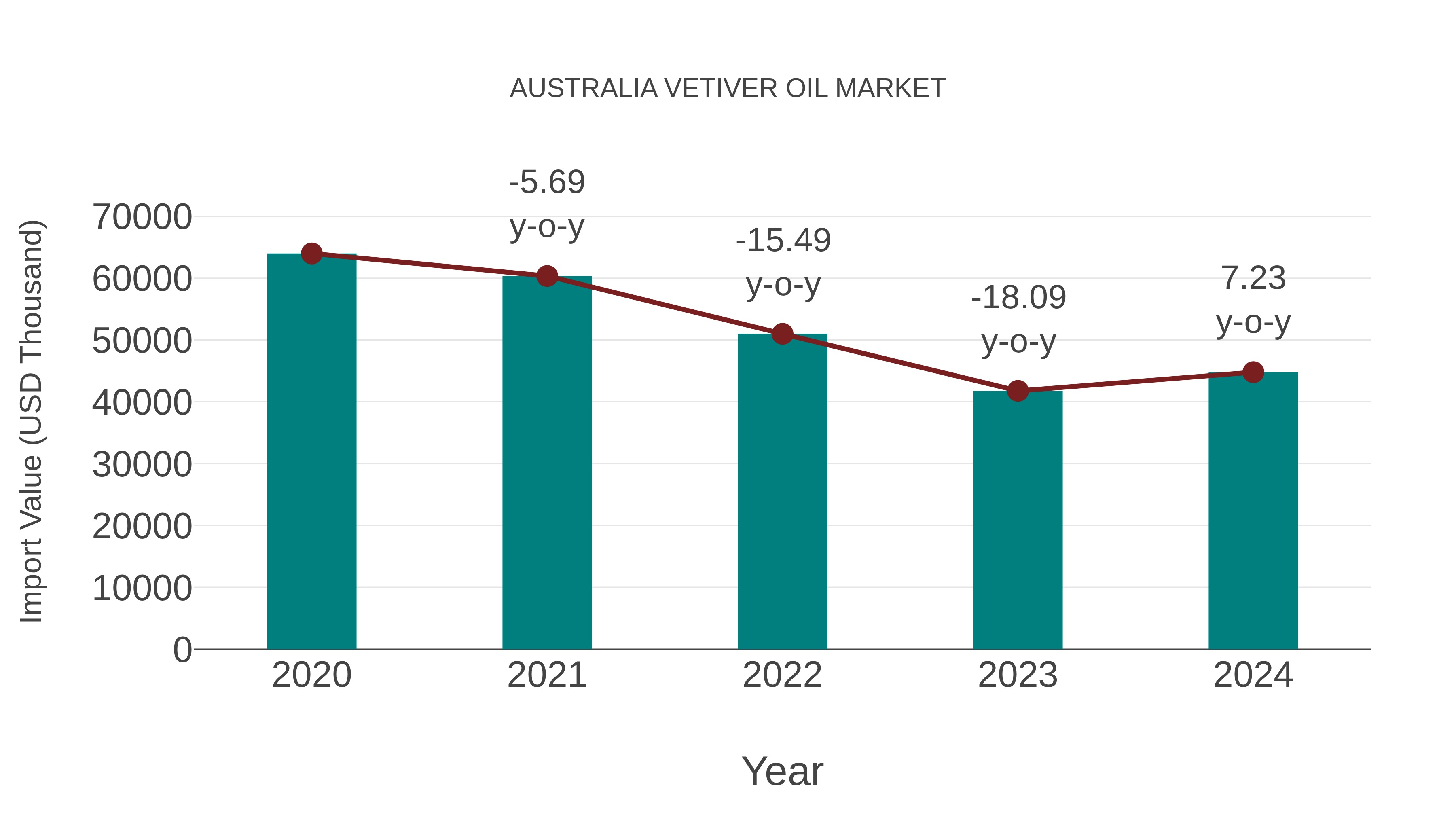
Australia`s import trend for vetiver oil in 2024 showed a growth rate of 7.23% compared to 2023, with a compound annual growth rate (CAGR) of -8.53% from 2020 to 2024. This fluctuation may be attributed to shifts in consumer preferences or changes in global trade dynamics impacting market stability.
Australia Vetiver Oil Market Overview
In the realm of aromatherapy and fragrance industry, the Australia vetiver oil market is witnessing growth owing to the oil`s distinctive aroma and therapeutic properties. Vetiver oil finds applications in perfumery, cosmetics, and aromatherapy products, catering to the growing demand for natural and sustainable ingredients.
Drivers of the market
Vetiver oil, prized for its earthy fragrance and therapeutic properties, is gaining popularity in Australia aromatherapy and fragrance markets. The market for vetiver oil is driven by the increasing consumer preference for natural and sustainable ingredients in personal care products, perfumes, and home fragrances. Factors such as stress relief, relaxation, and emotional well-being contribute to the demand for vetiver oil in aromatherapy applications. Moreover, the rising trend of eco-friendly and ethical sourcing practices further propels market growth.
Challenges of the market
Challenges in the vetiver oil market in Australia include sustainable sourcing and market demand fluctuations. Vetiver oil production relies on sustainable farming practices to prevent soil degradation and maintain ecosystem balance. However, meeting market demand while adhering to environmental and social sustainability standards can be challenging for vetiver oil producers.
Government Policy of the market
The Australia government regulates the production, processing, and marketing of vetiver oil to ensure product quality, purity, and sustainability. This involves adherence to agricultural practices that promote soil conservation, water management, and biodiversity conservation in vetiver cultivation areas. Additionally, there are guidelines for essential oil manufacturers and exporters to comply with standards set by regulatory authorities such as the Australia Essential Oils Association (AEOA) and the Therapeutic Goods Administration (TGA).
Key Highlights of the Report:
- Australia Vetiver Oil Market Outlook
- Market Size of Australia Vetiver Oil Market, 2025
- Forecast of Australia Vetiver Oil Market, 2032
- Historical Data and Forecast of Australia Vetiver Oil Revenues & Volume for the Period 2022-2032F
- Australia Vetiver Oil Market Trend Evolution
- Australia Vetiver Oil Market Drivers and Challenges
- Australia Vetiver Oil Price Trends
- Australia Vetiver Oil Porter's Five Forces
- Australia Vetiver Oil Industry Life Cycle
- Historical Data and Forecast of Australia Vetiver Oil Market Revenues & Volume By Application for the Period 2022-2032F
- Historical Data and Forecast of Australia Vetiver Oil Market Revenues & Volume By Medical for the Period 2022-2032F
- Historical Data and Forecast of Australia Vetiver Oil Market Revenues & Volume By Food & Beverage for the Period 2022-2032F
- Historical Data and Forecast of Australia Vetiver Oil Market Revenues & Volume By Spa & Relaxation for the Period 2022-2032F
- Australia Vetiver Oil Import Export Trade Statistics
- Market Opportunity Assessment By Application
- Australia Vetiver Oil Top Companies Market Share
- Australia Vetiver Oil Competitive Benchmarking By Technical and Operational Parameters
- Australia Vetiver Oil Company Profiles
- Australia Vetiver Oil Key Strategic Recommendations






































