Australia Zinc Cyanide Market Size, Share & Growth Rate
The Australia Zinc Cyanide Market was estimated at USD 107 Million in 2025 and is projected to reach USD 126 Million by 2032, growing at a CAGR of 2.4% from 2026 to 2032. This moderate growth trajectory is primarily fueled by the ongoing demand for zinc cyanide in gold mining operations, where it acts as a critical complexing agent in the cyanidation process. The Australian mining sector's resilience and commitment to adopting advanced extraction techniques contribute significantly to the steady demand within this niche market.
Australia Zinc Cyanide Market Year-wise Growth Rate and Key Drivers
This graph highlights how the Australia Zinc Cyanide Market has steadily grown over the years, supported by major growth factors.
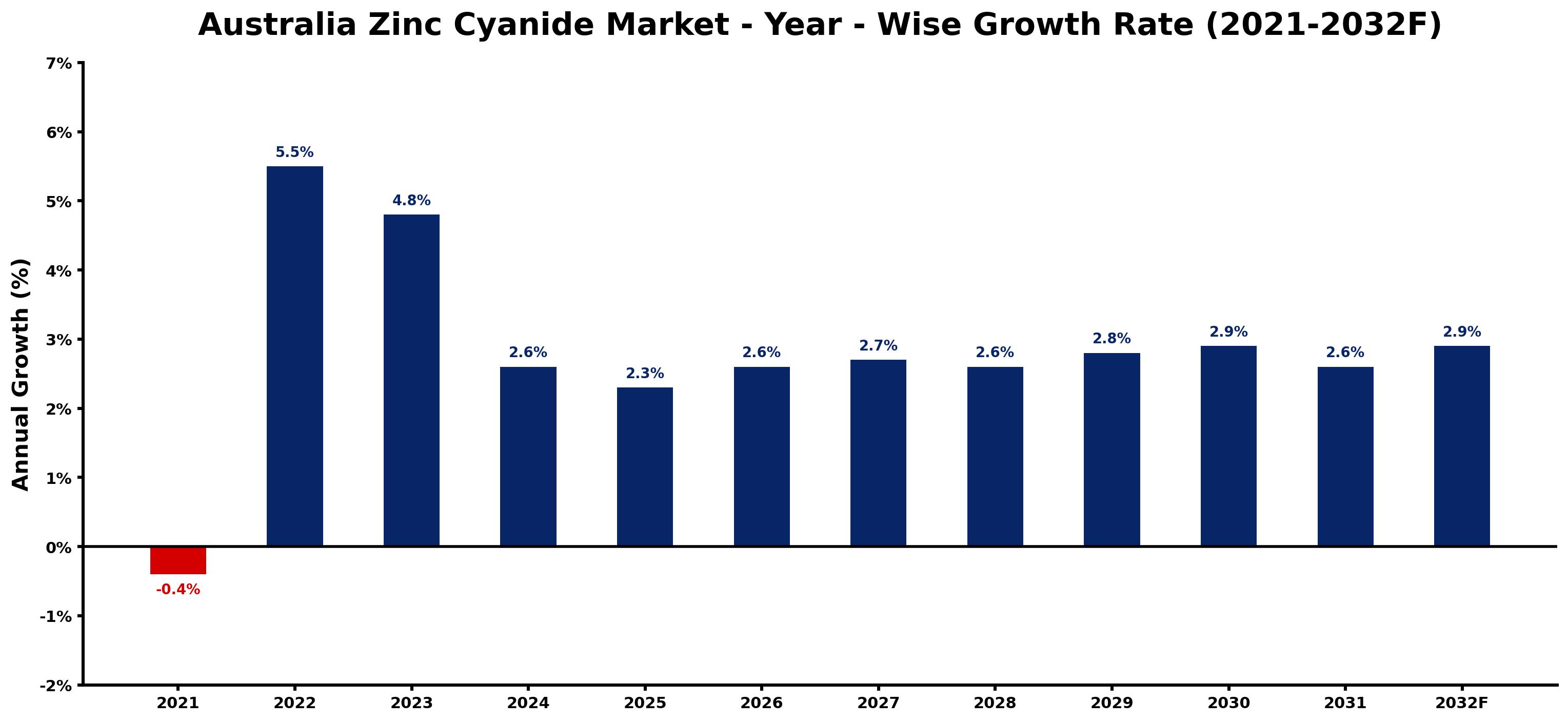
The table below presents the year‑wise growth rates along with the key drivers influencing the market
| Year | Growth Rate | Major Drivers |
| 2021 | -0.4% | Lower demand from manufacturing sectors |
| 2022 | 5.5% | Increased investments in mining projects |
| 2023 | 4.8% | Growing interest in sustainable practices |
| 2024 | 2.6% | Expansion of chemical processing facilities |
| 2025 | 2.3% | Rise in electronics production needs |
| 2026 | 2.6% | Higher demand from jewelry industry |
| 2027 | 2.7% | Boost in automotive sector requirements |
| 2028 | 2.6% | Increased exports to Asia markets |
| 2029 | 2.8% | Growth in renewable energy applications |
| 2030 | 2.9% | Surge in industrial automation trends |
| 2031 | 2.6% | Rising demand for specialty chemicals |
| 2032 | 2.9% | Enhanced focus on recycling initiatives |
Note: Market size estimations and growth projections presented in this report are based on 6Wresearch's proprietary forecasting methodology, utilizing the latest available industry data, government publications, and primary research inputs.
Australia Zinc Cyanide Market Synopsis
The driving force currently shaping the Australia Zinc Cyanide Market is its indispensable role in gold extraction processes. As mining companies seek efficient methods to optimize metal recovery, zinc cyanide remains a vital component, ensuring higher yields and profitability. This aspect underpins the market's steady demand, despite its relatively limited scale.
Another significant factor impacting the market is the stringent regulatory environment surrounding cyanide usage. While regulations are essential for promoting safe practices and minimizing environmental risks, they also pose challenges for market players, necessitating investment in compliance and alternative technologies. As a result, navigating these regulatory waters has become a key focus area for stakeholders.
Australia Zinc Cyanide Market Key Takeaways
- The market's growth is closely linked to the health and expansion of the mining industry in Australia.
- Gold cyanidation processes are pivotal to the consistent demand for zinc cyanide.
- Environmental regulations are influencing operational practices in the mining sector.
- Developing efficient waste management protocols is becoming increasingly critical for market participants.
- Long-term opportunities exist in refining extraction processes and exploring eco-friendly alternatives.
Evaluation of Restraints in Australia Zinc Cyanide Market
The Australia Zinc Cyanide Market faces significant constraints, largely stemming from stringent environmental regulations and public concerns regarding cyanide-related incidents. These factors compel mining companies to invest in advanced safety measures, which can elevate operational costs and limit market growth. Furthermore, potential liabilities from cyanide leaks or environmental harm can deter investment in new mining ventures, thereby constraining the demand for zinc cyanide.
Australia Zinc Cyanide Market Trends
Current trends in the Australia Zinc Cyanide Market include a noticeable shift toward more sustainable mining practices. Companies are actively seeking technologies that enhance efficiency while minimizing the environmental impact of cyanide use. Moreover, there is a growing emphasis on developing recycling methods for cyanide, which could revolutionize how mining operations handle this compound. This trend aligns with broader global efforts toward sustainability and regulatory compliance.
Australia Zinc Cyanide Market Opportunities
Genuine growth opportunities in the Australia Zinc Cyanide Market lie in innovation and technological advancements. Investing in alternative extraction processes that reduce or eliminate cyanide usage can open new market segments and appeal to environmentally conscious stakeholders. Additionally, establishing partnerships with regulatory bodies to ensure compliance while pursuing sustainable practices could provide a competitive edge for market participants, ultimately driving demand.
Government Initiatives in the Australia Zinc Cyanide Market
The Australian government plays a vital role in regulating the zinc cyanide market through stringent policies focused on environmental protection and public safety. Initiatives include comprehensive guidelines for the safe handling, storage, and disposal of cyanide compounds. These regulations often mandate regular inspections and compliance checks to ensure that mining operations adhere to established safety standards, helping to protect ecosystems and communities alike.
Future Insights of the Australia Zinc Cyanide Market
Looking ahead to the 2026-2032 period, the Australia Zinc Cyanide Market is poised for steady growth, underpinned by the mining sector's recovery and evolution. The increasing adoption of innovative extraction methods and enhanced waste management practices will likely shape the market landscape. Stakeholders that adapt to regulatory changes and prioritize sustainability will find themselves well-positioned to capitalize on emerging opportunities and ensure long-term viability.
Australia Zinc Cyanide Market Latest Developments (2025 - 2026)
Recent developments in the Australia Zinc Cyanide Market highlight a concerted effort by industry players to innovate extraction processes while addressing environmental challenges. Numerous initiatives focus on reducing cyanide consumption and enhancing recycling capabilities within mining operations. Furthermore, industry stakeholders are increasingly collaborating with governmental bodies to ensure compliance with evolving regulations, signaling a commitment to sustainability and safety in mining practices.
Australia Zinc Cyanide Market - Key Attractiveness of the Report
- 10 Years of Market Numbers
- Historical Data Starting from 2022 to 2025
- Base Year: 2025
- Forecast Data until 2032
- Key Performance Indicators Impacting the Market
- Major Upcoming Developments and Projects
Key Highlights of the Report:
- Australia Zinc Cyanide Market Outlook
- Market Size of Australia Zinc Cyanide Market, 2025
- Forecast of Australia Zinc Cyanide Market, 2032
- Historical Data and Forecast of Australia Zinc Cyanide Revenues & Volume for the Period 2022-2032F
- Australia Zinc Cyanide Market Trend Evolution
- Australia Zinc Cyanide Market Drivers and Challenges
- Australia Zinc Cyanide Price Trends
- Australia Zinc Cyanide Porter's Five Forces
- Australia Zinc Cyanide Industry Life Cycle
- Historical Data and Forecast of Australia Zinc Cyanide Market Revenues & Volume By Product Type for the Period 2022-2032F
- Historical Data and Forecast of Australia Zinc Cyanide Market Revenues & Volume By 0.99 for the Period 2022-2032F
- Historical Data and Forecast of Australia Zinc Cyanide Market Revenues & Volume By 0.999 for the Period 2022-2032F
- Historical Data and Forecast of Australia Zinc Cyanide Market Revenues & Volume By Application for the Period 2022-2032F
- Historical Data and Forecast of Australia Zinc Cyanide Market Revenues & Volume By Electroplate for the Period 2022-2032F
- Historical Data and Forecast of Australia Zinc Cyanide Market Revenues & Volume By Medicine for the Period 2022-2032F
- Historical Data and Forecast of Australia Zinc Cyanide Market Revenues & Volume By Pesticides for the Period 2022-2032F
- Australia Zinc Cyanide Import Export Trade Statistics
- Market Opportunity Assessment By Product Type
- Market Opportunity Assessment By Application
- Australia Zinc Cyanide Top Companies Market Share
- Australia Zinc Cyanide Competitive Benchmarking By Technical and Operational Parameters
- Australia Zinc Cyanide Company Profiles
- Australia Zinc Cyanide Key Strategic Recommendations






































