Austria Cigarette Market Size (2020-2030)
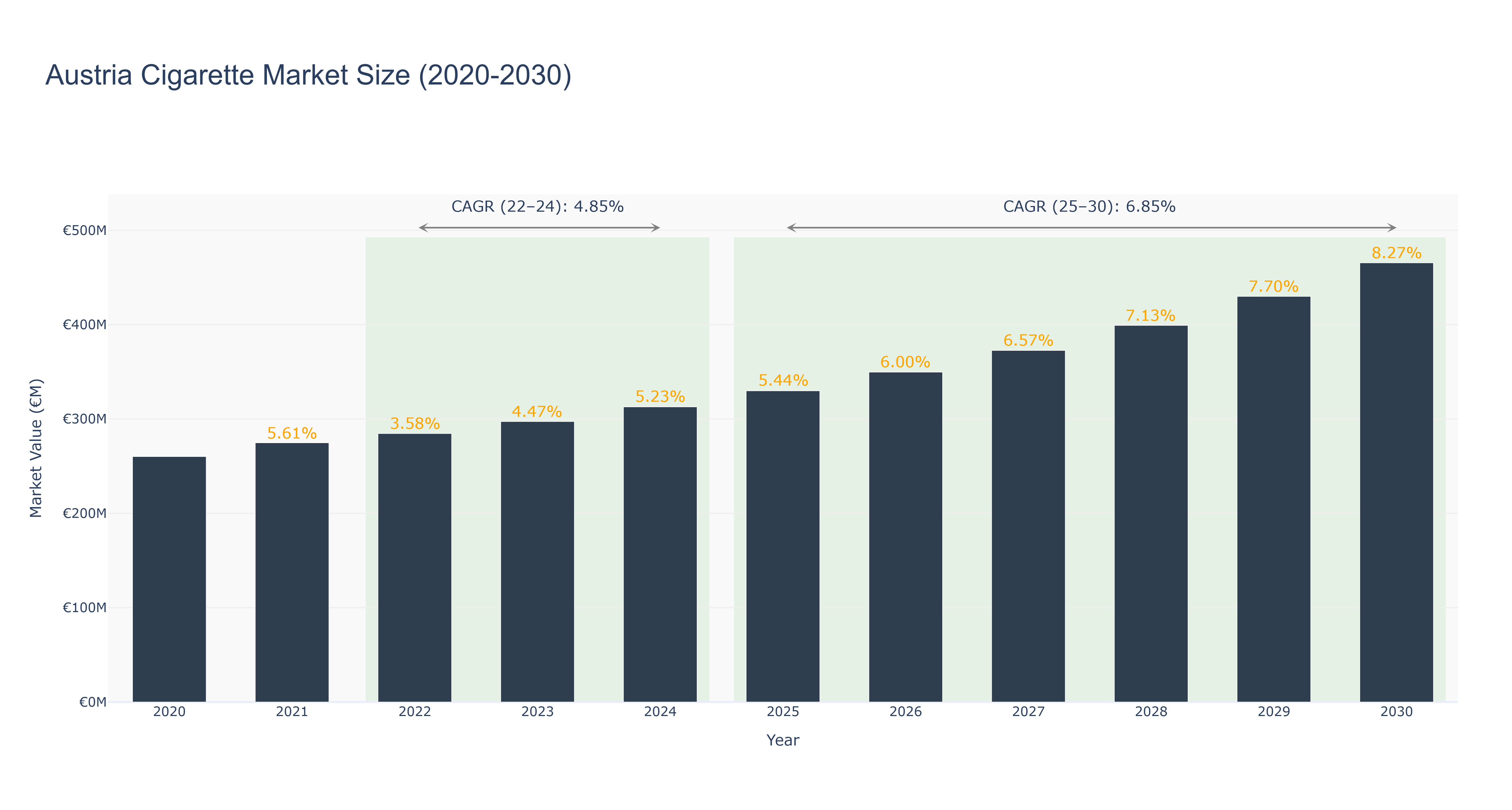
The Austria Cigarette Market demonstrated steady growth from 2020 to 2024, with the market size increasing from €260.10 million in 2020 to €312.80 million by 2024, reflecting an actual CAGR of 4.85% during this period. The market saw notable growth rates, peaking at €297.26 million in 2023, driven by both stable consumption patterns and pricing strategies amidst regulatory frameworks. Looking ahead, the forecasted period from 2025 to 2030 indicates a more robust outlook, with projected market size reaching €465.46 million by 2030, translating to a CAGR of 6.85%. This anticipated growth can be attributed to factors such as evolving consumer preferences, potential product innovations, and the emergence of reduced-risk alternatives. As the industry adapts to changing regulations and health awareness, these drivers are expected to propel the market forward, making it vital for stakeholders to strategically position themselves to capitalize on these trends.
Austria Cigarette Market: Production & Trade Performance (2019-2025)
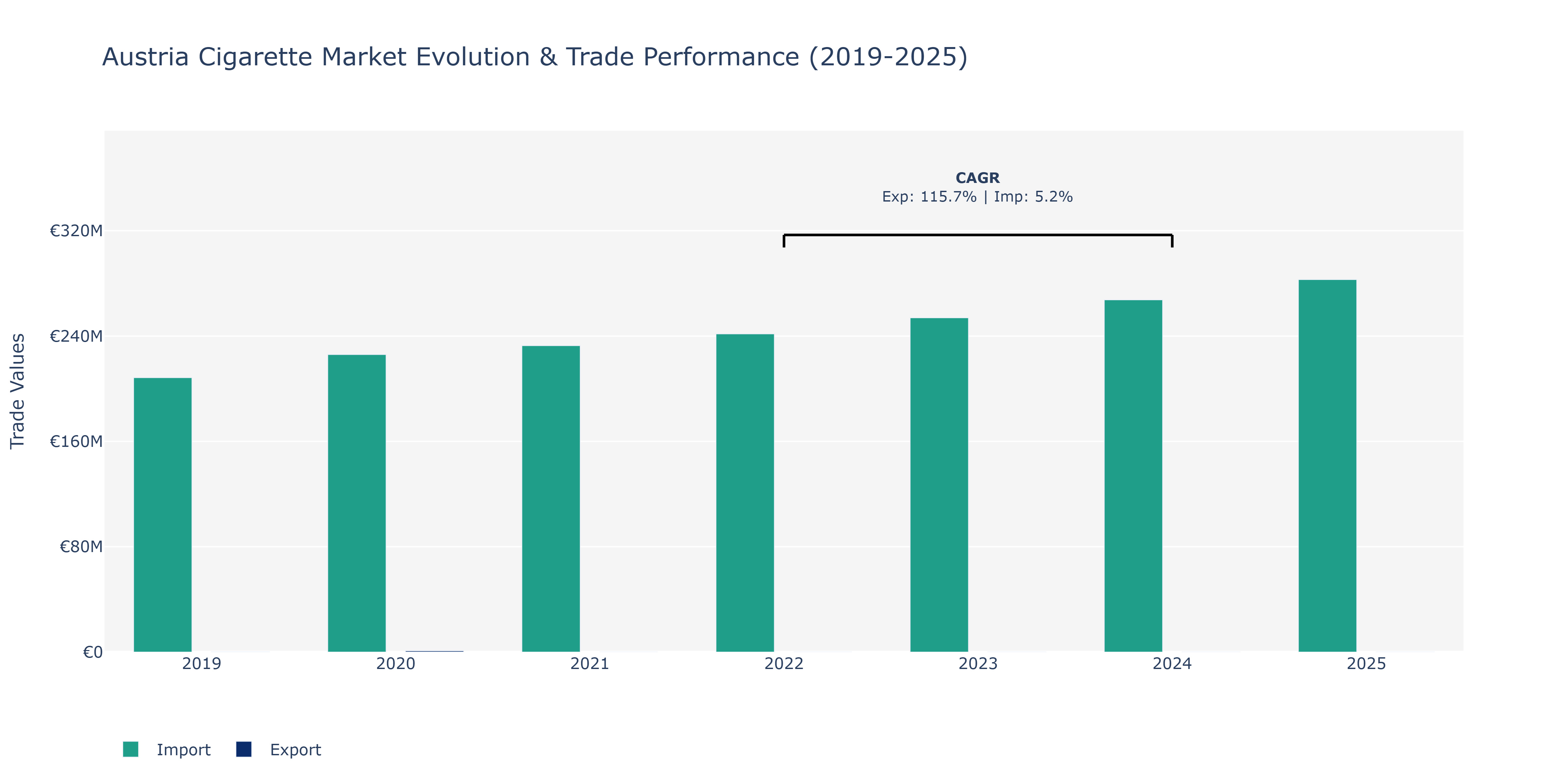
The Austria Cigarette Market witnessed notable fluctuations in both Exports and Imports from 2019 to 2025. Exports started at €41.37 thousand in 2019 and showed a decreasing trend until 2022, reaching a low of €2.66 thousand. However, a significant rebound occurred in 2023 and 2024, with exports peaking at €12.39 thousand. This growth continued in 2025, reaching €15.29 thousand. On the other hand, Imports consistently increased over the years, starting at €208.35 million in 2019 and reaching €282.85 million in 2025. The steady growth in Imports could be attributed to changing consumer preferences, increased globalization, and evolving trade agreements. The fluctuations in Exports can be linked to market demand, regulatory changes, and supply chain disruptions. The modest CAGR for Imports indicates a stable growth pattern, while the exceptional CAGR for Exports reflects a significant recovery and growth trajectory post-2022, aligning with the recovering global economy and changing consumption patterns towards premium products.
Austria Cigarette Market Overview
The cigarette market in Austria supplies tobacco products including cigarettes, cigars, and smoking accessories, catering to adult consumers` preferences for nicotine delivery and sensory enjoyment. Cigarette products range from traditional tobacco blends to flavored cigarillos, offering diverse smoking experiences in retail tobacco shops and convenience stores. Key applications include tobacco marketing, regulatory compliance, and smoking cessation programs. Key trends include the demand for reduced-risk tobacco products, the introduction of menthol and fruit-flavored cigarettes, and the customization of cigarette packaging for health warnings and branding regulations.
Drivers of the market
The cigarette market in Austria is driven by consumer demand, although it faces challenges from increasing health awareness and regulatory restrictions. The market adapts through product innovations and marketing strategies.
Challenges of the market
The cigarette market in Austria encounters challenges related to the fluctuating prices and availability of raw materials, such as tobacco and paper, which are influenced by global supply and demand dynamics. Ensuring the consistent quality, taste, and safety of cigarettes for various applications, such as smoking and recreational use, adds complexity to the market. Additionally, competition from alternative smoking products and the rapid pace of consumer preferences impact market demand. Regulatory compliance with safety and health standards also poses challenges. Manufacturers must invest in sustainable sourcing practices, quality control systems, and marketing strategies to maintain market competitiveness and meet consumer demands for high-quality cigarettes.
Government Policy of the market
Austria`s policies for the cigarette market focus on supporting the tobacco and retail industries. Financial incentives are available for companies producing high-quality cigarettes. The government also funds research aimed at improving the production processes and reducing the health impacts of cigarettes, fostering innovation and enhancing public health measures.
Key Highlights of the Report:
- Austria Cigarette Market Outlook
- Market Size of Austria Cigarette Market, 2025
- Forecast of Austria Cigarette Market, 2032
- Historical Data and Forecast of Austria Cigarette Revenues & Volume for the Period 2022-2032F
- Austria Cigarette Market Trend Evolution
- Austria Cigarette Market Drivers and Challenges
- Austria Cigarette Price Trends
- Austria Cigarette Porter`s Five Forces
- Austria Cigarette Industry Life Cycle
- Historical Data and Forecast of Austria Cigarette Market Revenues & Volume By Type for the Period 2022-2032F
- Historical Data and Forecast of Austria Cigarette Market Revenues & Volume By Light for the Period 2022-2032F
- Historical Data and Forecast of Austria Cigarette Market Revenues & Volume By Medium for the Period 2022-2032F
- Historical Data and Forecast of Austria Cigarette Market Revenues & Volume By Others for the Period 2022-2032F
- Historical Data and Forecast of Austria Cigarette Market Revenues & Volume By Distribution Channel for the Period 2022-2032F
- Historical Data and Forecast of Austria Cigarette Market Revenues & Volume By Tobacco Shops for the Period 2022-2032F
- Historical Data and Forecast of Austria Cigarette Market Revenues & Volume By Supermarket and Hypermarkets for the Period 2022-2032F
- Historical Data and Forecast of Austria Cigarette Market Revenues & Volume By Convenience Stores for the Period 2022-2032F
- Historical Data and Forecast of Austria Cigarette Market Revenues & Volume By Online Stores for the Period 2022-2032F
- Historical Data and Forecast of Austria Cigarette Market Revenues & Volume By Others for the Period 2022-2032F
- Austria Cigarette Import Export Trade Statistics
- Market Opportunity Assessment By Type
- Market Opportunity Assessment By Distribution Channel
- Austria Cigarette Top Companies Market Share
- Austria Cigarette Competitive Benchmarking By Technical and Operational Parameters
- Austria Cigarette Company Profiles
- Austria Cigarette Key Strategic Recommendations






































