Austria Emollient Market: Import Trend Analysis
In the Austria emollient market, the import trend experienced a decline, with a growth rate of -3.77% from 2023 to 2024. However, the compound annual growth rate (CAGR) for the period 2020-2024 stood at 2.45%. This negative import momentum in 2024 could be attributed to shifting demand patterns or market stabilization efforts.
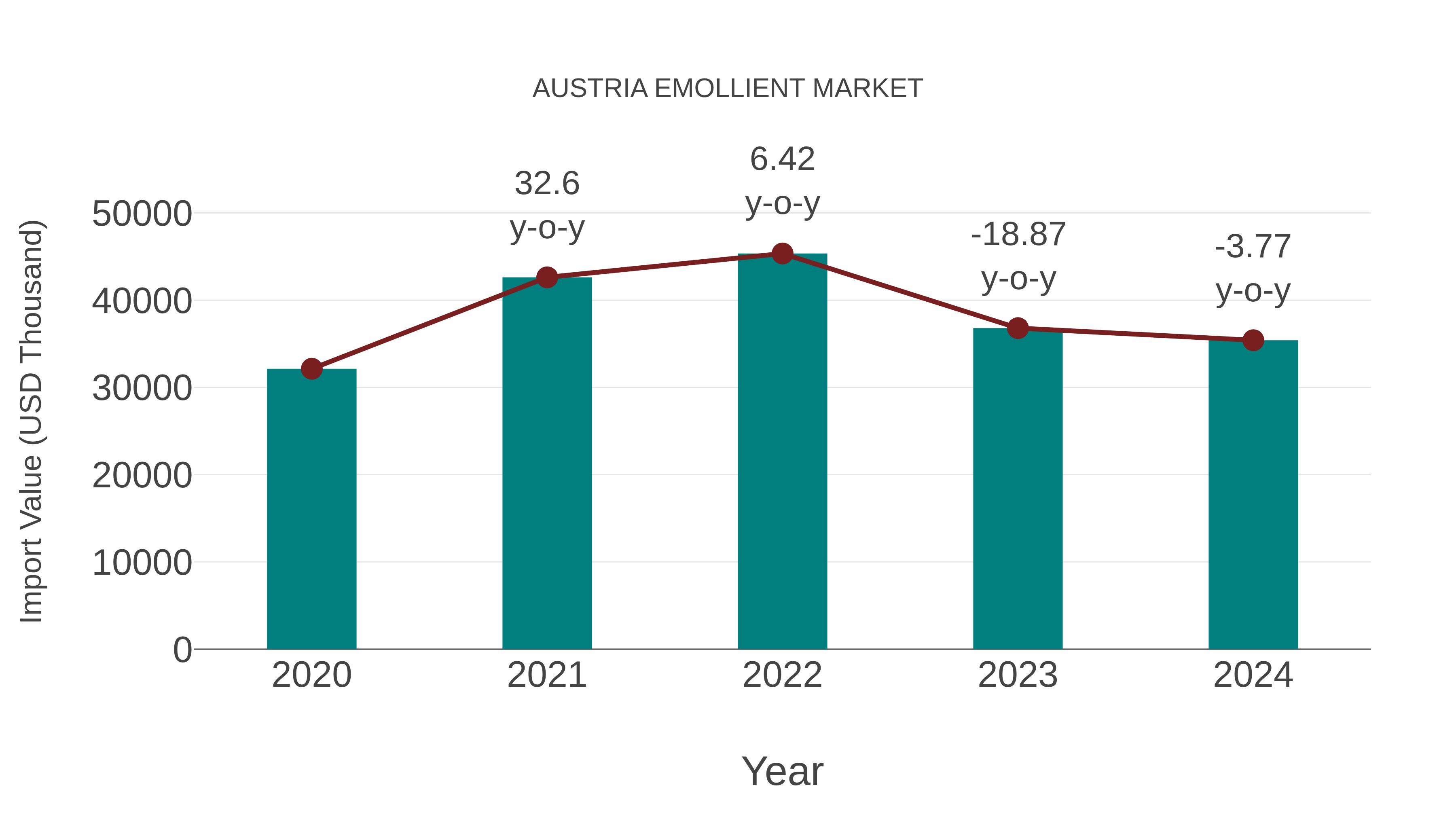
Austria Emollient Market Overview
The Austria Emollient Market is experiencing steady growth due to increasing consumer awareness about skincare and beauty products. Emollients are widely used in various cosmetic and personal care products to provide moisturizing and softening effects to the skin. The market is driven by the rising demand for natural and organic emollients as consumers are becoming more conscious about the ingredients used in skincare products. Key players in the Austria Emollient Market are focusing on innovative product formulations and marketing strategies to cater to the evolving consumer preferences. The market is also witnessing a trend towards sustainable and eco-friendly emollients, in line with the growing global emphasis on environmental conservation. Overall, the Austria Emollient Market is poised for further growth as the beauty and skincare industry continues to expand.
Austria Emollient Market Trends and Opportunities
The Austria Emollient Market is experiencing growth due to the increasing demand for natural and organic skincare products. Consumers are becoming more conscious of the ingredients in their skincare products, leading to a preference for emollients derived from plant-based sources such as shea butter, coconut oil, and jojoba oil. This trend presents opportunities for manufacturers to innovate and develop new emollient formulations that cater to the growing demand for clean and green beauty products. Additionally, the rise of e-commerce platforms and social media influencers in Austria has facilitated easier access to a wide range of emollient products, allowing for greater market penetration and consumer reach. Overall, the Austria Emollient Market is poised for continued growth driven by consumer preferences for natural ingredients and the convenience of online shopping channels.
Austria Emollient Market Challenges
The Austria Emollient Market faces several challenges, including increasing competition from international brands, stringent regulations on ingredients and labeling, and growing consumer demand for natural and sustainable products. Local emollient manufacturers may struggle to keep up with the innovation and marketing efforts of larger global companies, impacting their market share and profitability. Additionally, the need to comply with strict regulatory standards set by the European Union adds complexity and costs to the production process. Meeting consumer preferences for eco-friendly packaging and cruelty-free formulations further adds to the challenges faced by emollient companies operating in Austria. Finding a balance between meeting regulatory requirements, staying competitive in the market, and meeting consumer demands for sustainability presents a significant hurdle for players in the Austria Emollient Market.
Austria Emollient Market Drivers
The Austria Emollient Market is primarily driven by the increasing demand for skincare products that offer hydration and protection for the skin. Consumers are becoming more conscious of the benefits of emollients in maintaining healthy and moisturized skin, driving the growth of the market. Additionally, the rising prevalence of skin conditions such as eczema and psoriasis is fueling the demand for emollient products that can provide relief and improve skin health. Furthermore, the growing trend towards natural and organic ingredients in cosmetic products is influencing manufacturers to develop emollients sourced from plant-based and sustainable materials, catering to the preferences of eco-conscious consumers. Overall, these factors are driving the expansion of the Austria Emollient Market as consumers prioritize skincare products that promote skin hydration and overall well-being.
Austria Emollient Market Government Policy
Government policies related to the Austria Emollient Market primarily focus on ensuring product safety, sustainability, and compliance with regulatory standards. The government implements strict regulations to control the quality and labeling of emollient products, particularly those used in personal care and cosmetics. These policies aim to protect consumers from harmful ingredients and ensure that products are accurately labeled. Additionally, there are measures in place to promote sustainability within the emollient market, encouraging the use of environmentally friendly ingredients and packaging. The government also works to support local manufacturers and businesses, providing incentives and support programs to foster growth and innovation in the emollient industry. Overall, government policies in Austria aim to create a transparent and competitive market while prioritizing consumer safety and environmental sustainability.
Austria Emollient Market Future Outlook
The future outlook for the Austria Emollient Market appears promising with steady growth anticipated in the coming years. This growth can be attributed to the increasing demand for emollient products in the cosmetics and personal care industry, driven by consumers` growing focus on skincare and wellness. Additionally, the rising awareness about the benefits of using emollients for maintaining skin health and preventing dryness is expected to further fuel market expansion. Manufacturers are likely to continue innovating and introducing new emollient formulations to cater to evolving consumer preferences, thereby sustaining market growth. Overall, the Austria Emollient Market is projected to experience positive growth prospects in the foreseeable future.
Key Highlights of the Report:
- Austria Emollient Market Outlook
- Market Size of Austria Emollient Market, 2025
- Forecast of Austria Emollient Market, 2032
- Historical Data and Forecast of Austria Emollient Revenues & Volume for the Period 2022 - 2032F
- Austria Emollient Market Trend Evolution
- Austria Emollient Market Drivers and Challenges
- Austria Emollient Price Trends
- Austria Emollient Porter's Five Forces
- Austria Emollient Industry Life Cycle
- Historical Data and Forecast of Austria Emollient Market Revenues & Volume By Type for the Period 2022 - 2032F
- Historical Data and Forecast of Austria Emollient Market Revenues & Volume By Esters for the Period 2022 - 2032F
- Historical Data and Forecast of Austria Emollient Market Revenues & Volume By Fatty Alcohols for the Period 2022 - 2032F
- Historical Data and Forecast of Austria Emollient Market Revenues & Volume By Fatty Acids for the Period 2022 - 2032F
- Historical Data and Forecast of Austria Emollient Market Revenues & Volume By Ethers for the Period 2022 - 2032F
- Historical Data and Forecast of Austria Emollient Market Revenues & Volume By Silicones for the Period 2022 - 2032F
- Historical Data and Forecast of Austria Emollient Market Revenues & Volume By Others for the Period 2022 - 2032F
- Historical Data and Forecast of Austria Emollient Market Revenues & Volume By Form for the Period 2022 - 2032F
- Historical Data and Forecast of Austria Emollient Market Revenues & Volume By Solid for the Period 2022 - 2032F
- Historical Data and Forecast of Austria Emollient Market Revenues & Volume By Liquid for the Period 2022 - 2032F
- Historical Data and Forecast of Austria Emollient Market Revenues & Volume By Application for the Period 2022 - 2032F
- Historical Data and Forecast of Austria Emollient Market Revenues & Volume By Skin Care for the Period 2022 - 2032F
- Historical Data and Forecast of Austria Emollient Market Revenues & Volume By Hair Care for the Period 2022 - 2032F
- Historical Data and Forecast of Austria Emollient Market Revenues & Volume By Deodorants for the Period 2022 - 2032F
- Historical Data and Forecast of Austria Emollient Market Revenues & Volume By Oral Care for the Period 2022 - 2032F
- Historical Data and Forecast of Austria Emollient Market Revenues & Volume By Others for the Period 2022 - 2032F
- Austria Emollient Import Export Trade Statistics
- Market Opportunity Assessment By Type
- Market Opportunity Assessment By Form
- Market Opportunity Assessment By Application
- Austria Emollient Top Companies Market Share
- Austria Emollient Competitive Benchmarking By Technical and Operational Parameters
- Austria Emollient Company Profiles
- Austria Emollient Key Strategic Recommendations






































