Austria Non-alcoholic Drink Market: Import Trend Analysis
In 2024, Austria`s non-alcoholic drink market saw a notable import trend, with an increase in the volume of imported beverages. This trend reflected changing consumer preferences and a growing demand for a diverse range of non-alcoholic drinks in the Austrian market.
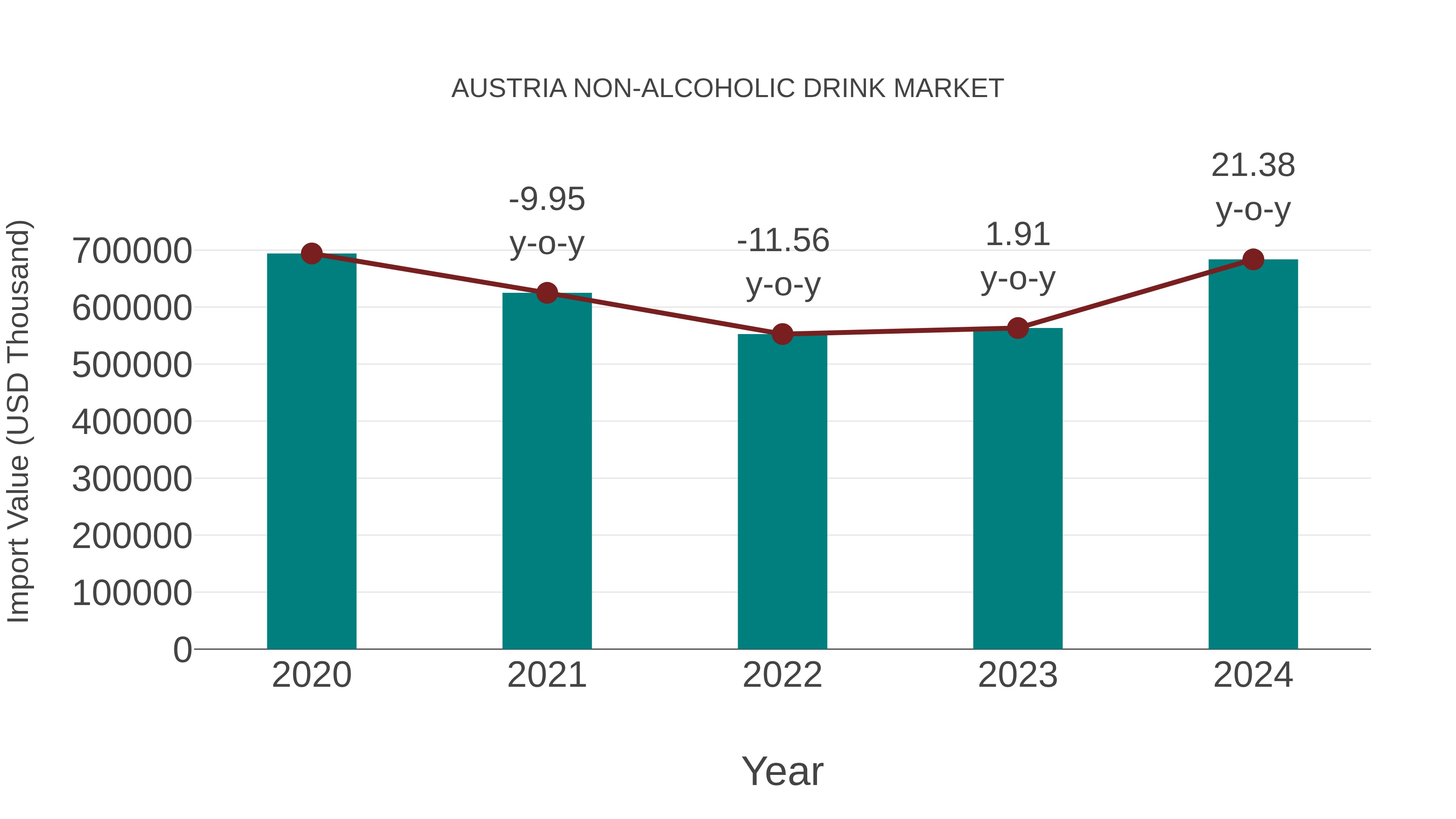
Austria Export Potential Assessment For Non-alcoholic Drink Market (Values in USD Thousand)
Austria Non-alcoholic Drink Market Overview
The Non-alcoholic Drink market in Austria offers a variety of beverages that do not contain alcohol, including soft drinks, juices, bottled water, and functional drinks. Austrian producers provide non-alcoholic beverages that cater to health-conscious consumers and those seeking refreshing alternatives to alcoholic drinks. The market is driven by health trends, innovative product offerings, and consumer preferences for diverse beverage options.
Drivers of the market
The non-alcoholic drink market in Austria is propelled by the growing health consciousness and the demand for healthier beverage options. The increasing variety of non-alcoholic drinks, including functional beverages and plant-based alternatives, supports market growth.
Challenges of the market
Challenges in the non-alcoholic drink market include developing low-sugar and functional beverage formulations, meeting consumer demand for natural and organic ingredients, and reducing environmental impact through sustainable packaging and production practices.
Government Policy of the market
Austria encourages the growth of the non-alcoholic drink market through health-focused policies and promotional campaigns. Subsidies and tax incentives are offered to manufacturers producing healthy beverages. The government also enforces strict regulations on labeling and marketing to ensure consumer transparency and promote healthier lifestyle choices.
Key Highlights of the Report:
- Austria Non-alcoholic Drink Market Outlook
- Market Size of Austria Non-alcoholic Drink Market, 2025
- Forecast of Austria Non-alcoholic Drink Market, 2032
- Historical Data and Forecast of Austria Non-alcoholic Drink Revenues & Volume for the Period 2022-2032F
- Austria Non-alcoholic Drink Market Trend Evolution
- Austria Non-alcoholic Drink Market Drivers and Challenges
- Austria Non-alcoholic Drink Price Trends
- Austria Non-alcoholic Drink Porter`s Five Forces
- Austria Non-alcoholic Drink Industry Life Cycle
- Historical Data and Forecast of Austria Non-alcoholic Drink Market Revenues & Volume By Product Types for the Period 2022-2032F
- Historical Data and Forecast of Austria Non-alcoholic Drink Market Revenues & Volume By CarbonatedDrinks for the Period 2022-2032F
- Historical Data and Forecast of Austria Non-alcoholic Drink Market Revenues & Volume By Non-CarbonatedDrinks for the Period 2022-2032F
- Historical Data and Forecast of Austria Non-alcoholic Drink Market Revenues & Volume By Distribution Channel for the Period 2022-2032F
- Historical Data and Forecast of Austria Non-alcoholic Drink Market Revenues & Volume By Online for the Period 2022-2032F
- Historical Data and Forecast of Austria Non-alcoholic Drink Market Revenues & Volume By Offline for the Period 2022-2032F
- Austria Non-alcoholic Drink Import Export Trade Statistics
- Market Opportunity Assessment By Product Types
- Market Opportunity Assessment By Distribution Channel
- Austria Non-alcoholic Drink Top Companies Market Share
- Austria Non-alcoholic Drink Competitive Benchmarking By Technical and Operational Parameters
- Austria Non-alcoholic Drink Company Profiles
- Austria Non-alcoholic Drink Key Strategic Recommendations






































