Azerbaijan Aircraft Cabin Interior Market Size, Share & Growth Rate
The Azerbaijan Aircraft Cabin Interior Market was estimated at USD 941 Million in 2025 and is projected to reach USD 1604 Million by 2032, growing at a CAGR of 7.9% from 2026 to 2032. This upward trajectory is primarily fueled by the increasing demand for air travel, driven by both the modernization of existing fleets and the emergence of new airlines. Furthermore, innovative lightweight materials and a focus on passenger comfort are enhancing the overall cabin experience while also supporting airlines in reducing fuel consumption.
Azerbaijan Aircraft Cabin Interior Market Year-wise Growth Rate and Key Drivers
This graph highlights how the Azerbaijan Aircraft Cabin Interior Market has steadily grown over the years, supported by major growth factors.
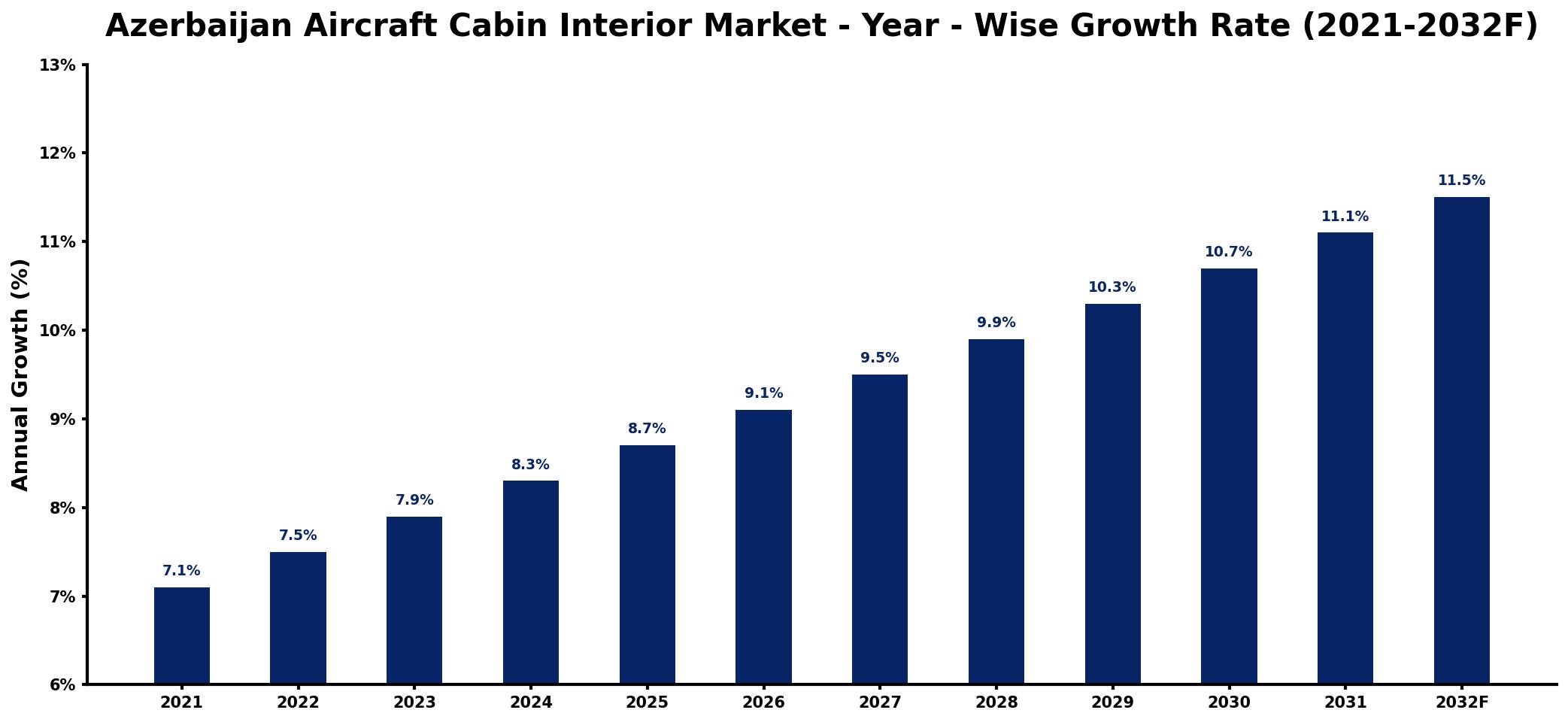
The table below presents the year‑wise growth rates along with the key drivers influencing the market
| Year | Growth Rate | Major Drivers |
| 2021 | 7.1% | Rising consumer travel preferences |
| 2022 | 7.5% | Increased airline fleet expansions |
| 2023 | 7.9% | Growing demand for comfort |
| 2024 | 8.3% | Investment in modern technologies |
| 2025 | 8.7% | Emergence of eco-friendly solutions |
| 2026 | 9.1% | Expansion of regional air travel |
| 2027 | 9.5% | Enhanced passenger experience focus |
| 2028 | 9.9% | Growing tourism industry recovery |
| 2029 | 10.3% | Technological advancements in design |
| 2030 | 10.7% | Increasing competition among airlines |
| 2031 | 11.1% | Strengthened regulatory compliance standards |
| 2032 | 11.5% | Rising disposable income trends |
Note: Market size estimations and growth projections presented in this report are based on 6Wresearch's proprietary forecasting methodology, utilizing the latest available industry data, government publications, and primary research inputs.
Azerbaijan Aircraft Cabin Interior Market Synopsis
Recent momentum in the Azerbaijan Aircraft Cabin Interior Market reflects a burgeoning aviation sector that is responding to the rising demand for air travel. Moving forward, the market is poised to accelerate as new airlines enter and existing carriers expand their services, driving the need for sophisticated cabin solutions.
As the market evolves, a significant shift towards sustainable practices is anticipated, with airlines increasingly prioritizing eco-friendly materials in their cabin designs. This growing inclination towards sustainability, coupled with advancements in technology, promises to enhance passenger experience and fuel operational efficiencies.
Azerbaijan Aircraft Cabin Interior Market Key Takeaways
- The market is projected to grow significantly, reaching USD 1604 Million by 2032.
- Technological innovations, including smart cabin features, are gaining traction.
- Demand for lightweight and eco-friendly materials is shaping product offerings.
- Modernization of fleets presents substantial opportunities for suppliers.
- Government support is fostering an attractive business environment for new entrants.
Evaluation of Restraints in Azerbaijan Aircraft Cabin Interior Market
Despite the promising growth of the Azerbaijan Aircraft Cabin Interior Market, several limitations remain. A primary constraint is the inadequate local manufacturing capabilities for specialized cabin components, resulting in heavy reliance on imports. This dependency can elevate costs, extend lead times, and pose risks related to supply chain disruptions. Moreover, navigating regulatory compliance to meet international standards is an ongoing challenge that local companies must strategically manage to remain competitive.
Azerbaijan Aircraft Cabin Interior Market Trends
The Azerbaijan Aircraft Cabin Interior Market is witnessing transformative trends that are reshaping demand and technology. A prevalent shift towards lightweight materials is being driven by airlines' desires to enhance fuel efficiency and decrease operating costs. Concurrently, the introduction of customizable cabin options and integration of cutting-edge technologies, such as touchless controls and advanced in-flight entertainment systems, are creating an enriched travel experience for passengers.
Azerbaijan Aircraft Cabin Interior Market Opportunities
Investors are presented with numerous avenues for growth within the Azerbaijan Aircraft Cabin Interior Market. Opportunities abound in supplying innovative cabin interiors, including seating, lighting, and entertainment systems tailored for local airlines. Furthermore, with Azerbaijan's strategic location bridging Europe and Asia, enhancing air traffic and fleet expansion will likely fuel demand for modern cabin solutions. Investing in cutting-edge technologies and eco-friendly materials that improve passenger experience and operational efficiencies can yield significant returns.
Government Initiatives in the Azerbaijan Aircraft Cabin Interior Market
The Azerbaijani government is actively promoting the development of the Aircraft Cabin Interior Market through a range of supportive policies. These initiatives include financial incentives and tax benefits designed to attract foreign investment while streamlining regulatory processes for companies in the sector. Additionally, enhancing infrastructure such as airports and maintenance facilities is a critical focus, aimed at bolstering the nation's aviation industry and creating a favorable business climate for market participants.
Future Insights of the Azerbaijan Aircraft Cabin Interior Market
Looking ahead, the Azerbaijan Aircraft Cabin Interior Market is expected to thrive as the aviation sector expands and air travel demand continues to rise. The growth of the national carrier and airport developments will necessitate advanced cabin interiors that elevate passenger experience. Moreover, as Azerbaijan aspires to become a regional air transportation hub, significant opportunities are emerging for suppliers to leverage technological advancements and sustainability trends, setting the stage for continued market evolution.
Azerbaijan Aircraft Cabin Interior Market Latest Developments (2025 - 2026)
In recent months, the Azerbaijan Aircraft Cabin Interior Market has seen an uptick in initiatives focused on sustainability and passenger-centric designs. Airlines are increasingly investing in cabin retrofits, emphasizing eco-friendly materials that adhere to global environmental standards. Furthermore, as the market matures, there is a noticeable shift towards the adoption of smart technology within cabin interiors, aiming to enhance the overall travel experience.
Azerbaijan Aircraft Cabin Interior Market - Key Attractiveness of the Report
- 10 Years of Market Numbers
- Historical Data Starting from 2022 to 2025
- Base Year: 2025
- Forecast Data until 2032
- Key Performance Indicators Impacting the Market
- Major Upcoming Developments and Projects
Key Highlights of the Report:
- Azerbaijan Aircraft Cabin Interior Market Outlook
- Market Size of Azerbaijan Aircraft Cabin Interior Market, 2025
- Forecast of Azerbaijan Aircraft Cabin Interior Market, 2032
- Historical Data and Forecast of Azerbaijan Aircraft Cabin Interior Revenues & Volume for the Period 2022-2032F
- Azerbaijan Aircraft Cabin Interior Market Trend Evolution
- Azerbaijan Aircraft Cabin Interior Market Drivers and Challenges
- Azerbaijan Aircraft Cabin Interior Price Trends
- Azerbaijan Aircraft Cabin Interior Porter's Five Forces
- Azerbaijan Aircraft Cabin Interior Industry Life Cycle
- Historical Data and Forecast of Azerbaijan Aircraft Cabin Interior Market Revenues & Volume By Type for the Period 2022-2032F
- Historical Data and Forecast of Azerbaijan Aircraft Cabin Interior Market Revenues & Volume By Seats for the Period 2022-2032F
- Historical Data and Forecast of Azerbaijan Aircraft Cabin Interior Market Revenues & Volume By Cabin Lightening for the Period 2022-2032F
- Historical Data and Forecast of Azerbaijan Aircraft Cabin Interior Market Revenues & Volume By Windows and Windshields for the Period 2022-2032F
- Historical Data and Forecast of Azerbaijan Aircraft Cabin Interior Market Revenues & Volume By Galley and Lavatory for the Period 2022-2032F
- Historical Data and Forecast of Azerbaijan Aircraft Cabin Interior Market Revenues & Volume By In-Flight Entertainment & Connectivity for the Period 2022-2032F
- Historical Data and Forecast of Azerbaijan Aircraft Cabin Interior Market Revenues & Volume By Others for the Period 2022-2032F
- Historical Data and Forecast of Azerbaijan Aircraft Cabin Interior Market Revenues & Volume By Class for the Period 2022-2032F
- Historical Data and Forecast of Azerbaijan Aircraft Cabin Interior Market Revenues & Volume By First Class for the Period 2022-2032F
- Historical Data and Forecast of Azerbaijan Aircraft Cabin Interior Market Revenues & Volume By Business Class for the Period 2022-2032F
- Historical Data and Forecast of Azerbaijan Aircraft Cabin Interior Market Revenues & Volume By Premium Economy Class for the Period 2022-2032F
- Historical Data and Forecast of Azerbaijan Aircraft Cabin Interior Market Revenues & Volume By Economy Class for the Period 2022-2032F
- Historical Data and Forecast of Azerbaijan Aircraft Cabin Interior Market Revenues & Volume By Aircraft Type for the Period 2022-2032F
- Historical Data and Forecast of Azerbaijan Aircraft Cabin Interior Market Revenues & Volume By Narrow Body Aircraft for the Period 2022-2032F
- Historical Data and Forecast of Azerbaijan Aircraft Cabin Interior Market Revenues & Volume By Wide-Body Aircraft for the Period 2022-2032F
- Historical Data and Forecast of Azerbaijan Aircraft Cabin Interior Market Revenues & Volume By Business Jets for the Period 2022-2032F
- Historical Data and Forecast of Azerbaijan Aircraft Cabin Interior Market Revenues & Volume By Regional Transport Aircraft for the Period 2022-2032F
- Historical Data and Forecast of Azerbaijan Aircraft Cabin Interior Market Revenues & Volume By End User for the Period 2022-2032F
- Historical Data and Forecast of Azerbaijan Aircraft Cabin Interior Market Revenues & Volume By OEM for the Period 2022-2032F
- Historical Data and Forecast of Azerbaijan Aircraft Cabin Interior Market Revenues & Volume By Aftermarket for the Period 2022-2032F
- Azerbaijan Aircraft Cabin Interior Import Export Trade Statistics
- Market Opportunity Assessment By Type
- Market Opportunity Assessment By Class
- Market Opportunity Assessment By Aircraft Type
- Market Opportunity Assessment By End User
- Azerbaijan Aircraft Cabin Interior Top Companies Market Share
- Azerbaijan Aircraft Cabin Interior Competitive Benchmarking By Technical and Operational Parameters
- Azerbaijan Aircraft Cabin Interior Company Profiles
- Azerbaijan Aircraft Cabin Interior Key Strategic Recommendations






































