Azerbaijan Bathroom Furniture Market Summary
The azerbaijan bathroom furniture market was estimated at USD 361 Million in 2025 and is projected to reach USD 618 Million by 2032, growing at a CAGR of 9.2% from 2026 to 2032.
Azerbaijan Bathroom Furniture Market Year-wise Growth Rate and Key Drivers
This graph highlights how the Azerbaijan Bathroom Furniture Market has steadily grown over the past five years, supported by major growth factors.
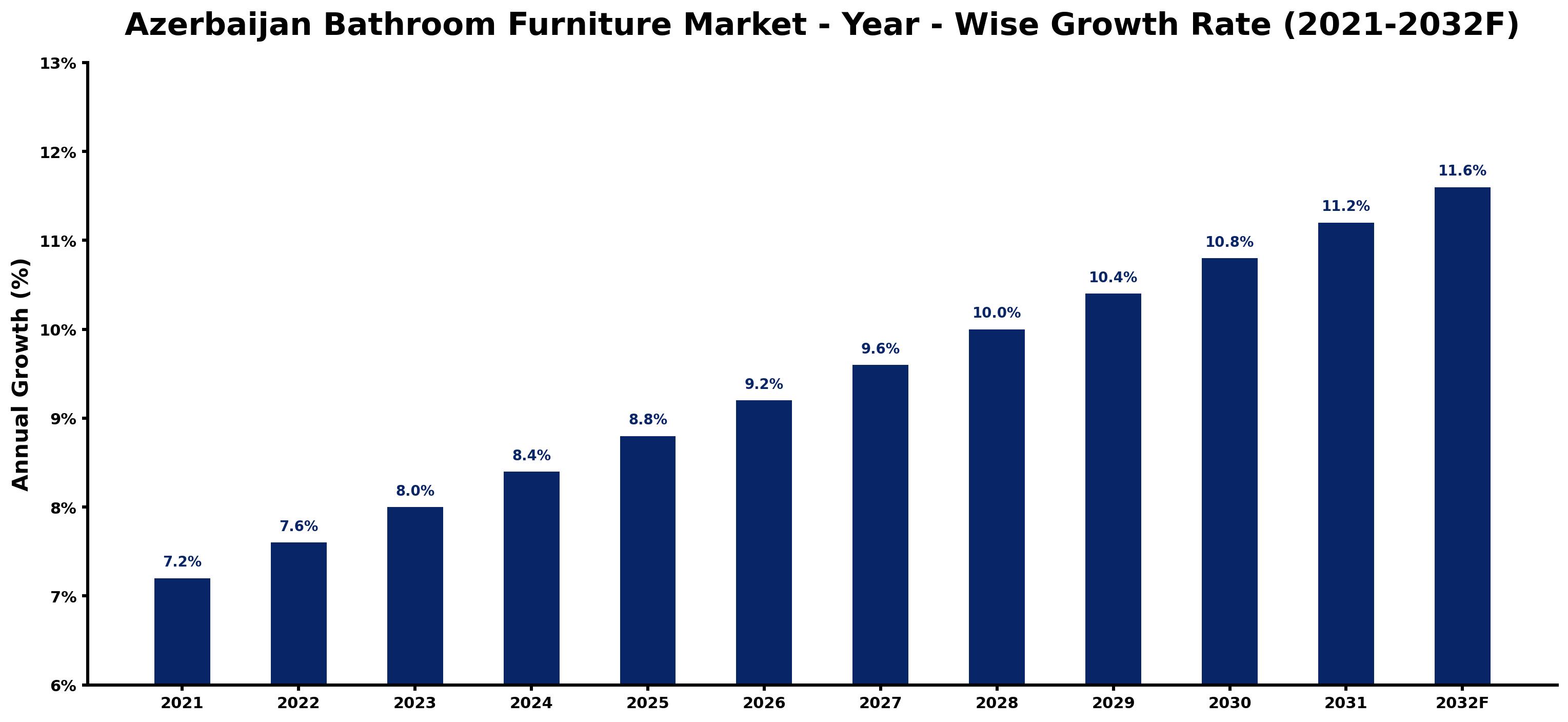
The table below presents the year wise growth rates along with the key drivers influencing the market
| Year | Growth Rate | Major Drivers |
| 2021 | 7.2% | Post-lockdown retail projects sparked interest in home improvement and renovations. |
| 2022 | 7.6% | Increasing urbanization created a shift towards modern bathroom aesthetics and functionality. |
| 2023 | 8.0% | Consumer preferences now lean heavily towards eco-friendly and sustainable materials. |
| 2024 | 8.4% | The rise in disposable incomes enables households to invest in premium bathroom fixtures. |
| 2025 | 8.8% | Innovations in smart technology influence design choices for contemporary bathroom solutions. |
| 2026 | 9.2% | Growing tourism in Azerbaijan leads to heightened demand for luxury hotel bathroom furnishings. |
| 2027 | 9.6% | Local artisans are gaining recognition for handcrafted fixtures, boosting regional craftsmanship. |
| 2028 | 10.0% | The construction boom in Azerbaijan ensures a steady supply of new residential projects. |
| 2029 | 10.4% | Digital marketing strategies effectively reach younger demographics seeking trendy designs. |
| 2030 | 10.8% | The cultural appreciation for wellness encourages homeowners to create spa-like environments. |
| 2031 | 11.2% | Market players are collaborating with international brands to enhance product variety. |
| 2032 | 11.6% | Sustainability certifications begin influencing purchasing decisions among environmentally-conscious consumers. |
Note - Market size estimations and growth projections presented in this report are based on 6Wresearch's advanced forecasting approach, validated with industry datasets as of June 2026.
Azerbaijan Bathroom Furniture Market Synopsis
The Azerbaijan Bathroom Furniture Market is projected to reach 9.2% and witness significant growth during the forecast period (2026-2032). This growth can be attributed to increasing urbanization, rising disposable incomes, and a heightened focus on home improvement among consumers. With a trend towards modern and stylish bathroom furnishings, the demand for aesthetically pleasing and functional products continues to rise, reflecting evolving consumer preferences.
Azerbaijan Bathroom Furniture Market Growth Drivers
Several key factors are propelling the Azerbaijan Bathroom Furniture Market forward. First, urbanization is leading to more people relocating to cities, which drives the demand for modern bathroom solutions that maximize space. Second, as disposable income rises, consumers are more willing to invest in high-quality, stylish bathroom furniture that improves their living environments. Third, a growing emphasis on home improvement projects encourages consumers to upgrade their bathrooms, further boosting market growth. Additionally, the trend towards multifunctional and space-saving solutions resonates with urban dwellers who face space constraints. Lastly, the increasing adoption of online retail channels provides consumers with convenient access to a broader range of products, stimulating market expansion.
Azerbaijan Bathroom Furniture Market Trends and Opportunities
The Azerbaijan Bathroom Furniture Market is characterized by several notable trends. A prominent shift towards modern and minimalist designs is evident, as consumers prioritize functionality without sacrificing style. This is reflected in the growing popularity of furniture that incorporates sleek lines and contemporary aesthetics. Furthermore, eco-friendly materials are increasingly in demand, as consumers become more environmentally conscious and seek sustainable options. Another significant trend is the integration of smart technology in bathroom products, including Bluetooth-enabled mirrors and smart faucets, catering to tech-savvy consumers looking for convenience and innovation.
Azerbaijan Bathroom Furniture Market Challenges and Restraints
Despite the positive outlook, the Azerbaijan Bathroom Furniture Market faces several challenges. Intense competition from both local and international manufacturers can create pricing pressures and challenges in differentiating products. Additionally, fluctuating raw material prices can impact production costs, making price stability a concern for manufacturers. Limited consumer awareness about certain types of bathroom furniture can hinder market penetration and growth for newer or innovative products. Furthermore, the industry suffers from a lack of standardization and quality control measures, which can affect consumer trust. Economic instability and currency fluctuations in the region may also influence purchasing power and overall market demand.
Azerbaijan Bathroom Furniture Market Investment Opportunities
With increasing urbanization and a growing demand for modern bathroom solutions, the Azerbaijan Bathroom Furniture Market offers promising investment opportunities. Investors may find a favorable climate for manufacturing and supplying a diverse range of bathroom furniture products tailored to local preferences. There is also potential for introducing innovative and sustainable materials to cater to a growing environmentally conscious consumer segment. Collaborating with local suppliers and retailers can further strengthen distribution networks, enhancing market reach. Given the upward trajectory of the market, leveraging these opportunities can lead to successful business ventures in this dynamic sector.
Azerbaijan Bathroom Furniture Market Government Investment and Initiatives
Government policies play a crucial role in shaping the Azerbaijan Bathroom Furniture Market. The government has launched initiatives aimed at promoting local manufacturing, thereby reducing the dependency on imports. Tariffs and trade regulations are designed to protect domestic producers while fostering the growth of the local industry. Additionally, measures are implemented to enhance the quality and safety standards of bathroom furniture products, ensuring that consumer protection is prioritized. Furthermore, the government provides incentives and support for businesses that invest in research and development, sustainable practices, and innovation. These initiatives collectively aim to create a competitive and sustainable bathroom furniture market in Azerbaijan, bolstering the manufacturing sector.
Azerbaijan Bathroom Furniture Market Latest Developments (May 2025 - June 2026)
During the period from May 2025 to June 2026, the Azerbaijan Bathroom Furniture Market has seen a surge in innovative product designs, focusing on sustainability and technology integration. Manufacturers are increasingly launching collections that feature eco-friendly materials and smart technology to meet changing consumer demands. Additionally, online retail channels are becoming increasingly important as consumers prefer the convenience of shopping from home. Retailers are enhancing their e-commerce platforms to provide a wider array of choices and improve customer experience. The focus on quality and innovation continues to drive competition in the market, as stakeholders strive to meet the evolving preferences of consumers.
Azerbaijan Bathroom Furniture Market - Key Attractiveness of the Report
- 10 Years of Market Numbers
- Historical Data Starting from 2022 to 2025
- Base Year: 2025
- Forecast Data until 2032
- Key Performance Indicators Impacting the Market
- Major Upcoming Developments and Projects
Key Highlights of the Report:
- Azerbaijan Bathroom Furniture Market Outlook
- Market Size of Azerbaijan Bathroom Furniture Market, 2025
- Forecast of Azerbaijan Bathroom Furniture Market, 2032F
- Historical Data and Forecast of Azerbaijan Bathroom Furniture Revenues & Volume for the Period 2022-2032F
- Azerbaijan Bathroom Furniture Market Trend Evolution
- Azerbaijan Bathroom Furniture Market Drivers and Challenges
- Azerbaijan Bathroom Furniture Price Trends
- Azerbaijan Bathroom Furniture Porter's Five Forces
- Azerbaijan Bathroom Furniture Industry Life Cycle
- Historical Data and Forecast of Azerbaijan Bathroom Furniture Market Revenues & Volume By Type for the Period 2022-2032F
- Historical Data and Forecast of Azerbaijan Bathroom Furniture Market Revenues & Volume By Bath Vanities for the Period 2022-2032F
- Historical Data and Forecast of Azerbaijan Bathroom Furniture Market Revenues & Volume By Console Vanity for the Period 2022-2032F
- Historical Data and Forecast of Azerbaijan Bathroom Furniture Market Revenues & Volume By Vanity Tops for the Period 2022-2032F
- Historical Data and Forecast of Azerbaijan Bathroom Furniture Market Revenues & Volume By Bathroom Mirrors for the Period 2022-2032F
- Historical Data and Forecast of Azerbaijan Bathroom Furniture Market Revenues & Volume By Other for the Period 2022-2032F
- Historical Data and Forecast of Azerbaijan Bathroom Furniture Market Revenues & Volume By Application for the Period 2022-2032F
- Historical Data and Forecast of Azerbaijan Bathroom Furniture Market Revenues & Volume By Household for the Period 2022-2032F
- Historical Data and Forecast of Azerbaijan Bathroom Furniture Market Revenues & Volume By Commercial for the Period 2022-2032F
- Historical Data and Forecast of Azerbaijan Bathroom Furniture Market Revenues & Volume By Other for the Period 2022-2032F
- Azerbaijan Bathroom Furniture Import Export Trade Statistics
- Market Opportunity Assessment By Type
- Market Opportunity Assessment By Application
- Azerbaijan Bathroom Furniture Top Companies Market Share
- Azerbaijan Bathroom Furniture Competitive Benchmarking By Technical and Operational Parameters
- Azerbaijan Bathroom Furniture Company Profiles
- Azerbaijan Bathroom Furniture Key Strategic Recommendations






































