Azerbaijan Chlorine Market Size Growth Rate
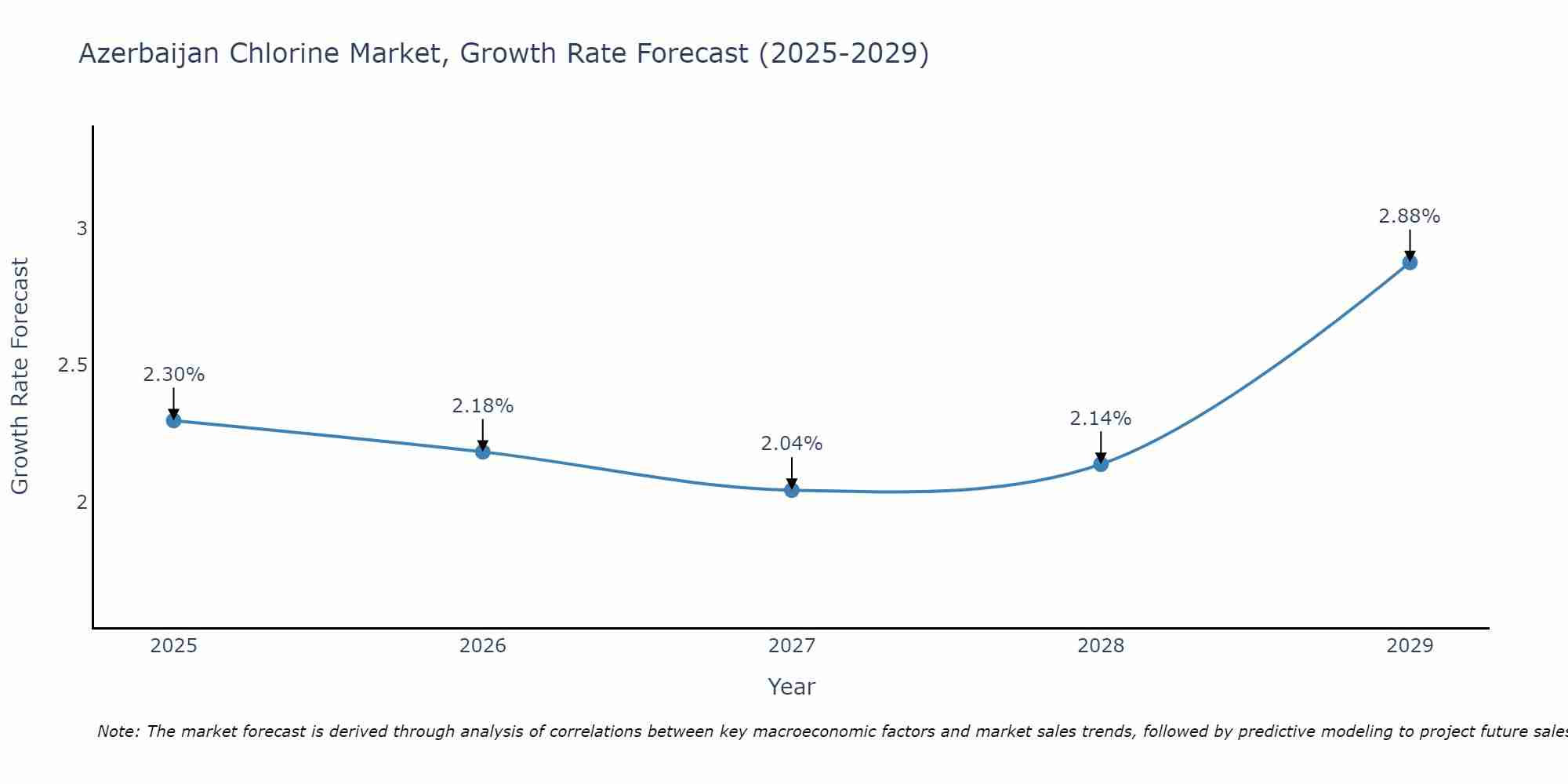
The Azerbaijan Chlorine Market is projected to witness mixed growth rate patterns during 2025 to 2029. From 2.30% in 2025, the growth rate steadily ascends to 2.88% in 2029.
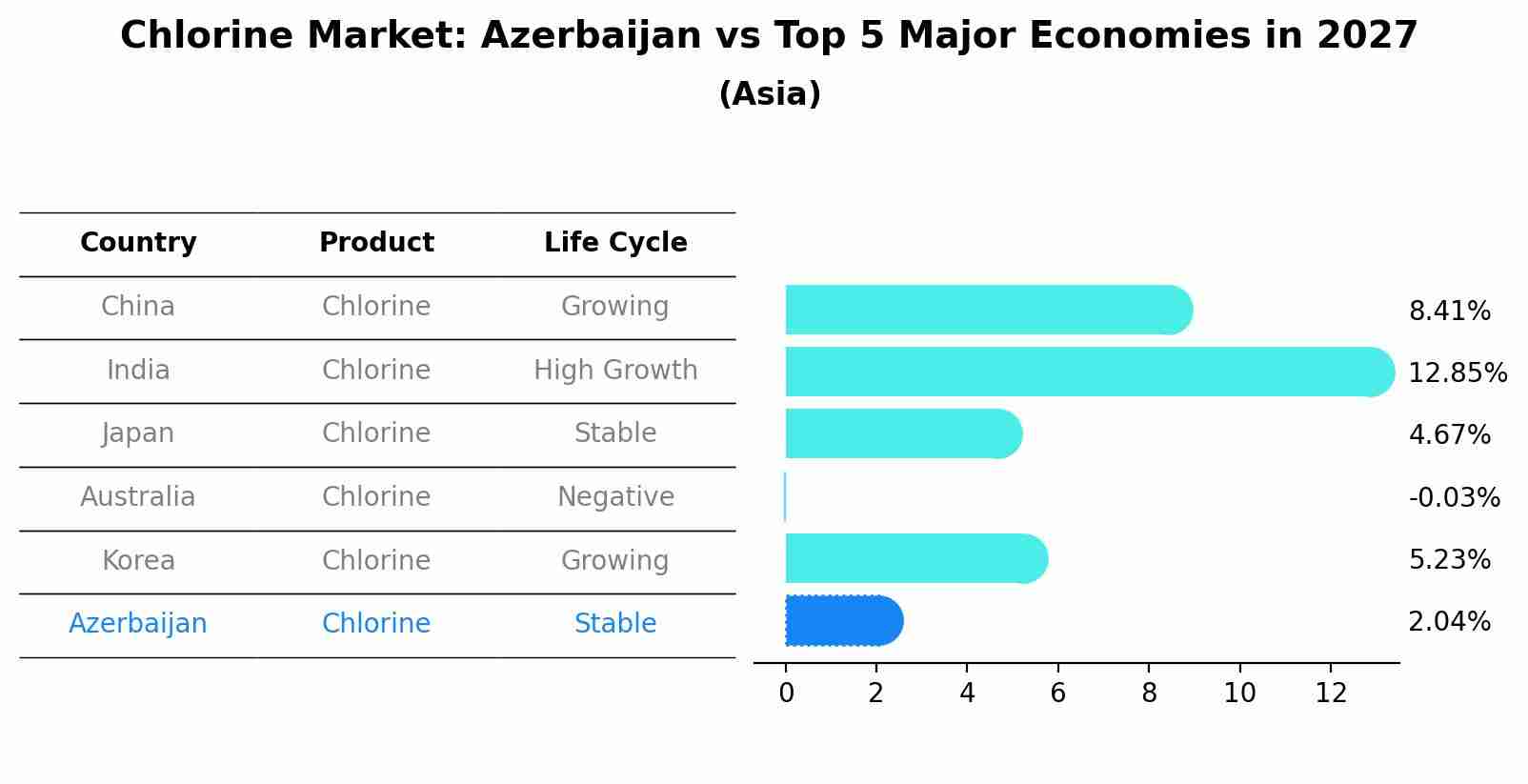
Chlorine Market: Azerbaijan vs Top 5 Major Economies in 2027 (Asia)
By 2027, Azerbaijan's Chlorine market is forecasted to achieve a stable growth rate of 2.04%, with China leading the Asia region, followed by India, Japan, Australia and South Korea.
Azerbaijan Chlorine Market Synopsis
The Chlorine market in Azerbaijan is experiencing growth due to the increasing demand for chlorine in various industrial applications such as water treatment, disinfection, chemicals manufacturing, and plastics production. Chlorine, a versatile chemical with strong oxidizing properties, is used in numerous processes, including water purification, sanitation, and bleaching. With industries focusing on water quality, hygiene, and product quality, the demand for chlorine is expected to rise. Challenges such as safety regulations, environmental concerns, and market volatility may impact market dynamics. However, investments in production technologies, process optimization, and sustainable practices could drive market growth and competitiveness.
Drivers of the market
The chlorine market in Azerbaijan is driven by factors such as chemical manufacturing, water treatment, and sanitation applications. Chlorine is a versatile chemical used for disinfection, bleaching, and manufacturing of various products. Factors such as population growth, urbanization, and industrialization contribute to the demand for chlorine in Azerbaijan.
Challenges of the market
The Azerbaijan chlorine market faces several challenges despite being a fundamental chemical with diverse applications in water treatment, chemicals manufacturing, and pharmaceuticals. One significant challenge is the environmental and safety concerns associated with chlorine production, storage, and usage, including the risk of accidental releases and exposure to chlorine gas. Regulatory compliance with safety and environmental standards adds complexity to chlorine manufacturing and handling processes, requiring investments in risk mitigation measures and emergency response capabilities. Additionally, fluctuations in chlorine demand and production volumes, as well as competition from alternative disinfection and water treatment technologies, impact market dynamics and pricing strategies for chlorine suppliers. Moreover, technological advancements in chlorine production and usage drive the demand for innovative and sustainable chlorine solutions. Addressing these challenges demands a strategic approach, including investment in safety protocols, environmental stewardship, and market diversification to ensure sustainable and responsible chlorine production and usage.
Government Policy of the market
In Azerbaijan, the government likely implements policies to regulate and support the chlorine market, ensuring product quality, safety, and environmental sustainability. These policies may include standards for chlorine production processes, product specifications, and safety protocols to meet industry requirements and regulatory standards. Additionally, regulations may address waste management, emissions control, and environmental protection measures to minimize the environmental impact of chlorine production and use. The government may also provide incentives for research and development in chlorine technology and innovation. Furthermore, initiatives may focus on promoting industry collaboration, capacity-building, and technology transfer to strengthen the domestic chlorine manufacturing sector. The government`s objective is likely to promote the growth of a sustainable and resilient chlorine market while safeguarding public health and environmental well-being.
Key Highlights of the Report:
- Azerbaijan Chlorine Market Outlook
- Market Size of Azerbaijan Chlorine Market, 2024
- Forecast of Azerbaijan Chlorine Market, 2031
- Historical Data and Forecast of Azerbaijan Chlorine Revenues & Volume for the Period 2021-2031
- Azerbaijan Chlorine Market Trend Evolution
- Azerbaijan Chlorine Market Drivers and Challenges
- Azerbaijan Chlorine Price Trends
- Azerbaijan Chlorine Porter's Five Forces
- Azerbaijan Chlorine Industry Life Cycle
- Historical Data and Forecast of Azerbaijan Chlorine Market Revenues & Volume By Application for the Period 2021-2031
- Historical Data and Forecast of Azerbaijan Chlorine Market Revenues & Volume By EDC/PVC for the Period 2021-2031
- Historical Data and Forecast of Azerbaijan Chlorine Market Revenues & Volume By Isocyanates and Oxygenates for the Period 2021-2031
- Historical Data and Forecast of Azerbaijan Chlorine Market Revenues & Volume By Chloromethanes for the Period 2021-2031
- Historical Data and Forecast of Azerbaijan Chlorine Market Revenues & Volume By Solvents and Epichlorohydrin for the Period 2021-2031
- Historical Data and Forecast of Azerbaijan Chlorine Market Revenues & Volume By Inorganic Chemicals for the Period 2021-2031
- Historical Data and Forecast of Azerbaijan Chlorine Market Revenues & Volume By Other Applications for the Period 2021-2031
- Historical Data and Forecast of Azerbaijan Chlorine Market Revenues & Volume By End-user Industry for the Period 2021-2031
- Historical Data and Forecast of Azerbaijan Chlorine Market Revenues & Volume By Water Treatment for the Period 2021-2031
- Historical Data and Forecast of Azerbaijan Chlorine Market Revenues & Volume By Pharmaceutical for the Period 2021-2031
- Historical Data and Forecast of Azerbaijan Chlorine Market Revenues & Volume By Chemicals for the Period 2021-2031
- Historical Data and Forecast of Azerbaijan Chlorine Market Revenues & Volume By Paper and Pulp for the Period 2021-2031
- Historical Data and Forecast of Azerbaijan Chlorine Market Revenues & Volume By Plastic for the Period 2021-2031
- Historical Data and Forecast of Azerbaijan Chlorine Market Revenues & Volume By Pesticides for the Period 2021-2031
- Historical Data and Forecast of Azerbaijan Chlorine Market Revenues & Volume By Other End-user Industries for the Period 2021-2031
- Azerbaijan Chlorine Import Export Trade Statistics
- Market Opportunity Assessment By Application
- Market Opportunity Assessment By End-user Industry
- Azerbaijan Chlorine Top Companies Market Share
- Azerbaijan Chlorine Competitive Benchmarking By Technical and Operational Parameters
- Azerbaijan Chlorine Company Profiles
- Azerbaijan Chlorine Key Strategic Recommendations






































