Azerbaijan Cloud VPN Market Size & Growth Rate (2026-2032)
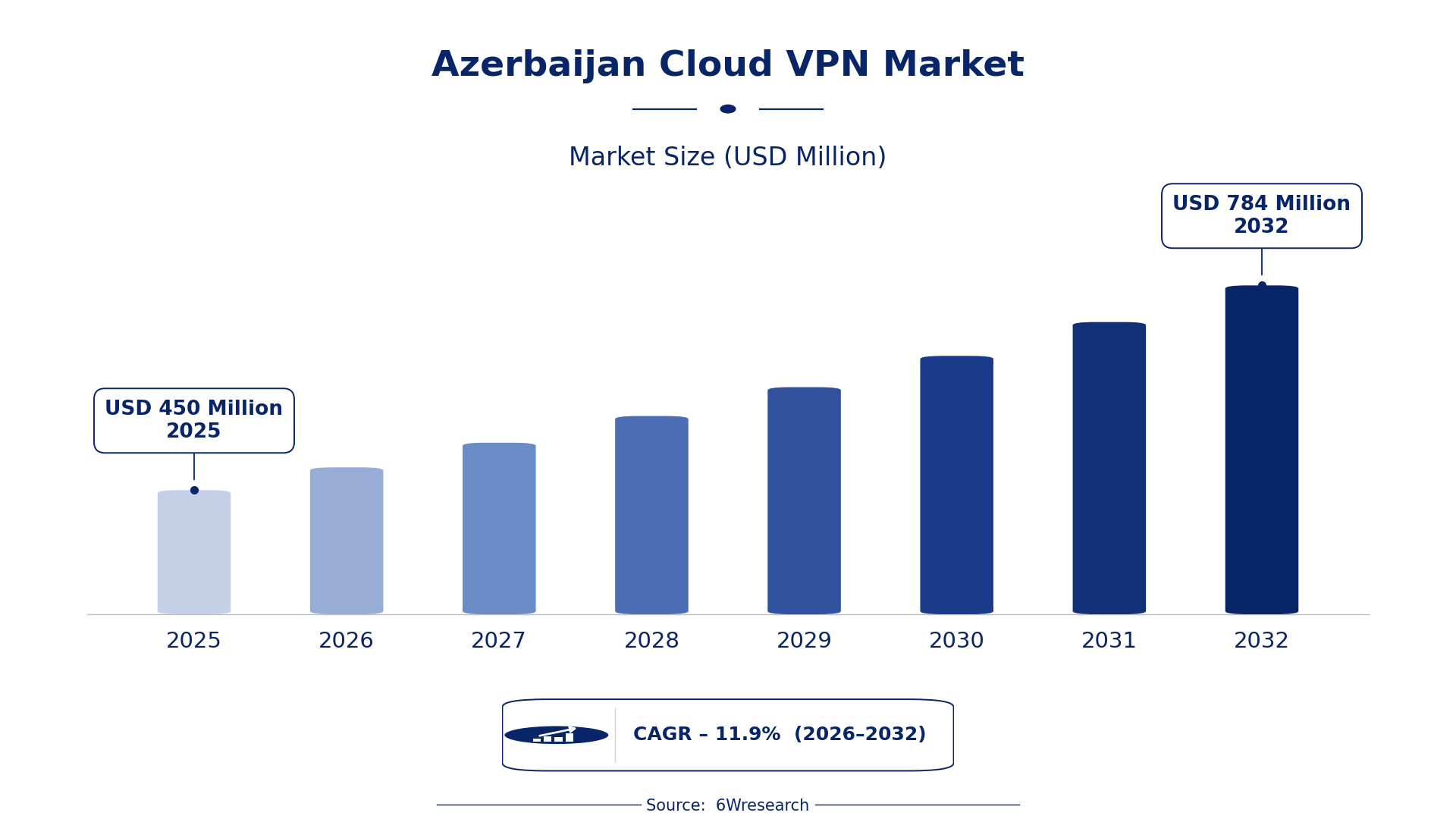
The Azerbaijan Cloud VPN Market was estimated at USD 450 Million in 2025 and is projected to reach USD 784 Million by 2032, growing at a CAGR of 11.9% from 2026 to 2032.
Azerbaijan Cloud VPN Market Synopsis
With the rising number of remote employees in Azerbaijan, the demand for secure and efficient access to corporate resources is intensifying. Cloud VPN solutions stand out as essential tools, facilitating encrypted connections for businesses navigating the complexities of a distributed workforce.
As organizations pivot to hybrid work models, concerns regarding data security and regulatory compliance are driving the uptake of cloud VPN services. The flexibility and management capabilities offered by these solutions are crucial in an environment where seamless connectivity is non-negotiable for maintaining productivity.
Azerbaijan Cloud VPN Market Year-wise Growth Rate and Key Drivers
This graph illustrates the annual growth rates of the Azerbaijan Cloud VPN Market from 2021 to 2032, highlighting a steady upward trajectory and projected expansion over the forecast period.
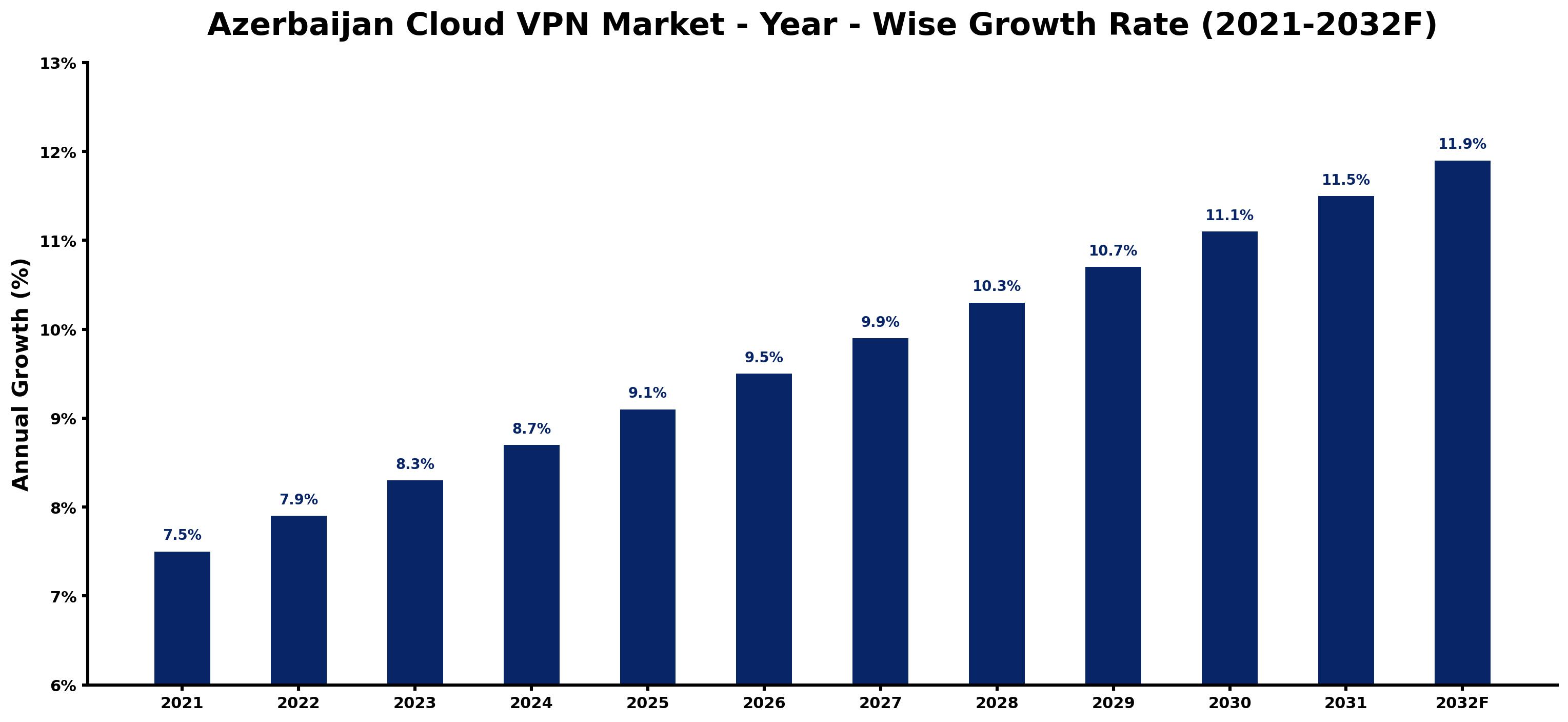
The table below presents the year‑wise growth rates along with the key drivers influencing the market
| Year | Growth Rate | Major Drivers |
| 2021 | 7.5% | Increased remote work policies post-pandemic. |
| 2022 | 7.9% | Government cybersecurity initiatives enhancing digital infrastructure. |
| 2023 | 8.3% | Rising internet penetration among rural populations. |
| 2024 | 8.7% | Adoption of cloud services by local businesses growing. |
| 2025 | 9.1% | Regulatory support for data privacy compliance advancements. |
| 2026 | 9.5% | Local tech startups driving VPN service innovations. |
| 2027 | 9.9% | Increased cross-border trade boosting cybersecurity needs. |
| 2028 | 10.3% | Rising online gaming popularity requiring enhanced privacy solutions. |
| 2029 | 10.7% | Adoption of blockchain technology elevating secure transactions. |
| 2030 | 11.1% | Heightened focus on Internet of Things security requirements. |
| 2031 | 11.5% | Azerbaijan's Digital Transformation Strategy fostering cloud services. |
| 2032 | 11.9% | Growing awareness of online privacy among consumers. |
Note: Market size estimations and growth projections presented in this report are based on 6Wresearch's proprietary forecasting methodology, utilizing the latest available industry data, government publications, and primary research inputs.
Azerbaijan Cloud VPN Market Key Takeaways
Below are some of the specific key takeaways from the market, including:
- Increasing adoption of remote work is propelling cloud VPN service demand across various sectors.
- A growing awareness of cybersecurity threats is pushing organizations to enhance their digital security frameworks.
- Cloud VPN services offer scalability and flexibility, positioning them as a preferred choice over traditional VPN solutions.
- Regulatory compliance, particularly concerning data privacy, is becoming a critical factor in the decision-making process for VPN adoption.
- Integration challenges with existing IT infrastructures remain a consideration for enterprises transitioning to cloud solutions.
Evaluation of Restraints in Azerbaijan Cloud VPN Market
Despite the evident demand for cloud VPNs, several constraints hinder market expansion in Azerbaijan. A prevailing issue is the limited understanding of cloud VPN technology among businesses, leading many to stick with traditional VPN methods. This lack of awareness is further exacerbated by apprehensions surrounding data privacy and compliance with evolving regulations like GDPR. The focus on cybersecurity is intensifying, yet the need for comprehensive education on cloud VPN benefits is crucial for overcoming these barriers. Furthermore, the competitive nature of pricing strategies complicates the decision-making process for organizations seeking reliable and cost-effective VPN solutions.
Azerbaijan Cloud VPN Market Trends
Several trends are beginning to shape the Azerbaijan Cloud VPN Market. Increased emphasis on mobile workforce strategies has led to greater investment in cloud-based security solutions. As companies prioritize data protection, cloud VPNs that offer strong encryption protocols and secure connections are becoming a standard requirement. The integration of artificial intelligence and machine learning within cloud VPN services is also emerging, promising enhanced performance and automated threat detection capabilities. Finally, partnerships between technology providers and service companies are expected to catalyze innovation and service delivery improvements.
Azerbaijan Cloud VPN Market Opportunities
The landscape for growth in the Azerbaijan Cloud VPN Market is ripe with opportunities. One of the most promising areas is the increasing need for secure remote access as businesses transition to hybrid work environments. The potential for cloud VPNs to serve various sectors—including finance, healthcare, and education—opens doors for tailored solutions addressing specific industry needs. Furthermore, investment in education around cybersecurity and VPN technologies can facilitate broader adoption. The market is also likely to benefit from collaborative initiatives between public and private sectors aimed at enhancing digital infrastructure.
Government Initiatives in the Azerbaijan Cloud VPN Market
Government policy is crucial in fostering a conducive environment for the growth of the cloud VPN market in Azerbaijan. Recent efforts focus on establishing a regulatory framework that promotes cybersecurity resilience and protects user data privacy. By actively supporting the adoption of VPN technologies, authorities are working to build public trust and encourage investment in secure internet communications.
- A national cybersecurity initiative launched in early 2023 aims to improve the overall security posture of businesses using cloud services.
- A regulatory framework introduced in mid-2024 mandates compliance with international data protection standards for VPN providers.
- A planned public-private partnership expected to enhance digital infrastructure accessibility is projected for 2026.
- A recently completed assessment of current internet policies seeks to identify areas for improvement in VPN regulation and support.
- An ongoing project initiated in late 2024 focuses on raising awareness about the advantages of cloud VPNs among small and medium enterprises.
Future Insights of the Azerbaijan Cloud VPN Market
Looking ahead to 2026-2032, the Azerbaijan Cloud VPN Market is set to experience robust growth, driven by the continued expansion of remote work and an increasing focus on cybersecurity. As businesses recognize the importance of secure access to cloud resources, the appetite for sophisticated VPN solutions will intensify. Vendors will need to stay ahead of the curve by innovating in encryption technologies and improving user experience. In addition, regulatory advancements and government support will further solidify the market’s foundation, encouraging investment and the development of new services.
Azerbaijan Cloud VPN Market Latest Developments
In the past year, the Azerbaijan Cloud VPN Market has seen notable developments that reflect its dynamic nature. The trend toward enhanced security measures has led organizations to adopt newer cloud VPN solutions, while government policies have started to align more closely with global standards. These changes suggest a more structured approach to both private and public sector involvement in the market.
- A major technology vendor initiated the rollout of a next-gen cloud VPN service in Q3 2025, highlighting improved speed and security features.
- In early 2025, a leading regional operator completed the upgrade of its cloud infrastructure, aimed at providing enhanced VPN services to businesses across Azerbaijan.
- A new collaborative project between tech firms and cybersecurity experts is currently underway, focusing on developing standardized best practices for cloud VPN security.
- A planned service upgrade is expected to introduce advanced encryption protocols by mid-2026, enhancing data protection for users.
- An ongoing awareness campaign targeting SMEs launched in early 2025 aims to educate businesses about the benefits of adopting cloud VPN solutions.
Azerbaijan Cloud VPN Market - Key Attractiveness of the Report
- 10 Years of Market Numbers
- Historical Data Starting from 2022 to 2025
- Base Year: 2025
- Forecast Data until 2032
- Key Performance Indicators Impacting the Market
- Major Upcoming Developments and Projects
Key Highlights of the Report:
- Azerbaijan Cloud VPN Market Outlook
- Market Size of Azerbaijan Cloud VPN Market, 2025
- Forecast of Azerbaijan Cloud VPN Market, 2032
- Historical Data and Forecast of Azerbaijan Cloud VPN Revenues & Volume for the Period 2022-2032F
- Azerbaijan Cloud VPN Market Trend Evolution
- Azerbaijan Cloud VPN Market Drivers and Challenges
- Azerbaijan Cloud VPN Price Trends
- Azerbaijan Cloud VPN Porter's Five Forces
- Azerbaijan Cloud VPN Industry Life Cycle
- Historical Data and Forecast of Azerbaijan Cloud VPN Market Revenues & Volume By Component for the Period 2022-2032F
- Historical Data and Forecast of Azerbaijan Cloud VPN Market Revenues & Volume By Software for the Period 2022-2032F
- Historical Data and Forecast of Azerbaijan Cloud VPN Market Revenues & Volume By Services for the Period 2022-2032F
- Historical Data and Forecast of Azerbaijan Cloud VPN Market Revenues & Volume By Connectivity Type for the Period 2022-2032F
- Historical Data and Forecast of Azerbaijan Cloud VPN Market Revenues & Volume By Site-to-Site for the Period 2022-2032F
- Historical Data and Forecast of Azerbaijan Cloud VPN Market Revenues & Volume By Remote Access for the Period 2022-2032F
- Historical Data and Forecast of Azerbaijan Cloud VPN Market Revenues & Volume By Organization Size for the Period 2022-2032F
- Historical Data and Forecast of Azerbaijan Cloud VPN Market Revenues & Volume By Large Enterprises for the Period 2022-2032F
- Historical Data and Forecast of Azerbaijan Cloud VPN Market Revenues & Volume By SMEs for the Period 2022-2032F
- Historical Data and Forecast of Azerbaijan Cloud VPN Market Revenues & Volume By End User for the Period 2022-2032F
- Historical Data and Forecast of Azerbaijan Cloud VPN Market Revenues & Volume By Service Providers for the Period 2022-2032F
- Historical Data and Forecast of Azerbaijan Cloud VPN Market Revenues & Volume By Verticals for the Period 2022-2032F
- Azerbaijan Cloud VPN Import Export Trade Statistics
- Market Opportunity Assessment By Component
- Market Opportunity Assessment By Connectivity Type
- Market Opportunity Assessment By Organization Size
- Market Opportunity Assessment By End User
- Azerbaijan Cloud VPN Top Companies Market Share
- Azerbaijan Cloud VPN Competitive Benchmarking By Technical and Operational Parameters
- Azerbaijan Cloud VPN Company Profiles
- Azerbaijan Cloud VPN Key Strategic Recommendations






































