Azerbaijan Decentralized Identity Market Size & Growth Rate (2026-2032)
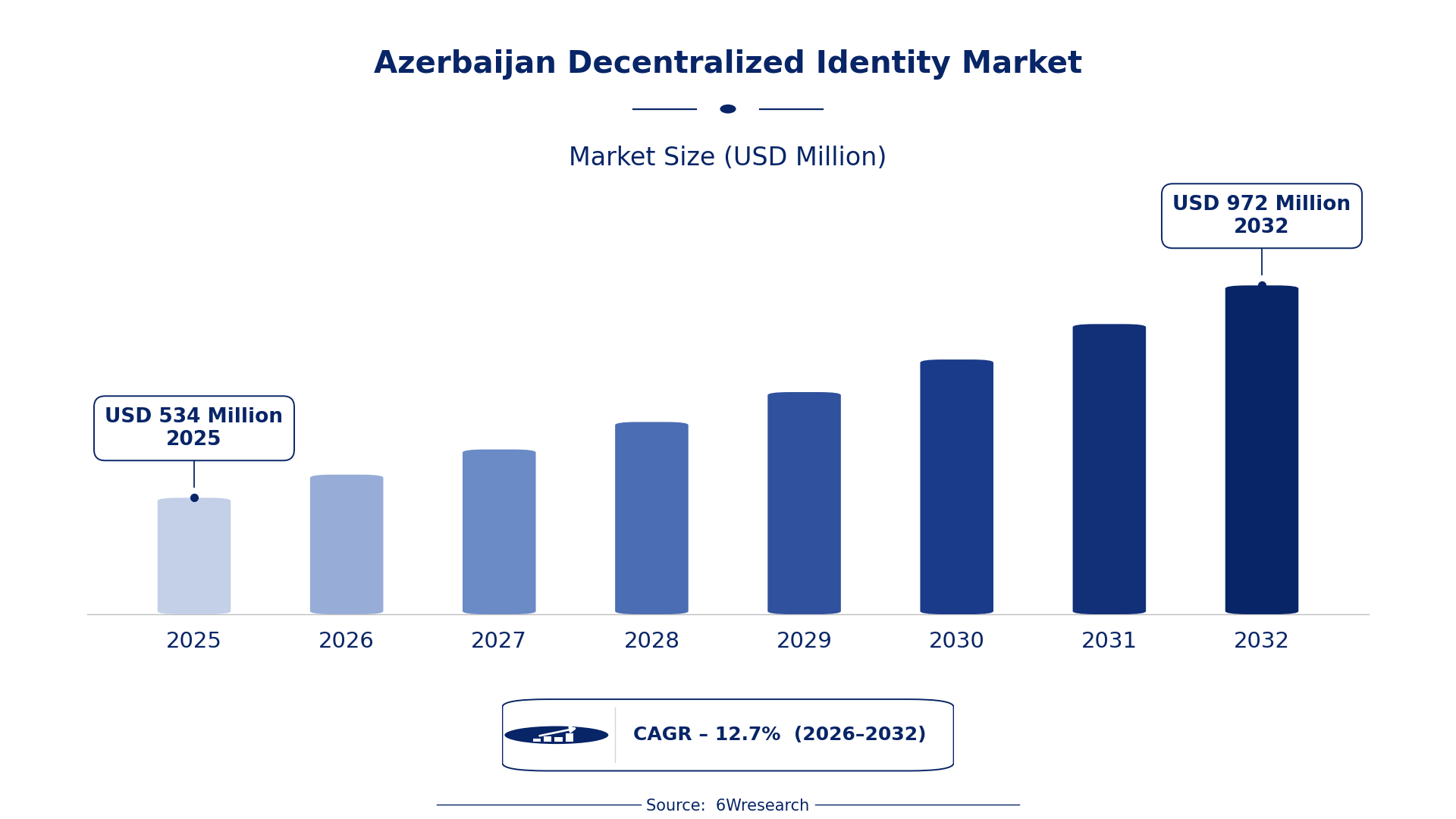
The Azerbaijan Decentralized Identity Market was estimated at USD 534 Million in 2025 and is projected to reach USD 972 Million by 2032, growing at a CAGR of 12.7% from 2026 to 2032.
Azerbaijan Decentralized Identity Market Synopsis
The primary force propelling the Azerbaijan Decentralized Identity Market is the urgent need for enhanced data privacy and security solutions. With increasing incidents of data breaches and identity theft, individuals and organizations are increasingly seeking systems that allow for greater control over personal information.
Decentralized identity solutions offer a compelling alternative to traditional centralized systems, enabling users to manage their identities securely and privately. This shift not only empowers users but also addresses the pressing concerns regarding data integrity and verification in a digitized economy.
Azerbaijan Decentralized Identity Market Year-wise Growth Rate and Key Drivers
This graph illustrates the annual growth rates of the Azerbaijan Decentralized Identity Market from 2021 to 2032, highlighting a steady upward trajectory and projected expansion over the forecast period.
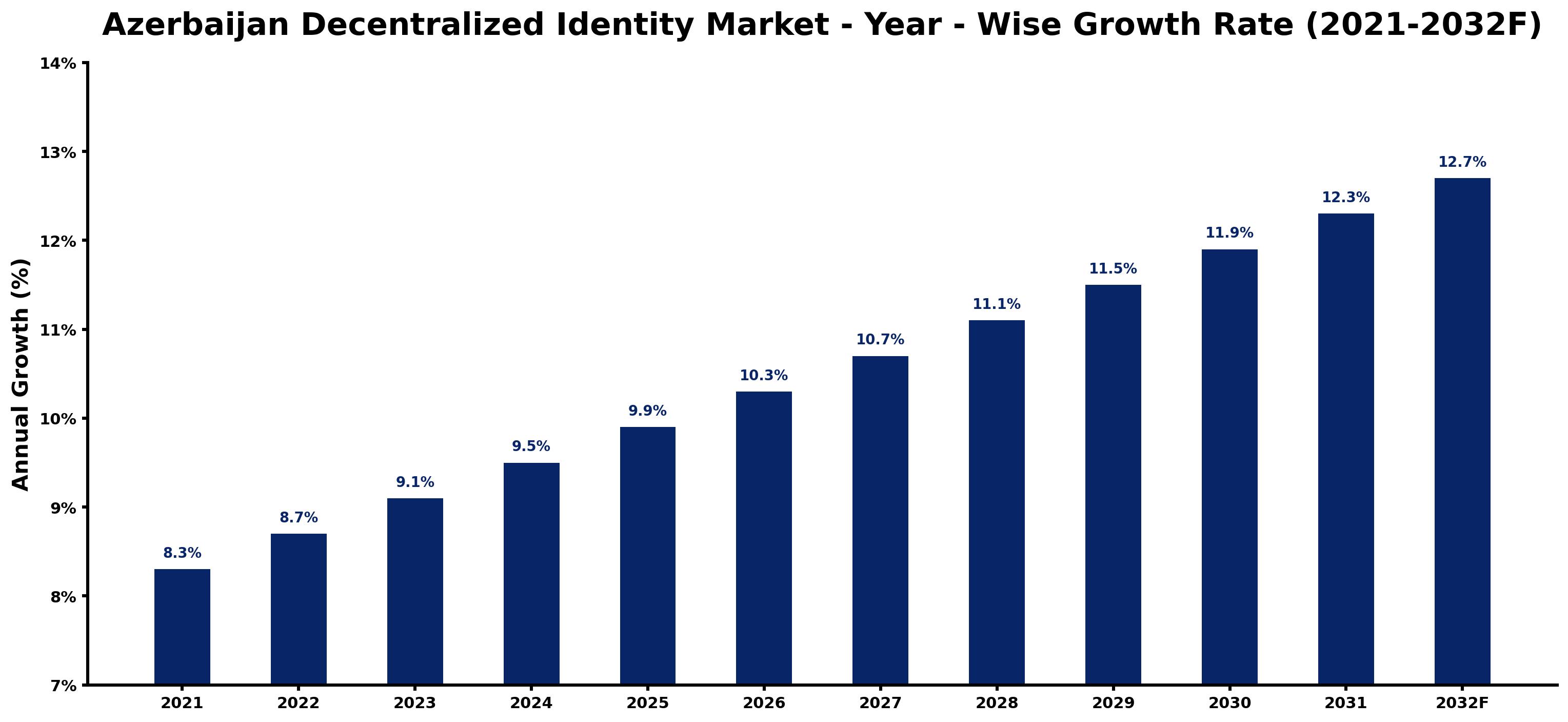
The table below presents the year‑wise growth rates along with the key drivers influencing the market
| Year | Growth Rate | Major Drivers |
| 2021 | 8.3% | Azerbaijan's digital transformation strategy boosts identity solutions. |
| 2022 | 8.7% | Government partnership with tech firms enhances decentralized identity. |
| 2023 | 9.1% | Increased e-government services drive demand for digital identities. |
| 2024 | 9.5% | Cybersecurity regulations promote adoption of decentralized identity frameworks. |
| 2025 | 9.9% | Youth tech-savvy population accelerates decentralized identity usage. |
| 2026 | 10.3% | Local startups innovate decentralized identity technologies for consumers. |
| 2027 | 10.7% | International investment in tech firms strengthens identity infrastructure. |
| 2028 | 11.1% | Digital ID initiatives align with EU digital single market goals. |
| 2029 | 11.5% | Adoption of biometric systems supports decentralized identity growth. |
| 2030 | 11.9% | Public awareness campaigns highlight benefits of digital identities. |
| 2031 | 12.3% | Legislative reforms prioritize digital identity for secure transactions. |
| 2032 | 12.7% | Increased focus on privacy protection fuels identity technology expansion. |
Note: Market size estimations and growth projections presented in this report are based on 6Wresearch's proprietary forecasting methodology, utilizing the latest available industry data, government publications, and primary research inputs.
Azerbaijan Decentralized Identity Market Key Takeaways
Below are some of the specific key takeaways from the market, including:
- The demand for self-sovereign identity solutions is on the rise, reflecting growing consumer expectations for privacy.
- Blockchain technology is a critical enabler of decentralized identity, driving innovation and trust in digital transactions.
- Regulatory frameworks are evolving to support decentralized identity systems, enhancing compliance and user confidence.
- Businesses are increasingly recognizing the value of decentralized identity in securing customer data and preventing fraud.
- Collaboration among stakeholders is essential to establish interoperability and trust in decentralized identity solutions.
Evaluation of Restraints in Azerbaijan Decentralized Identity Market
The Azerbaijan Decentralized Identity Market faces notable restraints that could hinder its growth trajectory. Key among these are the interoperability challenges between various decentralized platforms and protocols. Organizations are grappling with the integration of these systems into existing frameworks, which can complicate implementation efforts. Furthermore, privacy concerns regarding the handling and sharing of personal identity information persist, complicating trust-building initiatives. Lastly, compliance with evolving data protection regulations, including GDPR and CCPA, continues to challenge organizations as they strive to innovate while adhering to legal standards.
Azerbaijan Decentralized Identity Market Trends
Several trends are currently shaping the Azerbaijan Decentralized Identity Market. The shift towards self-sovereign identities is gaining momentum as users demand more control over their personal data. There’s also a growing emphasis on blockchain adoption across various sectors, facilitating secure and transparent identity management. Organizations are increasingly prioritizing privacy-centric solutions, reflecting heightened public awareness of data protection issues. Finally, investment in technological infrastructure is expected to expand, allowing for more widespread deployment of decentralized identity solutions.
Azerbaijan Decentralized Identity Market Opportunities
A wealth of opportunities exists for investment in the Azerbaijan Decentralized Identity Market. Organizations can tap into the demand for secure identity verification solutions as digital services proliferate across sectors. There’s significant potential for developing tailored applications that cater to specific industries, such as finance and healthcare, where identity verification is critical. Collaborations with government entities can lead to the creation of standardized frameworks that enhance trust and interoperability. As regulations evolve, market players can position themselves as leaders in compliance-focused identity solutions.
Government Initiatives in the Azerbaijan Decentralized Identity Market
Government policy is playing a transformative role in shaping the Azerbaijan Decentralized Identity Market. Regulations are emerging to promote secure digital identity solutions that enhance user control over personal data. These policies not only focus on protecting privacy rights but also aim to foster an environment conducive to innovation and cybersecurity in digital identity systems.
- A regulatory framework introduced in 2025 mandates standards for identity verification, fostering trust in decentralized identity technologies.
- A national digital infrastructure upgrade program is currently underway, aimed at integrating decentralized identity solutions into public services.
- Ongoing discussions are focused on developing interoperability standards to facilitate seamless integration between different decentralized identity platforms.
- A planned public-private initiative is expected to launch in 2028, aimed at enhancing digital literacy and trust in decentralized identity solutions across various sectors.
Future Insights of the Azerbaijan Decentralized Identity Market
Looking ahead, the Azerbaijan Decentralized Identity Market is expected to undergo significant transformations driven by technological advancements and regulatory support. By 2032, the market will likely see a maturation of decentralized identity solutions as organizations refine their offerings to meet user needs. Enhanced collaboration between public and private sectors will foster an ecosystem of innovation, promoting a broader acceptance of decentralized identity technologies across various sectors. This evolution will not only address current privacy concerns but also pave the way for new business models based on trusted identity verification.
Azerbaijan Decentralized Identity Market Latest Developments
Recent activity in the Azerbaijan Decentralized Identity Market indicates a growing interest in innovative identity management solutions. Stakeholders are increasingly focused on deploying technologies that enhance privacy and security in identity verification processes.
- A major technology vendor launched a decentralized identity platform in early 2025, aimed at serving the financial services sector and enhancing transaction security.
- A collaborative initiative between government agencies and tech firms began in mid-2025 and remains underway, focusing on developing best practices for decentralized identity adoption.
- A new project scheduled for late 2026 aims to establish a national identity registry utilizing decentralized technology to improve public service access.
- By mid-2026, a public awareness campaign is expected to kick off, promoting the benefits of decentralized identities among consumers and businesses alike.
Azerbaijan Decentralized Identity Market - Key Attractiveness of the Report
- 10 Years of Market Numbers
- Historical Data Starting from 2022 to 2025
- Base Year: 2025
- Forecast Data until 2032
- Key Performance Indicators Impacting the Market
- Major Upcoming Developments and Projects
Key Highlights of the Report:
- Azerbaijan Decentralized Identity Market Outlook
- Market Size of Azerbaijan Decentralized Identity Market, 2025
- Forecast of Azerbaijan Decentralized Identity Market, 2032
- Historical Data and Forecast of Azerbaijan Decentralized Identity Revenues & Volume for the Period 2022-2032F
- Azerbaijan Decentralized Identity Market Trend Evolution
- Azerbaijan Decentralized Identity Market Drivers and Challenges
- Azerbaijan Decentralized Identity Price Trends
- Azerbaijan Decentralized Identity Porter's Five Forces
- Azerbaijan Decentralized Identity Industry Life Cycle
- Historical Data and Forecast of Azerbaijan Decentralized Identity Market Revenues & Volume By Vertical for the Period 2022-2032F
- Historical Data and Forecast of Azerbaijan Decentralized Identity Market Revenues & Volume By BFSI for the Period 2022-2032F
- Historical Data and Forecast of Azerbaijan Decentralized Identity Market Revenues & Volume By Government for the Period 2022-2032F
- Historical Data and Forecast of Azerbaijan Decentralized Identity Market Revenues & Volume By Healthcare and Life Sciences for the Period 2022-2032F
- Historical Data and Forecast of Azerbaijan Decentralized Identity Market Revenues & Volume By Retail and eCommerce for the Period 2022-2032F
- Historical Data and Forecast of Azerbaijan Decentralized Identity Market Revenues & Volume By Telecom and IT for the Period 2022-2032F
- Historical Data and Forecast of Azerbaijan Decentralized Identity Market Revenues & Volume By Transport and Logistics for the Period 2022-2032F
- Historical Data and Forecast of Azerbaijan Decentralized Identity Market Revenues & Volume By Real Estate for the Period 2022-2032F
- Historical Data and Forecast of Azerbaijan BFSI Decentralized Identity Market Revenues & Volume By Others for the Period 2022-2032F
- Historical Data and Forecast of Azerbaijan Decentralized Identity Market Revenues & Volume By Identity Type for the Period 2022-2032F
- Historical Data and Forecast of Azerbaijan Decentralized Identity Market Revenues & Volume By Non- biometrics for the Period 2022-2032F
- Historical Data and Forecast of Azerbaijan Decentralized Identity Market Revenues & Volume By Biometrics for the Period 2022-2032F
- Historical Data and Forecast of Azerbaijan Decentralized Identity Market Revenues & Volume By End User for the Period 2022-2032F
- Historical Data and Forecast of Azerbaijan Decentralized Identity Market Revenues & Volume By Enterprises for the Period 2022-2032F
- Historical Data and Forecast of Azerbaijan Decentralized Identity Market Revenues & Volume By Individual for the Period 2022-2032F
- Historical Data and Forecast of Azerbaijan Decentralized Identity Market Revenues & Volume By Organization Size for the Period 2022-2032F
- Historical Data and Forecast of Azerbaijan Decentralized Identity Market Revenues & Volume By Large Enterprises for the Period 2022-2032F
- Historical Data and Forecast of Azerbaijan Decentralized Identity Market Revenues & Volume By SMEs for the Period 2022-2032F
- Azerbaijan Decentralized Identity Import Export Trade Statistics
- Market Opportunity Assessment By Vertical
- Market Opportunity Assessment By Identity Type
- Market Opportunity Assessment By End User
- Market Opportunity Assessment By Organization Size
- Azerbaijan Decentralized Identity Top Companies Market Share
- Azerbaijan Decentralized Identity Competitive Benchmarking By Technical and Operational Parameters
- Azerbaijan Decentralized Identity Company Profiles
- Azerbaijan Decentralized Identity Key Strategic Recommendations






































