Azerbaijan Frozen Fish Market Size, Share & Growth Rate
The Azerbaijan Frozen Fish Market was estimated at USD 500 Million in 2025 and is projected to reach USD 861 Million by 2032, growing at a CAGR of 8.1% from 2026 to 2032. This growth trajectory is fueled by a rising consumer preference for convenience and healthy food options, alongside an expanding portfolio of frozen fish products available in supermarkets and online. Moreover, the increasing awareness of the benefits of frozen fish, including longer shelf life and year-round availability, further supports the market's favorable outlook.
Azerbaijan Frozen Fish Market Year-wise Growth Rate and Key Drivers
This graph highlights how the Azerbaijan Frozen Fish Market has steadily grown over the years, supported by major growth factors.
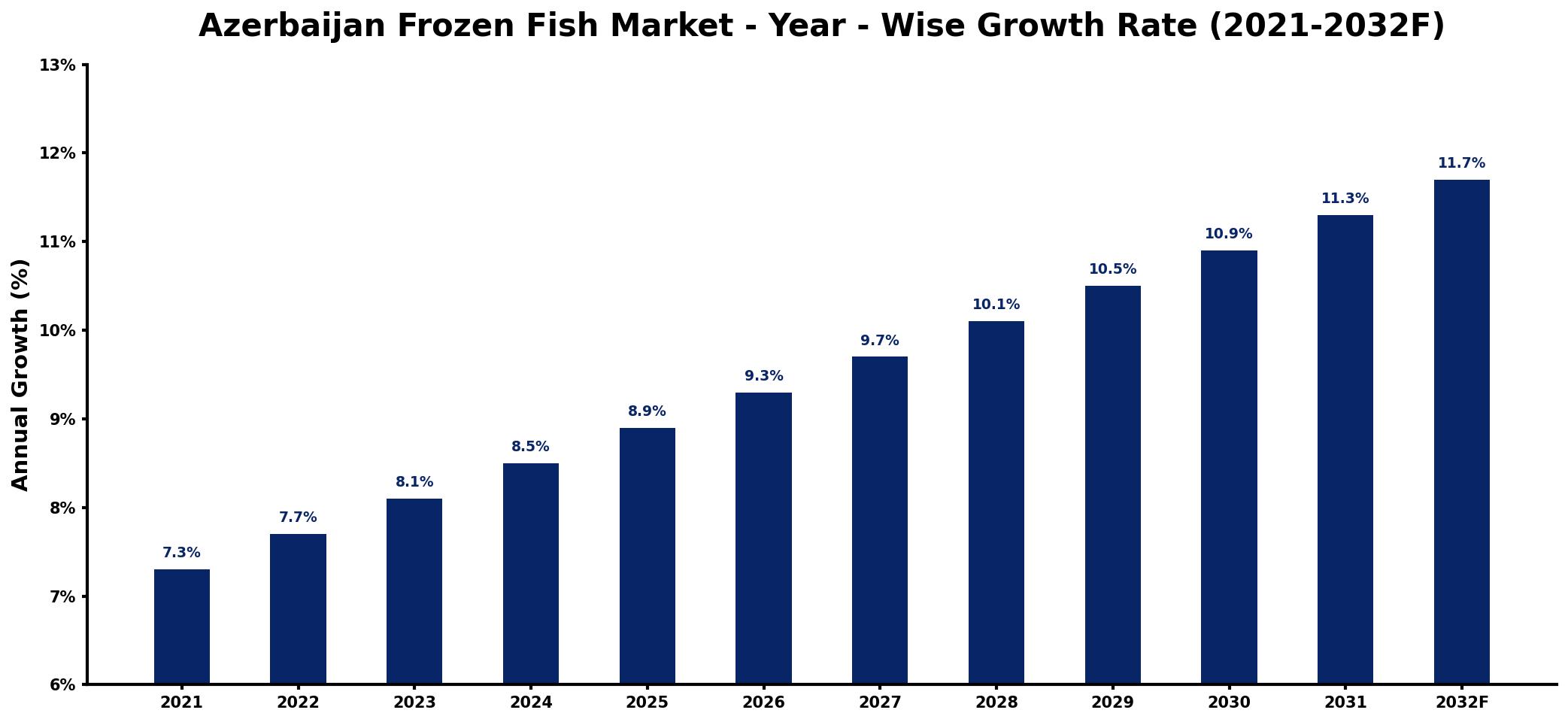
The table below presents the year‑wise growth rates along with the key drivers influencing the market
| Year | Growth Rate | Major Drivers |
| 2021 | 7.3% | Rising consumer health consciousness |
| 2022 | 7.7% | Increased retail distribution channels |
| 2023 | 8.1% | Growing online shopping trends |
| 2024 | 8.5% | Expansion of cold chain logistics |
| 2025 | 8.9% | Higher disposable income levels |
| 2026 | 9.3% | Innovations in packaging technology |
| 2027 | 9.7% | Increased tourism and dining options |
| 2028 | 10.1% | increased capital investment inflows |
| 2029 | 10.5% | Emerging culinary trends worldwide |
| 2030 | 10.9% | Sustainability initiatives gaining traction |
| 2031 | 11.3% | Strengthened export market opportunities |
| 2032 | 11.7% | Rising demand for convenience foods |
Note: Market size estimations and growth projections presented in this report are based on 6Wresearch's proprietary forecasting methodology, utilizing the latest available industry data, government publications, and primary research inputs.
Azerbaijan Frozen Fish Market Synopsis
Azerbaijan's frozen fish market is witnessing notable expansion as consumer habits shift towards more convenient food solutions. The diverse assortment of frozen fish products, ranging from whole fish to fillets and seafood mixes, caters to the growing demand for easy-to-prepare meals. Both domestic suppliers and international brands are becoming pivotal in fulfilling this rising demand.
The market is not only defined by its variety but also by the increasing quality expectations set by consumers. As health-conscious dining becomes more prevalent, the focus on product quality and packaging innovations is intensifying. This burgeoning sector presents ample opportunities for growth among industry players, who are actively seeking to expand their presence.
Azerbaijan Frozen Fish Market Key Takeaways
- Consumer demand for convenient seafood is steadily increasing, driving market growth.
- The product range includes whole fish, fillets, and seafood mixes from both local and international sources.
- Manufacturers are prioritizing sustainability and quality, leading to enhanced consumer trust and preference.
- Innovations in product offerings, such as ready-to-cook meals, are gaining traction.
- Investment in cold chain logistics is crucial for maintaining product integrity and market competitiveness.
Evaluation of Restraints in Azerbaijan Frozen Fish Market
Despite the promising growth, the Azerbaijan frozen fish market faces significant restraints. One of the primary limitations is the inadequacy of the cold chain infrastructure, which hampers the effective distribution and storage of frozen products. As a result, maintaining quality and minimizing spoilage during transportation remains a considerable challenge. Additionally, fluctuations in global fish prices can complicate pricing strategies, while the regulatory landscape can pose hurdles in terms of compliance and market entry for new players. These factors necessitate strategic investments in logistics and education efforts to enhance consumer perceptions of frozen fish.
Azerbaijan Frozen Fish Market Trends
The Azerbaijan frozen fish market is shaped by several key trends that reflect changing consumer preferences. There's a notable shift towards sustainability, with consumers increasingly favoring responsibly sourced seafood products. Furthermore, the expansion of online retail channels has made frozen fish products more accessible than ever. As health trends gain momentum, consumers are leaning towards frozen fish as a nutritious alternative, recognizing its comparable freshness to non-frozen options. This convergence of trends is encouraging manufacturers to innovate with value-added products that cater to busy lifestyles.
Azerbaijan Frozen Fish Market Opportunities
The opportunities in the Azerbaijan frozen fish market are abundant and diverse. With rising urbanization and a growing middle class, there's an increasing demand for high-quality, convenient food options. Investors may find value in developing specialized distribution networks or establishing partnerships with local suppliers to enhance market reach. Furthermore, expanding product lines to include ready-to-eat or specialty frozen meals could attract a broader consumer base. The potential for growth in cold storage and logistics investments also presents a compelling opportunity for stakeholders aiming to enhance operational efficiencies.
Government Initiatives in the Azerbaijan Frozen Fish Market
The Azerbaijani government has implemented a framework of policies aimed at regulating the frozen fish market effectively. These regulations set standards for product quality and safety, ensuring that consumers receive safe and nutritious options. Furthermore, the issuance of licenses to processing companies, coupled with monitoring of compliance with food safety regulations, underscores the government's commitment to supporting the local fish processing industry. Import and export regulations are also established to control market dynamics, fostering a balanced approach to local production and international trade.
Future Insights of the Azerbaijan Frozen Fish Market
Looking ahead to 2026-2032, the future of the Azerbaijan frozen fish market appears bright, driven by a sustained increase in consumer demand for healthy and convenient food options. As disposable incomes rise and dietary preferences shift, the market is set for steady expansion. Improvements in cold chain logistics will further facilitate product availability, while innovations in product offerings will engage a wider audience. Embracing sustainable practices will not only attract eco-conscious consumers but also enhance brand loyalty in a competitive landscape.
Azerbaijan Frozen Fish Market Latest Developments (2025 - 2026)
Recent developments in the Azerbaijan frozen fish market have seen a marked increase in product diversification, with several new offerings being introduced to cater to evolving consumer tastes. Manufacturers are also focusing on enhancing their online presence to better connect with customers. Furthermore, collaborations between local suppliers and international brands have emerged, aimed at fortifying supply chains and improving product quality. These trends are indicative of an industry moving towards greater innovation and consumer engagement.
Azerbaijan Frozen Fish Market - Key Attractiveness of the Report
- 10 Years of Market Numbers
- Historical Data Starting from 2022 to 2025
- Base Year: 2025
- Forecast Data until 2032
- Key Performance Indicators Impacting the Market
- Major Upcoming Developments and Projects
Key Highlights of the Report:
- Azerbaijan Frozen Fish Market Outlook
- Market Size of Azerbaijan Frozen Fish Market, 2025
- Forecast of Azerbaijan Frozen Fish Market, 2032
- Historical Data and Forecast of Azerbaijan Frozen Fish Revenues & Volume for the Period 2022-2032F
- Azerbaijan Frozen Fish Market Trend Evolution
- Azerbaijan Frozen Fish Market Drivers and Challenges
- Azerbaijan Frozen Fish Price Trends
- Azerbaijan Frozen Fish Porter's Five Forces
- Azerbaijan Frozen Fish Industry Life Cycle
- Historical Data and Forecast of Azerbaijan Frozen Fish Market Revenues & Volume By Type for the Period 2022-2032F
- Historical Data and Forecast of Azerbaijan Frozen Fish Market Revenues & Volume By Fish Fingers for the Period 2022-2032F
- Historical Data and Forecast of Azerbaijan Frozen Fish Market Revenues & Volume By Fish Cakes for the Period 2022-2032F
- Historical Data and Forecast of Azerbaijan Frozen Fish Market Revenues & Volume By Breaded/Battered Fish for the Period 2022-2032F
- Historical Data and Forecast of Azerbaijan Frozen Fish Market Revenues & Volume By Whole Fish & Drawn Fish for the Period 2022-2032F
- Historical Data and Forecast of Azerbaijan Frozen Fish Market Revenues & Volume By Single Fillet & Butterfly Fillet for the Period 2022-2032F
- Historical Data and Forecast of Azerbaijan Frozen Fish Market Revenues & Volume By Dressed Fish for the Period 2022-2032F
- Historical Data and Forecast of Azerbaijan Frozen Fish Market Revenues & Volume By Steaks Fish for the Period 2022-2032F
- Historical Data and Forecast of Azerbaijan Fish Fingers Frozen Fish Market Revenues & Volume By Others for the Period 2022-2032F
- Historical Data and Forecast of Azerbaijan Frozen Fish Market Revenues & Volume By Application for the Period 2022-2032F
- Historical Data and Forecast of Azerbaijan Frozen Fish Market Revenues & Volume By Direct Consumption for the Period 2022-2032F
- Historical Data and Forecast of Azerbaijan Frozen Fish Market Revenues & Volume By Restaurants for the Period 2022-2032F
- Historical Data and Forecast of Azerbaijan Frozen Fish Market Revenues & Volume By Food Processing Factories for the Period 2022-2032F
- Historical Data and Forecast of Azerbaijan Frozen Fish Market Revenues & Volume By Others for the Period 2022-2032F
- Historical Data and Forecast of Azerbaijan Frozen Fish Market Revenues & Volume By Distribution Channel for the Period 2022-2032F
- Historical Data and Forecast of Azerbaijan Frozen Fish Market Revenues & Volume By Supermarkets & Hypermarkets for the Period 2022-2032F
- Historical Data and Forecast of Azerbaijan Frozen Fish Market Revenues & Volume By Convenience Stores for the Period 2022-2032F
- Historical Data and Forecast of Azerbaijan Frozen Fish Market Revenues & Volume By Speciality Retailers for the Period 2022-2032F
- Historical Data and Forecast of Azerbaijan Frozen Fish Market Revenues & Volume By Online for the Period 2022-2032F
- Historical Data and Forecast of Azerbaijan Frozen Fish Market Revenues & Volume By Others for the Period 2022-2032F
- Azerbaijan Frozen Fish Import Export Trade Statistics
- Market Opportunity Assessment By Type
- Market Opportunity Assessment By Application
- Market Opportunity Assessment By Distribution Channel
- Azerbaijan Frozen Fish Top Companies Market Share
- Azerbaijan Frozen Fish Competitive Benchmarking By Technical and Operational Parameters
- Azerbaijan Frozen Fish Company Profiles
- Azerbaijan Frozen Fish Key Strategic Recommendations






































