Azerbaijan HVAC System Market Size Growth Rate
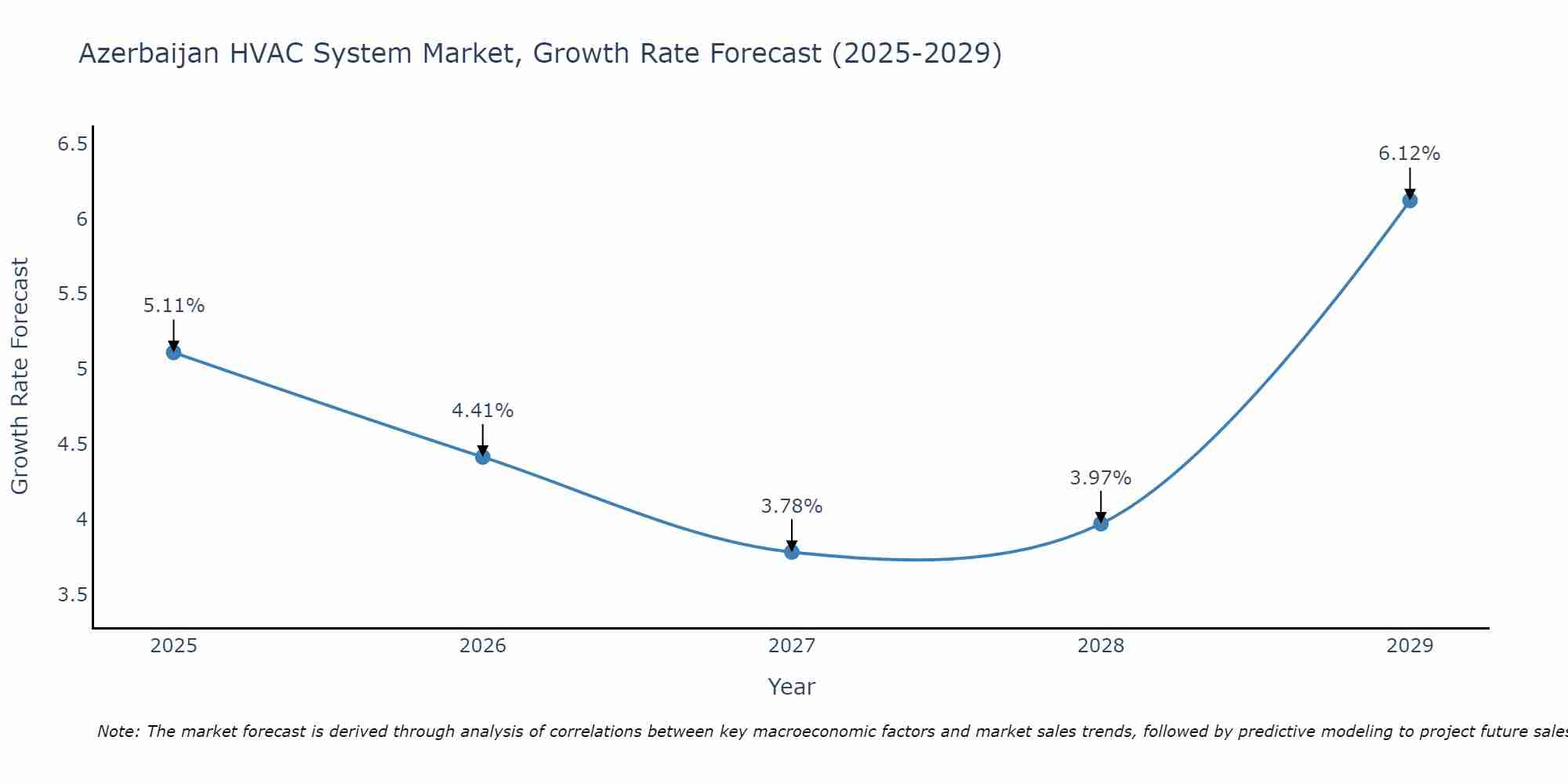
The Azerbaijan HVAC System Market is projected to witness mixed growth rate patterns during 2025 to 2029. The growth rate starts at 5.11% in 2025 and reaches 6.12% by 2029.
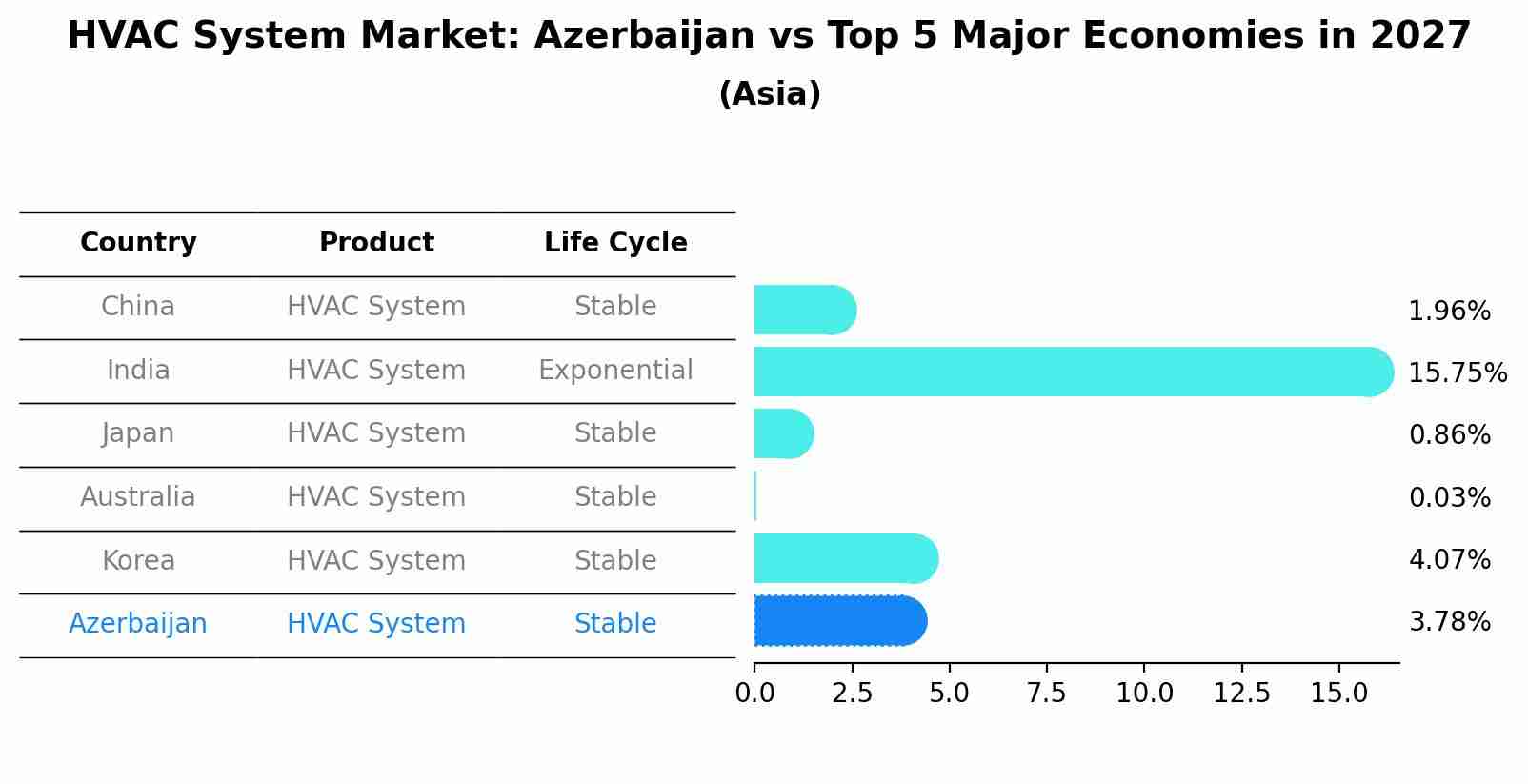
HVAC System Market: Azerbaijan vs Top 5 Major Economies in 2027 (Asia)
By 2027, Azerbaijan's HVAC System market is forecasted to achieve a stable growth rate of 3.78%, with China leading the Asia region, followed by India, Japan, Australia and South Korea.
Azerbaijan Hvac System Market Synopsis
The HVAC (heating, ventilation and air conditioning) system market in Azerbaijan is driven by the increasing demand for energy efficiency due to rising temperatures and increased pollution levels. The government has also been encouraging investments in green technologies as part of its efforts towards modernising the countrys infrastructure. As such, there have been numerous initiatives taken by various stakeholders to promote and develop a sustainable HVAC industry in Azerbaijan
Currently, there are several companies engaged in manufacturing HVAC systems within the country. These include names such as ATES Group LLC which provides heating equipment; Baku Heating Engineering Company which supplies ventilation equipment; AzerEnergoMash JSC supplying cooling equipment; E-Cool Corporation producing chillers; or Neftchiler Service providing maintenance services among others
Key Highlights of the Report:
- Azerbaijan HVAC System Market Outlook
- Market Size of Azerbaijan HVAC System Market, 2019
- Forecast of Azerbaijan HVAC System Market, 2026
- Historical Data and Forecast of Azerbaijan HVAC System Revenues & Volume for the Period 2016 - 2026
- Azerbaijan HVAC System Market Trend Evolution
- Azerbaijan HVAC System Market Drivers and Challenges
- Azerbaijan HVAC System Price Trends
- Azerbaijan HVAC System Porter's Five Forces
- Azerbaijan HVAC System Industry Life Cycle
- Historical Data and Forecast of Azerbaijan HVAC System Market Revenues & Volume By Product Type for the Period 2016 - 2026
- Historical Data and Forecast of Azerbaijan HVAC System Market Revenues & Volume By Heating for the Period 2016 - 2026
- Historical Data and Forecast of Azerbaijan HVAC System Market Revenues & Volume By Cooling for the Period 2016 - 2026
- Historical Data and Forecast of Azerbaijan HVAC System Market Revenues & Volume By Ventilation for the Period 2016 - 2026
- Historical Data and Forecast of Azerbaijan HVAC System Market Revenues & Volume By End-User for the Period 2016 - 2026
- Historical Data and Forecast of Azerbaijan HVAC System Market Revenues & Volume By Residential for the Period 2016 - 2026
- Historical Data and Forecast of Azerbaijan HVAC System Market Revenues & Volume By Commercial for the Period 2016 - 2026
- Historical Data and Forecast of Azerbaijan HVAC System Market Revenues & Volume By Industrial for the Period 2016 - 2026
- Azerbaijan HVAC System Import Export Trade Statistics
- Market Opportunity Assessment By Product Type
- Market Opportunity Assessment By End-User
- Azerbaijan HVAC System Top Companies Market Share
- Azerbaijan HVAC System Competitive Benchmarking By Technical and Operational Parameters
- Azerbaijan HVAC System Company Profiles
- Azerbaijan HVAC System Key Strategic Recommendations






































