Azerbaijan Office Chair Market Size Growth Rate
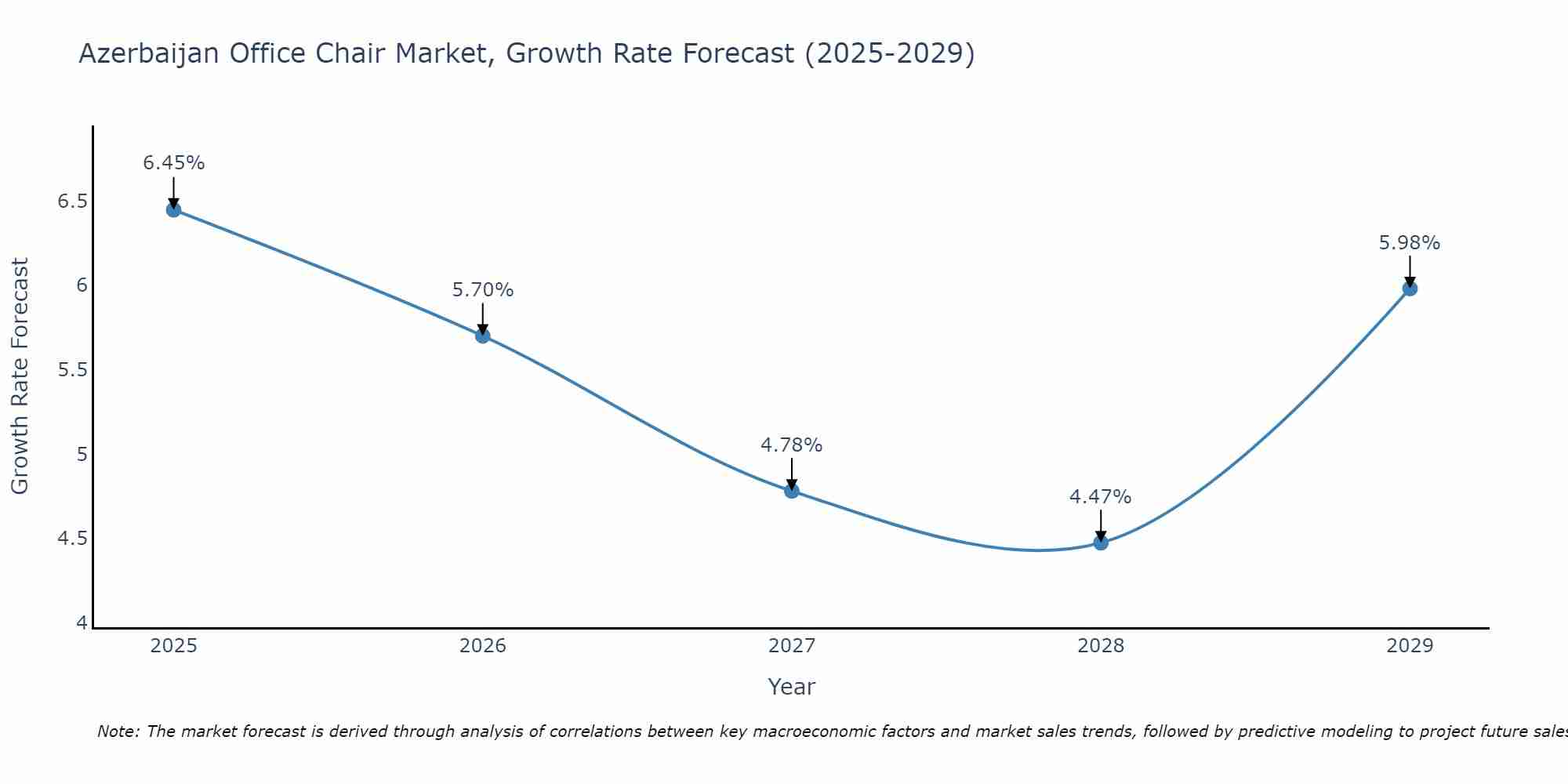
The Azerbaijan Office Chair Market is projected to witness mixed growth rate patterns during 2025 to 2029. Starting high at 6.45% in 2025, the market steadily declines to 5.98% by 2029.
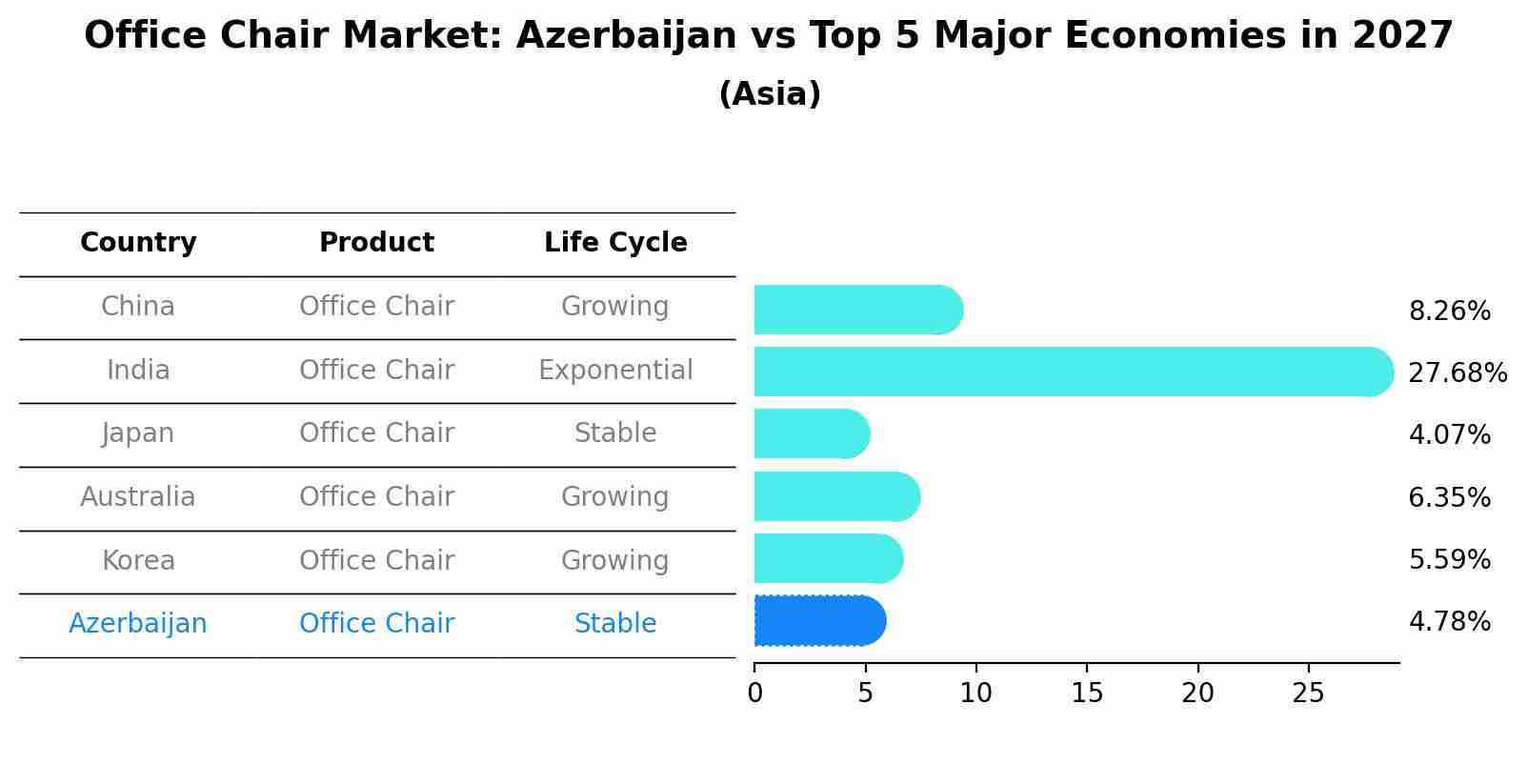
Office Chair Market: Azerbaijan vs Top 5 Major Economies in 2027 (Asia)
Azerbaijan's Office Chair market is anticipated to experience a stable growth rate of 4.78% by 2027, reflecting trends observed in the largest economy China, followed by India, Japan, Australia and South Korea.
Azerbaijan Office Chair Market Synopsis
The Azerbaijan office chair market is experiencing steady growth driven by increasing demand from the expanding corporate sector and the rising trend of setting up home offices. Key players in the market offer a wide range of ergonomic designs, materials, and price points to cater to diverse consumer preferences. The market is witnessing a shift towards sustainable and environmentally friendly products, with a growing emphasis on quality, durability, and comfort. Online retail channels are gaining popularity, providing consumers with convenient access to a variety of options. The competitive landscape includes both domestic manufacturers and international brands, each competing to capture a larger share of the market. As the economy continues to develop and modernize, the demand for office chairs is expected to further increase, presenting opportunities for innovation and growth in the industry.
Azerbaijan Office Chair Market Trends
The Azerbaijan Office Chair Market is experiencing a shift towards ergonomic designs and sustainable materials. With a growing awareness of the importance of employee well-being and productivity, companies are investing in chairs that offer better support and comfort for long hours of sitting. Additionally, there is a rising demand for office chairs made from eco-friendly materials such as recycled plastics and sustainable fabrics, reflecting a broader global trend towards sustainability. Online sales of office chairs are also on the rise, as more consumers prefer the convenience of browsing and purchasing products online. Overall, the Azerbaijan Office Chair Market is moving towards a more modern and environmentally conscious direction to meet the evolving needs of businesses and consumers.
Azerbaijan Office Chair Market Challenges
In the Azerbaijan Office Chair Market, several challenges are faced, including intense competition from both domestic and international manufacturers, fluctuating raw material prices affecting production costs, and a lack of awareness among consumers about the importance of ergonomic office chairs. Additionally, logistical issues related to transportation and distribution can impact the availability of office chairs in different regions of the country. The economic instability in Azerbaijan can also lead to fluctuations in demand for office furniture, including chairs. To succeed in this market, companies need to focus on product differentiation, competitive pricing strategies, and effective marketing campaigns to educate consumers about the benefits of ergonomic office chairs and establish a strong brand presence amidst the competitive landscape.
Azerbaijan Office Chair Market Investment Opportunities
The Azerbaijan Office Chair Market offers promising investment opportunities due to the growing demand for ergonomic and high-quality office furniture. With the increasing number of businesses and commercial spaces in Azerbaijan, there is a rising need for comfortable and stylish office chairs to enhance productivity and employee well-being. Investors can capitalize on this trend by offering a diverse range of office chairs that cater to different preferences and budgets. Additionally, incorporating sustainable and eco-friendly materials in the manufacturing process can appeal to environmentally conscious consumers. Partnering with local businesses or establishing a strong distribution network can also help investors penetrate the market effectively. Overall, the Azerbaijan Office Chair Market presents a lucrative opportunity for investors looking to tap into the growing demand for modern and functional office furniture solutions.
Jordan Agar Market Government Policies
Government policies related to the Azerbaijan Office Chair Market primarily focus on promoting local production and supporting domestic manufacturers. This includes offering incentives such as tax breaks, subsidies, and preferential treatment in government procurement to encourage the growth of the domestic office chair industry. Additionally, there are regulations in place to ensure product quality and safety standards are met, with government agencies responsible for monitoring and enforcing these requirements. Import duties and tariffs may also be imposed to protect local manufacturers from foreign competition. Overall, the government aims to foster a competitive and sustainable office chair market in Azerbaijan by supporting local businesses and ensuring consumer protection.
Azerbaijan Office Chair Market Future Outlook
The Azerbaijan office chair market is expected to witness steady growth in the coming years, driven by the expanding commercial sector and increasing demand for ergonomic and comfortable office furniture. With the country`s focus on economic diversification and improving business infrastructure, there is a growing need for modern office spaces equipped with high-quality furniture, including office chairs. Additionally, the rising trend of remote working and flexible office setups is likely to boost the demand for home office chairs. Manufacturers in the market are expected to innovate and introduce new designs and features to cater to the changing needs of consumers. Overall, the Azerbaijan office chair market is poised for growth, with opportunities for both local and international players to capitalize on the increasing demand for office furniture in the country.
Key Highlights of the Report:
- Azerbaijan Office Chair Market Outlook
- Market Size of Azerbaijan Office Chair Market, 2021
- Forecast of Azerbaijan Office Chair Market, 2031
- Historical Data and Forecast of Azerbaijan Office Chair Revenues & Volume for the Period 2018 - 2031
- Azerbaijan Office Chair Market Trend Evolution
- Azerbaijan Office Chair Market Drivers and Challenges
- Azerbaijan Office Chair Price Trends
- Azerbaijan Office Chair Porter's Five Forces
- Azerbaijan Office Chair Industry Life Cycle
- Historical Data and Forecast of Azerbaijan Office Chair Market Revenues & Volume By Product Type for the Period 2018 - 2031
- Historical Data and Forecast of Azerbaijan Office Chair Market Revenues & Volume By Executive Office for the Period 2018 - 2031
- Historical Data and Forecast of Azerbaijan Office Chair Market Revenues & Volume By Ergonomic for the Period 2018 - 2031
- Historical Data and Forecast of Azerbaijan Office Chair Market Revenues & Volume By Conference for the Period 2018 - 2031
- Historical Data and Forecast of Azerbaijan Office Chair Market Revenues & Volume By Material for the Period 2018 - 2031
- Historical Data and Forecast of Azerbaijan Office Chair Market Revenues & Volume By Mesh for the Period 2018 - 2031
- Historical Data and Forecast of Azerbaijan Office Chair Market Revenues & Volume By Lather for the Period 2018 - 2031
- Historical Data and Forecast of Azerbaijan Office Chair Market Revenues & Volume By Plastic for the Period 2018 - 2031
- Historical Data and Forecast of Azerbaijan Office Chair Market Revenues & Volume By Fabric for the Period 2018 - 2031
- Historical Data and Forecast of Azerbaijan Office Chair Market Revenues & Volume By Sales Channel for the Period 2018 - 2031
- Historical Data and Forecast of Azerbaijan Office Chair Market Revenues & Volume By Offline for the Period 2018 - 2031
- Historical Data and Forecast of Azerbaijan Office Chair Market Revenues & Volume By Online for the Period 2018 - 2031
- Azerbaijan Office Chair Import Export Trade Statistics
- Market Opportunity Assessment By Product Type
- Market Opportunity Assessment By Material
- Market Opportunity Assessment By Sales Channel
- Azerbaijan Office Chair Top Companies Market Share
- Azerbaijan Office Chair Competitive Benchmarking By Technical and Operational Parameters
- Azerbaijan Office Chair Company Profiles
- Azerbaijan Office Chair Key Strategic Recommendations






































