Azerbaijan Oyster Market Size, Share & Growth Rate
The Azerbaijan Oyster Market was estimated at USD 1053 Million in 2025 and is projected to reach USD 1825 Million by 2032, growing at a CAGR of 8.2% from 2026 to 2032. This growth trajectory is fueled by the rising demand for high-quality seafood, particularly oysters, which are being increasingly recognized as a premium delicacy among the affluent. The booming culinary scene and the strategic coastal positioning of Azerbaijan enhance accessibility to fresh oysters, further driving market momentum.
Azerbaijan Oyster Market Year-wise Growth Rate and Key Drivers
This graph highlights how the Azerbaijan Oyster Market has steadily grown over the years, supported by major growth factors.
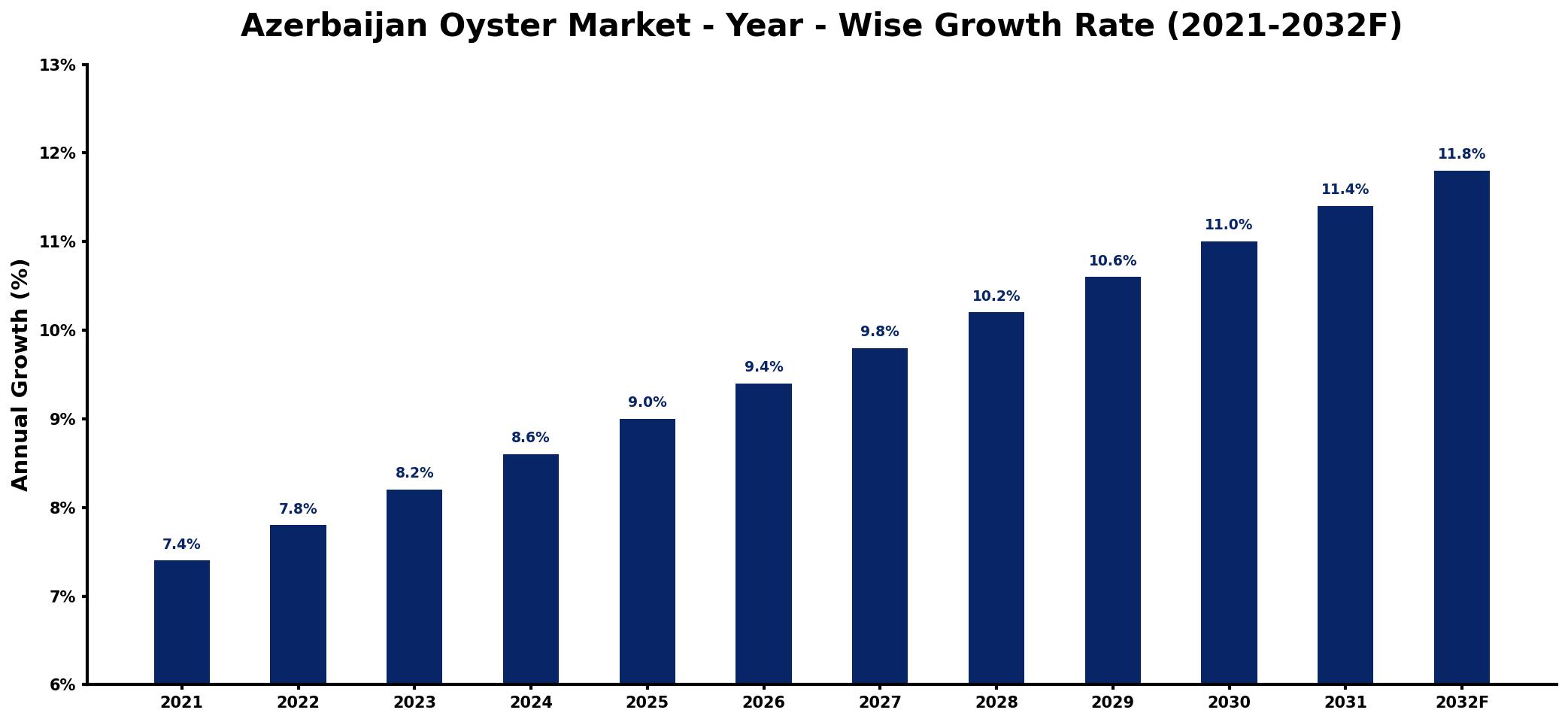
The table below presents the year‑wise growth rates along with the key drivers influencing the market
| Year | Growth Rate | Major Drivers |
| 2021 | 7.4% | increased consumer health awareness |
| 2022 | 7.8% | growing culinary tourism sector |
| 2023 | 8.2% | expansion of aquaculture operations |
| 2024 | 8.6% | rising demand for seafood exports |
| 2025 | 9.0% | enhanced distribution networks efficiency |
| 2026 | 9.4% | increased investment in sustainability |
| 2027 | 9.8% | growth in gourmet dining experiences |
| 2028 | 10.2% | development of local seafood markets |
| 2029 | 10.6% | expanding manufacturing base activity |
| 2030 | 11.0% | increased collaborations with restaurants |
| 2031 | 11.4% | growing interest in marine research |
| 2032 | 11.8% | rising popularity of seafood festivals |
Note: Market size estimations and growth projections presented in this report are based on 6Wresearch's proprietary forecasting methodology, utilizing the latest available industry data, government publications, and primary research inputs.
Azerbaijan Oyster Market Synopsis
Currently, the Azerbaijan oyster market is witnessing a positive uptrend, largely due to the burgeoning interest in gourmet dining experiences. The upscale restaurant sector is embracing oysters as a luxurious offering, elevating their status as a coveted choice among food enthusiasts. Looking ahead, the market is poised for sustained growth, with potential expansion into untapped segments and increased consumer education about oyster benefits.
Local aquaculture farms are capitalizing on this momentum, ensuring a steady supply of high-quality oysters to meet the evolving preferences of consumers. As health-consciousness and sustainability take center stage in dietary choices, oysters are increasingly seen as a nutritious and eco-friendly seafood option, aligning perfectly with modern eating trends.
Azerbaijan Oyster Market Key Takeaways
- Oysters are gaining traction among health-conscious consumers seeking nutritious food options.
- The affluent population is driving the trend towards gourmet seafood dining experiences.
- Strategic coastal access facilitates fresh and efficient distribution of oysters.
- Government initiatives aim to bolster aquaculture and support local oyster producers.
- Investment opportunities are expanding in oyster farming and processing sectors.
Evaluation of Restraints in Azerbaijan Oyster Market
Despite the positive outlook, several restraints hinder the Azerbaijan oyster market's growth. Limited consumer awareness regarding oysters as a viable food choice poses a significant challenge, as they are not traditionally featured in local cuisine. Furthermore, logistical constraints in transporting oysters, particularly due to Azerbaijan's landlocked regions, necessitate robust supply chain management to ensure freshness. Regulatory hurdles related to food safety and quality standards may also complicate compliance for producers, requiring continuous improvement in operational practices.
Azerbaijan Oyster Market Trends
Emerging trends in the Azerbaijan oyster market include a shift towards upscale dining and culinary experimentation, resulting in increased oyster consumption in fine dining establishments. Additionally, a growing appreciation for sustainability is driving demand for responsibly sourced oysters, encouraging local aquaculture operations to adopt eco-friendly practices. Digital marketing and social media are playing pivotal roles in increasing consumer awareness and promoting oysters as a premium dining choice, contributing to the market's overall growth.
Azerbaijan Oyster Market Opportunities
The Azerbaijan oyster market presents numerous growth and investment opportunities, especially as the middle-class population expands and dietary preferences shift towards healthier, gourmet options. There is significant potential in developing modern oyster farming technologies, processing facilities, and distribution networks. Furthermore, Azerbaijan's strategic geographical positioning enables opportunities for exporting to neighboring countries, thereby increasing revenue streams for local producers. Emphasizing sustainability in aquaculture practices will enhance market appeal and promote long-term profitability.
Government Initiatives in the Azerbaijan Oyster Market
The Azerbaijani government is actively supporting the oyster market through various initiatives aimed at promoting aquaculture development. These include financial assistance and incentives for oyster farmers and investments in infrastructure to enhance production and distribution capabilities. Additionally, regulations have been implemented to ensure the safety and quality of oysters, including regular monitoring of water quality. These efforts are designed to boost the industry, increase production capacity, and improve the overall competitiveness of Azerbaijani oysters in both domestic and international markets.
Future Insights of the Azerbaijan Oyster Market
Looking toward 2026-2032, the Azerbaijan oyster market is on track for significant growth. The increasing focus on healthy eating habits and premium seafood consumption aligns with global dietary trends, positioning oysters as a leading choice among consumers. Continued advancements in aquaculture technology and a favorable climate for oyster cultivation along the Caspian Sea will further enhance production capabilities. As consumer awareness grows and sustainability becomes a priority, the market is expected to solidify its reputation as a purveyor of high-quality oysters, appealing to both local and international markets.
Azerbaijan Oyster Market Latest Developments (2025 - 2026)
In recent months, the Azerbaijan oyster market has seen various initiatives aimed at enhancing local production capabilities. Efforts to establish partnerships between aquaculture farms and upscale restaurants have gained traction, resulting in innovative culinary offerings featuring oysters. Additionally, awareness campaigns focusing on the health benefits and culinary versatility of oysters are being launched, aiming to capture a broader consumer base. The tourism sectors continued growth is also driving interest in unique dining experiences that include oysters, thereby boosting overall market demand.
Azerbaijan Oyster Market - Key Attractiveness of the Report
- 10 Years of Market Numbers
- Historical Data Starting from 2022 to 2025
- Base Year: 2025
- Forecast Data until 2032
- Key Performance Indicators Impacting the Market
- Major Upcoming Developments and Projects
Key Highlights of the Report:
- Azerbaijan Oyster Market Outlook
- Market Size of Azerbaijan Oyster Market, 2025
- Forecast of Azerbaijan Oyster Market, 2032
- Historical Data and Forecast of Azerbaijan Oyster Revenues & Volume for the Period 2022-2032F
- Azerbaijan Oyster Market Trend Evolution
- Azerbaijan Oyster Market Drivers and Challenges
- Azerbaijan Oyster Price Trends
- Azerbaijan Oyster Porter's Five Forces
- Azerbaijan Oyster Industry Life Cycle
- Historical Data and Forecast of Azerbaijan Oyster Market Revenues & Volume By Oyster Type for the Period 2022-2032F
- Historical Data and Forecast of Azerbaijan Oyster Market Revenues & Volume By Cupped Oyster for the Period 2022-2032F
- Historical Data and Forecast of Azerbaijan Oyster Market Revenues & Volume By Pacific Cupped Oyster for the Period 2022-2032F
- Historical Data and Forecast of Azerbaijan Oyster Market Revenues & Volume By American Cupped Oyster for the Period 2022-2032F
- Historical Data and Forecast of Azerbaijan Oyster Market Revenues & Volume By Penguin Wing Oyster for the Period 2022-2032F
- Historical Data and Forecast of Azerbaijan Oyster Market Revenues & Volume By Others for the Period 2022-2032F
- Historical Data and Forecast of Azerbaijan Oyster Market Revenues & Volume By End User for the Period 2022-2032F
- Historical Data and Forecast of Azerbaijan Oyster Market Revenues & Volume By Foodservice for the Period 2022-2032F
- Historical Data and Forecast of Azerbaijan Oyster Market Revenues & Volume By Retail for the Period 2022-2032F
- Historical Data and Forecast of Azerbaijan Oyster Market Revenues & Volume By Packaging Form for the Period 2022-2032F
- Historical Data and Forecast of Azerbaijan Oyster Market Revenues & Volume By Fresh for the Period 2022-2032F
- Historical Data and Forecast of Azerbaijan Oyster Market Revenues & Volume By Frozen for the Period 2022-2032F
- Historical Data and Forecast of Azerbaijan Oyster Market Revenues & Volume By Canned for the Period 2022-2032F
- Historical Data and Forecast of Azerbaijan Oyster Market Revenues & Volume By Others for the Period 2022-2032F
- Azerbaijan Oyster Import Export Trade Statistics
- Market Opportunity Assessment By Oyster Type
- Market Opportunity Assessment By End User
- Market Opportunity Assessment By Packaging Form
- Azerbaijan Oyster Top Companies Market Share
- Azerbaijan Oyster Competitive Benchmarking By Technical and Operational Parameters
- Azerbaijan Oyster Company Profiles
- Azerbaijan Oyster Key Strategic Recommendations






































