Azerbaijan Polyester Fabric Market Summary
The azerbaijan polyester fabric market was estimated at USD 468 Million in 2025 and is projected to reach USD 875 Million by 2032, growing at a CAGR of 10.8% from 2026 to 2032.
Azerbaijan Polyester Fabric Market Year-wise Growth Rate and Key Drivers
This graph highlights how the Azerbaijan Polyester Fabric Market has steadily grown over the past five years, supported by major growth factors.
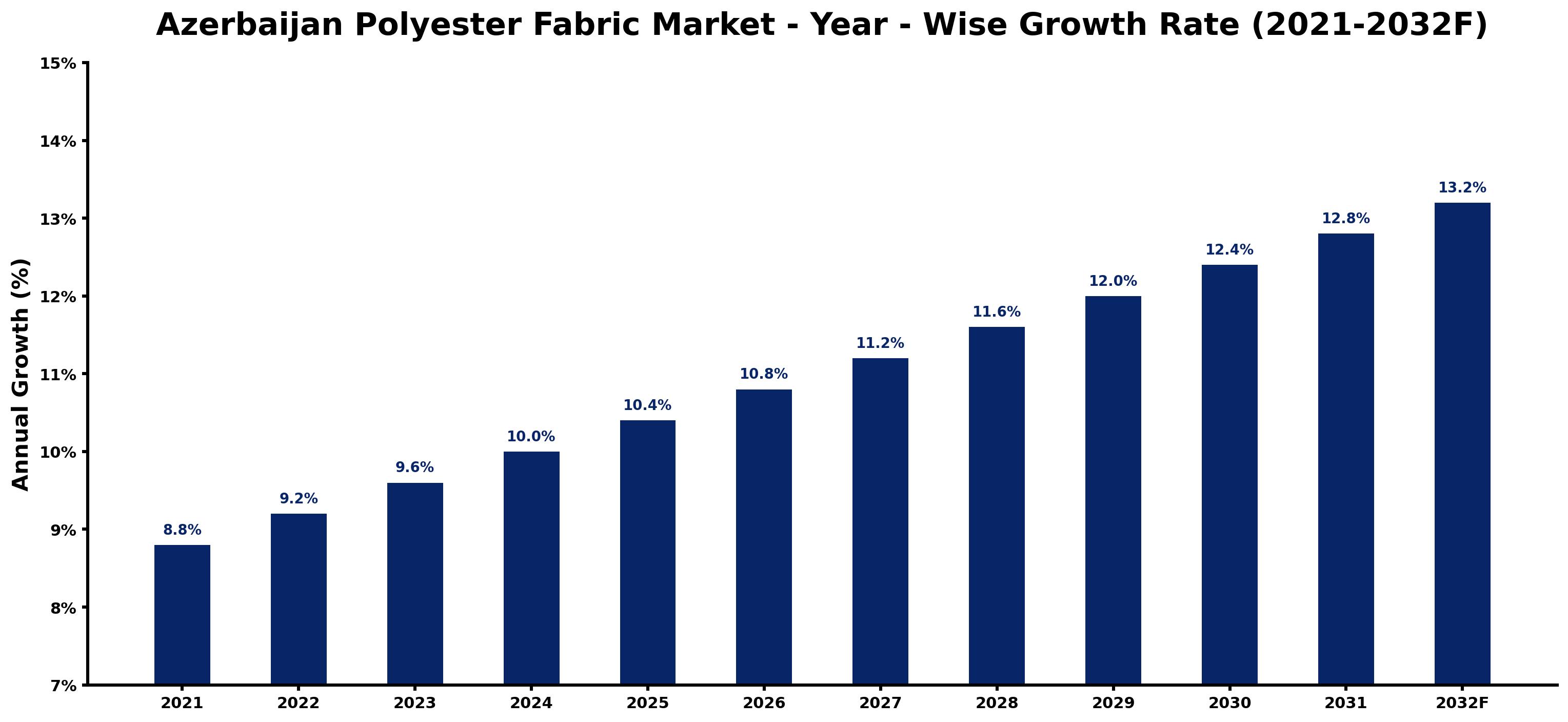
The table below presents the year wise growth rates along with the key drivers influencing the market
| Year | Growth Rate | Major Drivers |
| 2021 | 8.8% | Manufacturers explore sustainable production methods amid growing environmental concerns. |
| 2022 | 9.2% | Regional textile manufacturers invest in innovation to enhance product quality and durability. |
| 2023 | 9.6% | Local fashion brands introduce polyester collections, catering to changing consumer preferences. |
| 2024 | 10.0% | Increased participation in global trade exhibitions boosts Azerbaijan's fabric visibility. |
| 2025 | 10.4% | Emerging e-commerce platforms create new distribution channels for polyester fabrics. |
| 2026 | 10.8% | Infrastructure developments enhance logistics, lowering costs for fabric suppliers. |
| 2027 | 11.2% | Growing collaborations between local artisans and brands promote unique polyester designs. |
| 2028 | 11.6% | Consumer awareness about fabric sustainability enhances demand for recycled polyester options. |
| 2029 | 12.0% | Advent of advanced textile technology facilitates faster production and customization. |
| 2030 | 12.4% | Local universities begin specialized programs in textile engineering, nurturing skilled talent. |
| 2031 | 12.8% | Investment in automation within factories improves operational efficiency and reduces waste. |
| 2032 | 13.2% | Azerbaijan's strategic location attracts foreign textile investments, enhancing market competitiveness. |
Note - Market size estimations and growth projections presented in this report are based on 6Wresearch's advanced forecasting approach, validated with industry datasets as of June 2026.
Azerbaijan Polyester Fabric Market Synopsis
The Azerbaijan Polyester Fabric Market is projected to reach 10.8% and witness significant growth during the forecast period (2026-2032). The market is poised for an average CAGR of 6.6%, driven by the increasing demand for lightweight fabrics in the apparel sector and substantial investments from manufacturers in the textile domain. Additionally, the market dynamics are influenced by technological advancements that enhance production capabilities, leading to innovative products characterized by improved attributes such as breathability, moisture-wicking properties, and wrinkle resistance. These enhanced features are expanding the application spectrum of polyester fabrics in clothing, upholstery, and other sectors, which is further complemented by the rising consumer interest in eco-friendly textiles.
Azerbaijan Polyester Fabric Market Growth Drivers
Several key factors are stimulating the growth of the Azerbaijan Polyester Fabric Market. Firstly, the apparel industry's shift towards lightweight fabrics is contributing to increased demand, as these materials provide comfort and durability. Secondly, ongoing investments by manufacturers in modern production facilities are enabling an upsurge in output, directly influencing market availability. Thirdly, technological innovations are allowing for the development of polyester fabrics with advanced functionalities, appealing to a broader range of applications. Additionally, heightened consumer awareness regarding sustainable practices is creating a favorable environment for eco-friendly fabric options, propelling market growth. Lastly, expanding urbanization and improving living standards in Azerbaijan are fostering a rise in textile consumption across various demographics.
Azerbaijan Polyester Fabric Market Trends and Opportunities
The Azerbaijan Polyester Fabric Market presents numerous trends and opportunities that stakeholders can leverage. One notable trend is the increasing preference for specialty polyester fabrics, which offer unique properties that cater to niche markets such as sportswear and home furnishings. This trend is bolstered by the rise of athleisure and active lifestyle choices among consumers. Additionally, the integration of smart textiles into polyester fabric production is gaining traction, enhancing functionality through features such as moisture management and temperature regulation. Moreover, the industry's focus on sustainability is leading to the development of recycled polyester products, which align with global eco-conscious initiatives. These trends indicate a shift toward innovative and sustainable practices, providing expansive opportunities for investment and growth in the market.
Azerbaijan Polyester Fabric Market Challenges and Restraints
Despite its promising growth trajectory, the Azerbaijan Polyester Fabric Market faces several challenges and constraints. One significant challenge is the volatility of raw material prices, which can impact production costs and pricing strategies. Additionally, there is increasing competition from alternative fabrics, such as natural fibers, which may appeal to environmentally-conscious consumers. The market also encounters regulatory hurdles concerning environmental standards that may necessitate additional investment in compliance measures. Furthermore, the need for continuous innovation to meet evolving consumer preferences requires ongoing research and development efforts, potentially straining resources. Lastly, economic fluctuations can influence consumer spending patterns, affecting demand for polyester fabrics in various applications.
Azerbaijan Polyester Fabric Market Government Investment and Initiatives
The Azerbaijani government is actively promoting initiatives to bolster the country's textile industry, which encompasses the polyester fabric market. Investments in infrastructure improvements, such as transportation and logistics, are aimed at enhancing supply chain efficiency for textile manufacturers. Furthermore, government policies are favoring the establishment of special economic zones, which provide incentives for businesses looking to invest in textile production. Additionally, public spending initiatives aimed at innovation and research support the development of cutting-edge textile technologies. These efforts are conducive to creating a more favorable business environment for polyester fabric manufacturers, ultimately contributing to the market's growth through increased production capabilities and product diversification.
Azerbaijan Polyester Fabric Market Latest Developments (May 2025 - June 2026)
Between May 2025 and June 2026, the Azerbaijan Polyester Fabric Market has witnessed several noteworthy developments that may shape its future trajectory. There has been a marked increase in collaborations between textile manufacturers and technology firms aimed at enhancing fabric properties through innovative techniques. Additionally, the market is seeing a rise in demand for eco-friendly polyester initiatives, with several manufacturers exploring sustainable sourcing practices. Furthermore, significant attention is being directed towards improving supply chain transparency, as consumers increasingly prioritize ethical production methods. These trends highlight a shift towards a more sustainable and innovation-driven market landscape, influencing production strategies and consumer preferences moving forward.
Azerbaijan Polyester Fabric Market - Key Attractiveness of the Report
- 10 Years of Market Numbers
- Historical Data Starting from 2022 to 2025
- Base Year: 2025
- Forecast Data until 2032
- Key Performance Indicators Impacting the Market
- Major Upcoming Developments and Projects
Key Highlights of the Report:
- Azerbaijan Polyester Fabric Market Outlook
- Market Size of Azerbaijan Polyester Fabric Market, 2025
- Forecast of Azerbaijan Polyester Fabric Market, 2032F
- Historical Data and Forecast of Azerbaijan Polyester Fabric Revenues & Volume for the Period 2022-2032F
- Azerbaijan Polyester Fabric Market Trend Evolution
- Azerbaijan Polyester Fabric Market Drivers and Challenges
- Azerbaijan Polyester Fabric Price Trends
- Azerbaijan Polyester Fabric Porter's Five Forces
- Azerbaijan Polyester Fabric Industry Life Cycle
- Historical Data and Forecast of Azerbaijan Polyester Fabric Market Revenues & Volume By Type for the Period 2022-2032F
- Historical Data and Forecast of Azerbaijan Polyester Fabric Market Revenues & Volume By PET for the Period 2022-2032F
- Historical Data and Forecast of Azerbaijan Polyester Fabric Market Revenues & Volume By PCDT for the Period 2022-2032F
- Historical Data and Forecast of Azerbaijan Polyester Fabric Market Revenues & Volume By Applications for the Period 2022-2032F
- Historical Data and Forecast of Azerbaijan Polyester Fabric Market Revenues & Volume By Carpets & Rugs for the Period 2022-2032F
- Historical Data and Forecast of Azerbaijan Polyester Fabric Market Revenues & Volume By Non-Woven Fabrics Fiberfill for the Period 2022-2032F
- Historical Data and Forecast of Azerbaijan Polyester Fabric Market Revenues & Volume By Apparels for the Period 2022-2032F
- Historical Data and Forecast of Azerbaijan Polyester Fabric Market Revenues & Volume By Home Textiles for the Period 2022-2032F
- Historical Data and Forecast of Azerbaijan Polyester Fabric Market Revenues & Volume By Others? for the Period 2022-2032F
- Azerbaijan Polyester Fabric Import Export Trade Statistics
- Market Opportunity Assessment By Type
- Market Opportunity Assessment By Applications
- Azerbaijan Polyester Fabric Top Companies Market Share
- Azerbaijan Polyester Fabric Competitive Benchmarking By Technical and Operational Parameters
- Azerbaijan Polyester Fabric Company Profiles
- Azerbaijan Polyester Fabric Key Strategic Recommendations






































