Azerbaijan Tokenization Market Size & Growth Rate (2026-2032)
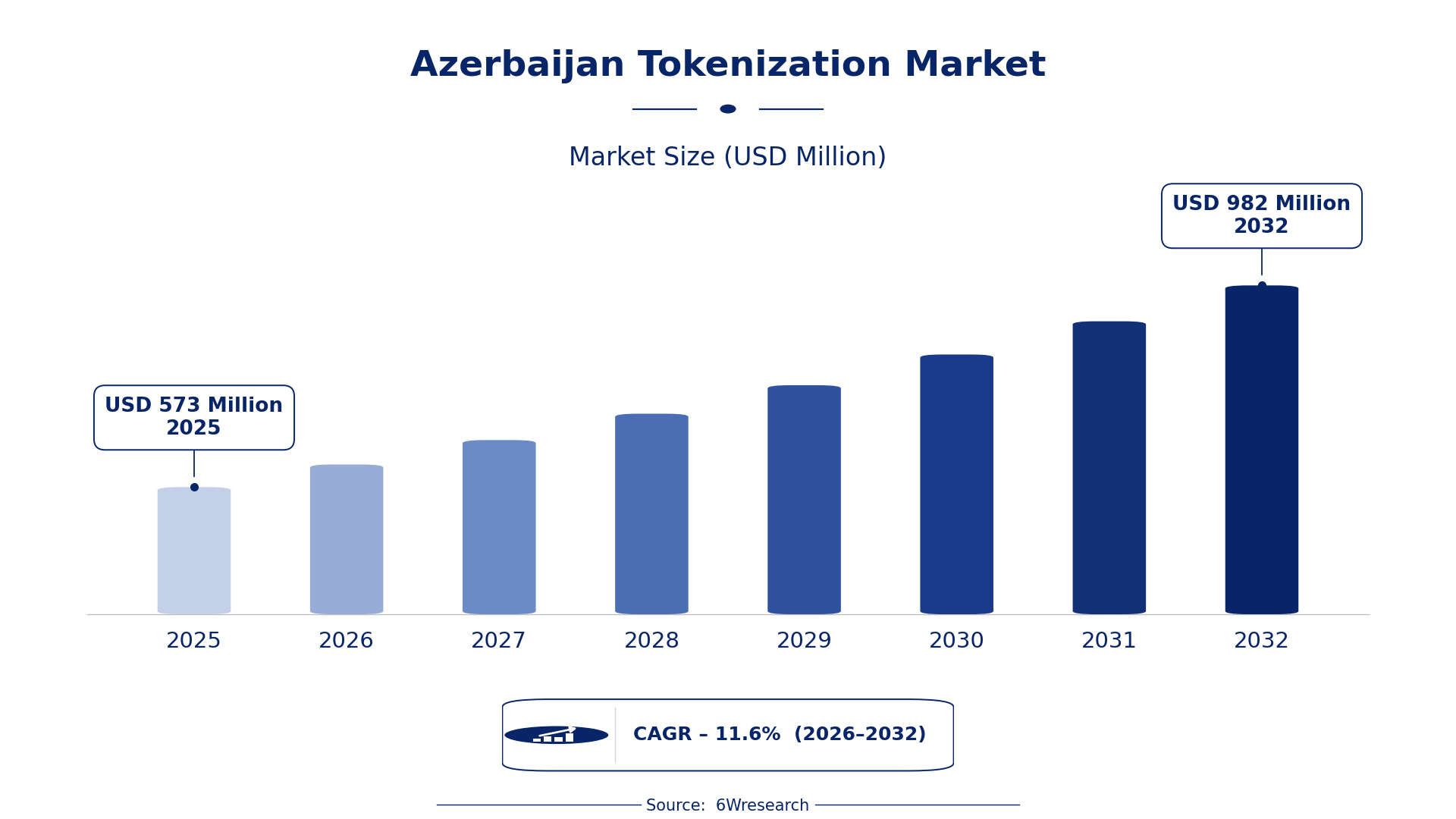
The Azerbaijan Tokenization Market was estimated at USD 573 Million in 2025 and is projected to reach USD 982 Million by 2032, growing at a CAGR of 11.6% from 2026 to 2032.
Azerbaijan Tokenization Market Synopsis
Azerbaijan's tokenization market is at a critical juncture, with substantial growth observed in recent years. The integration of blockchain technology is not only transforming industries such as finance and real estate but also laying a foundation for new asset management strategies.
As the market continues to evolve, the potential for asset digitization is becoming increasingly recognized. Companies are strategically adopting tokenization to enhance transaction efficiencies and security measures, all while benefiting from supportive regulatory developments that encourage innovation.
Azerbaijan Tokenization Market Year-wise Growth Rate and Key Drivers
This graph illustrates the annual growth rates of the Azerbaijan Tokenization Market from 2021 to 2032, highlighting a steady upward trajectory and projected expansion over the forecast period.
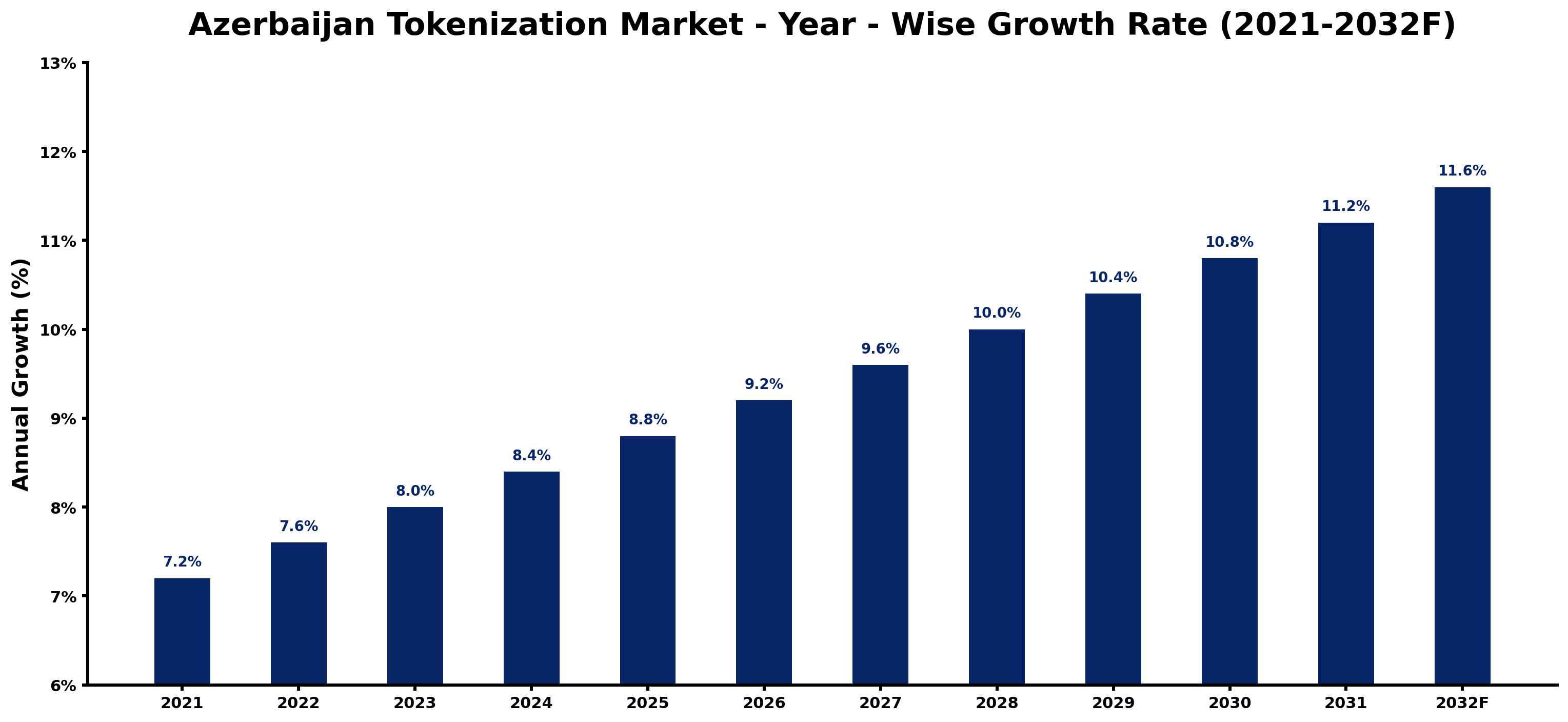
The table below presents the year‑wise growth rates along with the key drivers influencing the market
| Year | Growth Rate | Major Drivers |
| 2021 | 7.2% | Azerbaijan's fintech regulatory framework adoption supports tokenization. |
| 2022 | 7.6% | Increased interest in blockchain technology among local startups. |
| 2023 | 8.0% | Government promoting digital economy through innovation initiatives. |
| 2024 | 8.4% | Growth in digital asset adoption by local enterprises. |
| 2025 | 8.8% | Rise in consumer demand for secure payment solutions. |
| 2026 | 9.2% | Increased investment in blockchain education by Azerbaijani universities. |
| 2027 | 9.6% | Local regulations facilitating cryptocurrency and token market expansion. |
| 2028 | 10.0% | Azerbaijan hosting regional blockchain conferences boosts visibility. |
| 2029 | 10.4% | Partnerships between banks and fintechs drive tokenization services. |
| 2030 | 10.8% | Emergence of local tokenization platforms enhances user engagement. |
| 2031 | 11.2% | Government incentives for tech startups fuel innovative solutions. |
| 2032 | 11.6% | Increasing foreign investments in Azerbaijani tokenization projects. |
Note: Market size estimations and growth projections presented in this report are based on 6Wresearch's proprietary forecasting methodology, utilizing the latest available industry data, government publications, and primary research inputs.
Azerbaijan Tokenization Market Key Takeaways
Below are some of the specific key takeaways from the market, including:
- The government’s proactive regulatory framework promotes tokenized asset use across various sectors.
- Growing awareness of tokenization benefits enhances investor interest and market participation.
- Blockchain adoption in industries such as finance and real estate is increasing liquidity and accessibility.
- Emerging opportunities in art and commodities highlight diversification potential for investors.
- Service providers are developing tailored tokenization solutions to meet evolving client demands.
Evaluation of Restraints in Azerbaijan Tokenization Market
Despite the positive momentum, the Azerbaijan tokenization market faces significant barriers. Regulatory uncertainties, particularly concerning the legal status of tokenized assets, pose challenges for widespread adoption. There is an absence of clear guidelines which leaves potential investors uncertain about compliance and security. Additionally, a general lack of understanding surrounding tokenization technology limits engagement from both businesses and individual investors, potentially stifling growth. Overcoming these hurdles requires concerted efforts from industry players and regulators to create an informed environment that fosters trust and clarity.
Azerbaijan Tokenization Market Trends
Current trends highlight a shift towards the tokenization of diverse asset classes, such as real estate and commodities, which enhances both liquidity and fractional ownership opportunities. Additionally, businesses are increasingly leveraging tokenization as a means of raising capital efficiently, with a strong emphasis on transparency in transactions. Regulatory bodies are also adapting, signaling a growing recognition of the advantages of tokenization technology and its potential to transform investment approaches.
Azerbaijan Tokenization Market Opportunities
The market is rife with opportunities, particularly within the real estate sector where tokenization enables greater access for retail investors, allowing property owners to unlock value through digitization. on top of that, the art market is embracing tokenization, providing a new avenue for fractional ownership of high-value pieces. As businesses across various sectors recognize the advantages of tokenized commodities, the groundwork is being laid for efficient trading platforms that can significantly reduce administrative overheads. This environment presents fertile ground for investors seeking to diversify their portfolios.
Government Initiatives in the Azerbaijan Tokenization Market
The Azerbaijan government is adopting a forward-thinking approach towards the tokenization market, recognizing its economic potential and encouraging innovation. Recent guidelines introduced by the Central Bank of Azerbaijan reflect a commitment to establishing a regulatory framework that supports digital securities and tokenized assets. This collaborative environment between government and industry is crucial for the market's expansion and sustainability.
- A regulatory framework issued by the Central Bank in 2021 provides guidelines for digital securities issuance.
- Ongoing efforts to enhance blockchain technology adoption in sectors including finance, healthcare, and logistics.
- A planned public-private partnership aimed at developing a national blockchain infrastructure is expected to launch by 2026.
- Current initiatives focus on raising public awareness regarding the benefits and security of tokenized assets.
- Future policies are being crafted to streamline compliance for businesses involved in asset tokenization.
Future Insights of the Azerbaijan Tokenization Market
Looking ahead to 2026-2032, the Azerbaijan tokenization market is set for rapid growth. Continued digitization efforts and expanded blockchain integration across industries will catalyze the emergence of new tokenized assets. As regulatory frameworks solidify and investor confidence grows, we anticipate an uptick in the volume of tokenized assets. This evolution will likely redefine asset management practices and enhance investment diversification strategies, marking Azerbaijan as a key player in the digital economy.
Azerbaijan Tokenization Market Latest Developments
Recent activity in the Azerbaijan tokenization market has been characterized by a flurry of advancements and initiatives. Over the past year, key stakeholders have focused on integrating blockchain solutions into their operations, reflecting a broader trend towards asset digitization. These developments signal a proactive approach to embracing innovative technologies that can reshape the financial landscape.
- A major technology vendor launched a blockchain-based platform aimed at simplifying the process of asset tokenization, currently in its pilot phase.
- In early 2025, a consortium of local banks initiated a project to explore tokenized securities and their implications for traditional banking models.
- A national digital asset awareness campaign was rolled out in Q3 2025 to educate the public on the benefits of tokenization.
- Ongoing collaboration between government agencies and industry leaders is paving the way for a comprehensive regulatory framework expected to be completed by mid-2026.
- Plans for a new tokenization marketplace targeting real estate investments are set to begin development in late 2025.
Azerbaijan Tokenization Market - Key Attractiveness of the Report
- 10 Years of Market Numbers
- Historical Data Starting from 2022 to 2025
- Base Year: 2025
- Forecast Data until 2032
- Key Performance Indicators Impacting the Market
- Major Upcoming Developments and Projects
Key Highlights of the Report:
- Azerbaijan Tokenization Market Outlook
- Market Size of Azerbaijan Tokenization Market, 2025
- Forecast of Azerbaijan Tokenization Market, 2032
- Historical Data and Forecast of Azerbaijan Tokenization Revenues & Volume for the Period 2022-2032F
- Azerbaijan Tokenization Market Trend Evolution
- Azerbaijan Tokenization Market Drivers and Challenges
- Azerbaijan Tokenization Price Trends
- Azerbaijan Tokenization Porter's Five Forces
- Azerbaijan Tokenization Industry Life Cycle
- Historical Data and Forecast of Azerbaijan Tokenization Market Revenues & Volume By Application Area for the Period 2022-2032F
- Historical Data and Forecast of Azerbaijan Tokenization Market Revenues & Volume By Payment Security for the Period 2022-2032F
- Historical Data and Forecast of Azerbaijan Tokenization Market Revenues & Volume By User Authentication for the Period 2022-2032F
- Historical Data and Forecast of Azerbaijan Tokenization Market Revenues & Volume By Compliance Management for the Period 2022-2032F
- Historical Data and Forecast of Azerbaijan Tokenization Market Revenues & Volume By Vertical for the Period 2022-2032F
- Historical Data and Forecast of Azerbaijan Tokenization Market Revenues & Volume By Banking, Financial Services, and Insurance for the Period 2022-2032F
- Historical Data and Forecast of Azerbaijan Tokenization Market Revenues & Volume By Healthcare for the Period 2022-2032F
- Historical Data and Forecast of Azerbaijan Tokenization Market Revenues & Volume By IT and ITeS for the Period 2022-2032F
- Historical Data and Forecast of Azerbaijan Tokenization Market Revenues & Volume By Government for the Period 2022-2032F
- Historical Data and Forecast of Azerbaijan Tokenization Market Revenues & Volume By Retail & eCommerce for the Period 2022-2032F
- Historical Data and Forecast of Azerbaijan Tokenization Market Revenues & Volume By Energy & Utilities for the Period 2022-2032F
- Historical Data and Forecast of Azerbaijan Tokenization Market Revenues & Volume By Other Verticals for the Period 2022-2032F
- Historical Data and Forecast of Azerbaijan Tokenization Market Revenues & Volume By Component for the Period 2022-2032F
- Historical Data and Forecast of Azerbaijan Tokenization Market Revenues & Volume By Solutions for the Period 2022-2032F
- Historical Data and Forecast of Azerbaijan Tokenization Market Revenues & Volume By Services for the Period 2022-2032F
- Historical Data and Forecast of Azerbaijan Tokenization Market Revenues & Volume By Deployment Mode for the Period 2022-2032F
- Historical Data and Forecast of Azerbaijan Tokenization Market Revenues & Volume By Cloud for the Period 2022-2032F
- Historical Data and Forecast of Azerbaijan Tokenization Market Revenues & Volume By On-premises for the Period 2022-2032F
- Historical Data and Forecast of Azerbaijan Tokenization Market Revenues & Volume By Organization Size for the Period 2022-2032F
- Historical Data and Forecast of Azerbaijan Tokenization Market Revenues & Volume By Large Enterprises for the Period 2022-2032F
- Historical Data and Forecast of Azerbaijan Tokenization Market Revenues & Volume By SMEs for the Period 2022-2032F
- Azerbaijan Tokenization Import Export Trade Statistics
- Market Opportunity Assessment By Application Area
- Market Opportunity Assessment By Vertical
- Market Opportunity Assessment By Component
- Market Opportunity Assessment By Deployment Mode
- Market Opportunity Assessment By Organization Size
- Azerbaijan Tokenization Top Companies Market Share
- Azerbaijan Tokenization Competitive Benchmarking By Technical and Operational Parameters
- Azerbaijan Tokenization Company Profiles
- Azerbaijan Tokenization Key Strategic Recommendations






































