Azerbaijan Toys and Hobby Goods Market Summary
The azerbaijan toys and hobby goods market was estimated at USD 1277 Million in 2025 and is projected to reach USD 2189 Million by 2032, growing at a CAGR of 9.2% from 2026 to 2032.
Azerbaijan Toys and Hobby Goods Market Year-wise Growth Rate and Key Drivers
This graph highlights how the Azerbaijan Toys and Hobby Goods Market has steadily grown over the past five years, supported by major growth factors.
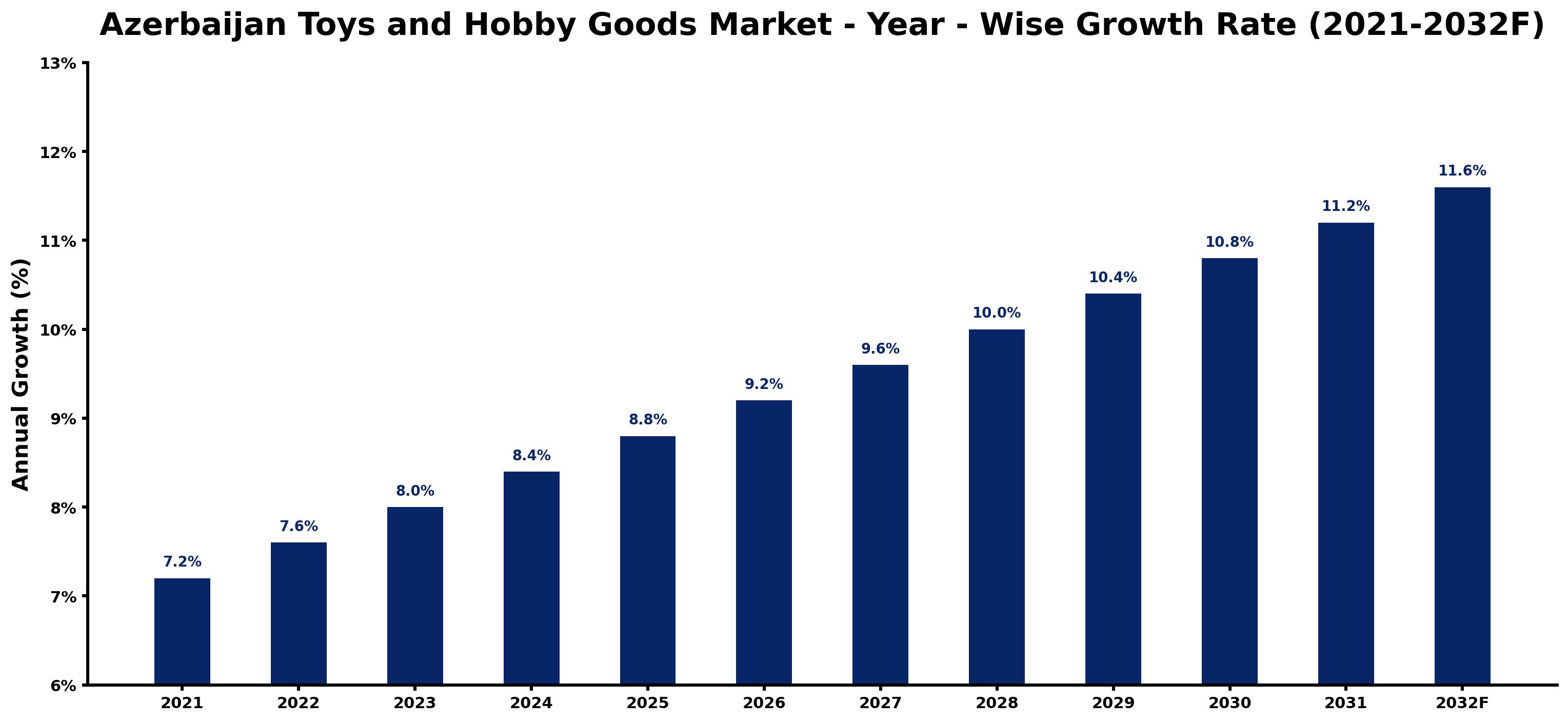
The table below presents the year wise growth rates along with the key drivers influencing the market
| Year | Growth Rate | Major Drivers |
| 2021 | 7.2% | Consumer interest in educational toys reflects a shift towards skill development. |
| 2022 | 7.6% | Brands increasingly focus on eco-friendly materials to appeal to conscious parents. |
| 2023 | 8.0% | Online shopping platforms expand, catering to diverse customer preferences across Azerbaijan. |
| 2024 | 8.4% | Local manufacturers gain traction by introducing culturally relevant toy designs. |
| 2025 | 8.8% | Innovation in tech-driven toys captivates children, enhancing playtime engagement significantly. |
| 2026 | 9.2% | Hobby goods gain popularity as leisure activities become essential post-pandemic. |
| 2027 | 9.6% | Collaborations between international brands and local businesses foster product diversity. |
| 2028 | 10.0% | Increased disposable income empowers families to spend more on quality toys. |
| 2029 | 10.4% | Influencer marketing begins shaping trends, driving interest in niche toy segments. |
| 2030 | 10.8% | School curriculum reforms promote STEAM toys, aligning education with market growth. |
| 2031 | 11.2% | Social media platforms cultivate communities, encouraging shared experiences around hobbies. |
| 2032 | 11.6% | Sustainable practices in manufacturing attract environmentally conscious consumers, reshaping preferences. |
Note - Market size estimations and growth projections presented in this report are based on 6Wresearch's advanced forecasting approach, validated with industry datasets as of June 2026.
Azerbaijan Toys and Hobby Goods Market Synopsis
The Azerbaijan Toys and Hobby Goods Market is projected to reach 9.2% and witness significant growth during the forecast period (2026-2032). This growth is largely driven by an increasing demand for innovative products, particularly in the categories of electronic games, dolls, action figures, and related items. As parents become more willing to invest in their children's learning experiences, fueled by rising disposable incomes, the market is expecting a substantial uptick across various toy segments including educational toys and outdoor play equipment. Additionally, the expansion of childcare facilities such as preschools and daycare centers has had a notable impact on market development, fostering a conducive environment for growth.
Azerbaijan Toys and Hobby Goods Market Growth Drivers
Several key factors are propelling the Azerbaijan Toys and Hobby Goods Market forward. Firstly, the surge in disposable income among consumers has encouraged parents to spend more on quality toys that enhance their children's educational experiences. Secondly, the increased availability of diverse product lines, including eco-friendly and educational toys, has attracted a wider customer base. Furthermore, the growth of e-commerce platforms has simplified access to a range of toys and hobby goods, allowing consumers to make informed purchases. Additionally, the rise in leisure activities and outdoor play has fostered demand for outdoor toys. Lastly, greater awareness around child development has led parents to prioritize educational and developmental toys, further cementing the market's growth trajectory.
Azerbaijan Toys and Hobby Goods Market Trends and Opportunities
The Azerbaijan Toys and Hobby Goods Market is undergoing notable trends that present rich opportunities for stakeholders. The increasing inclination towards electronic and interactive toys, particularly among tech-savvy families, signifies a potential area for investment and innovation. Moreover, trends indicating a preference for sustainable products are encouraging manufacturers to explore eco-friendly materials in toy production. Market participants can also capitalize on the rising popularity of educational toys as more parents are keen to provide their children with tools that facilitate learning through play. Furthermore, partnerships with educational institutions and childcare facilities are becoming more common, presenting opportunities for collaborative product development. A focus on digital marketing strategies is also essential as parents increasingly utilize online resources to inform their purchase decisions.
Azerbaijan Toys and Hobby Goods Market Challenges and Restraints
While the Azerbaijan Toys and Hobby Goods Market is poised for growth, a few challenges and restraints may hinder its progress. One key challenge is the intense competition from low-cost imports that can undermine local manufacturers. Additionally, fluctuating economic conditions may impact consumer spending on non-essential items, including toys. Regulatory hurdles related to safety standards and import regulations can also pose challenges for businesses looking to enter or expand within the market. Furthermore, market participants must adapt to changing consumer preferences rapidly, which can be resource-intensive. Lastly, the need for continued innovation in product offerings is critical, as stagnant product lines may lead to declining interest from consumers.
Azerbaijan Toys and Hobby Goods Market Government Investment and Initiatives
The Azerbaijani government has recognized the importance of the Toys and Hobby Goods sector and is taking steps to foster its development through various initiatives. Investments in educational programs have been a priority, promoting the importance of learning and play in childhood development. Additionally, public spending aimed at enhancing childcare facilities and preschools has contributed to increased demand for educational toys. The government is also encouraging collaboration with local businesses to stimulate the market, resulting in promotional events that showcase the benefits of quality toys. Furthermore, incentives for businesses that focus on sustainable production practices are becoming more prevalent, aligning with global trends towards environmental sustainability.
Azerbaijan Toys and Hobby Goods Market Latest Developments (May 2025 - June 2026)
Recent developments in the Azerbaijan Toys and Hobby Goods Market indicate a dynamic shift towards digital engagement and product diversification. The period has seen an uptick in technology-driven toys, reflecting the increasing integration of digital platforms in children's play. Moreover, there has been a noticeable rise in online shopping, with many businesses investing in e-commerce capabilities to enhance consumer access. Additionally, partnerships between toy manufacturers and educational institutions have flourished, resulting in innovative products designed to bolster learning. The market is responding to consumer desires for sustainable options, with several companies revamping product lines to feature environmentally friendly materials. Overall, these developments suggest a responsive market that is evolving to meet the demands of modern consumers.
Azerbaijan Toys and Hobby Goods Market - Key Attractiveness of the Report
- 10 Years of Market Numbers
- Historical Data Starting from 2022 to 2025
- Base Year: 2025
- Forecast Data until 2032
- Key Performance Indicators Impacting the Market
- Major Upcoming Developments and Projects
Key Highlights of the Report:
- Azerbaijan Toys and Hobby Goods Market Outlook
- Market Size of Azerbaijan Toys and Hobby Goods Market, 2025
- Forecast of Azerbaijan Toys and Hobby Goods Market, 2032F
- Historical Data and Forecast of Azerbaijan Toys and Hobby Goods Revenues & Volume for the Period 2022-2032F
- Azerbaijan Toys and Hobby Goods Market Trend Evolution
- Azerbaijan Toys and Hobby Goods Market Drivers and Challenges
- Azerbaijan Toys and Hobby Goods Price Trends
- Azerbaijan Toys and Hobby Goods Porter's Five Forces
- Azerbaijan Toys and Hobby Goods Industry Life Cycle
- Historical Data and Forecast of Azerbaijan Toys and Hobby Goods Market Revenues & Volume By Type for the Period 2022-2032F
- Historical Data and Forecast of Azerbaijan Toys and Hobby Goods Market Revenues & Volume By Sports Toys for the Period 2022-2032F
- Historical Data and Forecast of Azerbaijan Toys and Hobby Goods Market Revenues & Volume By Intellectual Toys for the Period 2022-2032F
- Historical Data and Forecast of Azerbaijan Toys and Hobby Goods Market Revenues & Volume By Education Toys for the Period 2022-2032F
- Historical Data and Forecast of Azerbaijan Toys and Hobby Goods Market Revenues & Volume By Decorative Toys for the Period 2022-2032F
- Historical Data and Forecast of Azerbaijan Toys and Hobby Goods Market Revenues & Volume By Other for the Period 2022-2032F
- Historical Data and Forecast of Azerbaijan Toys and Hobby Goods Market Revenues & Volume By Application for the Period 2022-2032F
- Historical Data and Forecast of Azerbaijan Toys and Hobby Goods Market Revenues & Volume By Online Sales for the Period 2022-2032F
- Historical Data and Forecast of Azerbaijan Toys and Hobby Goods Market Revenues & Volume By Offline Sales for the Period 2022-2032F
- Historical Data and Forecast of Azerbaijan Toys and Hobby Goods Market Revenues & Volume By Others for the Period 2022-2032F
- Azerbaijan Toys and Hobby Goods Import Export Trade Statistics
- Market Opportunity Assessment By Type
- Market Opportunity Assessment By Application
- Azerbaijan Toys and Hobby Goods Top Companies Market Share
- Azerbaijan Toys and Hobby Goods Competitive Benchmarking By Technical and Operational Parameters
- Azerbaijan Toys and Hobby Goods Company Profiles
- Azerbaijan Toys and Hobby Goods Key Strategic Recommendations






































