Azerbaijan Used Car Market Summary
The azerbaijan used car market was estimated at USD 446 Million in 2025 and is projected to reach USD 570 Million by 2032, growing at a CAGR of 3.9% from 2026 to 2032.
Azerbaijan Used Car Market Year-wise Growth Rate and Key Drivers
This graph highlights how the Azerbaijan Used Car Market has steadily grown over the past five years, supported by major growth factors.
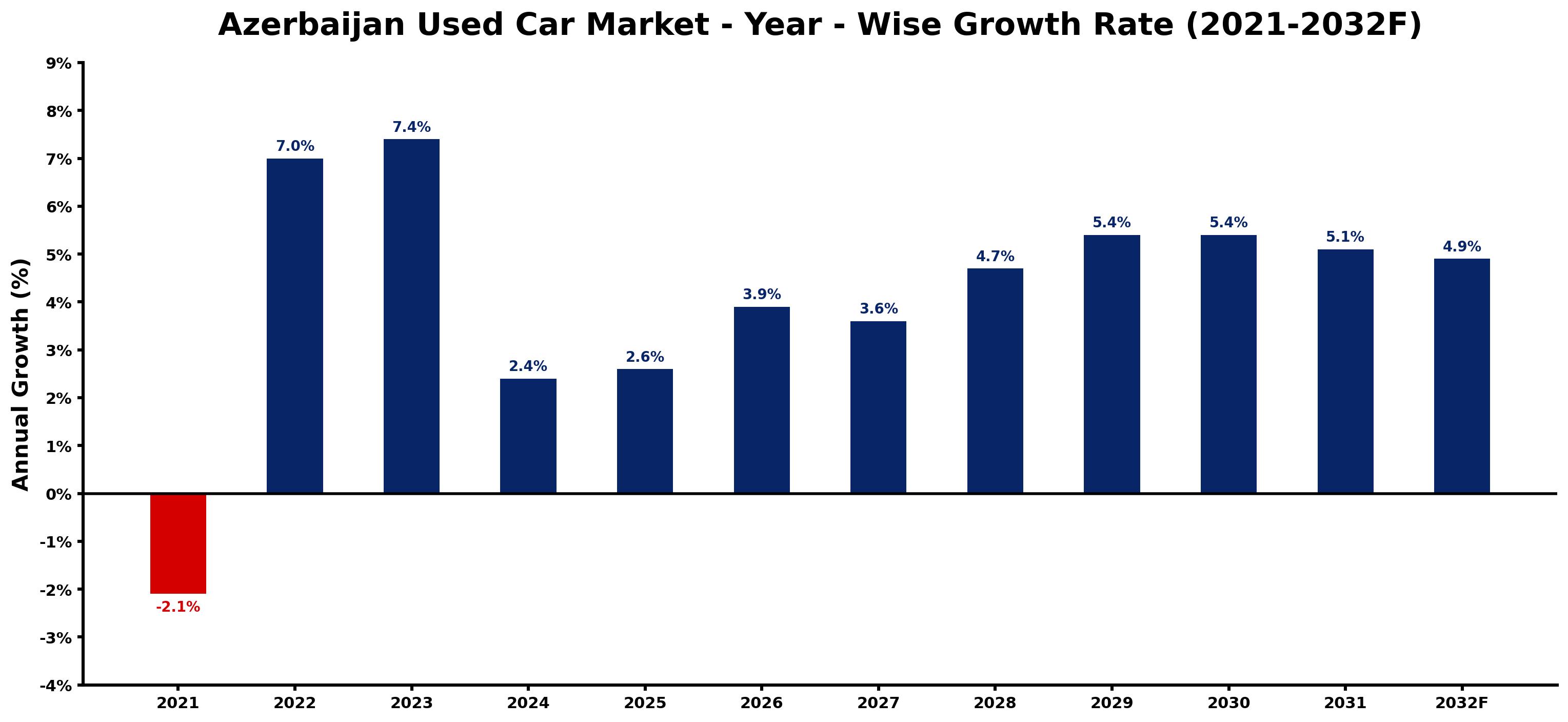
The table below presents the year wise growth rates along with the key drivers influencing the market
| Year | Growth Rate | Major Drivers |
| 2021 | -2.1% | Increased import tariffs led to higher used car prices, diminishing affordability for potential buyers. |
| 2022 | 7.0% | Infrastructure improvements make regional transportation networks more accessible and efficient. |
| 2023 | 7.4% | Inflationary pressures on new cars drive consumers toward more affordable used options. |
| 2024 | 2.4% | Increased internet penetration enhances online marketplaces for buying and selling used cars. |
| 2025 | 2.6% | Younger generations favor used cars, valuing affordability over luxury vehicle trends. |
| 2026 | 3.9% | Rising fuel prices prompt a shift toward fuel-efficient models in used car markets. |
| 2027 | 3.6% | The introduction of financing options attracts more buyers to the used car segment. |
| 2028 | 4.7% | Local automotive service centers emerge, improving post-purchase support and reliability. |
| 2029 | 5.4% | Consumer awareness of environmental impacts encourages purchases of eco-friendly used vehicles. |
| 2030 | 5.4% | Regional partnerships boost cross-border trade in used cars, expanding market accessibility. |
| 2031 | 5.1% | Increased availability of electric vehicles in the used market reflects changing consumer preferences. |
| 2032 | 4.9% | Enhanced customer service experiences in dealerships reshape buyer expectations and satisfaction. |
Note - Market size estimations and growth projections presented in this report are based on 6Wresearch's advanced forecasting approach, validated with industry datasets as of June 2026.
Azerbaijan Used Car Market Synopsis
The Azerbaijan Used Car Market is projected to reach 3.9% and witness significant growth during the forecast period (2026-2032). The factors contributing to this growth include increased disposable incomes among the populace, a burgeoning middle class, and a collective preference for affordable transportation options. As economic conditions improve, the demand for used vehicles is expected to intensify, encompassing a variety of options from economy to luxury cars. Notably, Japanese brands have emerged as preferred choices within the market due to their reliability and cost-effectiveness.
Azerbaijan Used Car Market Growth Drivers
Several key drivers are propelling the growth of the Azerbaijan Used Car Market. Firstly, the rise in disposable income among consumers creates a greater capacity for purchasing pre-owned vehicles. Secondly, the expanding middle class is increasingly seeking budget-friendly alternatives to new vehicles, further stimulating the demand for used cars. Additionally, the high cost of new cars plays a crucial role as many consumers opt for the more economical choice of reliable pre-owned options. Moreover, the convenience offered by online platforms and dealerships facilitates easier transactions, thereby enhancing market activity. Lastly, the growing trend towards environmentally conscious buying may encourage consumers to consider pre-owned vehicles as a sustainable option.
Azerbaijan Used Car Market Trends and Opportunities
The Azerbaijan Used Car Market is witnessing a notable shift towards digitalization, particularly with the increasing use of online marketplaces for vehicle transactions. This trend allows consumers to access a broader range of vehicles and simplifies the process of comparing options. The rising popularity of certified pre-owned vehicles is another significant trend, as consumers prioritize quality assurance and reliability. Online platforms are increasingly adapting to meet this demand by incorporating features that promote transparency and trust in transactions. There is also potential for growth in value-added services such as vehicle inspections, certification, and financing options tailored for used car purchases, representing a lucrative opportunity for investors in this evolving landscape.
Azerbaijan Used Car Market Challenges and Restraints
Despite the promising growth, the Azerbaijan Used Car Market is not without its challenges. Transparency remains a significant concern, as many buyers grapple with uncertainties regarding vehicle history and pricing, which can lead to mistrust between parties. The market's fragmentation, characterized by numerous small dealerships and individual sellers, complicates comparison shopping for consumers, hindering informed decision-making. Additionally, concerns regarding the quality and condition of used cars prevail, as some sellers may misrepresent vehicles or conceal defects. Limited access to financing options also poses a barrier for potential buyers, further affecting market dynamics. Addressing these challenges by enhancing transparency and consumer protection measures will be essential to bolster market confidence.
Azerbaijan Used Car Market Investment Opportunities
Investors looking to enter the Azerbaijan Used Car Market will find enticing opportunities linked to the increasing demand for economical transportation. As disposable incomes rise, there is a clear shift towards pre-owned vehicles as a feasible alternative to new cars. Opportunities for investment are abundant, particularly in sectors such as certified pre-owned programs, vehicle inspection and certification services, and robust online platforms for vehicle transactions. Additionally, the growing need for financing options presents an avenue for financial institutions to cater to this market segment. With Azerbaijan's ongoing economic development, the environment for investments in the used car industry appears favorable.
Azerbaijan Used Car Market Government Investment and Initiatives
The government of Azerbaijan is actively pursuing policies to regulate the used car market, focusing on consumer protection and fostering fair competition. Key initiatives include mandating vehicle inspections to verify roadworthiness, which serves to enhance safety standards and protect buyers. Furthermore, sellers are obliged to provide accurate information regarding the vehicle's history and condition, thereby promoting transparency within transactions. Import duties and taxes on used vehicles are implemented to manage the influx of older, potentially unsafe cars. The government is also encouraging environmentally friendly vehicle usage through various incentives and subsidies, aiming to boost the overall sustainability of the automotive sector. These measures collectively aim to establish a reliable and transparent used car market, benefiting both consumers and the broader economy.
Azerbaijan Used Car Market Latest Developments (May 2025 - June 2026)
Recent developments within the Azerbaijan Used Car Market indicate a shift towards greater digital engagement, with an increasing number of consumers utilizing online platforms for vehicle purchases. This trend highlights a growing acceptance of e-commerce solutions in the automotive sector. Additionally, there has been a noticeable rise in the number of certified pre-owned programs implemented by various dealerships, reflecting the demand for quality assurance among buyers. Furthermore, the government's focus on enhancing consumer protection measures, including stricter regulations regarding vehicle inspections and seller transparency, is anticipated to build consumer trust in the market. These changes suggest a move towards a more organized and reputable used car market environment.
Azerbaijan Used Car Market - Key Attractiveness of the Report
- 10 Years of Market Numbers
- Historical Data Starting from 2022 to 2025
- Base Year: 2025
- Forecast Data until 2032
- Key Performance Indicators Impacting the Market
- Major Upcoming Developments and Projects
Key Highlights of the Report:
- Azerbaijan Used Car Market Outlook
- Market Size of Azerbaijan Used Car Market, 2025
- Forecast of Azerbaijan Used Car Market, 2032F
- Historical Data and Forecast of Azerbaijan Used Car Revenues & Volume for the Period 2022-2032F
- Azerbaijan Used Car Market Trend Evolution
- Azerbaijan Used Car Market Drivers and Challenges
- Azerbaijan Used Car Price Trends
- Azerbaijan Used Car Porter's Five Forces
- Azerbaijan Used Car Industry Life Cycle
- Historical Data and Forecast of Azerbaijan Used Car Market Revenues & Volume By Vehicle Type for the Period 2022-2032F
- Historical Data and Forecast of Azerbaijan Used Car Market Revenues & Volume By Hatchbacks for the Period 2022-2032F
- Historical Data and Forecast of Azerbaijan Used Car Market Revenues & Volume By Sedan for the Period 2022-2032F
- Historical Data and Forecast of Azerbaijan Used Car Market Revenues & Volume By Sports Utility Vehicle for the Period 2022-2032F
- Historical Data and Forecast of Azerbaijan Used Car Market Revenues & Volume By Others for the Period 2022-2032F
- Historical Data and Forecast of Azerbaijan Used Car Market Revenues & Volume By Vendor for the Period 2022-2032F
- Historical Data and Forecast of Azerbaijan Used Car Market Revenues & Volume By Organized for the Period 2022-2032F
- Historical Data and Forecast of Azerbaijan Used Car Market Revenues & Volume By Unorganized for the Period 2022-2032F
- Historical Data and Forecast of Azerbaijan Used Car Market Revenues & Volume By Fuel Type for the Period 2022-2032F
- Historical Data and Forecast of Azerbaijan Used Car Market Revenues & Volume By Gasoline for the Period 2022-2032F
- Historical Data and Forecast of Azerbaijan Used Car Market Revenues & Volume By Diesel for the Period 2022-2032F
- Historical Data and Forecast of Azerbaijan Used Car Market Revenues & Volume By Alternative Fuel Vehicles for the Period 2022-2032F
- Azerbaijan Used Car Import Export Trade Statistics
- Market Opportunity Assessment By Vehicle Type
- Market Opportunity Assessment By Vendor
- Market Opportunity Assessment By Fuel Type
- Azerbaijan Used Car Top Companies Market Share
- Azerbaijan Used Car Competitive Benchmarking By Technical and Operational Parameters
- Azerbaijan Used Car Company Profiles
- Azerbaijan Used Car Key Strategic Recommendations






































