Azerbaijan Wood Pellets Market Summary
The azerbaijan wood pellets market was estimated at USD 1149 Million in 2025 and is projected to reach USD 2024 Million by 2032, growing at a CAGR of 9.7% from 2026 to 2032.
Azerbaijan Wood Pellets Market Year-wise Growth Rate and Key Drivers
This graph highlights how the Azerbaijan Wood Pellets Market has steadily grown over the past five years, supported by major growth factors.
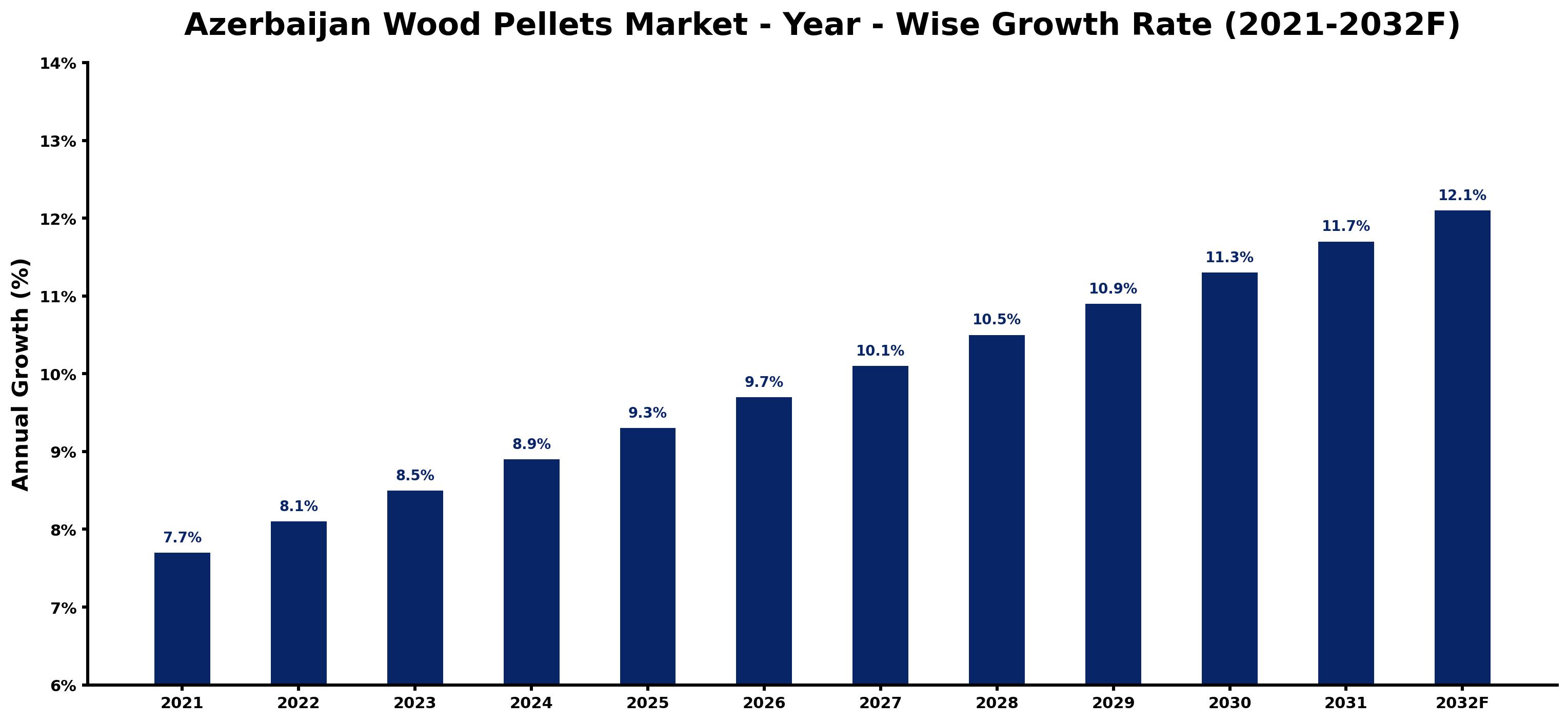
The table below presents the year wise growth rates along with the key drivers influencing the market
| Year | Growth Rate | Major Drivers |
| 2021 | 7.7% | Wood pellet production started gaining attention due to renewable energy goals. |
| 2022 | 8.1% | Consumer preferences shifted towards cleaner energy solutions for residential heating. |
| 2023 | 8.5% | Local manufacturers began investing in advanced technologies to enhance pellet quality. |
| 2024 | 8.9% | Azerbaijan's energy diversification efforts heightened wood pellets' market visibility. |
| 2025 | 9.3% | Environmental awareness campaigns emphasized the benefits of sustainable biomass energy. |
| 2026 | 9.7% | Rural electrification projects increasingly integrated wood pellets into energy solutions. |
| 2027 | 10.1% | Regional trade agreements facilitated easier access to international wood pellet markets. |
| 2028 | 10.5% | Urban development requirements favored renewable energy sources over fossil fuels. |
| 2029 | 10.9% | Technological innovations streamlined the pellet production process and reduced costs. |
| 2030 | 11.3% | Substantial investments in logistics improved the supply chain for wood pellets. |
| 2031 | 11.7% | Research on biomass energy solidified its role in national energy policies. |
| 2032 | 12.1% | Growing export opportunities to neighboring countries expanded Azerbaijan's market footprint. |
Note - Market size estimations and growth projections presented in this report are based on 6Wresearch's advanced forecasting approach, validated with industry datasets as of June 2026.
Azerbaijan Wood Pellets Market Synopsis
The Azerbaijan Wood Pellets Market is projected to reach 9.7% and witness significant growth during the forecast period (2026-2032). This growth is prominently driven by an increasing awareness of environmental sustainability, coupled with escalating demand for renewable energy sources. Government initiatives aimed at promoting renewable energy usage are also pivotal in shaping the market landscape. Furthermore, rising investments in biomass power plants will enhance the overall market dynamics, while various industries increasingly adopt wood pellets as a sustainable alternative to conventional heating fuels, such as coal and oil.
Azerbaijan Wood Pellets Market Growth Drivers
The Azerbaijan Wood Pellets Market is poised for robust expansion due to several key growth drivers:
- Environmental Concerns: The heightened awareness regarding the adverse impacts of fossil fuels on climate change has led to increased interest in renewable energy solutions, particularly wood pellets, which are regarded as a cleaner alternative.
- Government Support: Azerbaijan's government is actively promoting the use of renewable energy, implementing policies that encourage investment in biomass resources, which is crucial for driving demand in the wood pellets market.
- Investment in Biomass Power: The influx of investments in biomass power generation facilities enhances the demand for wood pellets, positioning them as a vital component in the energy mix.
- Shift to Renewable Energy: Industries are increasingly adopting wood pellets as a renewable energy source, which aligns with global sustainability goals and the shift away from fossil fuels.
- Technological Advancements: Improvements in production technology and pelletizing processes are enhancing the efficiency and quality of wood pellets, thus attracting more users to this eco-friendly fuel source.
Azerbaijan Wood Pellets Market Challenges and Restraints
Despite the positive outlook, there are several challenges that may impede the growth of the Azerbaijan Wood Pellets Market:
- Supply Chain Issues: Fluctuations in the supply of raw materials needed for pellet production may create uncertainties in the wood pellet supply chain, affecting market stability.
- Price Volatility: The price of wood pellets can be influenced by various external factors, including raw material costs and competition with other fuel sources, which may affect consumption rates.
- Infrastructure Limitations: The lack of sufficient infrastructure to support widespread distribution and usage of wood pellets may limit market penetration in certain regions.
- Regulatory Hurdles: Stricter regulations surrounding biomass production and sustainability certifications may pose compliance challenges for manufacturers in the wood pellets market.
- Public Awareness: Limited public awareness regarding the benefits and applications of wood pellets could slow down market acceptance and growth.
Azerbaijan Wood Pellets Market Investment Opportunities
The Azerbaijan Wood Pellets Market presents various investment opportunities that could attract stakeholders looking to capitalize on the renewable energy sector:
- Biomass Power Plants: Investment in the establishment and expansion of biomass power plants can significantly increase the demand for wood pellets, creating new revenue streams.
- Production Facilities: Developing modern, efficient pellet production facilities can cater to the growing demand and improve supply chain reliability.
- Research and Development: Investment in R&D focused on enhancing pellet production technologies and exploring new feedstock sources can lead to product innovation and market differentiation.
- Marketing and Education: Initiatives aimed at raising awareness among end-users and educating them about the benefits of wood pellets can drive consumption.
- Sustainability Certifications: Investing in sustainable practices and obtaining certifications can enhance market credibility and attract environmentally conscious consumers.
Azerbaijan Wood Pellets Market Government Investment and Initiatives
The government of Azerbaijan has demonstrated a strong commitment to fostering the growth of the renewable energy sector, which includes the wood pellets market. Recent initiatives focus on creating a conducive regulatory environment and providing financial incentives for investments in biomass energy projects. This includes public spending on infrastructure development that supports biomass production and distribution, as well as initiatives aimed at raising public awareness about the benefits of transitioning to more sustainable energy sources. The government is also exploring partnerships with international organizations to enhance technological capabilities in the biomass sector, which is expected to play a crucial role in the overall development of the Azerbaijan wood pellets market.
Azerbaijan Wood Pellets Market Latest Developments (May 2025 - June 2026)
During the period from May 2025 to June 2026, the Azerbaijan Wood Pellets Market has seen notable developments, reflecting the industry's dynamic nature. There has been an increase in collaborative efforts between public and private sectors to improve biomass energy infrastructure and expand production capacities. Additionally, several pilot projects aimed at utilizing wood pellets in district heating systems have been initiated, showcasing the potential for versatile applications. The government has continued to enhance policy frameworks to encourage investments, particularly focusing on energy diversification and sustainability goals. These developments are essential in setting the stage for long-term growth in the wood pellets market within Azerbaijan.
Azerbaijan Wood Pellets Market - Key Attractiveness of the Report
- 10 Years of Market Numbers
- Historical Data Starting from 2022 to 2025
- Base Year: 2025
- Forecast Data until 2032
- Key Performance Indicators Impacting the Market
- Major Upcoming Developments and Projects
Key Highlights of the Report:
- Azerbaijan Wood Pellets Market Outlook
- Market Size of Azerbaijan Wood Pellets Market, 2025
- Forecast of Azerbaijan Wood Pellets Market, 2032F
- Historical Data and Forecast of Azerbaijan Wood Pellets Revenues & Volume for the Period 2022-2032F
- Azerbaijan Wood Pellets Market Trend Evolution
- Azerbaijan Wood Pellets Market Drivers and Challenges
- Azerbaijan Wood Pellets Price Trends
- Azerbaijan Wood Pellets Porter's Five Forces
- Azerbaijan Wood Pellets Industry Life Cycle
- Historical Data and Forecast of Azerbaijan Wood Pellets Market Revenues & Volume By Types for the Period 2022-2032F
- Historical Data and Forecast of Azerbaijan Wood Pellets Market Revenues & Volume By Hardwood for the Period 2022-2032F
- Historical Data and Forecast of Azerbaijan Wood Pellets Market Revenues & Volume By Softwood for the Period 2022-2032F
- Historical Data and Forecast of Azerbaijan Wood Pellets Market Revenues & Volume By Applications for the Period 2022-2032F
- Historical Data and Forecast of Azerbaijan Wood Pellets Market Revenues & Volume By Power Plants for the Period 2022-2032F
- Historical Data and Forecast of Azerbaijan Wood Pellets Market Revenues & Volume By Residential Heating for the Period 2022-2032F
- Historical Data and Forecast of Azerbaijan Wood Pellets Market Revenues & Volume By Commercial Heating for the Period 2022-2032F
- Historical Data and Forecast of Azerbaijan Wood Pellets Market Revenues & Volume By Combined Heat and Power (CHP) for the Period 2022-2032F
- Azerbaijan Wood Pellets Import Export Trade Statistics
- Market Opportunity Assessment By Types
- Market Opportunity Assessment By Applications
- Azerbaijan Wood Pellets Top Companies Market Share
- Azerbaijan Wood Pellets Competitive Benchmarking By Technical and Operational Parameters
- Azerbaijan Wood Pellets Company Profiles
- Azerbaijan Wood Pellets Key Strategic Recommendations






































