Azerbaijan Wooden Furniture Market Size, Share & Growth Rate
The Azerbaijan Wooden Furniture Market was estimated at USD 1059 Million in 2025 and is projected to reach USD 1815 Million by 2032, growing at a CAGR of 8.0% from 2026 to 2032. This growth trajectory is primarily driven by urbanization trends and a booming housing construction sector, which is increasingly focused on quality and aesthetically appealing wooden furniture. Additionally, the rising disposable income and evolving lifestyle preferences among consumers are fostering a greater demand for stylish and functional wooden furniture across various applications.
Azerbaijan Wooden Furniture Market Growth Rate Analysis (2021-2032)
The Azerbaijan wooden furniture market is poised for robust growth, with an impressive trajectory of 7.2% in 2021, escalating to an anticipated 11.6% by 2032. This upward momentum is driven by a confluence of factors, including a surge in consumer demand for sustainable and locally sourced materials, bolstered by government initiatives promoting the use of eco-friendly resources. Additionally, technological advancements in production methods are enhancing efficiency and reducing costs, facilitating a more competitive market landscape. Investment in infrastructure, alongside a growing middle class eager to enhance their living environments, further fuels this expansion. As digitalization reshapes consumer purchasing behavior, the market is well-positioned to capitalize on evolving trends.
Azerbaijan Wooden Furniture Market Year-wise Growth Rate and Key Drivers
This graph highlights how the Azerbaijan Wooden Furniture Market has steadily grown over the past five years, supported by major growth factors.
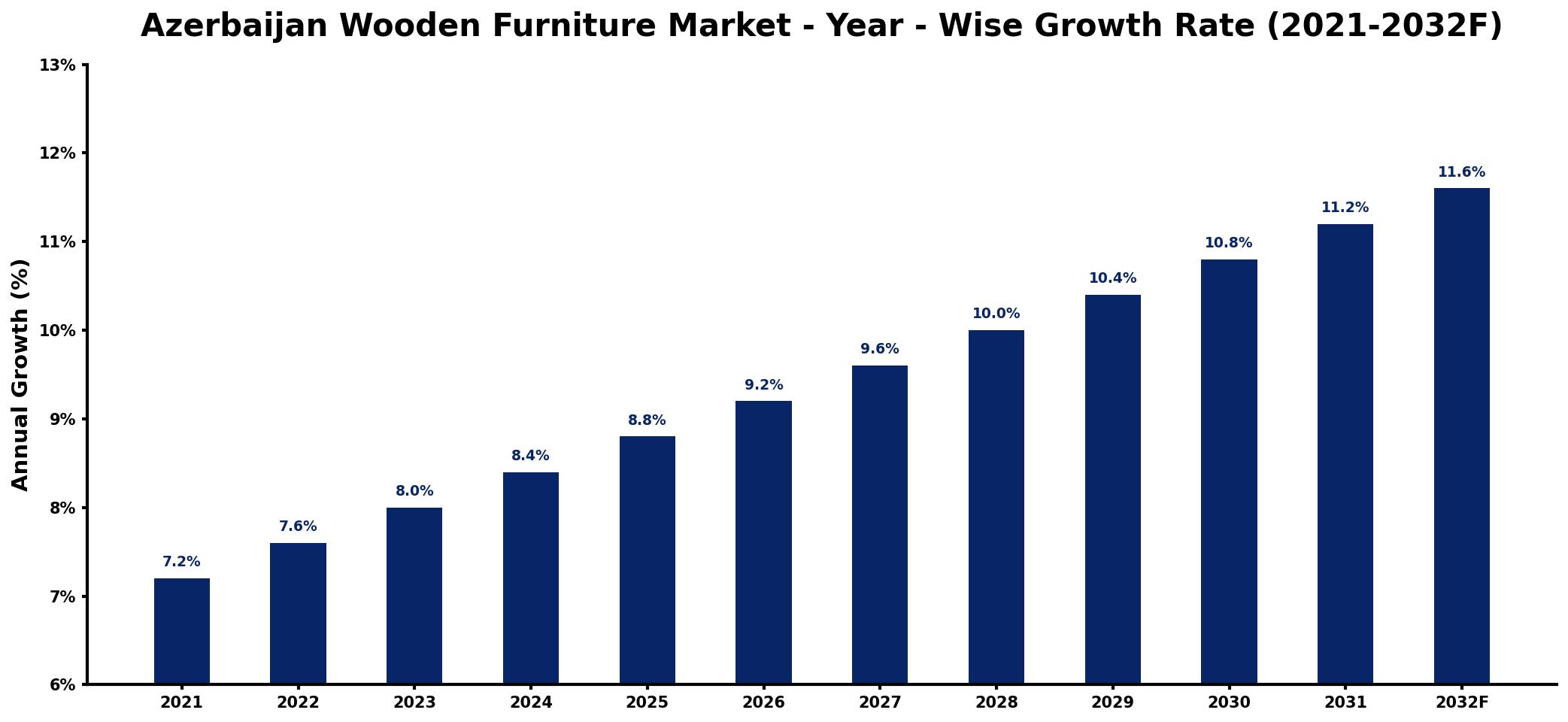
The table below presents the year‑wise growth rates along with the key drivers influencing the market
| Year | Growth Rate | Major Drivers |
| 2021 | 7.2% | Rising consumer spending patterns |
| 2022 | 7.6% | Growing urbanization and development |
| 2023 | 8.0% | Increased online retail presence |
| 2024 | 8.4% | Surge in home renovation projects |
| 2025 | 8.8% | Expansion of eco-friendly initiatives |
| 2026 | 9.2% | Boost in domestic manufacturing capabilities |
| 2027 | 9.6% | Increase in disposable income levels |
| 2028 | 10.0% | Growth in interior design trends |
| 2029 | 10.4% | Higher demand for custom solutions |
| 2030 | 10.8% | Strengthening export market opportunities |
| 2031 | 11.2% | Increased focus on sustainability practices |
| 2032 | 11.6% | increased capital investment inflows |
Note: Market size estimations and growth projections presented in this report are based on 6Wresearch's proprietary forecasting methodology, utilizing the latest available industry data, government publications, and primary research inputs.
Azerbaijan Wooden Furniture Market Synopsis
In recent years, the Azerbaijan wooden furniture market has gained momentum, reflecting a fusion of traditional craftsmanship and modern design sensibilities. As consumer preferences shift towards more durable and visually appealing furnishings, the market is poised for significant expansion, aligning itself with both local and international trends in interior design.
Looking ahead, the market is set to embrace new design innovations and customization options, catering to diverse consumer needs. However, manufacturers must navigate challenges related to competition and supply chain stability, which will influence their ability to maintain growth and profitability.
Azerbaijan Wooden Furniture Market Key Takeaways
- The market is experiencing a robust growth trajectory fueled by urbanization and rising disposable income.
- Consumers are increasingly seeking quality and stylish wooden furniture for both residential and commercial spaces.
- Customization and diverse design options are pivotal in meeting the preferences of contemporary buyers.
- Sustainable sourcing and eco-friendly production practices are becoming important for market differentiation.
- Government initiatives are bolstering support for the wooden furniture industry, encouraging local production.
Evaluation of Restraints in Azerbaijan Wooden Furniture Market
Despite the positive outlook for the Azerbaijan wooden furniture market, several restraints pose challenges to sustained growth. Foremost among these is the difficulty manufacturers face in achieving distinctive design innovation while remaining cost-competitive. The market's reliance on raw materials can lead to vulnerabilities, particularly amid fluctuating costs and supply chain disruptions. Additionally, the need to adhere to quality standards while promoting sustainable practices complicates the operational landscape, making it challenging for businesses to balance quality, affordability, and eco-responsibility.
Azerbaijan Wooden Furniture Market Trends
Current trends highlight a shift towards multifunctional and space-saving designs, especially in urban environments where living spaces are often limited. Additionally, the rise of online retail channels is changing consumer purchasing behaviors, making it easier to access a variety of wooden furniture options. Innovations in engineered wood products are also contributing to the trend, as they provide durability and design versatility while often being more cost-effective than solid wood.
Azerbaijan Wooden Furniture Market Opportunities
The opportunities for growth in the Azerbaijan wooden furniture market lie in increasing consumer demand for sustainable and eco-friendly products. As more consumers prioritize environmentally conscious choices, brands that emphasize sustainable sourcing and production methods will likely gain a competitive advantage. Furthermore, expanding into export markets could open new avenues for manufacturers, particularly as global interest in Azerbaijani craftsmanship continues to grow.
Government Initiatives in the Azerbaijan Wooden Furniture Market
The Azerbaijani government is actively supporting the wooden furniture industry through various initiatives designed to stimulate growth and enhance competitiveness. This includes providing incentives for local manufacturers to innovate and improve product quality, while also establishing regulations that ensure safety and environmental standards. Additionally, the government is promoting marketing efforts aimed at both domestic and international markets, which can help raise the profile of Azerbaijani wooden furniture on the global stage.
Future Insights of the Azerbaijan Wooden Furniture Market
Looking towards 2026-2032, the Azerbaijan wooden furniture market is expected to capitalize on emerging trends such as smart furniture and sustainable designs. The continued urbanization and the growing middle class will drive demand for stylish yet functional pieces that fit modern lifestyles. Moreover, with ongoing government support and increasing investment in technology and innovation, the market is well-positioned for robust growth in the coming years.
Azerbaijan Wooden Furniture Market Latest Developments (2025 - 2026)
Recent developments in the Azerbaijan wooden furniture market reflect a shift towards enhanced customization and the integration of technology into design processes. Manufacturers are increasingly adopting digital platforms for showcasing their products, while consumer engagement through social media is becoming a pivotal marketing strategy. Additionally, collaboration between local artisans and designers is fostering unique product offerings that appeal to both local and international consumers.
Azerbaijan Wooden Furniture Market - Key Attractiveness of the Report
- 10 Years of Market Numbers
- Historical Data Starting from 2022 to 2025
- Base Year: 2025
- Forecast Data until 2032
- Key Performance Indicators Impacting the Market
- Major Upcoming Developments and Projects
Key Highlights of the Report:
- Azerbaijan Wooden Furniture Market Outlook
- Market Size of Azerbaijan Wooden Furniture Market, 2025
- Forecast of Azerbaijan Wooden Furniture Market, 2032
- Historical Data and Forecast of Azerbaijan Wooden Furniture Revenues & Volume for the Period 2022-2032F
- Azerbaijan Wooden Furniture Market Trend Evolution
- Azerbaijan Wooden Furniture Market Drivers and Challenges
- Azerbaijan Wooden Furniture Price Trends
- Azerbaijan Wooden Furniture Porter's Five Forces
- Azerbaijan Wooden Furniture Industry Life Cycle
- Historical Data and Forecast of Azerbaijan Wooden Furniture Market Revenues & Volume By Type for the Period 2022-2032F
- Historical Data and Forecast of Azerbaijan Wooden Furniture Market Revenues & Volume By Hardwood for the Period 2022-2032F
- Historical Data and Forecast of Azerbaijan Wooden Furniture Market Revenues & Volume By Softwood for the Period 2022-2032F
- Historical Data and Forecast of Azerbaijan Wooden Furniture Market Revenues & Volume By Material for the Period 2022-2032F
- Historical Data and Forecast of Azerbaijan Wooden Furniture Market Revenues & Volume By Plywood for the Period 2022-2032F
- Historical Data and Forecast of Azerbaijan Wooden Furniture Market Revenues & Volume By Laminates for the Period 2022-2032F
- Historical Data and Forecast of Azerbaijan Wooden Furniture Market Revenues & Volume By MDF for the Period 2022-2032F
- Historical Data and Forecast of Azerbaijan Wooden Furniture Market Revenues & Volume By Other Materials for the Period 2022-2032F
- Historical Data and Forecast of Azerbaijan Wooden Furniture Market Revenues & Volume By Product for the Period 2022-2032F
- Historical Data and Forecast of Azerbaijan Wooden Furniture Market Revenues & Volume By Bedroom for the Period 2022-2032F
- Historical Data and Forecast of Azerbaijan Wooden Furniture Market Revenues & Volume By Seating for the Period 2022-2032F
- Historical Data and Forecast of Azerbaijan Wooden Furniture Market Revenues & Volume By Kitchen for the Period 2022-2032F
- Historical Data and Forecast of Azerbaijan Wooden Furniture Market Revenues & Volume By Other Products for the Period 2022-2032F
- Historical Data and Forecast of Azerbaijan Wooden Furniture Market Revenues & Volume By Application for the Period 2022-2032F
- Historical Data and Forecast of Azerbaijan Wooden Furniture Market Revenues & Volume By Residential for the Period 2022-2032F
- Historical Data and Forecast of Azerbaijan Wooden Furniture Market Revenues & Volume By Commercial for the Period 2022-2032F
- Historical Data and Forecast of Azerbaijan Wooden Furniture Market Revenues & Volume By Distribution Channel for the Period 2022-2032F
- Historical Data and Forecast of Azerbaijan Wooden Furniture Market Revenues & Volume By Offline for the Period 2022-2032F
- Historical Data and Forecast of Azerbaijan Wooden Furniture Market Revenues & Volume By Online for the Period 2022-2032F
- Azerbaijan Wooden Furniture Import Export Trade Statistics
- Market Opportunity Assessment By Type
- Market Opportunity Assessment By Material
- Market Opportunity Assessment By Product
- Market Opportunity Assessment By Application
- Market Opportunity Assessment By Distribution Channel
- Azerbaijan Wooden Furniture Top Companies Market Share
- Azerbaijan Wooden Furniture Competitive Benchmarking By Technical and Operational Parameters
- Azerbaijan Wooden Furniture Company Profiles
- Azerbaijan Wooden Furniture Key Strategic Recommendations






































