Bahamas Polyethylene Terephthalate Market Size Growth Rate
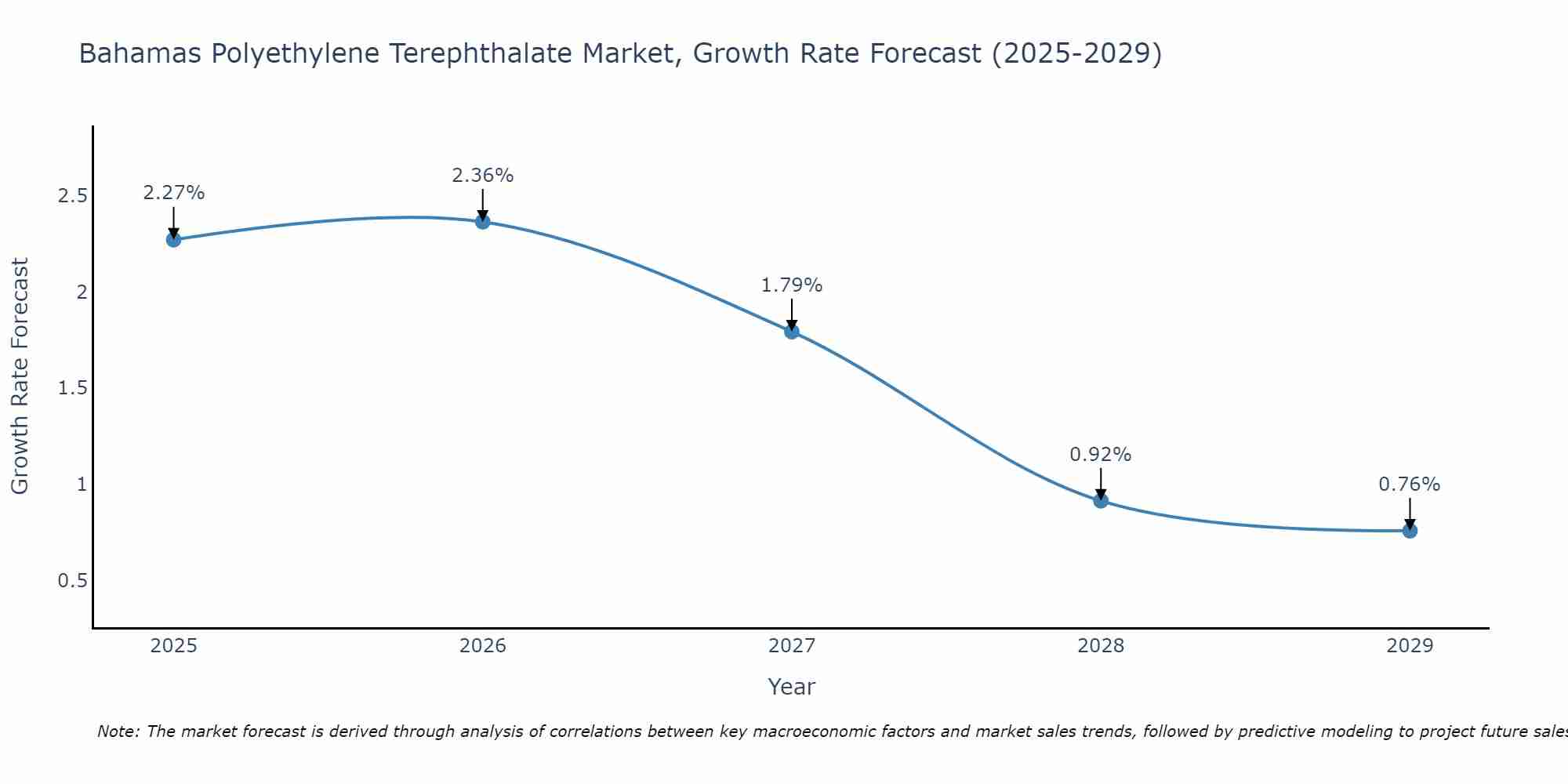
The Bahamas Polyethylene Terephthalate Market is projected to witness mixed growth rate patterns during 2025 to 2029. Starting at 2.27% in 2025, the market peaks at 2.36% in 2026, and settles at 0.76% by 2029.
Bahamas Polyethylene Terephthalate Market Overview
The polyethylene terephthalate (PET) market in the Bahamas is significant due to its widespread use in beverage and food packaging. PET is favored for its clarity, strength, and recyclability, making it an ideal choice for environmentally conscious manufacturers. As consumer preferences shift towards sustainable packaging solutions, the market for PET is projected to grow, driving innovations in recycling and material development.
Drivers of the market
The polyethylene terephthalate market is driven by the growing demand for sustainable packaging solutions and the rise of the circular economy. As consumers and businesses in the Bahamas seek eco-friendly options, PETs recyclability and versatility make it a popular choice for food and beverage packaging. The ongoing innovation in PET recycling technologies further supports the expansion of this market.
Challenges of the market
In the polyethylene terephthalate market, rising awareness of environmental impacts and recycling challenges are key concerns. Manufacturers must navigate stringent regulations and shifting consumer preferences toward sustainable materials. This landscape may require investment in research and development to enhance recycling capabilities and reduce environmental footprints.
Government Policy of the market
Government policies in the Bahamas support the polyethylene terephthalate (PET) market by promoting the use of recyclable and high-performance plastics in packaging and consumer goods. Regulations ensure that PET products meet quality and environmental standards, facilitating their use in enhancing product sustainability and performance.
Key Highlights of the Report:
- Bahamas Polyethylene Terephthalate Market Outlook
- Market Size of Bahamas Polyethylene Terephthalate Market, 2024
- Forecast of Bahamas Polyethylene Terephthalate Market, 2031
- Historical Data and Forecast of Bahamas Polyethylene Terephthalate Revenues & Volume for the Period 2021-2031
- Bahamas Polyethylene Terephthalate Market Trend Evolution
- Bahamas Polyethylene Terephthalate Market Drivers and Challenges
- Bahamas Polyethylene Terephthalate Price Trends
- Bahamas Polyethylene Terephthalate Porter`s Five Forces
- Bahamas Polyethylene Terephthalate Industry Life Cycle
- Historical Data and Forecast of Bahamas Polyethylene Terephthalate Market Revenues & Volume By Type for the Period 2021-2031
- Historical Data and Forecast of Bahamas Polyethylene Terephthalate Market Revenues & Volume By Virgin for the Period 2021-2031
- Historical Data and Forecast of Bahamas Polyethylene Terephthalate Market Revenues & Volume By Recycled for the Period 2021-2031
- Historical Data and Forecast of Bahamas Polyethylene Terephthalate Market Revenues & Volume By Application for the Period 2021-2031
- Historical Data and Forecast of Bahamas Polyethylene Terephthalate Market Revenues & Volume By Rigid Packaging for the Period 2021-2031
- Historical Data and Forecast of Bahamas Polyethylene Terephthalate Market Revenues & Volume By Film for the Period 2021-2031
- Historical Data and Forecast of Bahamas Polyethylene Terephthalate Market Revenues & Volume By Sheets and Straps for the Period 2021-2031
- Historical Data and Forecast of Bahamas Polyethylene Terephthalate Market Revenues & Volume By Others for the Period 2021-2031
- Bahamas Polyethylene Terephthalate Import Export Trade Statistics
- Market Opportunity Assessment By Type
- Market Opportunity Assessment By Application
- Bahamas Polyethylene Terephthalate Top Companies Market Share
- Bahamas Polyethylene Terephthalate Competitive Benchmarking By Technical and Operational Parameters
- Bahamas Polyethylene Terephthalate Company Profiles
- Bahamas Polyethylene Terephthalate Key Strategic Recommendations






































