Bahrain Candied Fruit Market: Import Trend Analysis
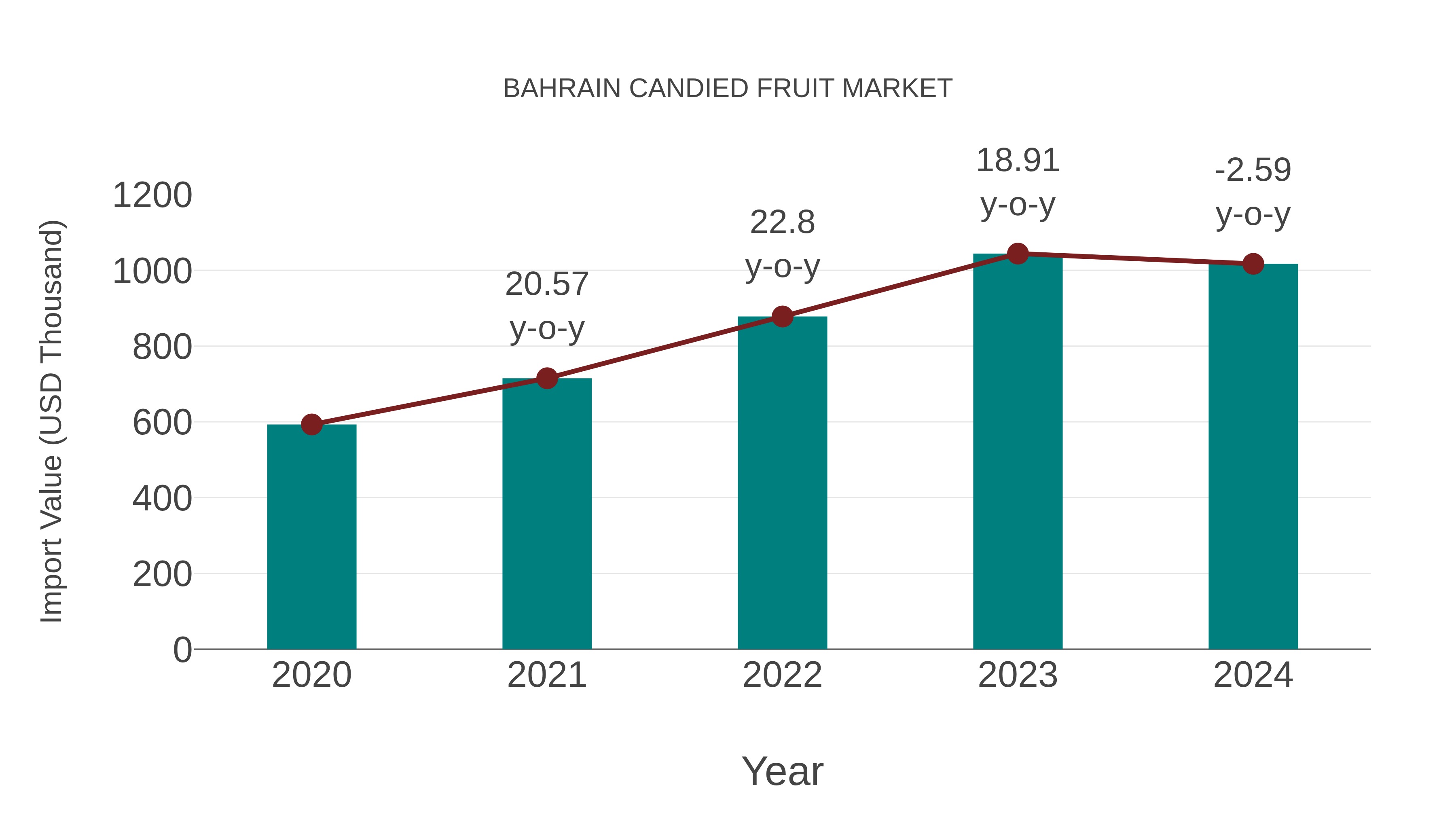
In 2024, Bahrain import trend for the candied fruit market experienced a decrease, with a growth rate of -2.59% compared to the previous year. However, the compound annual growth rate (CAGR) for the period 2020-2024 stood at a healthy 14.44%. This decline in import momentum could be attributed to shifts in consumer preferences or changes in trade policies impacting market stability.
Bahrain Candied Fruit Market Overview
The candied fruit market in Bahrain is growing, driven by increasing consumer interest in sweet snacks and desserts. Candied fruits are commonly used in confectionery, baked goods, and as standalone snacks. The market is influenced by the rising demand for high-quality, flavored products, with a focus on natural and organic ingredients. The growing interest in traditional Middle Eastern sweets, which often incorporate candied fruits, is also contributing to the market`s growth.
Drivers of the market
The candied fruit market in Bahrain is witnessing growth, supported by the increasing demand for sweet snacks and confectionery products. Candied fruits are popular as standalone snacks, as well as ingredients in baked goods and desserts, making them a versatile product in the food industry. The market is driven by the growing trend of gifting and the consumption of premium confectionery during festivals and special occasions. Additionally, the rising popularity of artisanal and gourmet candied fruit products, made with natural ingredients and unique flavors, is attracting a broader consumer base.
Challenges of the market
In the Bahrain candied fruit market, challenges arise from the limited availability of high-quality raw materials, especially tropical fruits, which must be imported. This increases the overall production cost and affects the market competitiveness. Additionally, changing consumer preferences toward healthier snacks pose a challenge, as candied fruits are often perceived as high in sugar content. Another issue is the lack of product innovation, with traditional flavors dominating the market, which can limit the appeal to younger consumers. Moreover, the market is subject to stringent food safety regulations, which adds to the operational burden for manufacturers.
Investment opportunities in the Market
The growing trend of healthy eating and demand for natural, preservative-free snacks present a lucrative opportunity in the candied fruit market. Investors can focus on expanding local production or importing premium candied fruits. Bahrains growing tourism industry could drive demand for such products as unique gift items or souvenirs. Additionally, innovative packaging and flavors could capture a niche market, appealing to both locals and tourists.
Government Policy of the market
The candied fruit market in Bahrain is relatively small but growing, driven by demand for confectionery products. Government policies regulate the production and sale of candied fruits to ensure they meet food safety standards. The government also encourages the local production of confectionery items by providing tax incentives and support for small and medium-sized enterprises (SMEs) in the food processing sector. Import regulations for ingredients and packaging materials are in place to ensure product quality and safety.
Key Highlights of the Report:
- Bahrain Candied Fruit Market Outlook
- Market Size of Bahrain Candied Fruit Market, 2025
- Forecast of Bahrain Candied Fruit Market, 2032
- Historical Data and Forecast of Bahrain Candied Fruit Revenues & Volume for the Period 2022 - 2032F
- Bahrain Candied Fruit Market Trend Evolution
- Bahrain Candied Fruit Market Drivers and Challenges
- Bahrain Candied Fruit Price Trends
- Bahrain Candied Fruit Porter's Five Forces
- Bahrain Candied Fruit Industry Life Cycle
- Historical Data and Forecast of Bahrain Candied Fruit Market Revenues & Volume By Type for the Period 2022 - 2032F
- Historical Data and Forecast of Bahrain Candied Fruit Market Revenues & Volume By Hard Type for the Period 2022 - 2032F
- Historical Data and Forecast of Bahrain Candied Fruit Market Revenues & Volume By Chewing Type for the Period 2022 - 2032F
- Historical Data and Forecast of Bahrain Candied Fruit Market Revenues & Volume By Distribution Channel for the Period 2022 - 2032F
- Historical Data and Forecast of Bahrain Candied Fruit Market Revenues & Volume By Convenience Stores for the Period 2022 - 2032F
- Historical Data and Forecast of Bahrain Candied Fruit Market Revenues & Volume By Traditional Grocery Stores for the Period 2022 - 2032F
- Historical Data and Forecast of Bahrain Candied Fruit Market Revenues & Volume By Supermarkets/Hypermarkets for the Period 2022 - 2032F
- Historical Data and Forecast of Bahrain Candied Fruit Market Revenues & Volume By Online Sales Channel for the Period 2022 - 2032F
- Historical Data and Forecast of Bahrain Candied Fruit Market Revenues & Volume By Others for the Period 2022 - 2032F
- Bahrain Candied Fruit Import Export Trade Statistics
- Market Opportunity Assessment By Type
- Market Opportunity Assessment By Distribution Channel
- Bahrain Candied Fruit Top Companies Market Share
- Bahrain Candied Fruit Competitive Benchmarking By Technical and Operational Parameters
- Bahrain Candied Fruit Company Profiles
- Bahrain Candied Fruit Key Strategic Recommendations






































