Bahrain Edible Beans Market: Import Trend Analysis
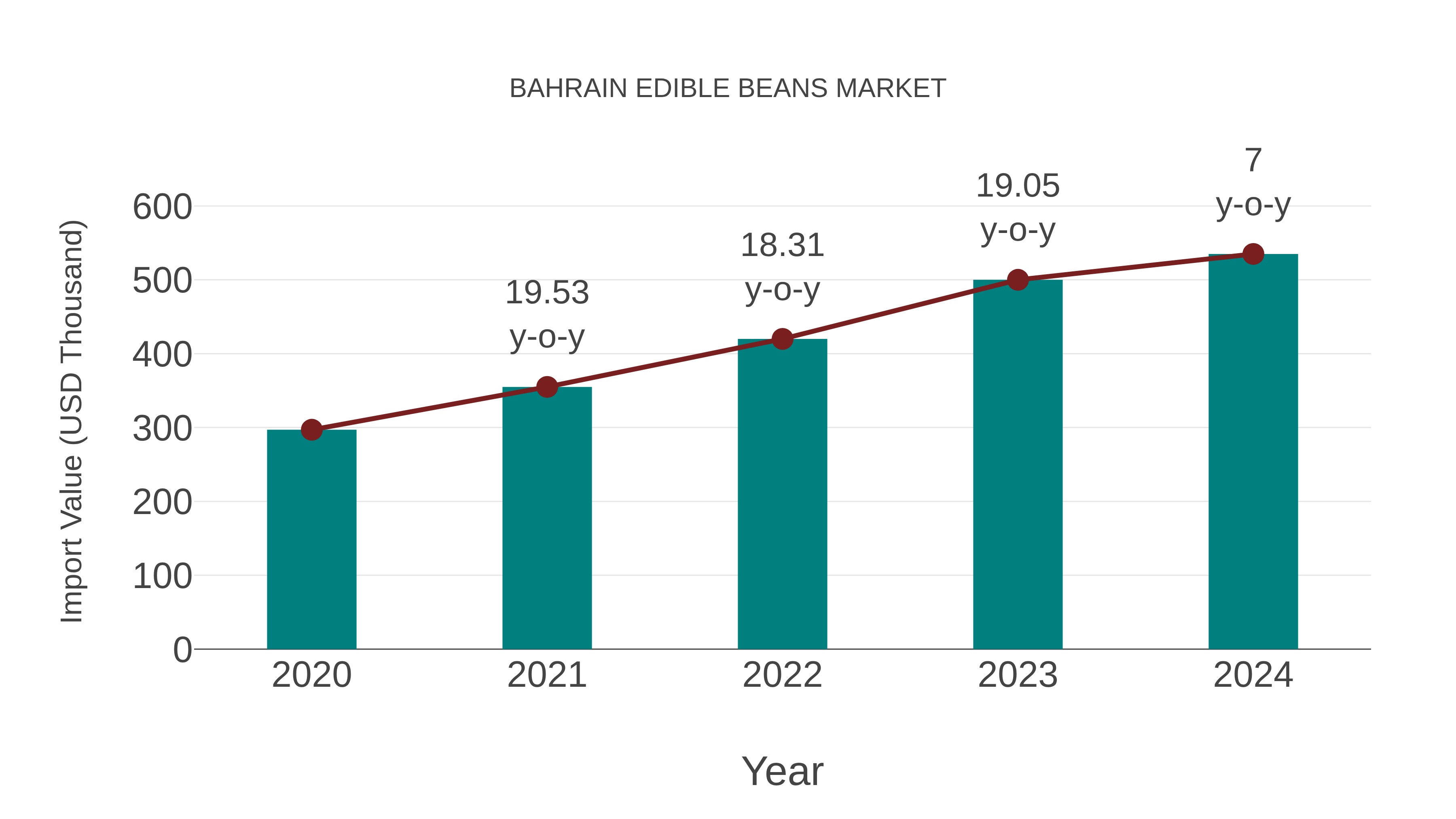
In the Bahrain edible beans market, import trends for 2023-2024 showed a growth rate of 7.0%, with a compound annual growth rate (CAGR) of 15.85% for 2020-2024. This robust import momentum can be attributed to a notable shift in consumer demand towards healthier food options, driving market stability and sustained growth in the sector.
Bahrain Edible Beans Market Overview
The edible beans market in Bahrain is expanding as consumer demand for plant-based protein and healthy food options increases. Edible beans, such as lentils, chickpeas, and kidney beans, are a staple in many diets and offer numerous health benefits. In Bahrain, the market is driven by both local production and imports, with beans being a key ingredient in traditional dishes as well as international cuisines. As health-conscious consumers and the growing vegetarian and vegan populations seek out protein-rich plant-based alternatives, the demand for edible beans is expected to rise, supporting market growth.
Drivers of the market
The edible beans market in Bahrain is expanding as consumers seek plant-based protein sources and healthier food options. Edible beans, such as kidney beans, chickpeas, and lentils, are popular for their nutritional value and versatility in cooking. A significant trend in this market is the growing demand for organic and non-GMO beans, driven by health-conscious consumers who prioritize clean-label products. Additionally, there is rising interest in ready-to-eat and pre-cooked bean products, catering to busy consumers looking for convenient meal solutions. The trend towards sustainable agriculture is also influencing the market, with increasing demand for beans grown using environmentally friendly practices.
Challenges of the market
The edible beans market in Bahrain is constrained by limited local agricultural production and consumer preferences. While edible beans are a staple food in many parts of the world, Bahrains small-scale agriculture results in a reliance on imports to meet local demand. The high costs associated with importing edible beans, coupled with limited local farming and processing infrastructure, create barriers to market growth. Additionally, cultural dietary preferences and competition from other types of food products limit the overall demand for edible beans in Bahrain.
Investment opportunities in the Market
The demand for plant-based proteins and healthy food options is increasing in Bahrain. Investors can explore opportunities in importing and distributing high-quality edible beans for retail and food service sectors.
Government Policy of the market
The edible beans market in Bahrain is growing due to rising health consciousness and plant-based diets. The government facilitates the import of pulses through low tariffs and promotes local packaging and processing via food security strategies. Bahrain also adheres to GCC-wide food quality and safety standards to regulate the supply chain.
Key Highlights of the Report:
- Bahrain Edible Beans Market Outlook
- Market Size of Bahrain Edible Beans Market, 2025
- Forecast of Bahrain Edible Beans Market, 2032
- Historical Data and Forecast of Bahrain Edible Beans Revenues & Volume for the Period 2022 - 2032F
- Bahrain Edible Beans Market Trend Evolution
- Bahrain Edible Beans Market Drivers and Challenges
- Bahrain Edible Beans Price Trends
- Bahrain Edible Beans Porter's Five Forces
- Bahrain Edible Beans Industry Life Cycle
- Historical Data and Forecast of Bahrain Edible Beans Market Revenues & Volume By Product Type for the Period 2022 - 2032F
- Historical Data and Forecast of Bahrain Edible Beans Market Revenues & Volume By Pinto Beans for the Period 2022 - 2032F
- Historical Data and Forecast of Bahrain Edible Beans Market Revenues & Volume By Navy Beans for the Period 2022 - 2032F
- Historical Data and Forecast of Bahrain Edible Beans Market Revenues & Volume By Great Northern Beans for the Period 2022 - 2032F
- Historical Data and Forecast of Bahrain Edible Beans Market Revenues & Volume By Red Kidney Beans for the Period 2022 - 2032F
- Historical Data and Forecast of Bahrain Edible Beans Market Revenues & Volume By Black Beans for the Period 2022 - 2032F
- Historical Data and Forecast of Bahrain Edible Beans Market Revenues & Volume By Yellow Beans for the Period 2022 - 2032F
- Historical Data and Forecast of Bahrain Edible Beans Market Revenues & Volume By Others for the Period 2022 - 2032F
- Historical Data and Forecast of Bahrain Edible Beans Market Revenues & Volume By Distribution Channel for the Period 2022 - 2032F
- Historical Data and Forecast of Bahrain Edible Beans Market Revenues & Volume By Supermarket/Hypermarket for the Period 2022 - 2032F
- Historical Data and Forecast of Bahrain Edible Beans Market Revenues & Volume By Online Stores for the Period 2022 - 2032F
- Historical Data and Forecast of Bahrain Edible Beans Market Revenues & Volume By Specialty Stores for the Period 2022 - 2032F
- Historical Data and Forecast of Bahrain Edible Beans Market Revenues & Volume By Other for the Period 2022 - 2032F
- Historical Data and Forecast of Bahrain Edible Beans Market Revenues & Volume By Application for the Period 2022 - 2032F
- Historical Data and Forecast of Bahrain Edible Beans Market Revenues & Volume By Household for the Period 2022 - 2032F
- Historical Data and Forecast of Bahrain Edible Beans Market Revenues & Volume By Restaurants for the Period 2022 - 2032F
- Historical Data and Forecast of Bahrain Edible Beans Market Revenues & Volume By Others for the Period 2022 - 2032F
- Bahrain Edible Beans Import Export Trade Statistics
- Market Opportunity Assessment By Product Type
- Market Opportunity Assessment By Distribution Channel
- Market Opportunity Assessment By Application
- Bahrain Edible Beans Top Companies Market Share
- Bahrain Edible Beans Competitive Benchmarking By Technical and Operational Parameters
- Bahrain Edible Beans Company Profiles
- Bahrain Edible Beans Key Strategic Recommendations






































