Bahrain Modular Kitchen Market: Import Trend Analysis
The Bahrain modular kitchen market witnessed a declining trend in imports from 2020 to 2024, with a Compound Annual Growth Rate (CAGR) of -10.56%. Particularly, in 2023-2024, there was a significant year-on-year decline of -27.32%, contributing to the overall decrease in imports during this period.
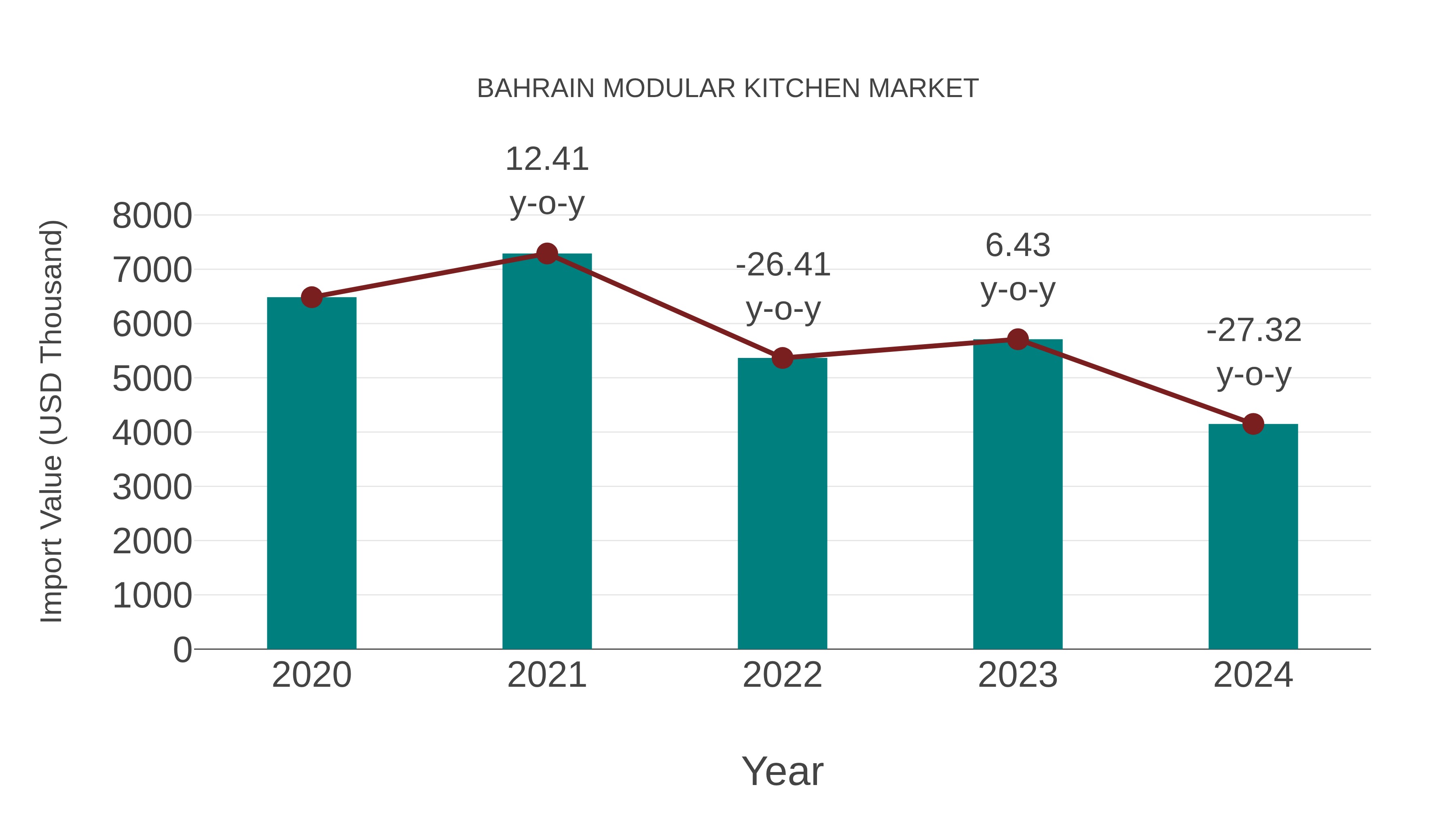
Bahrain Modular Kitchen Market
In Bahrain, the modular kitchen market is witnessing steady growth, fueled by factors such as urbanization, changing lifestyles, and the growing preference for efficient and aesthetically appealing kitchen solutions. Modular kitchens offer several advantages, including space optimization, ease of installation, and customization options to suit individual preferences and space constraints. With rising disposable incomes and an increasing focus on home renovations and interior design, the demand for modular kitchens in Bahrain is expected to continue its upward trajectory. Additionally, the integration of smart technologies and innovative design concepts is further driving market growth, as consumers seek convenience and functionality in their kitchen spaces.
Drivers of the market
In Bahrain, the Modular Kitchen Market is witnessing robust growth driven by several key factors. Firstly, the increasing urbanization and changing lifestyles are driving the demand for modern and convenient kitchen solutions. Modular kitchens offer space optimization, efficient storage solutions, and customization options, making them highly desirable for residential and commercial spaces alike. Additionally, the growing awareness about hygiene and cleanliness is fueling the adoption of modular kitchens, as they are easier to clean and maintain compared to traditional kitchen setups. Moreover, the rising disposable income levels in Bahrain are encouraging consumers to invest in premium kitchen solutions, further boosting market growth. Overall, the market is poised for continued expansion in the foreseeable future, driven by these driving factors.
Challenges of the market
Despite the growing demand for modular kitchens in Bahrain, several challenges hinder the market`s full potential. One primary challenge is the need for skilled labor to install and customize modular kitchen components according to customer specifications. This shortage of skilled labor can lead to delays and increased costs for both suppliers and consumers. Additionally, the high initial investment required for premium modular kitchen setups might deter budget-conscious consumers, limiting market penetration. Moreover, ensuring the durability and quality of modular kitchen materials in Bahrain climate, which can be hot and humid, presents another challenge for manufacturers.
Government Policy of the market
In response to the growing demand for modern and efficient kitchen solutions, the Bahrain government has introduced policies to support the development of the modular kitchen market. These policies include incentives for local manufacturers to invest in advanced technologies, streamline import/export procedures for kitchen components, and enforce standards for safety and quality. Furthermore, the government encourages sustainable practices within the modular kitchen industry, promoting the use of eco-friendly materials and energy-efficient appliances through regulatory measures and awareness campaigns.
Key Highlights of the Report:
- Bahrain Modular Kitchen Market Outlook
- Market Size of Bahrain Modular Kitchen Market, 2025
- Forecast of Bahrain Modular Kitchen Market, 2032
- Historical Data and Forecast of Bahrain Modular Kitchen Revenues & Volume for the Period 2022-2032F
- Bahrain Modular Kitchen Market Trend Evolution
- Bahrain Modular Kitchen Market Drivers and Challenges
- Bahrain Modular Kitchen Price Trends
- Bahrain Modular Kitchen Porter's Five Forces
- Bahrain Modular Kitchen Industry Life Cycle
- Historical Data and Forecast of Bahrain Modular Kitchen Market Revenues & Volume By Product for the Period 2022-2032F
- Historical Data and Forecast of Bahrain Modular Kitchen Market Revenues & Volume By Floor Cabinet & Wall Cabinets for the Period 2022-2032F
- Historical Data and Forecast of Bahrain Modular Kitchen Market Revenues & Volume By Tall Storage Cabinets for the Period 2022-2032F
- Historical Data and Forecast of Bahrain Modular Kitchen Market Revenues & Volume By Others for the Period 2022-2032F
- Historical Data and Forecast of Bahrain Modular Kitchen Market Revenues & Volume By End-User for the Period 2022-2032F
- Historical Data and Forecast of Bahrain Modular Kitchen Market Revenues & Volume By Residential for the Period 2022-2032F
- Historical Data and Forecast of Bahrain Modular Kitchen Market Revenues & Volume By Commercial for the Period 2022-2032F
- Historical Data and Forecast of Bahrain Modular Kitchen Market Revenues & Volume By Distribution Channel for the Period 2022-2032F
- Historical Data and Forecast of Bahrain Modular Kitchen Market Revenues & Volume By Offline (Contractors, Builders, and Others) for the Period 2022-2032F
- Historical Data and Forecast of Bahrain Modular Kitchen Market Revenues & Volume By Online for the Period 2022-2032F
- Bahrain Modular Kitchen Import Export Trade Statistics
- Market Opportunity Assessment By Product
- Market Opportunity Assessment By End-User
- Market Opportunity Assessment By Distribution Channel
- Bahrain Modular Kitchen Top Companies Market Share
- Bahrain Modular Kitchen Competitive Benchmarking By Technical and Operational Parameters
- Bahrain Modular Kitchen Company Profiles
- Bahrain Modular Kitchen Key Strategic Recommendations






































