Bahrain Rattan Furniture Market: Import Trend Analysis
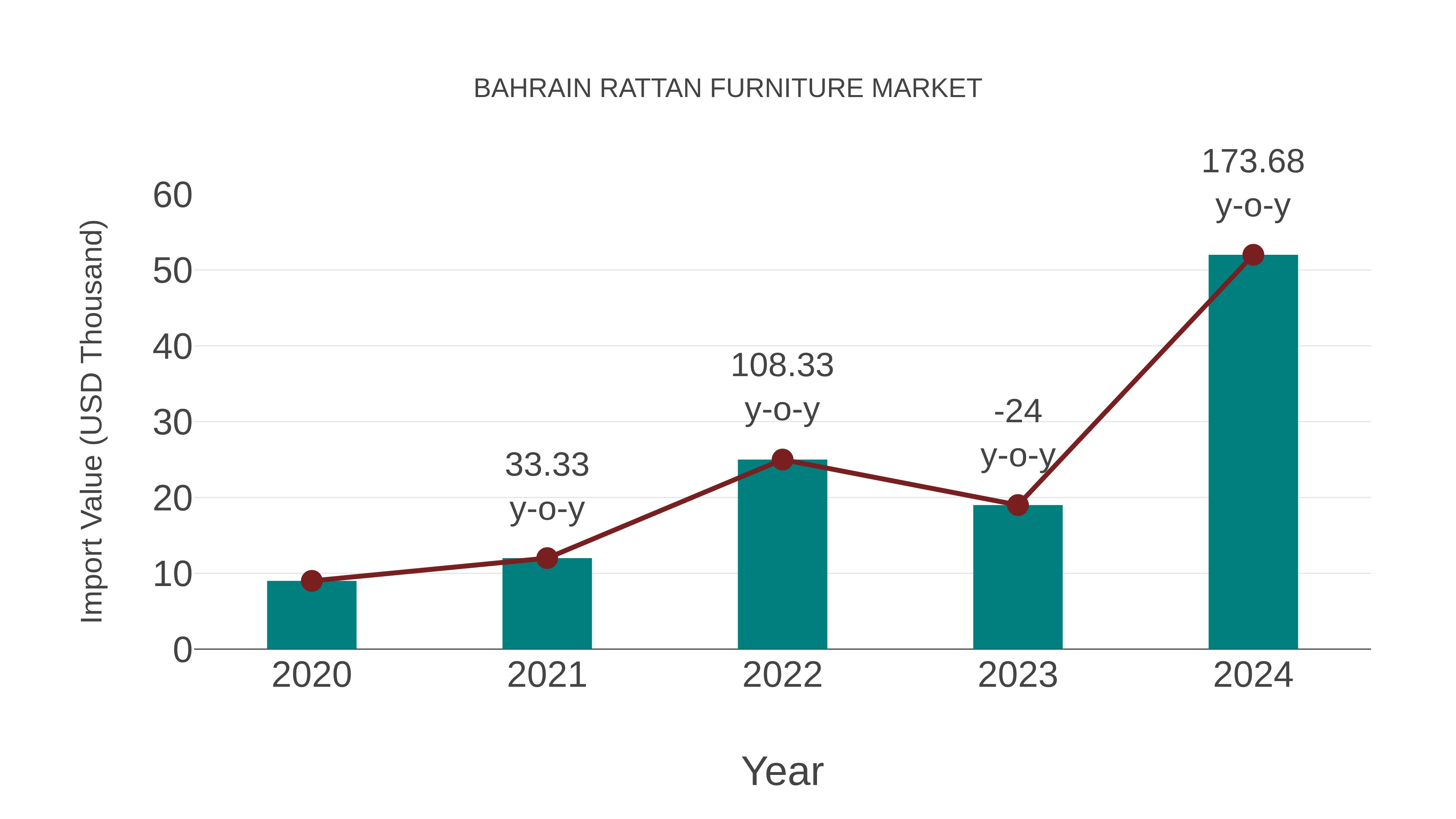
In 2024, Bahrain rattan furniture market experienced a notable increase in imports. This trend was driven by rising demand for quality and stylish furniture pieces. The market saw a surge in imported rattan furniture products from various international suppliers.
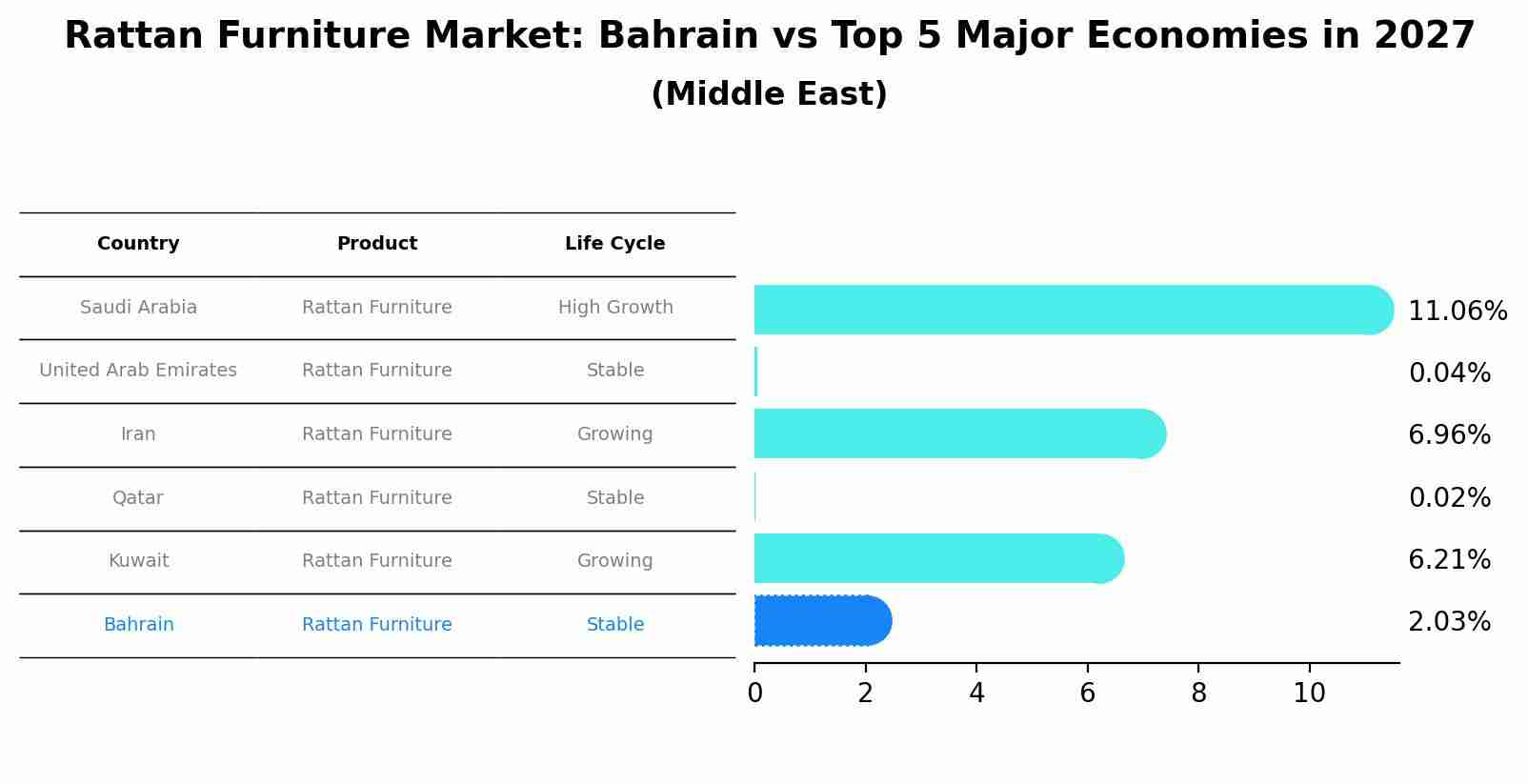
Rattan Furniture Market: Bahrain vs Top 5 Major Economies in 2027 (Middle East)
The Rattan Furniture market in Bahrain is projected to grow at a stable growth rate of 2.03% by 2027, within the Middle East region led by Saudi Arabia, along with other countries like United Arab Emirates, Iran, Qatar and Kuwait, collectively shaping a dynamic and evolving market environment driven by innovation and increasing adoption of emerging technologies.
Bahrain Rattan Furniture Market Synopsis
The rattan furniture market in Bahrain is growing due to its popularity in both indoor and outdoor settings. Known for its lightweight and tropical look, rattan appeals to customers seeking eco-friendly, artisanal furniture. With hospitality and retail sectors embracing natural aesthetics, demand is increasing for synthetic rattan that offers improved durability in Bahrains climate.
Trends of the market
The rattan furniture market in Bahrain is seeing a resurgence, thanks to the materials timeless appeal and adaptability to both indoor and outdoor settings. Consumers favor rattan for its lightweight, eco-friendly, and stylish characteristics, with growing demand in luxury villas, cafes, and garden lounges. Imported designer collections and handcrafted pieces are especially sought after, as buyers increasingly prioritize quality and unique aesthetics in their furniture choices.
Challenges of the market
The Rattan Furniture Market in Bahrain caters to consumers looking for stylish, lightweight, and eco-friendly furniture, especially for outdoor use. Demand peaks during cooler seasons and within the hospitality sector. However, the market faces issues like high susceptibility to weather damage, limited local production, and competition from synthetic alternatives. Moreover, changing design preferences and maintenance concerns limit year-round popularity.
Investment opportunities in the Market
The demand for rattan furniture in Bahrain is growing, particularly in luxury residential and hospitality sectors due to its natural, stylish, and durable appeal. Investors can capitalize on this market by offering a range of rattan furniture products, including chairs, tables, and outdoor furniture. Promoting eco-friendly, sustainable rattan alternatives, along with customization and design services, will appeal to high-end consumers and commercial establishments.
Government Policy of the market
The rattan furniture market in Bahrain is fueled by consumer demand for eco-friendly, stylish, and durable home and office furniture. Government policies that promote sustainable practices, through the Ministry of Industry and Commerce, encourage the use of natural materials like rattan. Regulations ensure that rattan products meet health and safety standards, particularly regarding the use of non-toxic finishes and adhesives. Additionally, the government supports local craftsmanship and the sustainable harvesting of rattan, which contributes to the market`s growth, especially as consumers become more eco-conscious.
Key Highlights of the Report:
- Bahrain Rattan Furniture Market Outlook
- Market Size of Bahrain Rattan Furniture Market, 2021
- Forecast of Bahrain Rattan Furniture Market, 2031
- Historical Data and Forecast of Bahrain Rattan Furniture Revenues & Volume for the Period 2018 - 2031
- Bahrain Rattan Furniture Market Trend Evolution
- Bahrain Rattan Furniture Market Drivers and Challenges
- Bahrain Rattan Furniture Price Trends
- Bahrain Rattan Furniture Porter's Five Forces
- Bahrain Rattan Furniture Industry Life Cycle
- Historical Data and Forecast of Bahrain Rattan Furniture Market Revenues & Volume By Type for the Period 2018 - 2031
- Historical Data and Forecast of Bahrain Rattan Furniture Market Revenues & Volume By Table for the Period 2018 - 2031
- Historical Data and Forecast of Bahrain Rattan Furniture Market Revenues & Volume By Chairs for the Period 2018 - 2031
- Historical Data and Forecast of Bahrain Rattan Furniture Market Revenues & Volume By Storage for the Period 2018 - 2031
- Historical Data and Forecast of Bahrain Rattan Furniture Market Revenues & Volume By Beds for the Period 2018 - 2031
- Historical Data and Forecast of Bahrain Rattan Furniture Market Revenues & Volume By Others for the Period 2018 - 2031
- Historical Data and Forecast of Bahrain Rattan Furniture Market Revenues & Volume By Application for the Period 2018 - 2031
- Historical Data and Forecast of Bahrain Rattan Furniture Market Revenues & Volume By Residential for the Period 2018 - 2031
- Historical Data and Forecast of Bahrain Rattan Furniture Market Revenues & Volume By Commercial for the Period 2018 - 2031
- Historical Data and Forecast of Bahrain Rattan Furniture Market Revenues & Volume By Distribution Channel for the Period 2018 - 2031
- Historical Data and Forecast of Bahrain Rattan Furniture Market Revenues & Volume By Multi-brand Stores for the Period 2018 - 2031
- Historical Data and Forecast of Bahrain Rattan Furniture Market Revenues & Volume By Exclusive Stores for the Period 2018 - 2031
- Historical Data and Forecast of Bahrain Rattan Furniture Market Revenues & Volume By Online for the Period 2018 - 2031
- Historical Data and Forecast of Bahrain Rattan Furniture Market Revenues & Volume By Other Distribution Channel for the Period 2018 - 2031
- Bahrain Rattan Furniture Import Export Trade Statistics
- Market Opportunity Assessment By Type
- Market Opportunity Assessment By Application
- Market Opportunity Assessment By Distribution Channel
- Bahrain Rattan Furniture Top Companies Market Share
- Bahrain Rattan Furniture Competitive Benchmarking By Technical and Operational Parameters
- Bahrain Rattan Furniture Company Profiles
- Bahrain Rattan Furniture Key Strategic Recommendations






































