Bahrain Risk Analytics Market Size & Growth Rate (2026-2032)
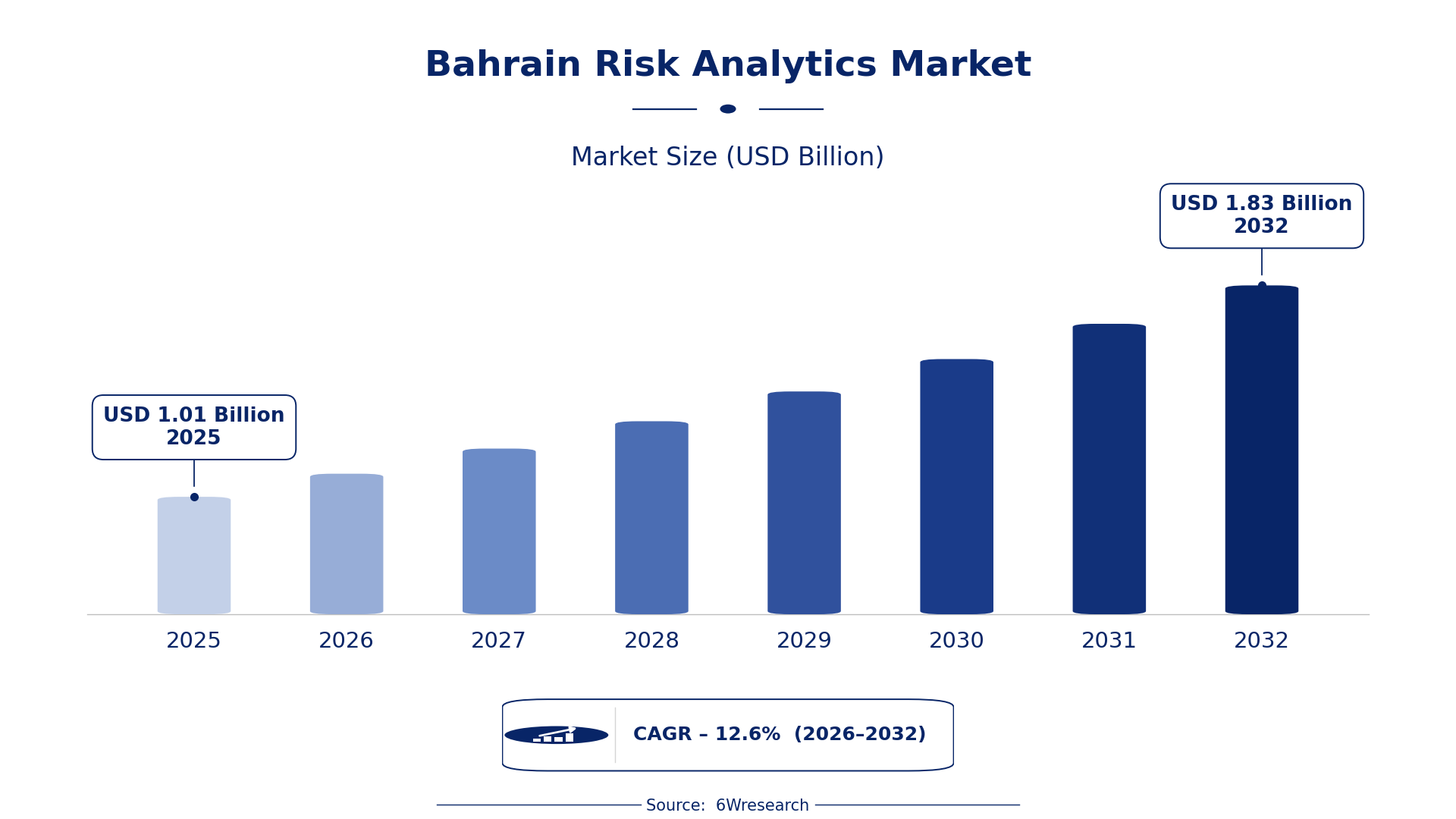
The Bahrain Risk Analytics Market was estimated at USD 1010 Million in 2025 and is projected to reach USD 1828 Million by 2032, growing at a CAGR of 12.6% from 2026 to 2032.
Bahrain Risk Analytics Market Synopsis
In recent years, Bahrain's Risk Analytics Market has gained substantial traction, primarily driven by the increasing necessity for organizations to manage diverse risks effectively. The integration of advanced analytics tools is becoming commonplace as businesses strive to enhance their operational resilience, particularly in sectors such as finance and energy.
Companies are now leveraging big data and AI to identify patterns, forecast potential risks, and comply with regulatory standards. This shift is critical as digital transactions rise and cybersecurity threats become more sophisticated, compelling organizations to invest in proactive risk management strategies.
Bahrain Risk Analytics Market Year-wise Growth Rate and Key Drivers
This graph illustrates the annual growth rates of the Bahrain Risk Analytics Market from 2021 to 2032, highlighting a steady upward trajectory and projected expansion over the forecast period.
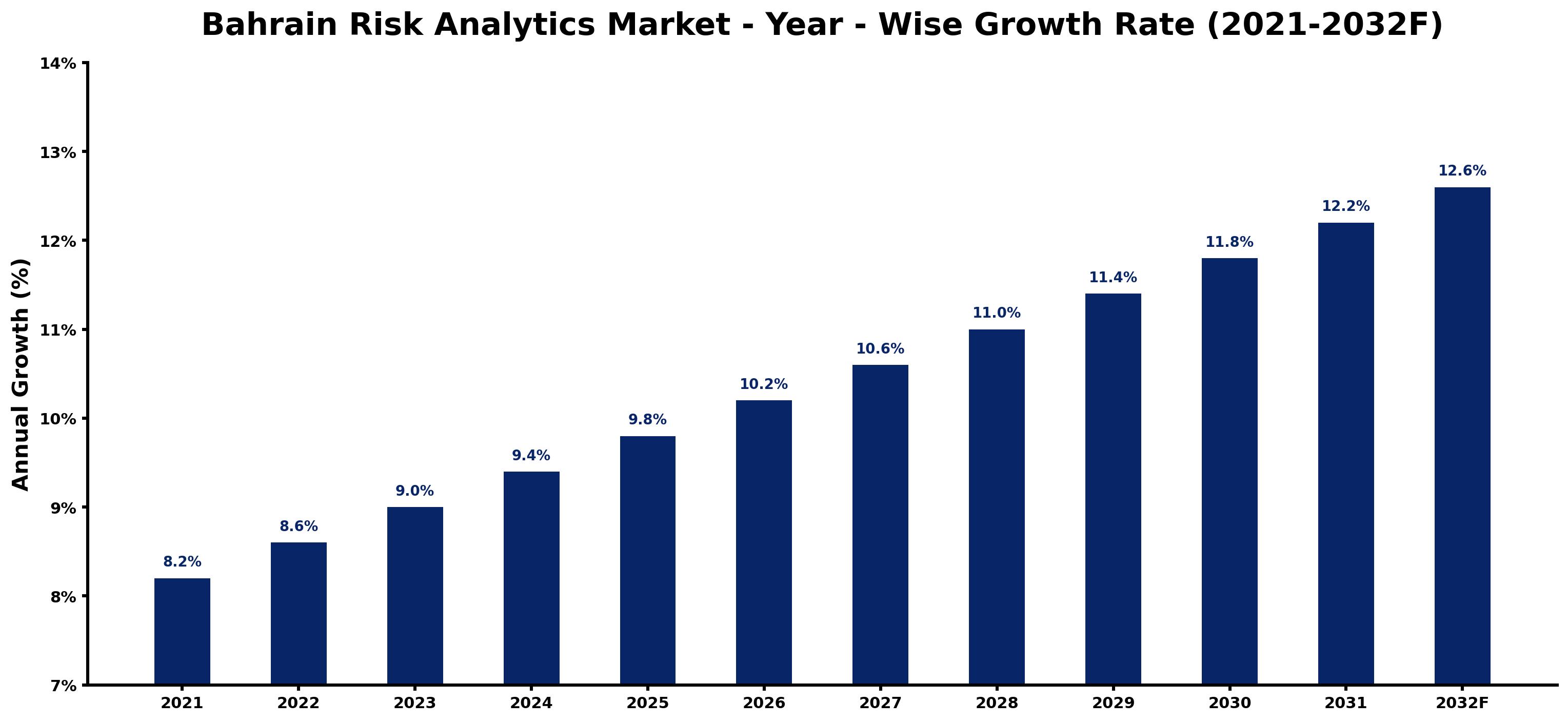
The table below presents the year‑wise growth rates along with the key drivers influencing the market
| Year | Growth Rate | Major Drivers |
| 2021 | 8.2% | Bahrain Central Bank enhancing risk management regulations. |
| 2022 | 8.6% | Growing focus on cybersecurity following recent breaches. |
| 2023 | 9.0% | Adoption of digital banking driving analytics necessity. |
| 2024 | 9.4% | Increased investment in regulatory compliance solutions. |
| 2025 | 9.8% | Government initiatives promoting financial transparency and accountability. |
| 2026 | 10.2% | Emergence of local startups specializing in risk solutions. |
| 2027 | 10.6% | Enhanced focus on sustainability risk in banking loans. |
| 2028 | 11.0% | Rising financial literacy leading to higher risk awareness. |
| 2029 | 11.4% | Collaboration with international firms on risk management strategies. |
| 2030 | 11.8% | Advancements in AI technology for risk profiling. |
| 2031 | 12.2% | Implementation of stricter AML regulations by authorities. |
| 2032 | 12.6% | Increased economic diversification leading to new risk factors. |
Note: Market size estimations and growth projections presented in this report are based on 6Wresearch's proprietary forecasting methodology, utilizing the latest available industry data, government publications, and primary research inputs.
Bahrain Risk Analytics Market Key Takeaways
Below are some of the specific key takeaways from the market, including:
- Growing demand for risk analytics tools across financial institutions and corporations.
- Increased adoption of AI and machine learning technologies for improved risk assessment.
- Regulatory pressures are driving the implementation of advanced analytics for compliance.
- Emerging startups focusing on cybersecurity and fraud detection are reshaping the market.
- Investment in integrated governance, risk, and compliance solutions is on the rise.
Evaluation of Restraints in Bahrain Risk Analytics Market
The Bahrain Risk Analytics Market faces several challenges that hinder its growth. A primary issue is the lack of comprehensive historical and real-time data, which limits the accuracy of risk models. Financial institutions, eager to adopt these tools, often grapple with integrating them into outdated legacy systems, complicating the transition to more advanced analytics.
on top of that, high implementation costs and the requirement for specialized talent remain significant barriers, particularly for small and medium enterprises. Regulatory uncertainties surrounding risk modeling standards further complicate the situation, as organizations may hesitate to invest in new technologies without clear guidelines. This combination of factors is slowing the evolution of the risk analytics ecosystem in Bahrain.
Bahrain Risk Analytics Market Trends
The current trends in the Bahrain Risk Analytics Market highlight a shift towards real-time data processing and advanced analytics capabilities. Companies are increasingly utilizing AI to predict threats and streamline compliance with regulatory demands. The rise of digital transactions is intensifying the focus on cybersecurity, driving investments in risk management solutions that can adapt to evolving threats.
on top of that, organizations are recognizing the value of integrated governance, risk, and compliance (GRC) frameworks, which allow for a more cohesive approach to risk management across various sectors. This trend is expected to gain momentum as businesses seek to enhance their operational agility and responsiveness to risk.
Bahrain Risk Analytics Market Opportunities
Investment opportunities in the Bahrain Risk Analytics Market are abundant, particularly for innovative platforms offering real-time risk scoring and predictive analytics. Financial institutions and energy firms are leading the demand for sophisticated risk management tools as they seek to meet regulatory standards and mitigate operational risks.
The surge in interest from startups specializing in cybersecurity and credit risk analytics signifies a burgeoning sector ready to capitalize on the market's growth. Organizations looking to adopt integrated GRC solutions will find that opportunities for collaboration and technology integration are paramount for future success.
Government Initiatives in the Bahrain Risk Analytics Market
Bahrain's government has recognized the critical role of risk analytics in strengthening the financial system and addressing cybersecurity threats. The regulatory framework encourages financial institutions to adopt advanced analytics tools, which is crucial for proactive risk detection and management. This commitment to enhancing the country's risk assessment capabilities reflects a broader strategy to bolster economic resilience.
- A regulatory framework introduced in 2025 mandating financial institutions to perform regular stress testing and scenario analysis.
- An initiative currently underway to enhance national cybersecurity infrastructure, focusing on analytics-driven risk management.
- A planned public-private partnership aimed at developing a national risk assessment framework expected to launch by 2028.
- The Central Bank of Bahrain is actively promoting the integration of AI in financial analytics to better predict and manage risks.
- A recently completed program focused on training financial professionals in advanced risk management techniques and tools.
Future Insights of the Bahrain Risk Analytics Market
Looking ahead to 2026-2032, the Bahrain Risk Analytics Market is set for notable advancements. As organizations increasingly prioritize data-driven governance, the demand for sophisticated analytics solutions will continue to rise. Financial institutions and other sectors will likely adopt more integrated approaches to risk management, leveraging AI and machine learning technologies to stay ahead of potential threats.
The expansion of digital services will further necessitate enhanced risk management frameworks, driving growth in the analytics sector. Additionally, the regulatory environment will evolve, pushing organizations to adopt more innovative strategies for compliance and risk mitigation, thereby shaping the future of risk analytics in Bahrain.
Bahrain Risk Analytics Market Latest Developments
Over the past year, Bahrain's Risk Analytics Market has seen significant developments that reflect its growing importance. Organizations are increasingly investing in advanced analytics tools as they recognize the need to enhance their risk management capabilities. This trend has been accelerated by the rising complexities of regulatory requirements and the ongoing threats in the cybersecurity landscape.
- A leading regional operator launched a new risk management platform in early 2025, aimed at improving compliance and operational efficiency.
- An ongoing initiative began in mid-2025 to integrate AI technologies into existing risk assessment processes across several financial institutions.
- A major technology vendor announced plans in Q3 2025 to roll out enhanced predictive analytics tools, focusing on fraud detection and risk scoring.
- Upcoming in 2026, a public-private partnership is expected to enhance data sharing protocols between financial institutions to improve risk analytics capabilities.
- A recent collaboration was established in late 2025 between several financial organizations to develop a shared risk analytics framework, enhancing collective risk management efforts.
Bahrain Risk Analytics Market - Key Attractiveness of the Report
- 10 Years of Market Numbers
- Historical Data Starting from 2022 to 2025
- Base Year: 2025
- Forecast Data until 2032
- Key Performance Indicators Impacting the Market
- Major Upcoming Developments and Projects
Key Highlights of the Report:
- Bahrain Risk Analytics Market Outlook
- Market Size of Bahrain Risk Analytics Market, 2025
- Forecast of Bahrain Risk Analytics Market, 2032
- Historical Data and Forecast of Bahrain Risk Analytics Revenues & Volume for the Period 2022-2032F
- Bahrain Risk Analytics Market Trend Evolution
- Bahrain Risk Analytics Market Drivers and Challenges
- Bahrain Risk Analytics Price Trends
- Bahrain Risk Analytics Porter's Five Forces
- Bahrain Risk Analytics Industry Life Cycle
- Historical Data and Forecast of Bahrain Risk Analytics Market Revenues & Volume By Component for the Period 2022-2032F
- Historical Data and Forecast of Bahrain Risk Analytics Market Revenues & Volume By Software (ETL Tools, Risk Calculation Engines, GRC Software) for the Period 2022-2032F
- Historical Data and Forecast of Bahrain Risk Analytics Market Revenues & Volume By Services for the Period 2022-2032F
- Historical Data and Forecast of Bahrain Risk Analytics Market Revenues & Volume By Risk Type for the Period 2022-2032F
- Historical Data and Forecast of Bahrain Risk Analytics Market Revenues & Volume By Strategic Risk for the Period 2022-2032F
- Historical Data and Forecast of Bahrain Risk Analytics Market Revenues & Volume By Operational Risk for the Period 2022-2032F
- Historical Data and Forecast of Bahrain Risk Analytics Market Revenues & Volume By Financial Risk for the Period 2022-2032F
- Historical Data and Forecast of Bahrain Risk Analytics Market Revenues & Volume By Deployment Mode for the Period 2022-2032F
- Historical Data and Forecast of Bahrain Risk Analytics Market Revenues & Volume By Cloud for the Period 2022-2032F
- Historical Data and Forecast of Bahrain Risk Analytics Market Revenues & Volume By On-premises for the Period 2022-2032F
- Historical Data and Forecast of Bahrain Risk Analytics Market Revenues & Volume By Organization Size for the Period 2022-2032F
- Historical Data and Forecast of Bahrain Risk Analytics Market Revenues & Volume By Large enterprises for the Period 2022-2032F
- Historical Data and Forecast of Bahrain Risk Analytics Market Revenues & Volume By Small and medium-sized enterprises (SMEs) for the Period 2022-2032F
- Historical Data and Forecast of Bahrain Risk Analytics Market Revenues & Volume By Vertical for the Period 2022-2032F
- Historical Data and Forecast of Bahrain Risk Analytics Market Revenues & Volume By Banking and Financial Services for the Period 2022-2032F
- Historical Data and Forecast of Bahrain Risk Analytics Market Revenues & Volume By Insurance for the Period 2022-2032F
- Historical Data and Forecast of Bahrain Risk Analytics Market Revenues & Volume By Manufacturing for the Period 2022-2032F
- Historical Data and Forecast of Bahrain Risk Analytics Market Revenues & Volume By Transportation and Logistics for the Period 2022-2032F
- Historical Data and Forecast of Bahrain Risk Analytics Market Revenues & Volume By Retail and Consumer Goods for the Period 2022-2032F
- Historical Data and Forecast of Bahrain Risk Analytics Market Revenues & Volume By IT and Telecom for the Period 2022-2032F
- Historical Data and Forecast of Bahrain Risk Analytics Market Revenues & Volume By Government and Defense for the Period 2022-2032F
- Historical Data and Forecast of Bahrain Risk Analytics Market Revenues & Volume By Healthcare and Life Sciences for the Period 2022-2032F
- Bahrain Risk Analytics Import Export Trade Statistics
- Market Opportunity Assessment By Component
- Market Opportunity Assessment By Risk Type
- Market Opportunity Assessment By Deployment Mode
- Market Opportunity Assessment By Organization Size
- Market Opportunity Assessment By Vertical
- Bahrain Risk Analytics Top Companies Market Share
- Bahrain Risk Analytics Competitive Benchmarking By Technical and Operational Parameters
- Bahrain Risk Analytics Company Profiles
- Bahrain Risk Analytics Key Strategic Recommendations






































