Bangladesh Bathroom Furniture Market Summary
The bangladesh bathroom furniture market was estimated at USD 163 Million in 2025 and is projected to reach USD 214 Million by 2032, growing at a CAGR of 4.5% from 2026 to 2032.
Bangladesh Bathroom Furniture Market Year-wise Growth Rate and Key Drivers
This graph highlights how the Bangladesh Bathroom Furniture Market has steadily grown over the past five years, supported by major growth factors.
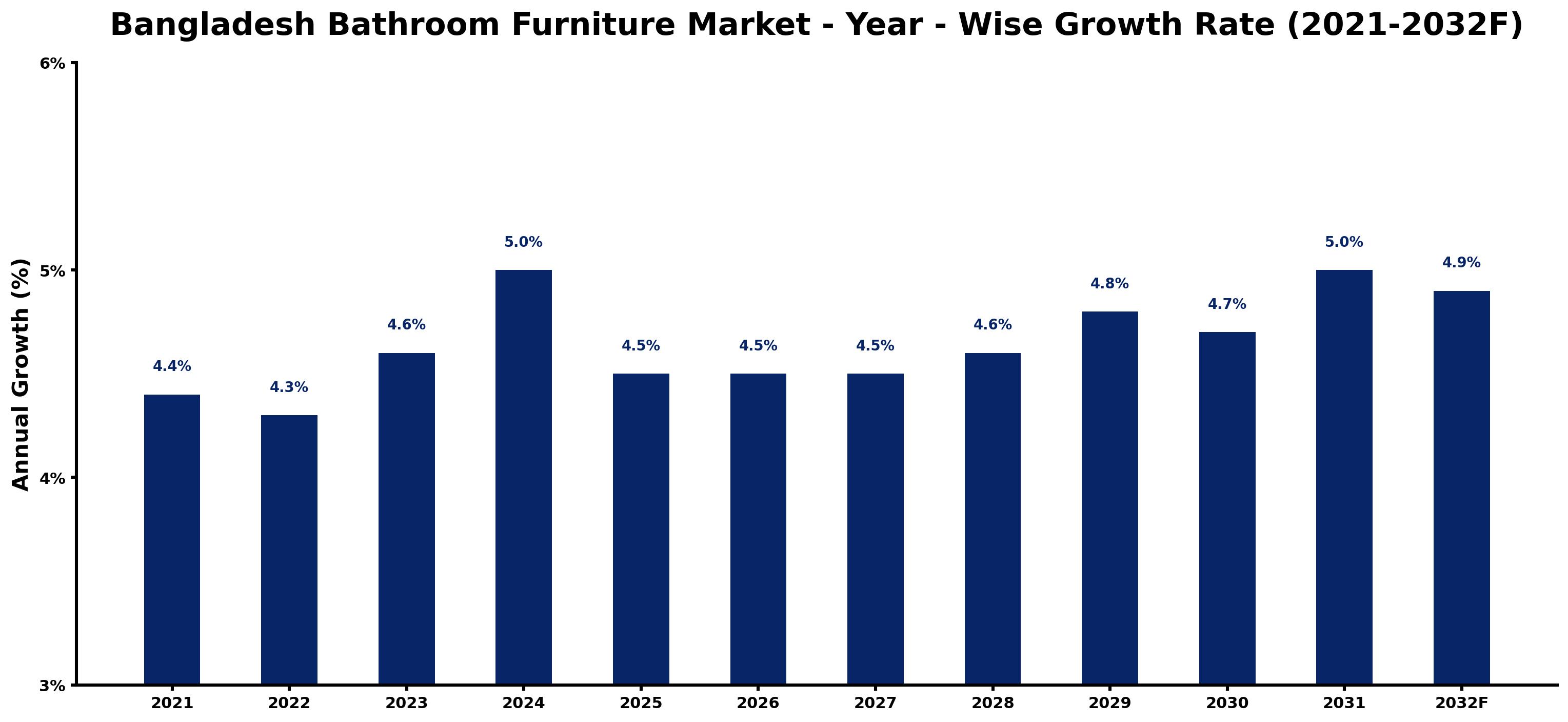
The table below presents the year wise growth rates along with the key drivers influencing the market
| Year | Growth Rate | Major Drivers |
| 2021 | 4.4% | Post-lockdown retail projects boost consumer interest in home renovation sectors. |
| 2022 | 4.3% | Urban housing developments emerge, increasing the demand for stylish bathroom solutions. |
| 2023 | 4.6% | Middle-class expansion drives focus on luxury and modern bathroom furniture options. |
| 2024 | 5.0% | E-commerce platforms enhance accessibility for bathroom furniture across diverse demographics. |
| 2025 | 4.5% | Sustainable materials gain popularity, appealing to environmentally conscious consumers. |
| 2026 | 4.5% | Design trends shift towards multifunctional spaces, affecting bathroom furnishing choices. |
| 2027 | 4.5% | Rising disposable incomes allow families to invest in premium bathroom products. |
| 2028 | 4.6% | Smart home technologies integrate into bathroom furniture, attracting tech-savvy buyers. |
| 2029 | 4.8% | Increased focus on health and wellness boosts demand for spa-like bathroom experiences. |
| 2030 | 4.7% | Renovation projects flourish due to older housing stock needing modernization and upgrades. |
| 2031 | 5.0% | Marketing strategies evolve, highlighting customization options for unique consumer preferences. |
| 2032 | 4.9% | Collaboration with interior designers shapes market offerings for luxury bathroom furniture. |
Note - Market size estimations and growth projections presented in this report are based on 6Wresearch's advanced forecasting approach, validated with industry datasets as of June 2026.
Bangladesh Bathroom Furniture Market Synopsis
The Bangladesh Bathroom Furniture Market is projected to reach 4.5% and witness significant growth during the forecast period (2026-2032). This growth is propelled by a combination of increasing urbanization, a rise in disposable income, and evolving consumer preferences towards stylish and functional bathroom solutions. As the country undergoes a transformation in its residential and commercial infrastructure, the demand for aesthetically pleasing and innovative bathroom furniture continues to surge.
Bangladesh Bathroom Furniture Market Growth Drivers
Several factors are driving the expansion of the Bangladesh Bathroom Furniture Market. These include:
- Urbanization: The rapid urbanization in Bangladesh has led to a growing number of residential projects, necessitating modern bathroom solutions designed to enhance space and aesthetic appeal.
- Rising Disposable Income: As disposable incomes rise, consumers are increasingly investing in home improvement projects, including bathroom renovations that require new furniture.
- Changing Lifestyles: With a shift towards contemporary living, the demand for bathroom furniture that combines style with functionality has increased significantly.
- Interest in Home Aesthetics: A heightened focus on home aesthetics has driven consumers to seek out elegant and sophisticated bathroom furniture options that reflect their personal style.
- Growth of E-commerce: The proliferation of e-commerce platforms has made a wide range of bathroom furniture products more accessible to consumers, facilitating online purchasing decisions.
Bangladesh Bathroom Furniture Market Trends and Opportunities
Current trends in the Bangladesh Bathroom Furniture Market indicate a keen consumer preference for modern and efficient designs. Key observations include:
- Space-Saving Solutions: Growing demand for wall-mounted cabinets and vanities illustrates an emphasis on maximizing space in smaller urban bathrooms, aligning with modern urban living.
- Eco-Friendly Materials: Consumers are increasingly prioritizing sustainable furniture options, leading to a rise in demand for products made from eco-friendly materials that align with environmental considerations.
- Smart Technology Integration: The introduction of smart features such as mirrors with built-in lighting and Bluetooth connectivity has gained popularity, appealing to tech-savvy consumers.
- Minimalist Designs: A trend towards sleek, minimalist designs is evident, with consumers favoring products that offer durability and functionality while maintaining a stylish appearance.
- Heightened Customization: There is a growing trend towards personalized bathroom furniture solutions, with consumers looking for products that reflect their unique requirements and preferences.
Bangladesh Bathroom Furniture Market Challenges and Restraints
Despite the promising growth trajectory, the Bangladesh Bathroom Furniture Market faces several challenges:
- Raw Material Shortages: Limited access to high-quality raw materials can hinder the ability of manufacturers to produce premium bathroom furniture, affecting overall product quality.
- Skilled Labor Deficits: The market struggles with a shortage of skilled labor, complicating efforts to innovate and maintain high manufacturing standards in bathroom furniture production.
- Intense Competition: The presence of numerous local and international competitors creates pricing pressures, which can negatively impact profit margins for manufacturers.
- Logistical Constraints: Inadequate transportation and logistics networks can impede the efficient distribution of products across various regions, affecting market reach.
- Evolving Consumer Preferences: As consumer preferences continue to evolve, manufacturers must invest in market research and product development to stay relevant and meet changing demands.
Bangladesh Bathroom Furniture Market Investment Opportunities
The Bangladesh Bathroom Furniture Market presents various investment opportunities driven by the booming real estate sector and ongoing urbanization trends:
- Manufacturing Prospects: Investors can explore opportunities in the manufacturing of diverse bathroom furniture items, including storage cabinets, vanity units, and accessory products.
- Supply Chain Development: There is potential for investment in supply chain and logistics improvements to ensure timely and efficient product delivery across Bangladesh.
- Focus on Quality: By emphasizing the production of high-quality and durable bathroom products, investors can tap into the growing consumer demand for premium offerings.
- Digital Engagement: Leveraging digital marketing platforms and e-commerce for distribution channels can significantly enhance market penetration and customer engagement.
- Eco-Friendly Innovations: Investment in sustainable product development can cater to the rising consumer interest in environmentally friendly bathroom solutions.
Bangladesh Bathroom Furniture Market Government Investment and Initiatives
Government policies have a significant impact on the Bangladesh Bathroom Furniture Market. Key initiatives include:
- Import Regulations: Regulations on import duties and taxes are established to protect local manufacturers, fostering domestic production and supporting the local industry.
- Environmental Standards: The government has introduced environmental standards to ensure that bathroom furniture manufacturers utilize sustainable materials and adopt responsible practices.
- Safety Requirements: Stringent safety standards are enforced to protect consumers from inferior or hazardous products, promoting market integrity.
- Incentives for Local Manufacturers: Support mechanisms and incentives are provided to encourage innovation and enhance competitiveness among domestic manufacturers.
- Investment in Infrastructure: Ongoing government investment in infrastructure development aims to improve logistics and distribution networks, facilitating better access to markets.
Bangladesh Bathroom Furniture Market Latest Developments (May 2025 - June 2026)
During the period from May 2025 to June 2026, the Bangladesh Bathroom Furniture Market has seen several developments that shape its direction:
- Rise in Consumer Preferences: There has been a noticeable increase in consumer demand for customizable and innovative bathroom furniture solutions, indicating a shift towards personalization.
- Smart Technology Introduction: The integration of smart technology into bathroom furniture designs has gained traction, enhancing consumer interest in multifunctional products.
- Focus on Sustainability: The market has experienced a significant rise in demand for eco-friendly products, with many manufacturers adapting their offerings to meet this interest.
- Growth of Online Sales: E-commerce platforms have increasingly become a primary channel for consumers seeking to purchase bathroom furniture, promoting accessibility across various demographics.
- Expansion of Local Manufacturing: Local manufacturers are ramping up production capabilities and diversifying product lines to meet the growing demands of the market.
Bangladesh Bathroom Furniture Market - Key Attractiveness of the Report
- 10 Years of Market Numbers
- Historical Data Starting from 2022 to 2025
- Base Year: 2025
- Forecast Data until 2032
- Key Performance Indicators Impacting the Market
- Major Upcoming Developments and Projects
Key Highlights of the Report:
- Bangladesh Bathroom Furniture Market Outlook
- Market Size of Bangladesh Bathroom Furniture Market, 2025
- Forecast of Bangladesh Bathroom Furniture Market, 2032F
- Historical Data and Forecast of Bangladesh Bathroom Furniture Revenues & Volume for the Period 2022-2032F
- Bangladesh Bathroom Furniture Market Trend Evolution
- Bangladesh Bathroom Furniture Market Drivers and Challenges
- Bangladesh Bathroom Furniture Price Trends
- Bangladesh Bathroom Furniture Porter's Five Forces
- Bangladesh Bathroom Furniture Industry Life Cycle
- Historical Data and Forecast of Bangladesh Bathroom Furniture Market Revenues & Volume By Type for the Period 2022-2032F
- Historical Data and Forecast of Bangladesh Bathroom Furniture Market Revenues & Volume By Bath Vanities for the Period 2022-2032F
- Historical Data and Forecast of Bangladesh Bathroom Furniture Market Revenues & Volume By Console Vanity for the Period 2022-2032F
- Historical Data and Forecast of Bangladesh Bathroom Furniture Market Revenues & Volume By Vanity Tops for the Period 2022-2032F
- Historical Data and Forecast of Bangladesh Bathroom Furniture Market Revenues & Volume By Bathroom Mirrors for the Period 2022-2032F
- Historical Data and Forecast of Bangladesh Bathroom Furniture Market Revenues & Volume By Other for the Period 2022-2032F
- Historical Data and Forecast of Bangladesh Bathroom Furniture Market Revenues & Volume By Application for the Period 2022-2032F
- Historical Data and Forecast of Bangladesh Bathroom Furniture Market Revenues & Volume By Household for the Period 2022-2032F
- Historical Data and Forecast of Bangladesh Bathroom Furniture Market Revenues & Volume By Commercial for the Period 2022-2032F
- Historical Data and Forecast of Bangladesh Bathroom Furniture Market Revenues & Volume By Other for the Period 2022-2032F
- Bangladesh Bathroom Furniture Import Export Trade Statistics
- Market Opportunity Assessment By Type
- Market Opportunity Assessment By Application
- Bangladesh Bathroom Furniture Top Companies Market Share
- Bangladesh Bathroom Furniture Competitive Benchmarking By Technical and Operational Parameters
- Bangladesh Bathroom Furniture Company Profiles
- Bangladesh Bathroom Furniture Key Strategic Recommendations






































