Bangladesh Carob Powder Market Size, Share & Growth Rate
The Bangladesh Carob Powder Market was estimated at USD 399 Million in 2025 and is projected to reach USD 537 Million by 2032, growing at a CAGR of 4.3% from 2026 to 2032. This growth trajectory is primarily fueled by the rising awareness among consumers regarding the health benefits of carob powder, particularly as a natural sweetener and cocoa alternative. Additionally, the increasing adoption of plant-based diets and the demand for innovative culinary ingredients continue to propel the market forward.
Bangladesh Carob Powder Market Year-wise Growth Rate and Key Drivers
This graph highlights how the Bangladesh Carob Powder Market has steadily grown over the years, supported by major growth factors.
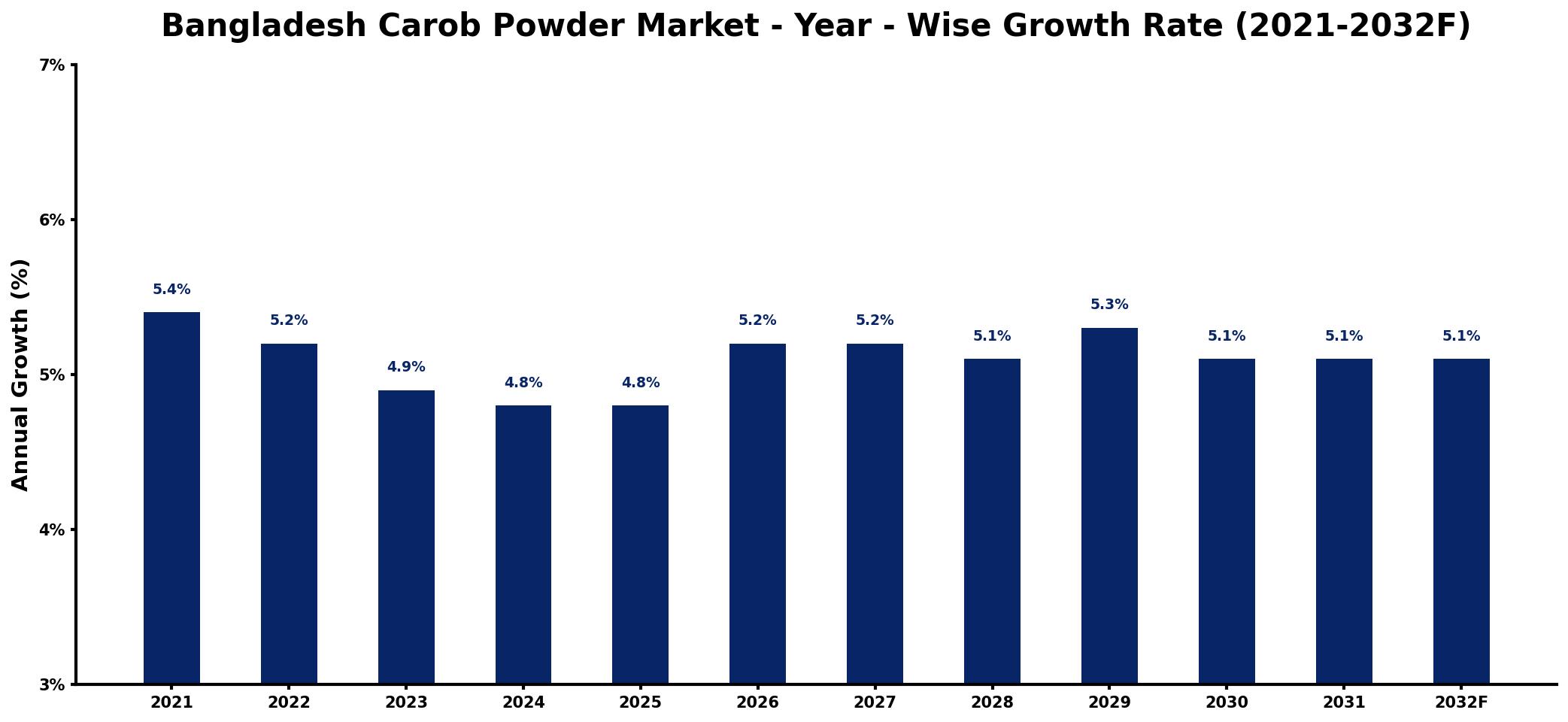
The table below presents the year‑wise growth rates along with the key drivers influencing the market
| Year | Growth Rate | Major Drivers |
| 2021 | 5.4% | Rising health consciousness among consumers |
| 2022 | 5.2% | Increased demand for natural alternatives |
| 2023 | 4.9% | Growing popularity of vegan diets |
| 2024 | 4.8% | Expansion of organic food market |
| 2025 | 4.8% | Surge in online retail platforms |
| 2026 | 5.2% | Investments in sustainable agriculture practices |
| 2027 | 5.2% | Emergence of new product applications |
| 2028 | 5.1% | Heightened focus on environmental sustainability |
| 2029 | 5.3% | Strengthened distribution network capabilities |
| 2030 | 5.1% | Rising consumer interest in superfoods |
| 2031 | 5.1% | Collaborations with health food brands |
| 2032 | 5.1% | Increased awareness of nutritional benefits |
Note: Market size estimations and growth projections presented in this report are based on 6Wresearch's proprietary forecasting methodology, utilizing the latest available industry data, government publications, and primary research inputs.
Bangladesh Carob Powder Market Synopsis
In Bangladesh, carob powder is gaining traction in both traditional and contemporary culinary settings. Its unique flavor profile and natural sweetness make it a sought-after ingredient in baking, beverages, and healthy snacks. As consumers shift towards health-conscious eating, carob powders role as a substitute for cocoa and refined sugars is becoming increasingly relevant.
The local production of carob powder, although limited, is gradually evolving due to government support for agro-processing initiatives. Efforts to enhance product quality and expand market reach are helping to meet growing consumer demand for natural and nutritious food options, thereby driving market expansion.
Bangladesh Carob Powder Market Key Takeaways
- Steady growth driven by increased health consciousness and demand for natural sweeteners.
- Carob powder is emerging as a popular ingredient in plant-based and functional foods.
- Government initiatives are promoting agro-processing to support local production.
- Market penetration remains limited, but awareness is gradually increasing.
- Innovations in processing techniques are expanding product offerings and applications.
Evaluation of Restraints in Bangladesh Carob Powder Market
Despite the promising growth outlook, the Bangladesh carob powder market faces significant challenges. Limited consumer awareness hampers market penetration, as many potential buyers are unaware of the benefits and uses of carob powder. Additionally, maintaining consistent product quality is crucial, but supply chain inefficiencies and sourcing issues can pose challenges for manufacturers. Overcoming these obstacles will be essential for sustaining long-term growth in this niche market.
Bangladesh Carob Powder Market Trends
The market is currently witnessing a shift towards sustainable and organic products, with consumers increasingly favoring natural ingredients. Carob powder fits perfectly within this trend, given its status as a plant-based, gluten-free alternative to traditional sweeteners. Moreover, innovative culinary applications and the rise of health-focused products are fueling interest in carob powder as a versatile ingredient in both home cooking and the food service industry.
Bangladesh Carob Powder Market Opportunities
Significant growth and investment opportunities exist within the Bangladesh carob powder market, particularly in product development and marketing. As consumer awareness grows, businesses that can effectively communicate the nutritional benefits of carob powder are well-positioned to capture market share. Expanding distribution channels and collaborating with health food brands can further enhance visibility and accessibility, tapping into the increasing demand for natural and healthy food options.
Government Initiatives in the Bangladesh Carob Powder Market
The Bangladeshi government is actively promoting agro-processing initiatives to diversify agricultural products and bolster the economy. Collaborations between government bodies and food processing enterprises focus on technological upgrades and quality assurance, aiming to align local production with international standards. Trade promotion activities and support for carob powder exporters are crucial elements of the governments strategy to enhance competitiveness in the global market.
Future Insights of the Bangladesh Carob Powder Market
Looking ahead, the Bangladesh carob powder market is poised for robust growth through 2032. The ongoing trend towards health and wellness, combined with the expanding vegan and plant-based movements, will likely sustain demand for this versatile ingredient. Furthermore, as more consumers adopt healthier lifestyles and seek out alternatives to conventional sweeteners, carob powder's unique benefits will position it as a key player in the evolving food landscape.
Bangladesh Carob Powder Market Latest Developments (2025 - 2026)
Recent developments in the Bangladesh carob powder market indicate a growing interest from manufacturers in enhancing processing capabilities and product innovation. Companies are increasingly exploring partnerships to improve distribution networks, while consumer education initiatives are underway to raise awareness about the nutritional advantages of carob powder. These trends signify a collective effort to position carob powder as a mainstream ingredient in various culinary applications.
Bangladesh Carob Powder Market - Key Attractiveness of the Report
- 10 Years of Market Numbers
- Historical Data Starting from 2022 to 2025
- Base Year: 2025
- Forecast Data until 2032
- Key Performance Indicators Impacting the Market
- Major Upcoming Developments and Projects
Key Highlights of the Report:
- Bangladesh Carob Powder Market Outlook
- Market Size of Bangladesh Carob Powder Market, 2025
- Forecast of Bangladesh Carob Powder Market, 2032
- Historical Data and Forecast of Bangladesh Carob Powder Revenues & Volume for the Period 2022-2032F
- Bangladesh Carob Powder Market Trend Evolution
- Bangladesh Carob Powder Market Drivers and Challenges
- Bangladesh Carob Powder Price Trends
- Bangladesh Carob Powder Porter's Five Forces
- Bangladesh Carob Powder Industry Life Cycle
- Historical Data and Forecast of Bangladesh Carob Powder Market Revenues & Volume By Product Type for the Period 2022-2032F
- Historical Data and Forecast of Bangladesh Carob Powder Market Revenues & Volume By Natural Carob Powder for the Period 2022-2032F
- Historical Data and Forecast of Bangladesh Carob Powder Market Revenues & Volume By Organic Carob Powder for the Period 2022-2032F
- Bangladesh Carob Powder Import Export Trade Statistics
- Market Opportunity Assessment By Product Type
- Bangladesh Carob Powder Top Companies Market Share
- Bangladesh Carob Powder Competitive Benchmarking By Technical and Operational Parameters
- Bangladesh Carob Powder Company Profiles
- Bangladesh Carob Powder Key Strategic Recommendations






































