Bangladesh Christmas Tree Market Size, Share & Growth Rate
The Bangladesh Christmas Tree Market was estimated at USD 334 Million in 2025 and is projected to reach USD 437 Million by 2032, growing at a CAGR of 3.9% from 2026 to 2032. This growth trajectory is fueled by a combination of increasing Western cultural influences and a burgeoning expatriate community in urban areas, both of which contribute to a rising appreciation for Christmas as a festive occasion. Furthermore, the expansion of commercial spaces like shopping malls and hotels has amplified the demand for Christmas trees, serving both decorative and celebratory purposes.
Bangladesh Christmas Tree Market Year-wise Growth Rate and Key Drivers
This graph highlights how the Bangladesh Christmas Tree Market has steadily grown over the years, supported by major growth factors.
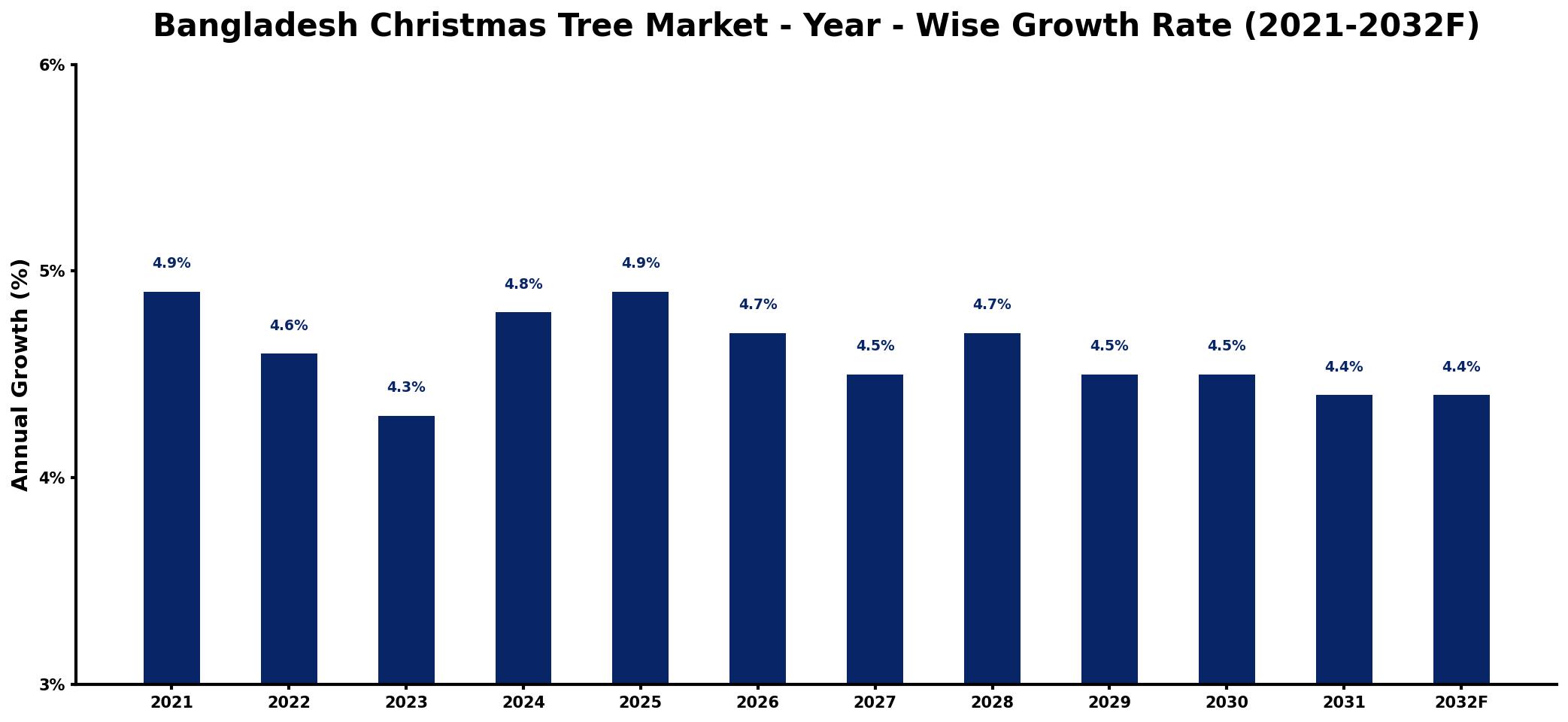
The table below presents the year‑wise growth rates along with the key drivers influencing the market
| Year | Growth Rate | Major Drivers |
| 2021 | 4.9% | Increased consumer spending on decor |
| 2022 | 4.6% | Growing popularity of festive traditions |
| 2023 | 4.3% | Rise in disposable income trends |
| 2024 | 4.8% | Expansion of retail holiday offerings |
| 2025 | 4.9% | Surge in online shopping platforms |
| 2026 | 4.7% | Enhanced marketing strategies implemented |
| 2027 | 4.5% | Development of eco-friendly alternatives |
| 2028 | 4.7% | Increased participation in celebrations |
| 2029 | 4.5% | Growth in seasonal event planning |
| 2030 | 4.5% | Higher demand for home decorations |
| 2031 | 4.4% | stronger distribution network expansion |
| 2032 | 4.4% | rising procurement volume requirements |
Note: Market size estimations and growth projections presented in this report are based on 6Wresearch's proprietary forecasting methodology, utilizing the latest available industry data, government publications, and primary research inputs.
Bangladesh Christmas Tree Market Synopsis
The most significant force shaping the Bangladesh Christmas Tree Market currently is the increasing acceptance of Western traditions within urban populations. With expatriates leading the charge, more locals are engaging with the holiday, thereby enhancing the market's appeal and accessibility.
In addition to cultural adoption, the market's growth is supported by government policies promoting religious and cultural diversity. This initiative encourages local craftsmanship, creating a more vibrant domestic market that seeks to cater to both expatriate and local demand.
Bangladesh Christmas Tree Market Key Takeaways
- Expatriate communities are crucial in driving demand for Christmas trees in urban areas.
- Government support for cultural diversity is fostering local production of festive decorations.
- Commercial spaces are increasingly utilizing Christmas trees for decorative purposes.
- Logistical challenges associated with importing trees present cost implications for retailers.
- Consumer spending on alternative decorations could influence market dynamics.
Evaluation of Restraints in Bangladesh Christmas Tree Market
Despite the festive allure of Christmas trees, the market faces significant cultural and logistical restraints. The limited celebration of Christmas within the broader Bangladeshi context restricts the overall demand. Furthermore, the complexities of importing live or artificial trees can inflate costs, putting pressure on both retailers and consumers. Coupled with competition from other festive decorations and local traditions, these challenges may hinder more rapid growth in the market.
Bangladesh Christmas Tree Market Trends
Current trends within the Bangladesh Christmas Tree Market show a marked increase in interest in sustainable and locally-sourced decorations. Consumers are gravitating towards eco-friendly artificial trees and natural, locally crafted options, driven by a greater environmental awareness. Social media platforms have also emerged as significant channels for promoting festive ideas, showcasing unique decorating styles that resonate with a younger demographic.
Bangladesh Christmas Tree Market Opportunities
The burgeoning interest in celebrating Christmas presents multiple opportunities for investment in the Bangladesh Christmas Tree Market. Entrepreneurs can explore partnerships with local artisans to create unique decorative items, catering to both expatriates and locals seeking authentic experiences. Additionally, enhancing supply chains for both live and artificial trees could help to mitigate costs and expand market reach.
Government Initiatives in the Bangladesh Christmas Tree Market
Government initiatives aimed at promoting cultural diversity have played a pivotal role in the growth of the Christmas tree market. Policies encouraging local artisans and small businesses to produce holiday decorations are gradually reducing reliance on imports. These measures not only stimulate economic activity but also enhance the cultural fabric by fostering the production of unique local crafts that appeal to a growing customer base.
Future Insights of the Bangladesh Christmas Tree Market
Looking ahead to the period between 2026 and 2032, the Bangladesh Christmas Tree Market is poised for steady growth. The increasing influence of Western holidays combined with ongoing urbanization will likely lead to a broader acceptance of Christmas celebrations. As more people seek festive experiences, retailers and local craftsmen will have the opportunity to capitalize on this trend by offering innovative products that cater to evolving consumer preferences.
Bangladesh Christmas Tree Market Latest Developments (2025 - 2026)
In recent months, the Bangladesh Christmas Tree Market has witnessed a surge in locally-produced decorations, driven by a renewed interest in sustainable practices. Furthermore, urban shopping malls are increasingly hosting Christmas fairs, showcasing local artisans and attracting a diverse audience. These developments signify a growing market dynamic as Bangladeshis become more engaged with festive traditions.
Bangladesh Christmas Tree Market - Key Attractiveness of the Report
- 10 Years of Market Numbers
- Historical Data Starting from 2022 to 2025
- Base Year: 2025
- Forecast Data until 2032
- Key Performance Indicators Impacting the Market
- Major Upcoming Developments and Projects
Key Highlights of the Report:
- Bangladesh Christmas Tree Market Outlook
- Market Size of Bangladesh Christmas Tree Market, 2025
- Forecast of Bangladesh Christmas Tree Market, 2032
- Historical Data and Forecast of Bangladesh Christmas Tree Revenues & Volume for the Period 2022-2032F
- Bangladesh Christmas Tree Market Trend Evolution
- Bangladesh Christmas Tree Market Drivers and Challenges
- Bangladesh Christmas Tree Price Trends
- Bangladesh Christmas Tree Porter's Five Forces
- Bangladesh Christmas Tree Industry Life Cycle
- Historical Data and Forecast of Bangladesh Christmas Tree Market Revenues & Volume By Type for the Period 2022-2032F
- Historical Data and Forecast of Bangladesh Christmas Tree Market Revenues & Volume By Horizontal Tree for the Period 2022-2032F
- Historical Data and Forecast of Bangladesh Christmas Tree Market Revenues & Volume By Vertical Tree for the Period 2022-2032F
- Historical Data and Forecast of Bangladesh Christmas Tree Market Revenues & Volume By Location of Deployment for the Period 2022-2032F
- Historical Data and Forecast of Bangladesh Christmas Tree Market Revenues & Volume By Onshore for the Period 2022-2032F
- Historical Data and Forecast of Bangladesh Christmas Tree Market Revenues & Volume By Offshore for the Period 2022-2032F
- Bangladesh Christmas Tree Import Export Trade Statistics
- Market Opportunity Assessment By Type
- Market Opportunity Assessment By Location of Deployment
- Bangladesh Christmas Tree Top Companies Market Share
- Bangladesh Christmas Tree Competitive Benchmarking By Technical and Operational Parameters
- Bangladesh Christmas Tree Company Profiles
- Bangladesh Christmas Tree Key Strategic Recommendations






































