Bangladesh EdTech and Smart Classrooms Market Size & Growth Rate (2026-2032)
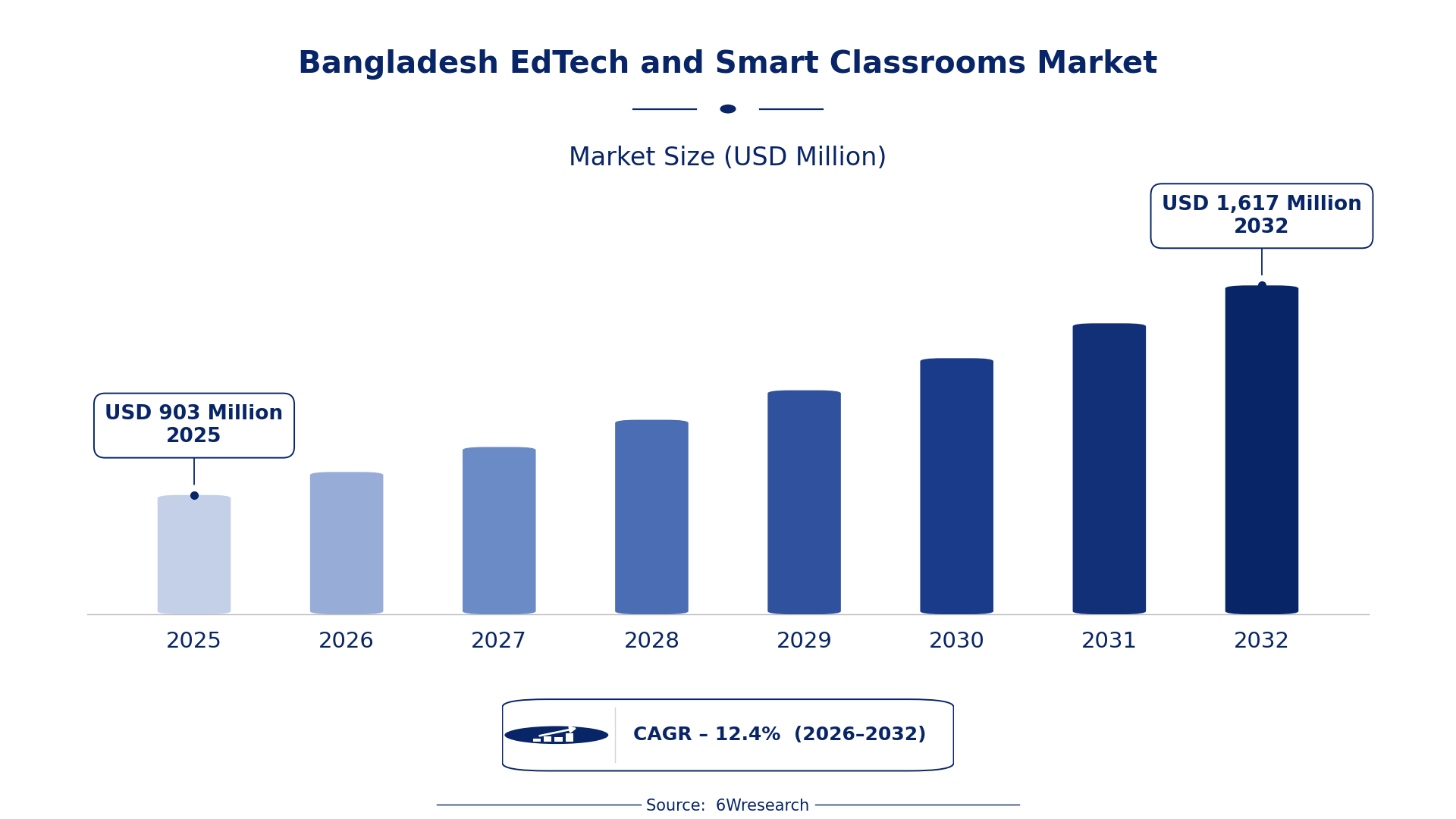
The Bangladesh EdTech and Smart Classrooms Market was estimated at USD 903 Million in 2025 and is projected to reach USD 1617 Million by 2032, growing at a CAGR of 12.4% from 2026 to 2032.
Bangladesh EdTech and Smart Classrooms Market Synopsis
The Bangladesh EdTech and Smart Classrooms Market is undergoing a transformation, driven by the increasing integration of technology in education. Schools and universities are adopting digital tools to improve student engagement and learning outcomes, highlighting a clear shift toward more interactive learning environments.
This market expansion is fueled not only by government initiatives but also by changing student expectations and a growing demand for personalized learning experiences. As the digital divide narrows, more educational institutions are recognizing the importance of smart classrooms equipped with advanced technologies, setting the stage for sustained growth.
Bangladesh EdTech and Smart Classrooms Market Year-wise Growth Rate and Key Drivers
This graph illustrates the annual growth rates of the Bangladesh EdTech and Smart Classrooms Market from 2021 to 2032, highlighting a steady upward trajectory and projected expansion over the forecast period.
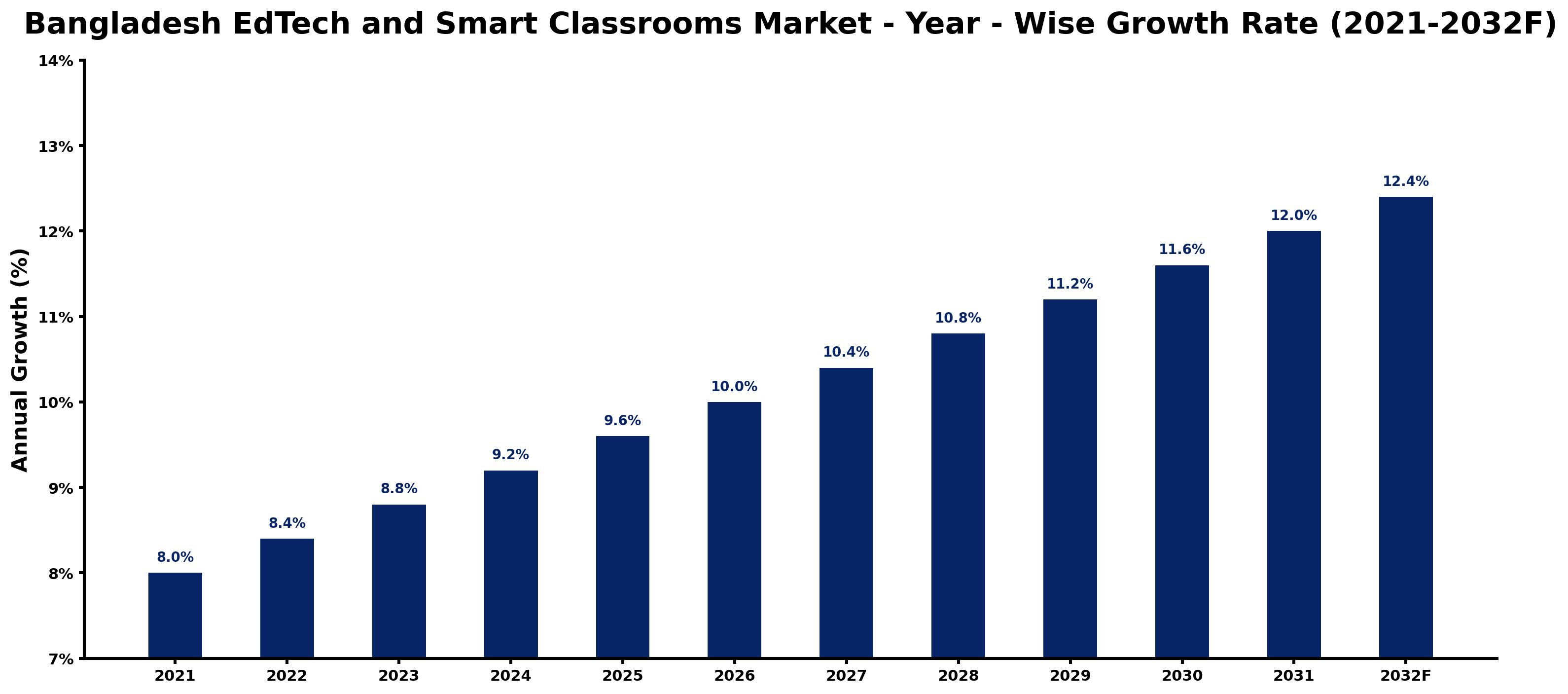
The table below presents the year‑wise growth rates along with the key drivers influencing the market
| Year | Growth Rate | Major Drivers |
| 2021 | 8.0% | Digital Bangladesh initiative boosts educational technology adoption. |
| 2022 | 8.4% | Increased smartphone penetration enhances access to online learning. |
| 2023 | 8.8% | Government grants support smart classroom technology implementation. |
| 2024 | 9.2% | Rising middle-class population demands quality educational resources. |
| 2025 | 9.6% | Partnerships with local tech firms drive innovative solutions. |
| 2026 | 10.0% | National curriculum reform prioritizes technology integration in education. |
| 2027 | 10.4% | Growing awareness of remote learning benefits accelerates demand. |
| 2028 | 10.8% | Increased youth population drives higher enrollment in EdTech. |
| 2029 | 11.2% | Foreign investments in education technology stimulate sector growth. |
| 2030 | 11.6% | Enhanced internet connectivity supports interactive learning platforms. |
| 2031 | 12.0% | Teacher training programs focus on digital teaching methodologies. |
| 2032 | 12.4% | Public-private partnerships promote smart classroom infrastructure development. |
Note: Market size estimations and growth projections presented in this report are based on 6Wresearch's proprietary forecasting methodology, utilizing the latest available industry data, government publications, and primary research inputs.
Bangladesh EdTech and Smart Classrooms Market Key Takeaways
Below are some of the specific key takeaways from the market, including:
- Increasing internet penetration is significantly contributing to the growth of digital learning tools.
- Government policies are actively promoting the integration of technology in education.
- There is a rising demand for personalized and gamified learning solutions.
- Smart classrooms are becoming essential for modern educational institutions.
- Challenges remain in terms of infrastructure and digital literacy, particularly in remote areas.
Evaluation of Restraints in Bangladesh EdTech and Smart Classrooms Market
Several barriers are hindering the full potential of the Bangladesh EdTech and Smart Classrooms Market. Limited internet connectivity in rural areas remains a critical issue, preventing equitable access to digital resources. Additionally, many schools lack the necessary infrastructure to support advanced technology, which restricts the implementation of smart classroom solutions.
on top of that, low levels of digital literacy among both teachers and students hinder effective engagement with EdTech tools. Affordability also poses a challenge, as many institutions struggle to fund the integration of new technologies. Addressing these issues will require coordinated efforts among various stakeholders to ensure that all students can benefit from the advancements in educational technology.
Bangladesh EdTech and Smart Classrooms Market Trends
The market is witnessing several trends that are reshaping the educational landscape. The adoption of mobile learning solutions has surged, catering to the needs of a tech-savvy generation. Gamified learning platforms are also gaining traction, making education more engaging and enjoyable for students.
on top of that, the integration of virtual reality and augmented reality tools is enhancing the learning experience, allowing students to explore complex concepts in immersive ways. These trends are not just improving engagement; they are also contributing to better learning outcomes, making them vital components of modern education strategies.
Bangladesh EdTech and Smart Classrooms Market Opportunities
There are numerous opportunities for growth in this sector. The demand for personalized learning experiences is on the rise, providing a significant opening for developers of adaptive learning technologies. Additionally, teacher training programs focused on digital education can enhance the effectiveness of technology integration in classrooms.
Developing localized content that caters to the diverse needs of students across different regions can also foster greater engagement. Collaborations between EdTech companies and educational institutions will be crucial to drive innovation and expand access to quality education in Bangladesh.
Government Initiatives in the Bangladesh EdTech and Smart Classrooms Market
The Bangladeshi government is actively shaping the EdTech and Smart Classrooms Market through a series of targeted initiatives aimed at enhancing digital education. With a strong focus on improving learning outcomes and increasing access to technology, public policy is critical to fostering an environment conducive to educational innovation.
- A recently completed initiative involved the rollout of digital classrooms across select schools to enhance interactive learning.
- A current program, the Digital Bangladesh Vision 2021, emphasizes technology integration in education as a cornerstone for national development.
- Ongoing efforts include the Access to Information (a2i) project, which aims to improve digital literacy among teachers and students.
- Upcoming plans involve a national ICT Policy revision expected to introduce new standards for digital education by 2026.
- Future initiatives aim to expand internet connectivity to underserved areas, addressing infrastructure gaps in the education sector.
Future Insights of the Bangladesh EdTech and Smart Classrooms Market
Looking ahead to 2026-2032, the Bangladesh EdTech and Smart Classrooms Market is set for remarkable growth. The increased emphasis on digital learning, accelerated by the COVID-19 pandemic, will continue to shape educational practices. As government initiatives support digital education, the market will likely attract further investment, paving the way for innovative solutions.
The expectation is that educational institutions will increasingly prioritize technology integration, which will drive demand for smart classrooms and advanced learning tools. With these developments, the future of education in Bangladesh appears promising, as technology becomes an integral part of the learning journey.
Bangladesh EdTech and Smart Classrooms Market Latest Developments
In the past 12-14 months, the Bangladesh EdTech and Smart Classrooms Market has seen a surge in activity, reflecting a growing recognition of the importance of technology in education. Many institutions are now embracing digital tools to enhance learning experiences and outcomes.
- A major technology vendor launched a new online learning platform in early 2025, designed to support interactive learning in classrooms.
- An ongoing collaboration between educational institutions and EdTech providers aims to develop localized content that meets regional educational needs.
- By mid-2025, a series of teacher training workshops were initiated to enhance digital literacy and effective technology use in classrooms.
- A planned initiative is set to roll out in Q3 2025, focusing on upgrading digital infrastructure in rural schools.
- A recently completed pilot program demonstrated the effectiveness of gamified learning tools, leading to plans for wider adoption in schools.
Bangladesh EdTech and Smart Classrooms Market - Key Attractiveness of the Report
- 10 Years of Market Numbers
- Historical Data Starting from 2022 to 2025
- Base Year: 2025
- Forecast Data until 2032
- Key Performance Indicators Impacting the Market
- Major Upcoming Developments and Projects
Key Highlights of the Report:
- Bangladesh EdTech and Smart Classrooms Market Outlook
- Market Size of Bangladesh EdTech and Smart Classrooms Market, 2025
- Forecast of Bangladesh EdTech and Smart Classrooms Market, 2032
- Historical Data and Forecast of Bangladesh EdTech and Smart Classrooms Revenues & Volume for the Period 2022-2032F
- Bangladesh EdTech and Smart Classrooms Market Trend Evolution
- Bangladesh EdTech and Smart Classrooms Market Drivers and Challenges
- Bangladesh EdTech and Smart Classrooms Price Trends
- Bangladesh EdTech and Smart Classrooms Porter's Five Forces
- Bangladesh EdTech and Smart Classrooms Industry Life Cycle
- Historical Data and Forecast of Bangladesh EdTech and Smart Classrooms Market Revenues & Volume By Hardware for the Period 2022-2032F
- Historical Data and Forecast of Bangladesh EdTech and Smart Classrooms Market Revenues & Volume By Interactive Displays for the Period 2022-2032F
- Historical Data and Forecast of Bangladesh EdTech and Smart Classrooms Market Revenues & Volume By Interactive Projectors for the Period 2022-2032F
- Historical Data and Forecast of Bangladesh EdTech and Smart Classrooms Market Revenues & Volume By Education System Solution for the Period 2022-2032F
- Historical Data and Forecast of Bangladesh EdTech and Smart Classrooms Market Revenues & Volume By Learning Management System for the Period 2022-2032F
- Historical Data and Forecast of Bangladesh EdTech and Smart Classrooms Market Revenues & Volume By Student Information and Administration System for the Period 2022-2032F
- Historical Data and Forecast of Bangladesh EdTech and Smart Classrooms Market Revenues & Volume By Student Collaboration System for the Period 2022-2032F
- Historical Data and Forecast of Bangladesh EdTech and Smart Classrooms Market Revenues & Volume By Student Response System for the Period 2022-2032F
- Historical Data and Forecast of Bangladesh EdTech and Smart Classrooms Market Revenues & Volume By Learning and Gamification for the Period 2022-2032F
- Historical Data and Forecast of Bangladesh EdTech and Smart Classrooms Market Revenues & Volume By Test Preparation for the Period 2022-2032F
- Historical Data and Forecast of Bangladesh EdTech and Smart Classrooms Market Revenues & Volume By Classroom Management System for the Period 2022-2032F
- Historical Data and Forecast of Bangladesh EdTech and Smart Classrooms Market Revenues & Volume By Document Management System for the Period 2022-2032F
- Historical Data and Forecast of Bangladesh EdTech and Smart Classrooms Market Revenues & Volume By Deployment Type for the Period 2022-2032F
- Historical Data and Forecast of Bangladesh EdTech and Smart Classrooms Market Revenues & Volume By Cloud for the Period 2022-2032F
- Historical Data and Forecast of Bangladesh EdTech and Smart Classrooms Market Revenues & Volume By On-Premises for the Period 2022-2032F
- Historical Data and Forecast of Bangladesh EdTech and Smart Classrooms Market Revenues & Volume By End User for the Period 2022-2032F
- Historical Data and Forecast of Bangladesh EdTech and Smart Classrooms Market Revenues & Volume By K-12 for the Period 2022-2032F
- Historical Data and Forecast of Bangladesh EdTech and Smart Classrooms Market Revenues & Volume By Higher Education for the Period 2022-2032F
- Bangladesh EdTech and Smart Classrooms Import Export Trade Statistics
- Market Opportunity Assessment By Hardware
- Market Opportunity Assessment By Education System Solution
- Market Opportunity Assessment By Deployment Type
- Market Opportunity Assessment By End User
- Bangladesh EdTech and Smart Classrooms Top Companies Market Share
- Bangladesh EdTech and Smart Classrooms Competitive Benchmarking By Technical and Operational Parameters
- Bangladesh EdTech and Smart Classrooms Company Profiles
- Bangladesh EdTech and Smart Classrooms Key Strategic Recommendations






































