Bangladesh Handicrafts Market Size Growth Rate
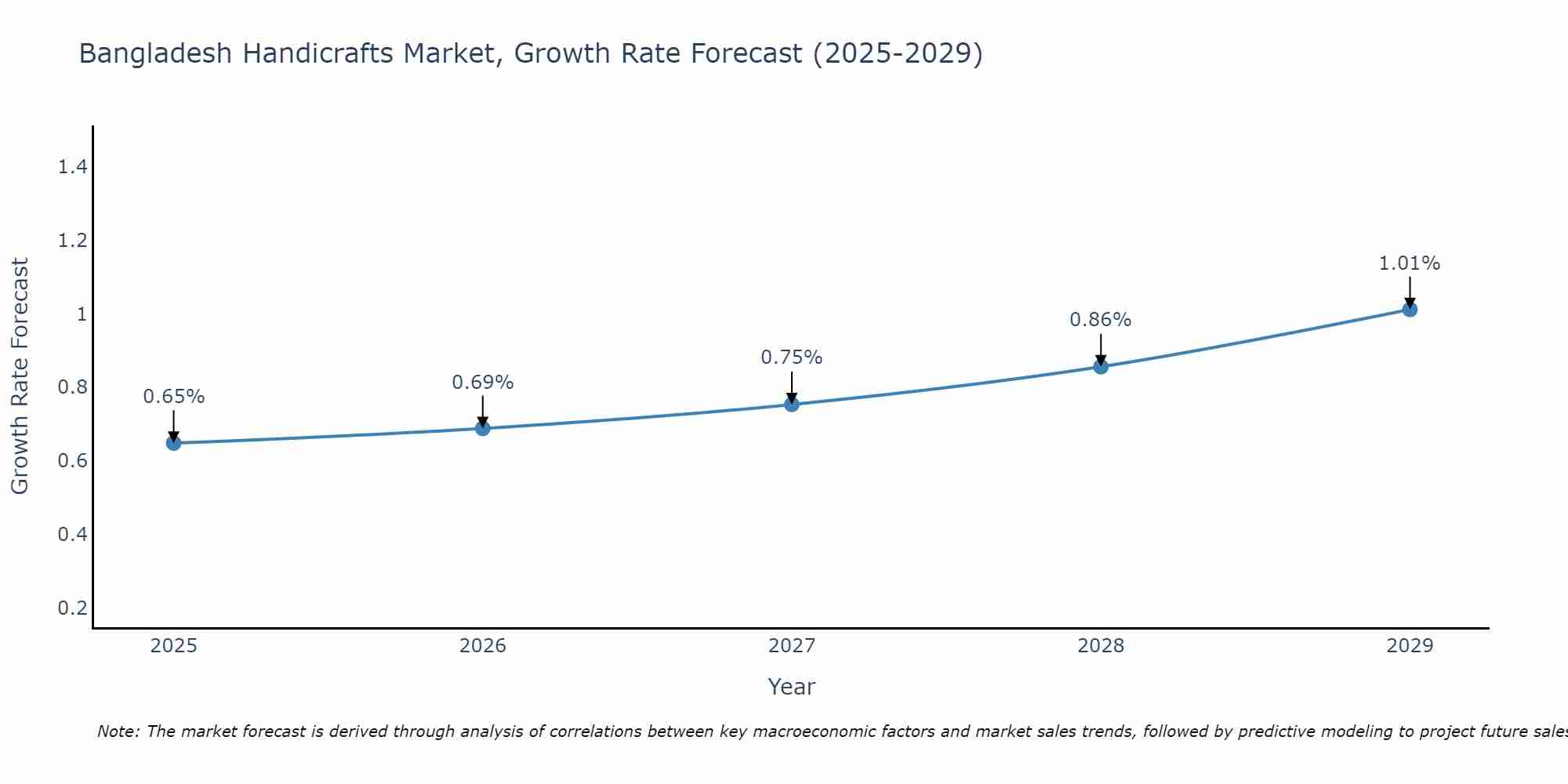
The Bangladesh Handicrafts Market is poised for steady growth rate improvements from 2025 to 2029. From 0.65% in 2025, the growth rate steadily ascends to 1.01% in 2029.
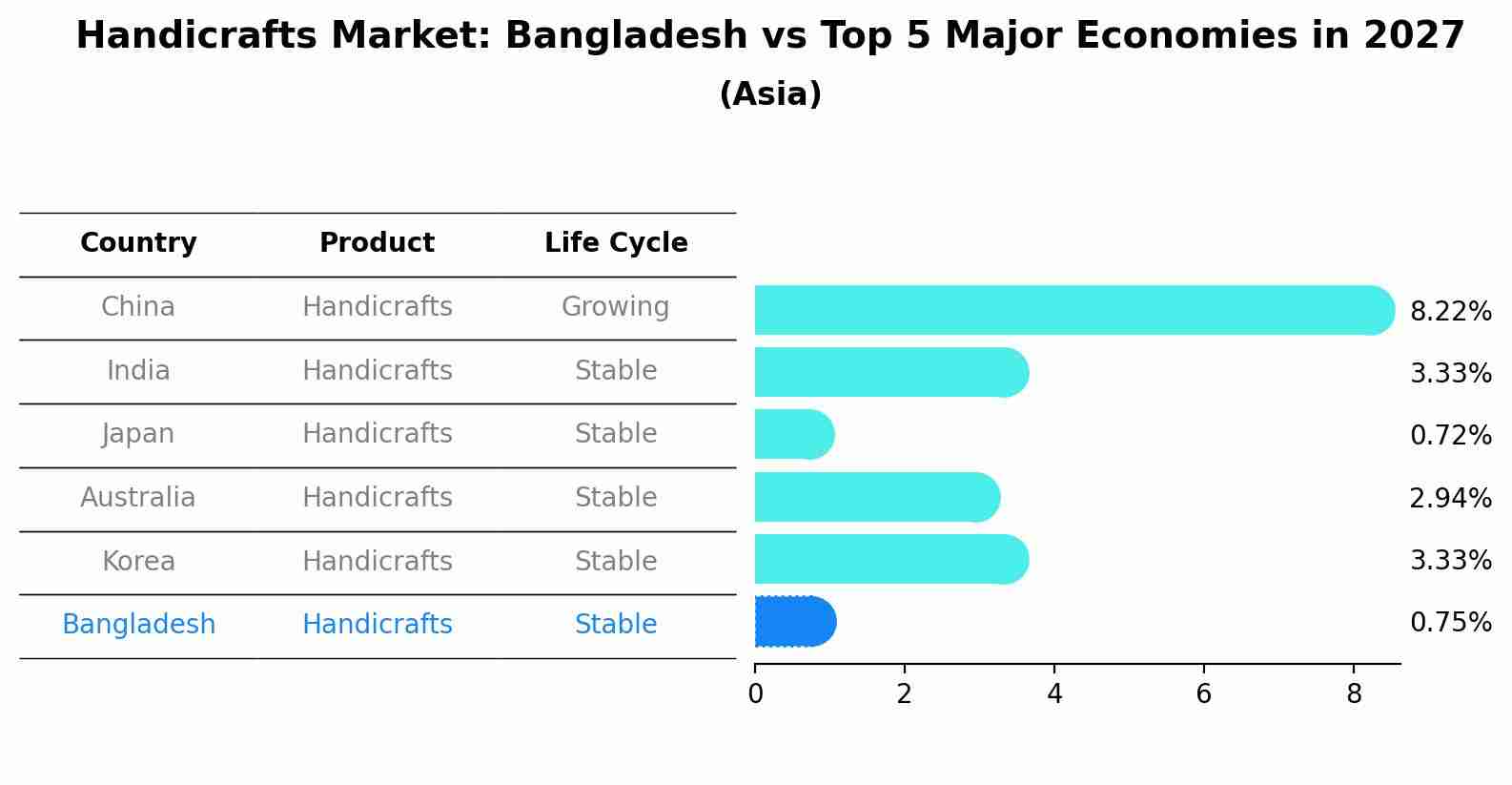
Handicrafts Market: Bangladesh vs Top 5 Major Economies in 2027 (Asia)
Bangladesh's Handicrafts market is anticipated to experience a stable growth rate of 0.75% by 2027, reflecting trends observed in the largest economy China, followed by India, Japan, Australia and South Korea.
Bangladesh Handicrafts Market Growth Rate
According to 6Wresearch internal database and industry insight, the Bangladesh Handicrafts Market is projected to grow at a compound annual growth rate (CAGR) of 7.2% during the forecast period (2026-2032).
Topics Covered in the Bangladesh Handicrafts Market Report
The Bangladesh Handicrafts Market report thoroughly covers the market by product type, distribution channel and end-users. The report provides an unbiased and detailed analysis of ongoing market trends, opportunities/high-growth areas, and market drivers, which help stakeholders devise and align their market strategies according to the current and future market dynamics.
Bangladesh Handicrafts Market Highlights
| Report Name | Bangladesh Handicrafts Market |
| Forecast Period | 2026–2032 |
| CAGR | 7.2% |
| Growing Sector | Residential |
Bangladesh Handicrafts Market Synopsis
The Bangladesh Handicrafts Market is experiencing major growth, which is spurred by the rising demand for handmade decorative products. The increasing value that people place on cultural heritage and eco-friendly handmade products creates a demand for handicrafts, which is expected to fuel the growth of the market. The expansion of e-commerce platforms along with the increasing tourism activities creates better access to handicraft products while making them more visible to people.
Evaluation of Growth Drivers in the Bangladesh Handicrafts Market
Below mentioned are some prominent drivers and their influence on market dynamics:
| Drivers | Primary Segments Affected | Why it Matters (Evidence) |
| Growing Demand for Handmade Products | All Segments | Consumers are increasingly preferring handcrafted items due to their uniqueness and cultural value. |
| Expansion of E-commerce Platforms | Distribution Channel | Online platforms provide artisans with broader market access. |
| Tourism Industry Growth | Residential, Commercial | Tourists often purchase handicrafts as cultural souvenirs. |
| Government Support for Artisans | All Segments | Government initiatives encourage local craft production and exports. |
| Export Demand | Product Type Segments | International markets show growing interest in handcrafted and eco-friendly products. |
The Bangladesh Handicrafts Market is projected to experience significance growth at a CAGR of 7.2% during the forecast period (2026-2032), which is propelled by the rising appreciation for handmade products and cultural craft items. Additional factors that are supporting the growth of the market are the increasing number of tourists and the rising demand for decorative products. The expansion of e-commerce platforms and the increasing export opportunities for Bangladeshi handicrafts are anticipated to further boost the expansion of the market. Along with this, the increasing purchasing power in urban populations is promoting higher expenditure on decorative home products and artisan goods.
Evaluation of Restraints in the Bangladesh Handicrafts Market
Below mentioned are some major restraints and their influence on market dynamics:
| Restraints | Primary Segments Affected | What This Means (Evidence) |
| Competition from Machine-made Products | All Segments | Low-cost factory products may reduce demand for handmade crafts. |
| Limited Market Access for Artisans | Distribution Channel | Small artisans may face difficulties reaching larger markets. |
| Price Sensitivity | Residential Consumers | Higher prices of handmade items may restrict consumer adoption. |
| Lack of Modern Design Adaptation | Product Type Segments | Traditional designs may not always match modern consumer preferences. |
| Supply Chain Challenges | All Segments | Limited logistics infrastructure can restrict product distribution. |
Bangladesh Handicrafts Market Challenges
Even with growth prospects, the Bangladesh Handicrafts Market revenue can be affected due to the major challenges. One primary challenge is the strong competition from machine-manufactured decorative products, which are available at lower prices than decorative items made using traditional methods, which could create a barrier to the growth of the market. The market reach of small artisans is restricted as they lack access to contemporary marketing techniques that could help their products reach more customers.
Bangladesh Handicrafts Market Trends
The Bangladesh handicrafts market is evolving due to several key trends. The growing popularity of personalised lifestyle products is one major key trend as people seek specific items based on their space theme. Additionally, the natural and recycled materials are preferred over traditional crafts by the buyers. Attractive packaging, collaborations with influencers and subscription-driven gifting models are emerging that helps brands differentiate themselves. Along with this, the rising demand for functional handicrafts and handmade accessories is also accelerating the growth of the market across the country.
Investment Opportunities in the Bangladesh Handicrafts Market
The Bangladesh handicrafts market provides major investment opportunities. Brands offering affordable products that compete with imported or machine-made goods are leading the market and presenting strong growth opportunities. Investing in setting up online stores with features like AI-based product suggestions or artisan storytelling integration also offers strong market potential. Furthermore, partnerships with home decor platforms, influencers, and lifestyle coaches help small brands reach wider audiences. Along with this, Investors can also explore companies that develop unique collections, adopt green packaging or offer customised product bundles as these strategies support stable market growth.
Top 5 Leading Players in the Bangladesh Handicrafts Market
Below is a comprehensive list of leading players operating in the Bangladesh Handicrafts Market:
1. Aarong
| Company Name | Aarong (BRAC) |
|---|---|
| Established Year | 1978 |
| Headquarters | Dhaka, Bangladesh |
| Official Website | Click Here |
Aarong is a premier social enterprise operated by BRAC and one of the most recognized handicraft brands in Bangladesh. The organization supports more than 65,000 artisans and offers a wide range of handcrafted products including textiles, clothing, home décor items, and fashion accessories while promoting traditional craftsmanship and sustainable livelihoods.
2. Karupannya Rangpur Ltd.
| Company Name | Karupannya Rangpur Ltd. |
|---|---|
| Established Year | 1991 |
| Headquarters | Rangpur, Bangladesh |
| Official Website | Click Here |
Karupannya Rangpur Ltd. is a well-known manufacturer and exporter of traditional Bangladeshi home textiles. The company specializes in Shatranji, a hand-tufted floor mat, along with other eco-friendly textile products that are exported to several international markets.
3. CORR – The Jute Works
| Company Name | CORR – The Jute Works |
|---|---|
| Established Year | 1973 |
| Headquarters | Dhaka, Bangladesh |
| Official Website | Click Here |
CORR – The Jute Works is a pioneer in the fair-trade handicraft movement in Bangladesh. The organization focuses on empowering rural women by producing jute-based handicrafts such as bags, rugs, and decorative items while promoting ethical production and sustainable economic development.
4. Prokritee
| Company Name | Prokritee |
|---|---|
| Established Year | 2001 |
| Headquarters | Dhaka, Bangladesh |
| Official Website | Click Here |
Prokritee operates as a fair-trade social enterprise managing multiple handicraft production units across Bangladesh. The organization produces eco-friendly products such as handmade paper items, baskets, and textiles made from natural materials including jute and seagrass.
5. Kumudini Handicrafts
| Company Name | Kumudini Handicrafts |
|---|---|
| Established Year | 1980 |
| Headquarters | Dhaka, Bangladesh |
| Official Website | Click Here |
Kumudini Handicrafts, part of the Kumudini Welfare Trust, focuses on preserving traditional Bangladeshi crafts while supporting marginalized artisans. The organization produces handcrafted items such as Nakshi Kantha embroidered quilts and handloom textile products, helping sustain traditional craft techniques and artisan communities.
Government Regulations Introduced in the Bangladesh Handicrafts Market
According to Bangladeshi government guidelines, various regulations have been established to encourage handicraft production and support local artisans. The Bangladesh Small and Cottage Industries Corporation (BSCIC) operates training programs that offer financial assistance while promoting export activities to strengthen the handicraft industry. The programs seek to develop artisan skills while increasing product quality and creating new market opportunities, which will further contribute to the expansion of the Bangladesh handicrafts industry.
Future Insights of the Bangladesh Handicrafts Market
The Bangladesh Handicrafts Market revenue is anticipated to increase in the coming years, which is spurred by the evolving consumer preference for handmade items and the increasing use of environmentally friendly products. Additional factors that are encouraging the growth of the market are the increasing number of e-commerce platforms and expanding tourism activities. The increasing investments in artisan training, along with technical advancements and export promotion programs, are expected to accelerate the expansion of the market.
Market Segmentation Analysis
This report provides an inclusive study of the following market segments and their leading categories:
By Product Type – Hand Printed Textiles and Scarves to Dominate
According to Sarthi, Senior Research Analyst, 6wresearch, hand printed textiles and scarves are anticipated to lead the Bangladesh Handicrafts Market due to their cultural importance and extensive use in clothing and decorative products.
By Distribution Channel – Independent Retailers to Dominate
Independent retailers are estimated to dominate the Bangladesh Handicrafts Market which is influenced by the strong presence of local artisan shops and traditional craft stores across the country.
By End-users – Residential Segment to Dominate
The residential segment is projected to dominate the Bangladesh Handicrafts Market due to the rising consumer demand for handmade decorative products and the growing interest in the culturally inspired decor items.
Key Attractiveness of the Report
- 10 Years of Market Numbers
- Historical Data Starting from 2022 to 2025
- Base Year: 2025
- Forecast Data until 2032
- Key Performance Indicators Impacting the Market
- Major Upcoming Developments and Projects
Key Highlights of the Report:
- Bangladesh Handicrafts Market Outlook
- Market Size of Bangladesh Handicrafts Market, 2025
- Forecast of Bangladesh Handicrafts Market, 2032
- Historical Data and Forecast of Bangladesh Handicrafts Revenues & Volume for the Period 2022-2032
- Bangladesh Handicrafts Market Trend Evolution
- Bangladesh Handicrafts Market Drivers and Challenges
- Bangladesh Handicrafts Price Trends
- Bangladesh Handicrafts Porter's Five Forces
- Bangladesh Handicrafts Industry Life Cycle
- Historical Data and Forecast of Bangladesh Handicrafts Market Revenues & Volume By Product Type for the Period 2022-2032
- Historical Data and Forecast of Bangladesh Handicrafts Market Revenues & Volume By Woodware for the Period 2022-2032
- Historical Data and Forecast of Bangladesh Handicrafts Market Revenues & Volume By Art metal Ware for the Period 2022-2032
- Historical Data and Forecast of Bangladesh Handicrafts Market Revenues & Volume By Hand printed Textiles and Scarves for the Period 2022-2032
- Historical Data and Forecast of Bangladesh Handicrafts Market Revenues & Volume By Embroidered and Crocheted Goods for the Period 2022-2032
- Historical Data and Forecast of Bangladesh Handicrafts Market Revenues & Volume By Zari and Zari Goods for the Period 2022-2032
- Historical Data and Forecast of Bangladesh Handicrafts Market Revenues & Volume By Imitation Jewellery for the Period 2022-2032
- Historical Data and Forecast of Bangladesh Handicrafts Market Revenues & Volume By Sculptures for the Period 2022-2032
- Historical Data and Forecast of Bangladesh Woodware Handicrafts Market Revenues & Volume By Others for the Period 2022-2032
- Historical Data and Forecast of Bangladesh Handicrafts Market Revenues & Volume By Distribution Channel for the Period 2022-2032
- Historical Data and Forecast of Bangladesh Handicrafts Market Revenues & Volume By Mass Retailers for the Period 2022-2032
- Historical Data and Forecast of Bangladesh Handicrafts Market Revenues & Volume By Departmental Stores for the Period 2022-2032
- Historical Data and Forecast of Bangladesh Handicrafts Market Revenues & Volume By Independent Retailers for the Period 2022-2032
- Historical Data and Forecast of Bangladesh Handicrafts Market Revenues & Volume By Specialty Stores for the Period 2022-2032
- Historical Data and Forecast of Bangladesh Handicrafts Market Revenues & Volume By Online Stores for the Period 2022-2032
- Historical Data and Forecast of Bangladesh Handicrafts Market Revenues & Volume By Others for the Period 2022-2032
- Historical Data and Forecast of Bangladesh Handicrafts Market Revenues & Volume By End-users for the Period 2022-2032
- Historical Data and Forecast of Bangladesh Handicrafts Market Revenues & Volume By Residential for the Period 2022-2032
- Historical Data and Forecast of Bangladesh Handicrafts Market Revenues & Volume By Commercial for the Period 2022-2032
- Bangladesh Handicrafts Import Export Trade Statistics
- Market Opportunity Assessment By Product Type
- Market Opportunity Assessment By Distribution Channel
- Market Opportunity Assessment By End-users
- Bangladesh Handicrafts Top Companies Market Share
- Bangladesh Handicrafts Competitive Benchmarking By Technical and Operational Parameters
- Bangladesh Handicrafts Company Profiles
- Bangladesh Handicrafts Key Strategic Recommendations
Market Segmentations:
The Market report covers a detailed analysis of the following market segments:
By Product Type
- Woodware
- Art Metal Ware
- Hand Printed Textiles and Scarves
- Embroidered and Crocheted Goods
- Zari and Zari Goods
- Imitation Jewellery
- Sculptures
- Others
By Distribution Channel
- Mass Retailers
- Departmental Stores
- Independent Retailers
- Specialty Stores
- Online Stores
By End-users
- Residential
- Commercial






































