Bangladesh Hotel Furniture Market Summary
The bangladesh hotel furniture market was estimated at USD 1294 Million in 2025 and is projected to reach USD 1871 Million by 2032, growing at a CAGR of 6.3% from 2026 to 2032.
Bangladesh Hotel Furniture Market Year-wise Growth Rate and Key Drivers
This graph highlights how the Bangladesh Hotel Furniture Market has steadily grown over the past five years, supported by major growth factors.
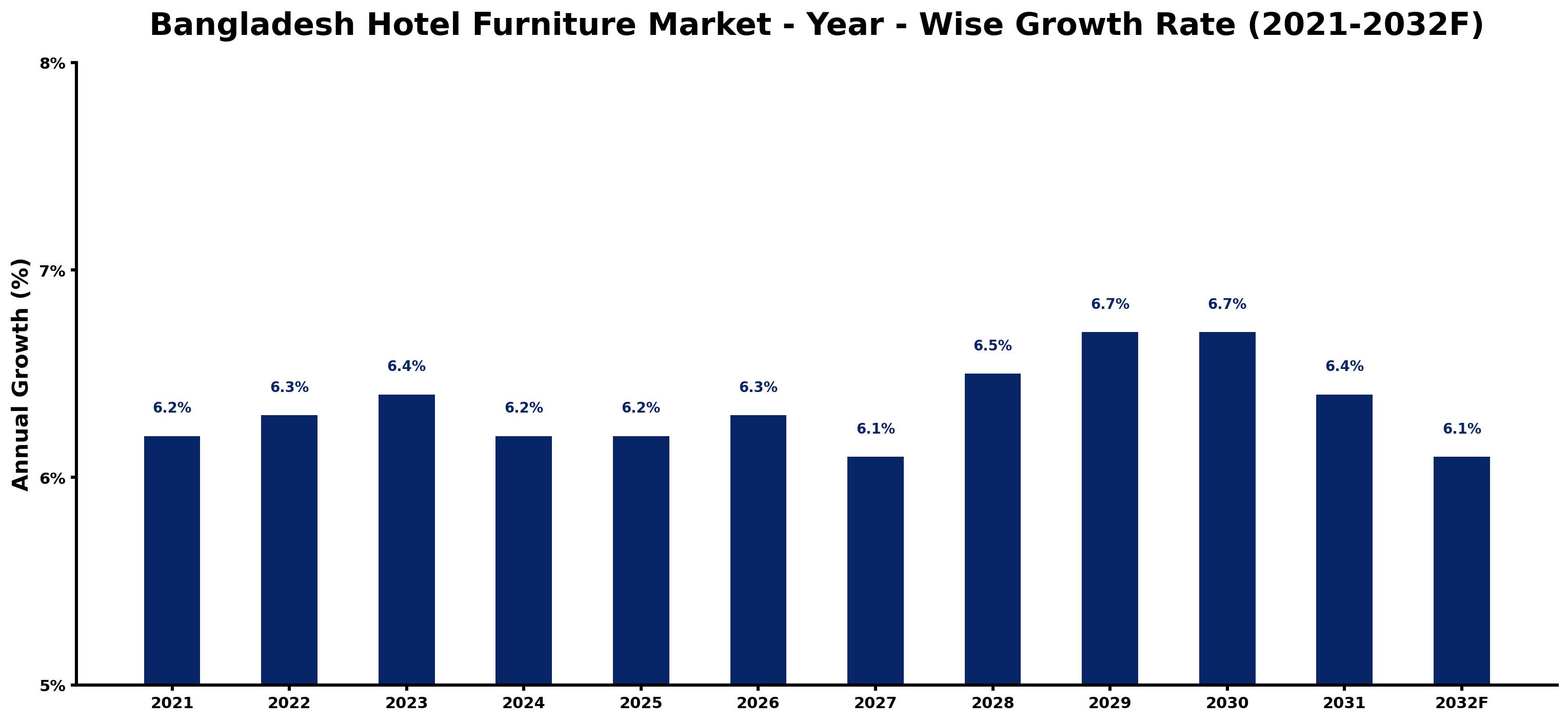
The table below presents the year wise growth rates along with the key drivers influencing the market
| Year | Growth Rate | Major Drivers |
| 2021 | 6.2% | Hospitality sector recovery post-COVID-19 catalyzed furniture refurbishments and upgrades. |
| 2022 | 6.3% | Increased domestic tourism sparked investments in boutique hotels and unique furnishings. |
| 2023 | 6.4% | Foreign investments in luxury hotels reshaped demand for high-quality, bespoke furniture. |
| 2024 | 6.2% | Sustainability trends encouraged eco-friendly materials in hotel furniture design choices. |
| 2025 | 6.2% | Technological integration in hospitality led to demand for smart furniture solutions. |
| 2026 | 6.3% | Rising disposable incomes expanded consumer preferences towards premium hotel experiences. |
| 2027 | 6.1% | Regional collaborations enhanced exports of locally produced hotel furniture to other countries. |
| 2028 | 6.5% | Growing real estate developments attracted multinational hotel chains seeking bespoke solutions. |
| 2029 | 6.7% | Emerging trends in minimalist design influenced hotel furniture styles and aesthetics. |
| 2030 | 6.7% | E-commerce platforms revolutionized procurement processes for hotel furniture manufacturers and buyers. |
| 2031 | 6.4% | Focus on wellness tourism prompted specialized furniture catering to health and relaxation. |
| 2032 | 6.1% | Supply chain resilience improvements ensured steady availability of materials for hotel furniture. |
Note - Market size estimations and growth projections presented in this report are based on 6Wresearch's advanced forecasting approach, validated with industry datasets as of June 2026.
Bangladesh Hotel Furniture Market Synopsis
The Bangladesh Hotel Furniture Market is projected to reach 6.3% and witness significant growth during the forecast period (2026-2032). This growth trajectory is primarily driven by the expansion of the hospitality sector, characterized by an increasing number of hotels, restaurants, and cafes aiming to meet the demands of a burgeoning tourism industry. As urbanization accelerates, there is a corresponding rise in the demand for stylish, durable, and high-quality furniture tailored to enhance the aesthetic appeal and functionality of various hospitality establishments.
Bangladesh Hotel Furniture Market Growth Drivers
Several factors contribute to the growing momentum of the Bangladesh Hotel Furniture Market. First and foremost, the rapid development of the tourism sector creates a robust demand for accommodating facilities, leading to increased investments in hotel furniture. Furthermore, evolving consumer preferences have prompted hotels to seek furnishings that not only boast functionality but also align with contemporary design trends. Additionally, the rise in disposable income among the middle class has fueled their spending on travel and accommodation, consequently boosting the hotel furniture market.
Moreover, local manufacturers are increasingly adopting sustainable production practices, which has resonated well with environmentally-conscious consumers. This shift towards eco-friendly furniture solutions further enhances the attractiveness of the Bangladesh Hotel Furniture Market. As a result, there is a growing tendency for hotels to invest in customized furniture options that reflect their unique branding and customer experience objectives.
Bangladesh Hotel Furniture Market Trends and Opportunities
The Bangladesh Hotel Furniture Market is currently witnessing a transformation driven by emerging trends that focus on modern aesthetics and sustainability. Hotels are increasingly gravitating towards minimalist and contemporary styles that prioritize clean lines and functionality. This trend is complemented by a rising demand for multifunctional furniture, which maximizes space utilization in often limited hotel room environments.
- Sustainability is becoming a primary consideration, with hotels opting for furniture made from eco-friendly materials. This shift not only reflects a growing environmental consciousness but also aligns with global consumer expectations.
- Customization is gaining traction as hotels seek to differentiate themselves from competitors. Investing in unique furniture designs allows establishments to provide distinctive guest experiences that enhance brand identity.
- As urbanization continues to rise, the demand for innovative and adaptable furniture solutions will increase, creating opportunities for manufacturers to develop products tailored to the evolving needs of hoteliers.
- There is a notable interest in the integration of technology within hotel furniture. Smart furniture solutions, which can enhance guest convenience and comfort, are likely to become increasingly popular.
- The expansion of boutique hotels and themed accommodations is fostering a demand for unique, niche furniture designs that cater to specific experiences, thus further diversifying the market.
Bangladesh Hotel Furniture Market Challenges and Restraints
Despite the robust growth, the Bangladesh Hotel Furniture Market faces several challenges that could hinder its expansion. Intense competition among local and international manufacturers pressures firms to continuously innovate and enhance the quality of their offerings. Local manufacturers often grapple with maintaining quality standards that can compete with established global brands, leading to market share challenges.
Additionally, fluctuations in raw material prices pose a significant risk to production costs, impacting profit margins for furniture producers. The volatility in the availability and pricing of essential materials such as wood and metal necessitates adept management strategies to mitigate these financial risks.
Moreover, rapidly changing consumer preferences in the hospitality industry compel furniture manufacturers to stay ahead of design trends and aesthetics. This dynamic environment requires a keen understanding of market dynamics and an ability to adapt quickly to consumer demands.
Bangladesh Hotel Furniture Market Government Investment and Initiatives
Government policies play a pivotal role in shaping the landscape of the Bangladesh Hotel Furniture Market. The government actively promotes investments in the hospitality sector through various incentives and support programs. Tax breaks and financial benefits for domestic and international investors aim to stimulate the establishment of hotels and hospitality businesses, concurrently driving demand for hotel furniture.
Regulatory frameworks are in place to ensure that the furniture used in hotels meets safety and quality standards, thereby contributing to the overall integrity of the market. The government is also placing significant emphasis on sustainable practices within the furniture production sector, which aligns with global trends toward environmentally responsible solutions.
These initiatives collectively aim to foster the growth of the Bangladesh Hotel Furniture Market while maintaining a balance between quality and sustainability, ensuring that the market can thrive in a competitive environment.
Bangladesh Hotel Furniture Market Latest Developments (May 2025 - June 2026)
The period from May 2025 to June 2026 has seen significant developments within the Bangladesh Hotel Furniture Market. The hospitality sector continues to expand, driven by an increase in both domestic and international tourism. In response, manufacturers are exploring innovative materials and production techniques to meet the demands for aesthetically pleasing and high-quality furniture.
There is an ongoing trend towards incorporating technology into furniture design, with a focus on enhancing guest experience through smart furniture solutions. This trend is expected to gain further traction as hotels aim to provide more personalized experiences for their guests.
Furthermore, the emphasis on sustainability is evident as more manufacturers are adopting eco-friendly practices. This shift is not just a response to consumer demands but also aligns with broader governmental initiatives aimed at promoting sustainability within the furniture sector.
Bangladesh Hotel Furniture Market - Key Attractiveness of the Report
- 10 Years of Market Numbers
- Historical Data Starting from 2022 to 2025
- Base Year: 2025
- Forecast Data until 2032
- Key Performance Indicators Impacting the Market
- Major Upcoming Developments and Projects
Key Highlights of the Report:
- Bangladesh Hotel Furniture Market Outlook
- Market Size of Bangladesh Hotel Furniture Market, 2025
- Forecast of Bangladesh Hotel Furniture Market, 2032F
- Historical Data and Forecast of Bangladesh Hotel Furniture Revenues & Volume for the Period 2022-2032F
- Bangladesh Hotel Furniture Market Trend Evolution
- Bangladesh Hotel Furniture Market Drivers and Challenges
- Bangladesh Hotel Furniture Price Trends
- Bangladesh Hotel Furniture Porter's Five Forces
- Bangladesh Hotel Furniture Industry Life Cycle
- Historical Data and Forecast of Bangladesh Hotel Furniture Market Revenues & Volume By Product Types for the Period 2022-2032F
- Historical Data and Forecast of Bangladesh Hotel Furniture Market Revenues & Volume By Table and Chairs for the Period 2022-2032F
- Historical Data and Forecast of Bangladesh Hotel Furniture Market Revenues & Volume By Hotel Beds for the Period 2022-2032F
- Historical Data and Forecast of Bangladesh Hotel Furniture Market Revenues & Volume By Hotel Casegoods for the Period 2022-2032F
- Historical Data and Forecast of Bangladesh Hotel Furniture Market Revenues & Volume By Other for the Period 2022-2032F
- Historical Data and Forecast of Bangladesh Hotel Furniture Market Revenues & Volume By Applications for the Period 2022-2032F
- Historical Data and Forecast of Bangladesh Hotel Furniture Market Revenues & Volume By Business Hotel for the Period 2022-2032F
- Historical Data and Forecast of Bangladesh Hotel Furniture Market Revenues & Volume By Luxury Hotel for the Period 2022-2032F
- Historical Data and Forecast of Bangladesh Hotel Furniture Market Revenues & Volume By Boutique Hotel for the Period 2022-2032F
- Historical Data and Forecast of Bangladesh Hotel Furniture Market Revenues & Volume By Other for the Period 2022-2032F
- Bangladesh Hotel Furniture Import Export Trade Statistics
- Market Opportunity Assessment By Product Types
- Market Opportunity Assessment By Applications
- Bangladesh Hotel Furniture Top Companies Market Share
- Bangladesh Hotel Furniture Competitive Benchmarking By Technical and Operational Parameters
- Bangladesh Hotel Furniture Company Profiles
- Bangladesh Hotel Furniture Key Strategic Recommendations






































