Bangladesh Magazines Market Summary
The bangladesh magazines market was estimated at USD 271 Million in 2025 and is projected to reach USD 369 Million by 2032, growing at a CAGR of 5.6% from 2026 to 2032.
Bangladesh Magazines Market Year-wise Growth Rate and Key Drivers
This graph highlights how the Bangladesh Magazines Market has steadily grown over the past five years, supported by major growth factors.
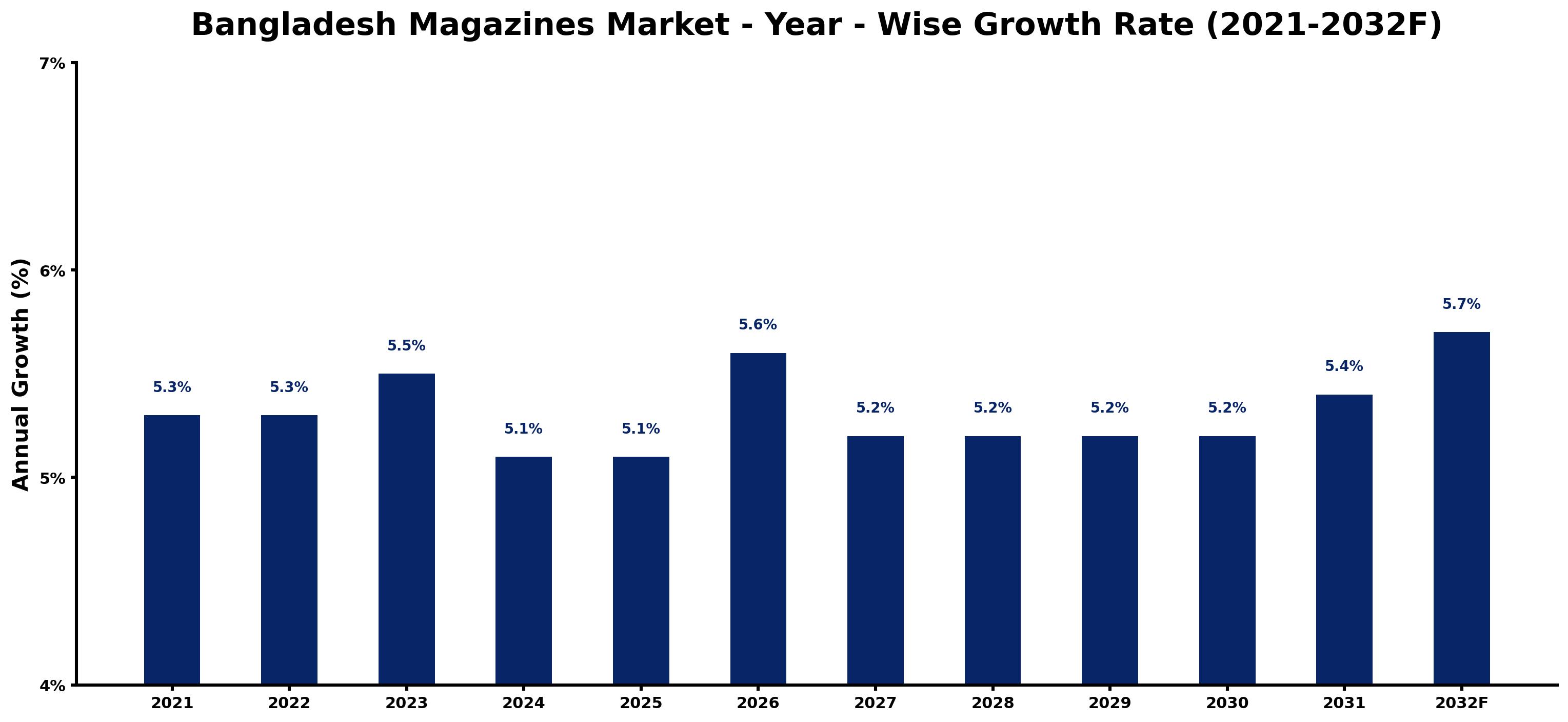
The table below presents the year wise growth rates along with the key drivers influencing the market
| Year | Growth Rate | Major Drivers |
| 2021 | 5.3% | Readers increasingly seek diverse content, enhancing engagement with niche publications. |
| 2022 | 5.3% | Local publications gain traction, reflecting unique cultural themes and community interests. |
| 2023 | 5.5% | Digital subscriptions expand, drawing younger audiences into the magazine sector. |
| 2024 | 5.1% | Advertising budgets shift, with brands recognizing magazines as effective marketing channels. |
| 2025 | 5.1% | Sustainability trends drive eco-conscious magazines, appealing to environmentally aware consumers. |
| 2026 | 5.6% | Print and digital integration creates multi-platform offerings, enhancing user experience and loyalty. |
| 2027 | 5.2% | Collaborations with influencers shape content strategies, attracting new readership demographics. |
| 2028 | 5.2% | Increased smartphone penetration encourages mobile-friendly magazine formats and accessibility. |
| 2029 | 5.2% | Content personalization becomes essential, catering to specific reader preferences and interests. |
| 2030 | 5.2% | Subscription models evolve, merging traditional and digital subscriptions to maximize reach. |
| 2031 | 5.4% | Interactive content, including augmented reality, captivates audiences and enriches storytelling. |
| 2032 | 5.7% | Market consolidation occurs, as larger groups acquire smaller titles for expanded portfolios. |
Note - Market size estimations and growth projections presented in this report are based on 6Wresearch's advanced forecasting approach, validated with industry datasets as of June 2026.
Bangladesh Magazines Market Synopsis
The Bangladesh Magazines Market is projected to reach 5.6% and witness significant growth during the forecast period (2026-2032). This dynamic sector encompasses a variety of publications, including both print and digital magazines, catering to diverse audiences and interests. Popular genres within the market include lifestyle, fashion, entertainment, and current affairs, with local publishers predominantly leading the market in both English and Bengali languages.
Bangladesh Magazines Market Growth Drivers
Several factors are propelling the growth of the Bangladesh Magazines Market. Firstly, an increase in internet penetration is significantly driving the shift towards digital platforms. As more of the population, particularly the youth, engages with content via smartphones and tablets, digital magazines are becoming increasingly popular. Secondly, the rise in disposable incomes is enabling consumers to allocate more financial resources towards leisure activities, including magazine subscriptions. Furthermore, the demand for niche publications focusing on specialized content is on the rise, attracting audiences seeking tailored information. Thirdly, advertisers are increasingly recognizing the value of reaching magazine audiences, leading to a steady influx of advertising revenues that benefit publishers. Lastly, the cultural diversity and rich heritage of Bangladesh provide a wealth of content opportunities for magazines to explore, further fueling market growth.
Bangladesh Magazines Market Trends and Opportunities
The Bangladesh Magazines Market is undergoing a significant transformation, characterized by a decisive trend towards digitalization. Many traditional print publications are either launching online versions or transitioning entirely to digital formats. This shift is primarily driven by the tech-savvy nature of the younger demographic. Additionally, niche magazines that focus on specific interests such as technology, lifestyle, and travel are gaining traction among readers seeking more specialized content.
- The popularity of online subscriptions is on the rise, evidenced by the growing number of readers opting for digital formats.
- Publishers are leveraging various revenue streams, including sponsored content, events, and e-commerce integration, to enhance their profitability.
- Engagement through multimedia content and interactivity is becoming more prevalent as magazines adapt to meet reader expectations.
- The market remains vibrant in urban areas, where print magazines continue to hold consumer interest, albeit facing competition from digital formats.
- Innovative content strategies are being explored to ensure magazine offerings resonate with a broader audience.
Bangladesh Magazines Market Challenges and Restraints
Despite the positive outlook, the Bangladesh Magazines Market grapples with several challenges that threaten its stability. A notable issue is the declining readership of print magazines due to the rise of digital media, significantly impacting sales and circulation numbers. Additionally, limited advertising revenues pose financial constraints for many publishers, compelling them to innovate continuously to survive in the competitive landscape. Distribution, particularly in remote areas, remains a challenge, as publishers strive to reach wider audiences. Furthermore, the presence of international publications increases competition, often outshining local magazines in terms of quality and content. Lastly, overall economic fluctuations in Bangladesh affect consumers' willingness to spend on magazines, necessitating a strategic adjustment by publishers to remain relevant.
Bangladesh Magazines Market Government Investment and Initiatives
The Bangladesh government plays an important role in regulating the magazines market through various policies and initiatives aimed at fostering local industry growth. These policies include limitations on foreign ownership to protect local publishers, ensuring they maintain a significant presence in the market. There are also guidelines that require adherence to cultural and social norms in content publication, which helps maintain societal values while allowing creative expression. Moreover, the government provides support and incentives to local publishers, aiming to stimulate the sector and encourage innovative publishing practices. Initiatives that promote literacy and access to print media are crucial to expanding the readership base and fostering a vibrant publishing ecosystem.
Bangladesh Magazines Market Latest Developments (May 2025 - June 2026)
During the period from May 2025 to June 2026, the Bangladesh Magazines Market has witnessed several noteworthy developments reflective of its dynamic nature. The acceleration towards digital publication has gained momentum, with many traditional print magazines successfully launching their digital platforms. This shift has not only catered to evolving consumer preferences but has also opened avenues for new advertising strategies adapted to digital formats. Furthermore, niche publications have seen a surge in interest as readers increasingly seek specialized content that meets their unique interests. Publishers have begun to experiment with interactive features and multimedia content, aiming to enhance reader engagement and differentiate their offerings in a crowded market. Overall, the push towards innovation and digital transformation has characterized this period and is influencing the future trajectory of the market.
Bangladesh Magazines Market - Key Attractiveness of the Report
- 10 Years of Market Numbers
- Historical Data Starting from 2022 to 2025
- Base Year: 2025
- Forecast Data until 2032
- Key Performance Indicators Impacting the Market
- Major Upcoming Developments and Projects
Key Highlights of the Report:
- Bangladesh Magazines Market Outlook
- Market Size of Bangladesh Magazines Market, 2025
- Forecast of Bangladesh Magazines Market, 2032F
- Historical Data and Forecast of Bangladesh Magazines Revenues & Volume for the Period 2022-2032F
- Bangladesh Magazines Market Trend Evolution
- Bangladesh Magazines Market Drivers and Challenges
- Bangladesh Magazines Price Trends
- Bangladesh Magazines Porter's Five Forces
- Bangladesh Magazines Industry Life Cycle
- Historical Data and Forecast of Bangladesh Magazines Market Revenues & Volume By Applications for the Period 2022-2032F
- Historical Data and Forecast of Bangladesh Magazines Market Revenues & Volume By Household for the Period 2022-2032F
- Historical Data and Forecast of Bangladesh Magazines Market Revenues & Volume By Commercial for the Period 2022-2032F
- Historical Data and Forecast of Bangladesh Magazines Market Revenues & Volume By Product Types for the Period 2022-2032F
- Historical Data and Forecast of Bangladesh Magazines Market Revenues & Volume By General Interest Magazines for the Period 2022-2032F
- Historical Data and Forecast of Bangladesh Magazines Market Revenues & Volume By News Magazine for the Period 2022-2032F
- Historical Data and Forecast of Bangladesh Magazines Market Revenues & Volume By Men?s Interest Magazine for the Period 2022-2032F
- Historical Data and Forecast of Bangladesh Magazines Market Revenues & Volume By Technical Magazines for the Period 2022-2032F
- Historical Data and Forecast of Bangladesh Magazines Market Revenues & Volume By Religious Magazine for the Period 2022-2032F
- Historical Data and Forecast of Bangladesh Magazines Market Revenues & Volume By Film Magazine for the Period 2022-2032F
- Historical Data and Forecast of Bangladesh Magazines Market Revenues & Volume By Sports Magazine for the Period 2022-2032F
- Historical Data and Forecast of Bangladesh Magazines Market Revenues & Volume By Others for the Period 2022-2032F
- Bangladesh Magazines Import Export Trade Statistics
- Market Opportunity Assessment By Applications
- Market Opportunity Assessment By Product Types
- Bangladesh Magazines Top Companies Market Share
- Bangladesh Magazines Competitive Benchmarking By Technical and Operational Parameters
- Bangladesh Magazines Company Profiles
- Bangladesh Magazines Key Strategic Recommendations






































