Bangladesh Nylon Market Size Growth Rate
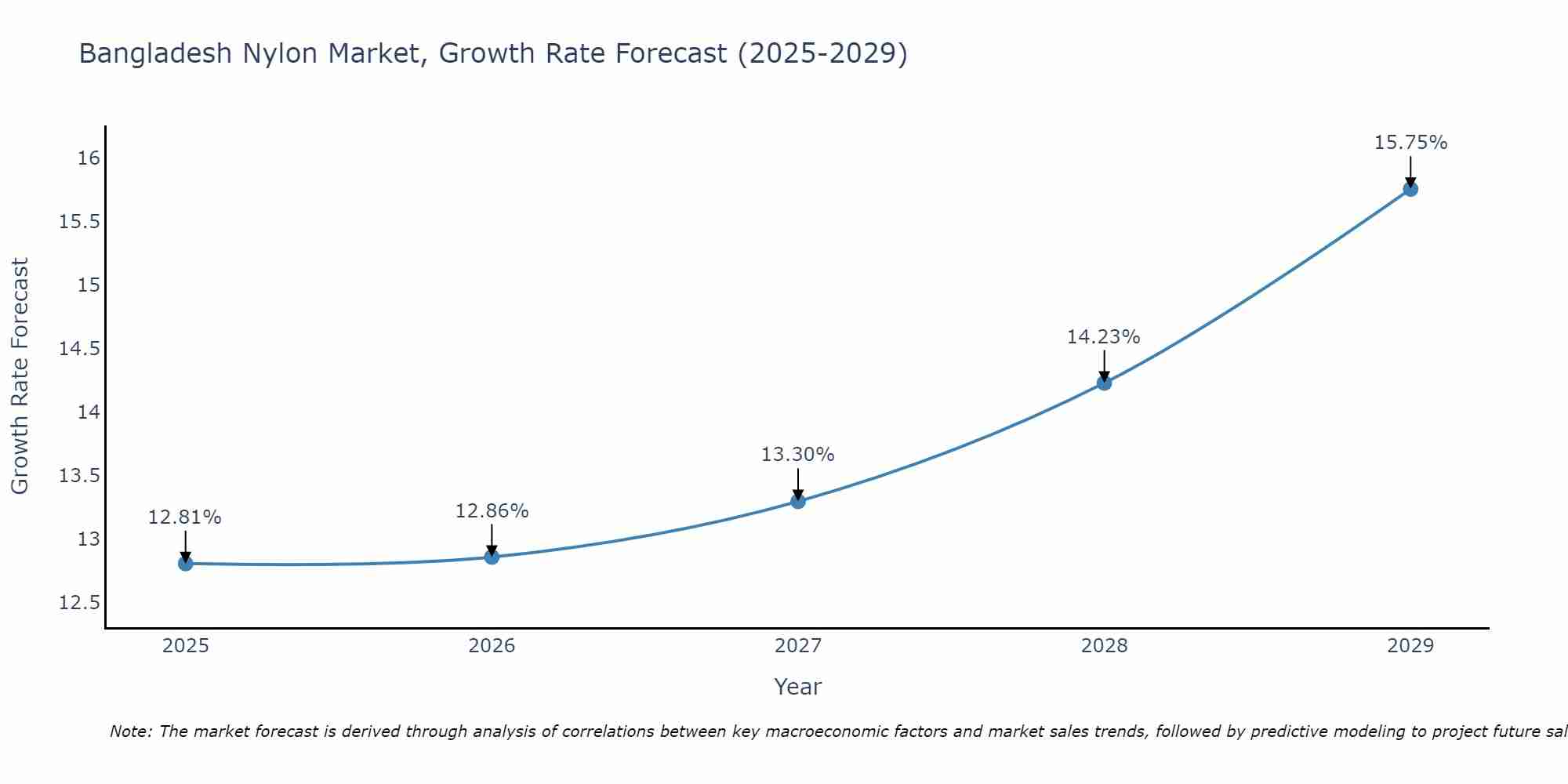
The Bangladesh Nylon Market is likely to experience consistent growth rate gains over the period 2025 to 2029. From 12.81% in 2025, the growth rate steadily ascends to 15.75% in 2029.
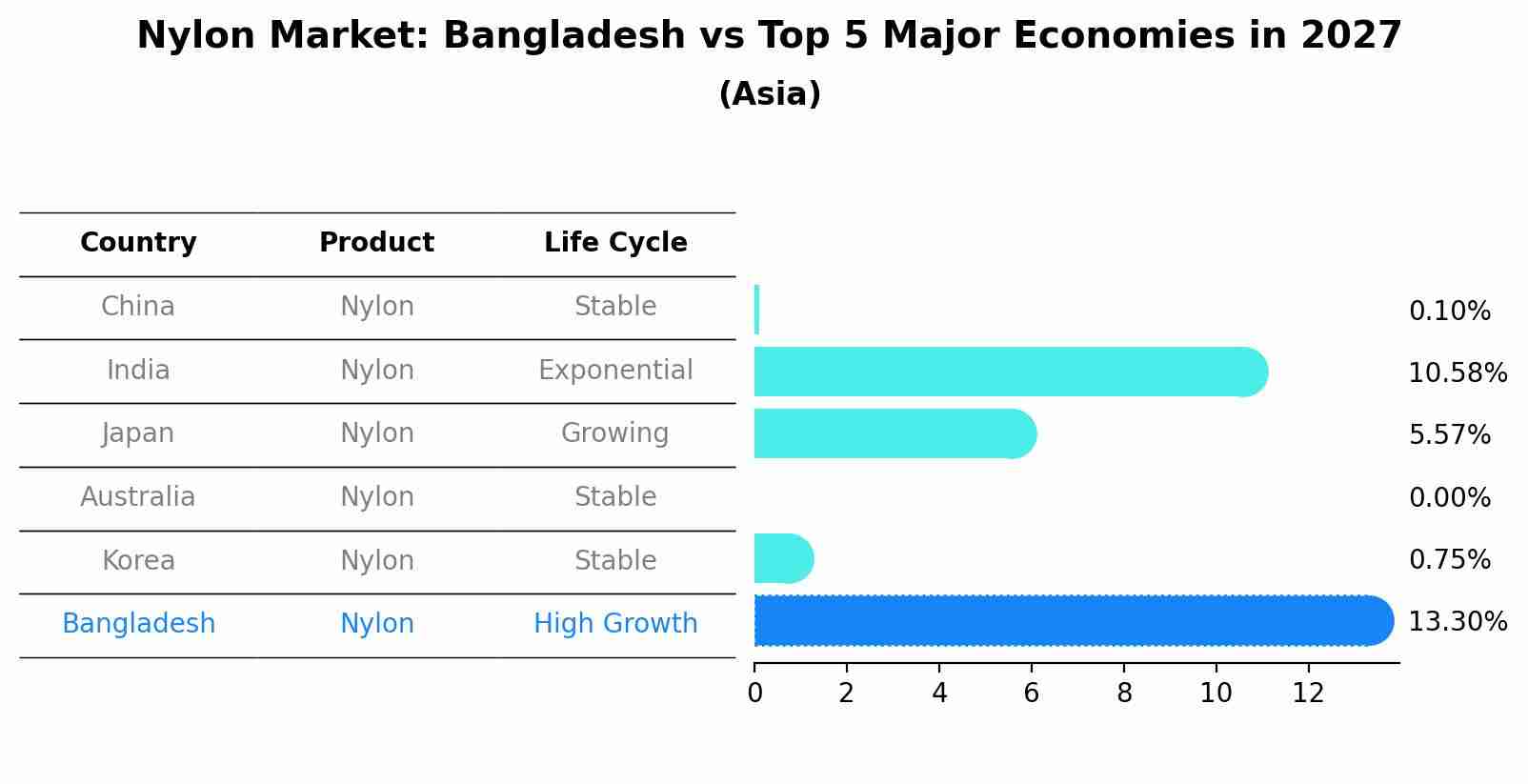
Nylon Market: Bangladesh vs Top 5 Major Economies in 2027 (Asia)
The Nylon market in Bangladesh is projected to grow at a high growth rate of 13.30% by 2027, within the Asia region led by China, along with other countries like India, Japan, Australia and South Korea, collectively shaping a dynamic and evolving market environment driven by innovation and increasing adoption of emerging technologies.
Bangladesh Nylon Market Overview
The Bangladesh nylon market is witnessing steady growth driven by increasing demand from various sectors such as textiles, automotive, packaging, and consumer goods. The market is primarily fueled by the textile industry, where nylon is used for manufacturing garments, hosiery, and industrial fabrics due to its durability and versatility. With the country`s expanding automotive sector, nylon is also being utilized for making automotive components and parts. Additionally, the packaging industry is adopting nylon for flexible packaging materials due to its strength and barrier properties. The market is characterized by intense competition among key players striving to innovate and introduce advanced nylon products to meet the evolving demands of industries in Bangladesh. Furthermore, the government`s initiatives to promote industrial growth and investments are expected to further propel the growth of the nylon market in Bangladesh.
Bangladesh Nylon Market Trends
The Bangladesh Nylon Market is currently experiencing growth driven by increasing demand from industries such as textiles, automotive, and packaging. The market is witnessing a shift towards sustainable and eco-friendly nylon products, in response to growing environmental concerns. Technological advancements in nylon production processes are also shaping the market, leading to the development of high-performance nylon variants with improved durability and strength. Additionally, the rising disposable income and changing consumer preferences are driving the demand for nylon-based products in the fashion and apparel sector. Overall, the Bangladesh Nylon Market is expected to continue its growth trajectory, with a focus on innovation, sustainability, and diversification of product offerings to meet the evolving market demands.
Bangladesh Nylon Market Challenges
In the Bangladesh Nylon Market, several challenges can be identified. One major challenge is the presence of counterfeit or low-quality nylon products flooding the market, which can undermine the reputation of genuine nylon manufacturers and create confusion among consumers. Additionally, fluctuations in raw material prices and supply chain disruptions can impact the production cost and availability of nylon products in the market. Another challenge is the presence of strong competition from other synthetic fibers and alternative materials, which requires nylon manufacturers to constantly innovate and differentiate their products to maintain market share. Furthermore, regulatory hurdles and compliance issues related to environmental standards and labor practices can pose challenges for companies operating in the Bangladesh Nylon Market. Overall, navigating these challenges requires strategic planning, quality control measures, and a deep understanding of market dynamics.
Bangladesh Nylon Market Investment Opportunities
The Bangladesh Nylon Market presents promising investment opportunities due to the country`s growing textile industry and increasing demand for nylon products. Investing in nylon manufacturing companies or suppliers in Bangladesh can be lucrative, considering the country`s competitive labor costs and strategic location for exporting to global markets. Additionally, there is a rising trend towards sustainable and eco-friendly textiles, opening avenues for investments in the production of recycled or bio-based nylon materials. With government initiatives to boost the textile sector and attract foreign investments, the Bangladesh Nylon Market offers potential for growth and profitability for investors looking to capitalize on the expanding textile industry in the region.
Bangladesh Nylon Market Government Policy
Government policies related to the Bangladesh Nylon Market include import tariffs on raw materials and finished nylon products, aimed at protecting the domestic industry. Additionally, there are regulations in place to ensure quality standards are met for nylon products manufactured in the country. The government also provides incentives and subsidies to support the growth of the nylon industry, encouraging investment and technology upgrades. Environmental regulations are enforced to ensure sustainable production practices in the nylon sector. Overall, government policies in Bangladesh focus on promoting the competitiveness and sustainability of the nylon market through a combination of trade barriers, quality control measures, financial support, and environmental protection initiatives.
Bangladesh Nylon Market Future Outlook
The future outlook for the Bangladesh Nylon Market appears to be positive, driven by increasing demand from various end-use industries such as textiles, automotive, and packaging. The growing population, rising disposable income levels, and expanding industrial sector are expected to fuel the demand for nylon products in the country. Additionally, government initiatives to promote the textile and garment industry, as well as infrastructure development projects, are likely to further boost the demand for nylon materials. However, challenges such as fluctuating raw material prices and increasing competition from alternative materials may impact market growth. Overall, the Bangladesh Nylon Market is projected to experience steady growth in the coming years, supported by favorable economic conditions and increasing consumer preferences for durable and versatile nylon products.
Key Highlights of the Report:
- Bangladesh Nylon Market Outlook
- Market Size of Bangladesh Nylon Market, 2024
- Forecast of Bangladesh Nylon Market, 2031
- Historical Data and Forecast of Bangladesh Nylon Revenues & Volume for the Period 2021 - 2031
- Bangladesh Nylon Market Trend Evolution
- Bangladesh Nylon Market Drivers and Challenges
- Bangladesh Nylon Price Trends
- Bangladesh Nylon Porter's Five Forces
- Bangladesh Nylon Industry Life Cycle
- Historical Data and Forecast of Bangladesh Nylon Market Revenues & Volume By Product for the Period 2021 - 2031
- Historical Data and Forecast of Bangladesh Nylon Market Revenues & Volume By Nylon 6 for the Period 2021 - 2031
- Historical Data and Forecast of Bangladesh Nylon Market Revenues & Volume By Nylon 66 for the Period 2021 - 2031
- Historical Data and Forecast of Bangladesh Nylon Market Revenues & Volume By Application for the Period 2021 - 2031
- Historical Data and Forecast of Bangladesh Nylon Market Revenues & Volume By Automobile for the Period 2021 - 2031
- Historical Data and Forecast of Bangladesh Nylon Market Revenues & Volume By Electrical & Electronics for the Period 2021 - 2031
- Historical Data and Forecast of Bangladesh Nylon Market Revenues & Volume By Engineering Plastics for the Period 2021 - 2031
- Historical Data and Forecast of Bangladesh Nylon Market Revenues & Volume By Textiles for the Period 2021 - 2031
- Historical Data and Forecast of Bangladesh Nylon Market Revenues & Volume By Others for the Period 2021 - 2031
- Bangladesh Nylon Import Export Trade Statistics
- Market Opportunity Assessment By Product
- Market Opportunity Assessment By Application
- Bangladesh Nylon Top Companies Market Share
- Bangladesh Nylon Competitive Benchmarking By Technical and Operational Parameters
- Bangladesh Nylon Company Profiles
- Bangladesh Nylon Key Strategic Recommendations






































