Bangladesh Ornamental Fish Market Size, Share & Growth Rate
The Bangladesh Ornamental Fish Market was estimated at USD 304 Million in 2025 and is projected to reach USD 413 Million by 2032, growing at a CAGR of 4.5% from 2026 to 2032. This growth is fueled by increasing disposable incomes and urbanization, which drive demand for unique and visually appealing aquarium fish. Moreover, the rising popularity of home aquariums as a stress-relief activity among urban dwellers underscores the market's positive trajectory.
Bangladesh Ornamental Fish Market Year-wise Growth Rate and Key Drivers
This graph highlights how the Bangladesh Ornamental Fish Market has steadily grown over the years, supported by major growth factors.
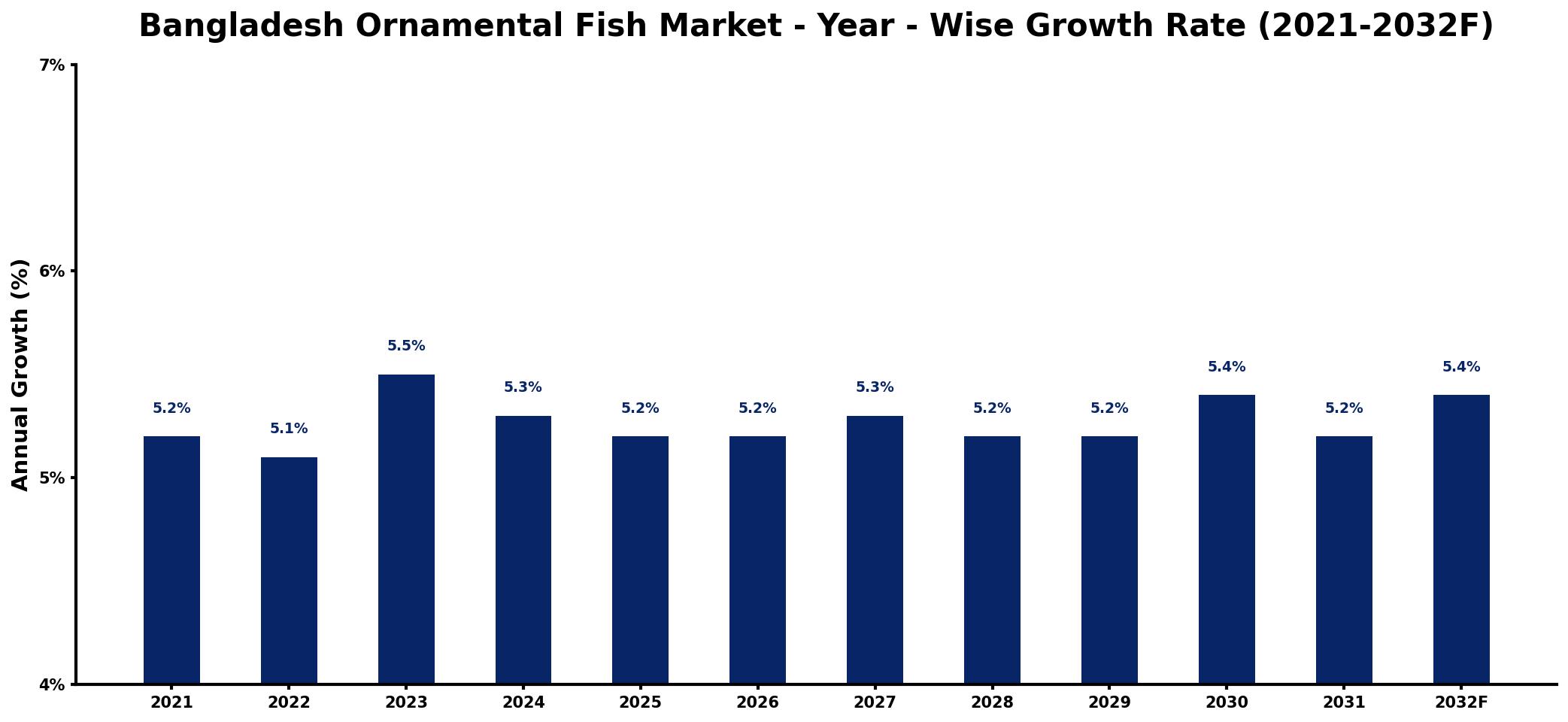
The table below presents the year‑wise growth rates along with the key drivers influencing the market
| Year | Growth Rate | Major Drivers |
| 2021 | 5.2% | Increased interest in aquascaping |
| 2022 | 5.1% | Growth in home decor trends |
| 2023 | 5.5% | Rising disposable income levels |
| 2024 | 5.3% | Expansion of online retail platforms |
| 2025 | 5.2% | Increase in urban gardening initiatives |
| 2026 | 5.2% | Boost in eco-friendly practices |
| 2027 | 5.3% | Development of aquaculture technologies |
| 2028 | 5.2% | Surge in pet ownership rates |
| 2029 | 5.2% | expanding healthcare application demand |
| 2030 | 5.4% | Improvement in supply chain logistics |
| 2031 | 5.2% | Rise in educational awareness programs |
| 2032 | 5.4% | rising infrastructure development spending |
Note: Market size estimations and growth projections presented in this report are based on 6Wresearch's proprietary forecasting methodology, utilizing the latest available industry data, government publications, and primary research inputs.
Bangladesh Ornamental Fish Market Synopsis
The Bangladesh ornamental fish market is distinguished by a rich diversity of fish species, including beloved varieties such as guppies, goldfish, tetras, and bettas. This variety not only caters to casual pet enthusiasts but also attracts dedicated hobbyists seeking rare and exotic breeds, establishing a vibrant ecosystem for both suppliers and consumers.
Despite its potential, the market grapples with issues like limited consumer awareness regarding fish care and inadequate regulatory standards. These challenges highlight the urgent need for increased education on sustainable practices and responsible fishkeeping to safeguard both the market and its aquatic inhabitants.
Bangladesh Ornamental Fish Market Key Takeaways
- The market is witnessing a surge in demand for exotic fish species, reflecting a growing interest in aquarium aesthetics.
- Online platforms are becoming essential distribution channels, facilitating wider access for consumers.
- Sustainability in fish breeding and conservation practices is gaining importance among industry stakeholders.
- Government initiatives are being put in place to regulate the market and promote responsible fishkeeping.
- Investment opportunities abound in breeding, specialized retail, and aquarium-related services.
Evaluation of Restraints in Bangladesh Ornamental Fish Market
The Bangladesh Ornamental Fish Market faces several constraints that hinder its growth potential. A significant issue is the lack of organized marketplaces where buyers and sellers can interact efficiently. This fragmentation leads to distribution inefficiencies, resulting in challenges related to fish health and sustainability. Furthermore, the absence of stringent regulatory frameworks around breeding and sales can complicate the ethical sourcing of ornamental fish, creating risks for both consumers and suppliers. Addressing these issues is crucial to unlocking the market's full potential.
Bangladesh Ornamental Fish Market Trends
Recent trends in the Bangladesh Ornamental Fish Market indicate a significant shift towards sustainable practices, with a focus on conservation of native species and eco-friendly breeding methods. Additionally, the growing popularity of customized aquarium setups is propelling sales of specialized accessories and equipment. As e-commerce platforms rise, consumers are presented with a greater variety of options than ever before, changing how ornamental fish and related products are marketed and sold.
Bangladesh Ornamental Fish Market Opportunities
The market holds considerable investment potential as more people engage in fishkeeping as a hobby. Opportunities abound for new entrants to consider breeding rare ornamental fish or establishing niche retail outlets that focus on unique species. Furthermore, ventures that provide value-added services, such as aquarium maintenance and workshops on fish care, could cater to the evolving interests of consumers and capitalize on the market's growth trajectory.
Government Initiatives in the Bangladesh Ornamental Fish Market
The Bangladeshi government has made strides in promoting and regulating the ornamental fish market through various initiatives. These include the establishment of guidelines for sustainable breeding practices, licensing requirements for fish exporters and importers, and anti-poaching measures to combat illegal trade of endangered species. Moreover, training programs have been initiated to enhance the skills of local fish farmers, aimed at improving product quality and elevating competitiveness in the global market.
Future Insights of the Bangladesh Ornamental Fish Market
Looking ahead to 2026-2032, the Bangladesh Ornamental Fish Market is poised for steady growth. Increasing disposable incomes and a growing urban population are driving interest in home aquariums, positioning fishkeeping as a desirable leisure activity. As technology continues to advance, particularly in e-commerce, consumers will have unprecedented access to a diverse range of species and aquarium products. However, addressing sustainability and ethical sourcing practices will be critical to ensuring a healthy future for this vibrant market.
Bangladesh Ornamental Fish Market Latest Developments (2025 - 2026)
In recent months, the Bangladesh Ornamental Fish Market has seen increased interest from international buyers seeking unique species native to the region. Local suppliers have begun improving their practices to meet these growing demands, focusing on fish health and sustainability. Additionally, the rise of online sales channels has enabled more efficient distribution methods, allowing local retailers to reach a broader audience while enhancing customer engagement through specialized services and products.
Bangladesh Ornamental Fish Market - Key Attractiveness of the Report
- 10 Years of Market Numbers
- Historical Data Starting from 2022 to 2025
- Base Year: 2025
- Forecast Data until 2032
- Key Performance Indicators Impacting the Market
- Major Upcoming Developments and Projects
Key Highlights of the Report:
- Bangladesh Ornamental Fish Market Outlook
- Market Size of Bangladesh Ornamental Fish Market, 2025
- Forecast of Bangladesh Ornamental Fish Market, 2032
- Historical Data and Forecast of Bangladesh Ornamental Fish Revenues & Volume for the Period 2022-2032F
- Bangladesh Ornamental Fish Market Trend Evolution
- Bangladesh Ornamental Fish Market Drivers and Challenges
- Bangladesh Ornamental Fish Price Trends
- Bangladesh Ornamental Fish Porter's Five Forces
- Bangladesh Ornamental Fish Industry Life Cycle
- Historical Data and Forecast of Bangladesh Ornamental Fish Market Revenues & Volume By Product for the Period 2022-2032F
- Historical Data and Forecast of Bangladesh Ornamental Fish Market Revenues & Volume By Tropical Freshwater for the Period 2022-2032F
- Historical Data and Forecast of Bangladesh Ornamental Fish Market Revenues & Volume By Temperate for the Period 2022-2032F
- Historical Data and Forecast of Bangladesh Ornamental Fish Market Revenues & Volume By Marine for the Period 2022-2032F
- Historical Data and Forecast of Bangladesh Ornamental Fish Market Revenues & Volume By Application for the Period 2022-2032F
- Historical Data and Forecast of Bangladesh Ornamental Fish Market Revenues & Volume By Commercial for the Period 2022-2032F
- Historical Data and Forecast of Bangladesh Ornamental Fish Market Revenues & Volume By Household for the Period 2022-2032F
- Bangladesh Ornamental Fish Import Export Trade Statistics
- Market Opportunity Assessment By Product
- Market Opportunity Assessment By Application
- Bangladesh Ornamental Fish Top Companies Market Share
- Bangladesh Ornamental Fish Competitive Benchmarking By Technical and Operational Parameters
- Bangladesh Ornamental Fish Company Profiles
- Bangladesh Ornamental Fish Key Strategic Recommendations






































