Bangladesh Plastic Furniture Market Size Growth Rate
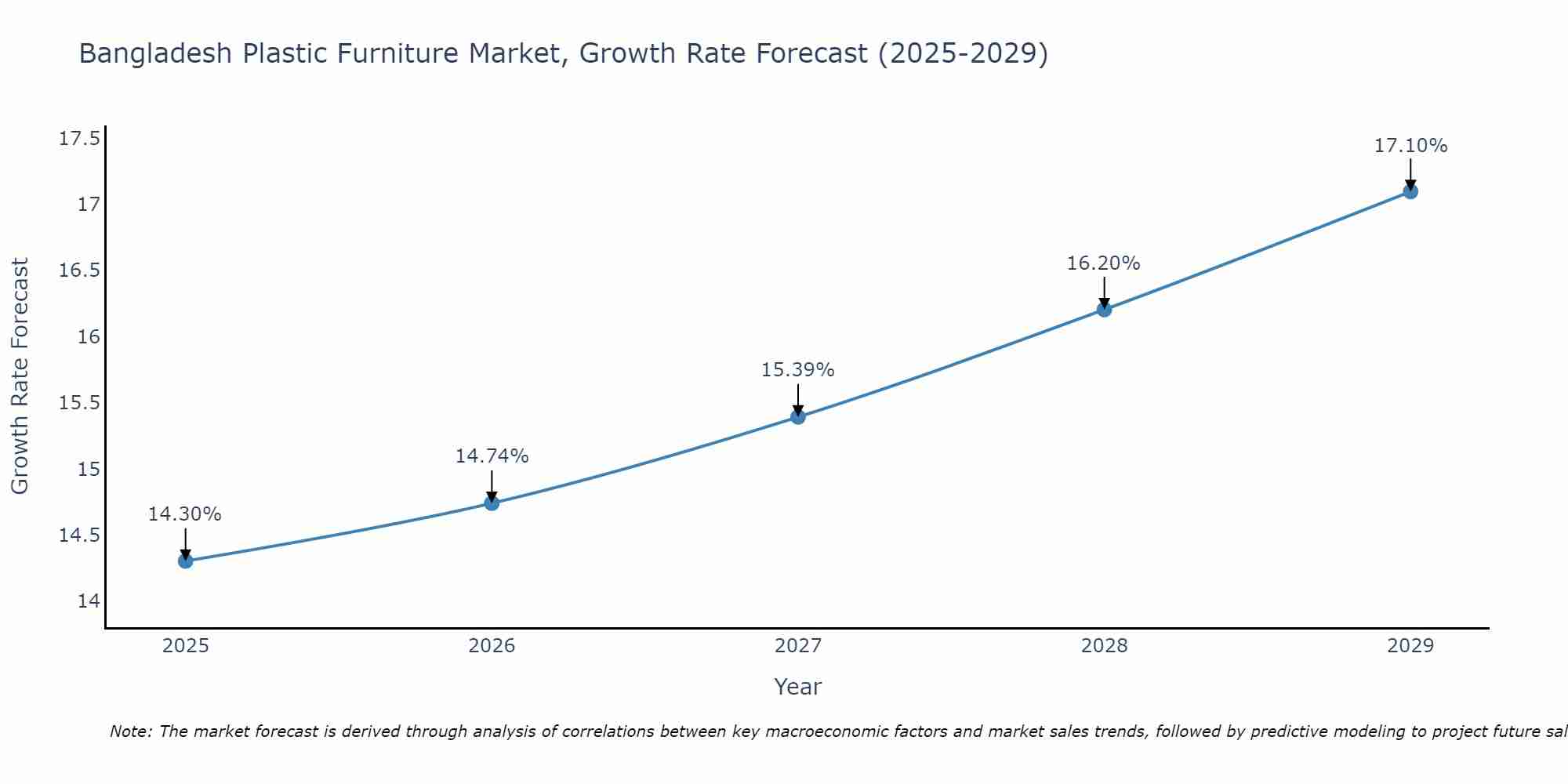
The Bangladesh Plastic Furniture Market is likely to experience consistent growth rate gains over the period 2025 to 2029. The growth rate starts at 14.30% in 2025 and reaches 17.10% by 2029.
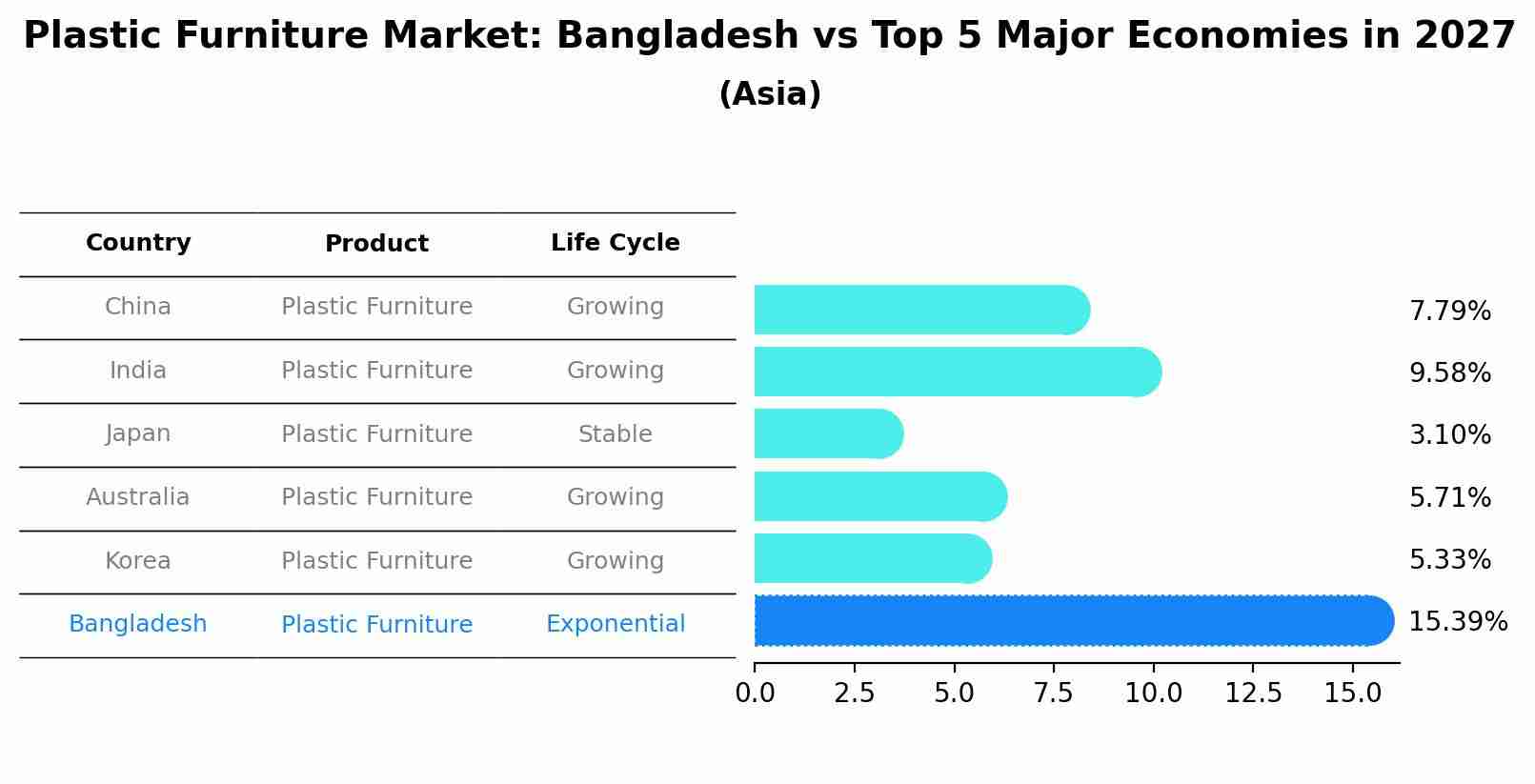
Plastic Furniture Market: Bangladesh vs Top 5 Major Economies in 2027 (Asia)
By 2027, the Plastic Furniture market in Bangladesh is anticipated to reach a growth rate of 15.39%, as part of an increasingly competitive Asia region, where China remains at the forefront, supported by India, Japan, Australia and South Korea, driving innovations and market adoption across sectors.
Bangladesh Plastic Furniture Market Overview
In the furniture industry, the plastic furniture market in Bangladesh is growing as consumers seek affordable, durable, and lightweight furniture solutions for homes, offices, and outdoor spaces. Plastic furniture offers advantages such as weather resistance, easy maintenance, and versatility in design and color options. With changing consumer preferences, urbanization, and lifestyle trends, there is increasing demand for plastic furniture products such as chairs, tables, cabinets, and outdoor seating.
Drivers of the market
The increasing urbanization and the growing demand for affordable and lightweight furniture solutions are driving the growth of the plastic furniture market in Bangladesh. Plastic furniture offers advantages such as durability, weather resistance, and low maintenance, making it suitable for indoor and outdoor use in residential, commercial, and hospitality sectors.
Challenges of the market
Challenges include durability concerns, design innovation, and environmental sustainability. While plastic furniture offers affordable and lightweight alternatives to traditional materials, manufacturers may face challenges in addressing consumer perceptions about the durability and quality of plastic furniture, designing products that meet aesthetic preferences and ergonomic standards, and promoting environmentally friendly manufacturing practices.
Government Policy of the market
To promote affordable and durable furniture options for consumers and businesses, the government has implemented policies to support the plastic furniture market in Bangladesh. These policies may include incentives for furniture manufacturers, regulations for furniture safety and quality standards, and support for design innovation and product diversification in the plastic furniture industry.
Key Highlights of the Report:
- Bangladesh Plastic Furniture Market Outlook
- Market Size of Bangladesh Plastic Furniture Market, 2024
- Forecast of Bangladesh Plastic Furniture Market, 2031
- Historical Data and Forecast of Bangladesh Plastic Furniture Revenues & Volume for the Period 2021-2031
- Bangladesh Plastic Furniture Market Trend Evolution
- Bangladesh Plastic Furniture Market Drivers and Challenges
- Bangladesh Plastic Furniture Price Trends
- Bangladesh Plastic Furniture Porter's Five Forces
- Bangladesh Plastic Furniture Industry Life Cycle
- Historical Data and Forecast of Bangladesh Plastic Furniture Market Revenues & Volume By Distribution Channel for the Period 2021-2031
- Historical Data and Forecast of Bangladesh Plastic Furniture Market Revenues & Volume By Online for the Period 2021-2031
- Historical Data and Forecast of Bangladesh Plastic Furniture Market Revenues & Volume By Offline for the Period 2021-2031
- Historical Data and Forecast of Bangladesh Plastic Furniture Market Revenues & Volume By Application for the Period 2021-2031
- Historical Data and Forecast of Bangladesh Plastic Furniture Market Revenues & Volume By Residential for the Period 2021-2031
- Historical Data and Forecast of Bangladesh Plastic Furniture Market Revenues & Volume By Commercial for the Period 2021-2031
- Bangladesh Plastic Furniture Import Export Trade Statistics
- Market Opportunity Assessment By Distribution Channel
- Market Opportunity Assessment By Application
- Bangladesh Plastic Furniture Top Companies Market Share
- Bangladesh Plastic Furniture Competitive Benchmarking By Technical and Operational Parameters
- Bangladesh Plastic Furniture Company Profiles
- Bangladesh Plastic Furniture Key Strategic Recommendations






































