Bangladesh Prefabricated Building Market Size Growth Rate
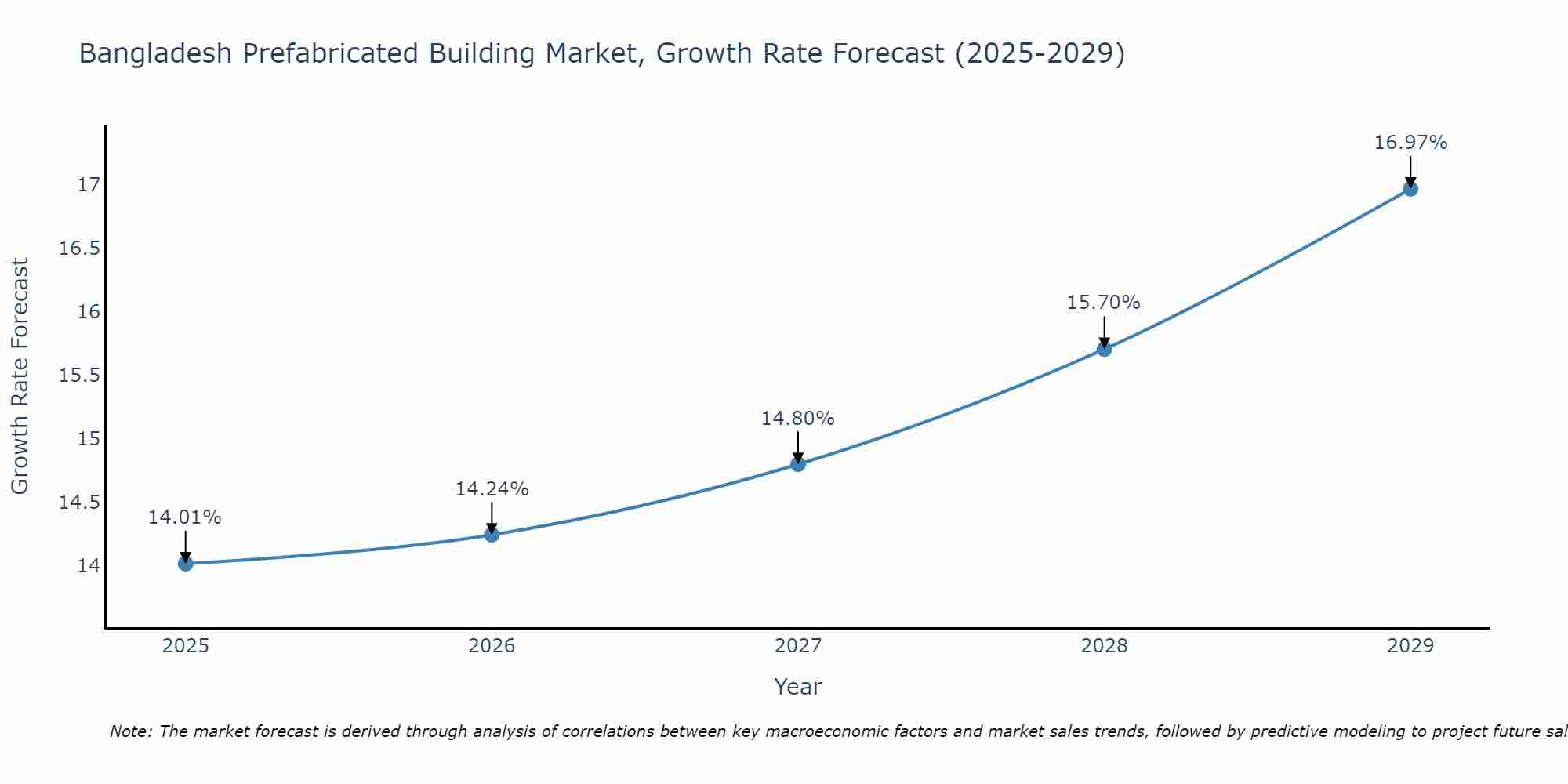
The Bangladesh Prefabricated Building Market is poised for steady growth rate improvements from 2025 to 2029. Commencing at 14.01% in 2025, growth builds up to 16.97% by 2029.
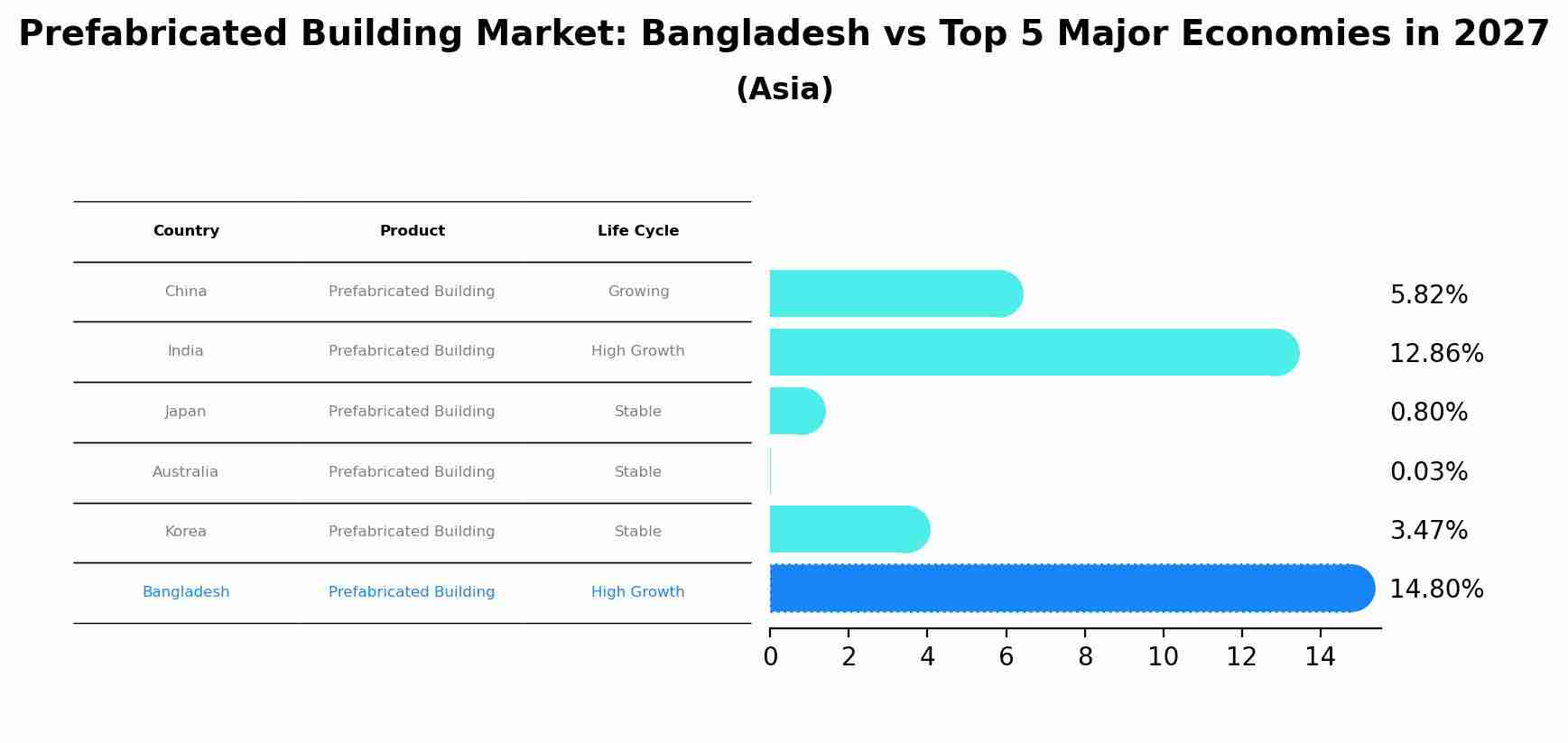
Prefabricated Building Market: Bangladesh vs Top 5 Major Economies in 2027 (Asia)
By 2027, the Prefabricated Building market in Bangladesh is anticipated to reach a growth rate of 14.80%, as part of an increasingly competitive Asia region, where China remains at the forefront, supported by India, Japan, Australia and South Korea, driving innovations and market adoption across sectors.
Bangladesh Prefabricated Building Market Overview
The Bangladesh Prefabricated Building Market is experiencing significant growth due to factors such as rapid urbanization, increasing construction activities, and the government`s focus on infrastructure development. Prefabricated buildings offer advantages such as cost-effectiveness, faster construction timelines, and eco-friendly construction methods. The market is driven by demand from sectors like residential, commercial, and industrial construction. Key players in the market are investing in innovative technologies and sustainable practices to meet the rising demand for prefabricated buildings. Challenges such as limited awareness, skilled labor shortages, and regulatory hurdles exist but are being addressed through initiatives to promote prefabricated construction methods. Overall, the Bangladesh Prefabricated Building Market is poised for continued expansion in the coming years.
Bangladesh Prefabricated Building Market Trends
The Bangladesh Prefabricated Building Market is experiencing significant growth due to increasing urbanization and a focus on sustainable construction practices. Key trends include a rise in the use of prefabricated steel and concrete structures for housing, commercial, and industrial purposes. Modular construction methods are gaining popularity for their efficiency and cost-effectiveness, particularly in urban areas facing rapid development. Additionally, there is a growing demand for green building solutions, driving the adoption of prefabricated materials that promote energy efficiency and reduce environmental impact. As the construction industry in Bangladesh continues to evolve, prefabricated buildings are expected to play a crucial role in meeting the demand for fast, reliable, and sustainable construction solutions.
Bangladesh Prefabricated Building Market Challenges
In the Bangladesh Prefabricated Building Market, some of the key challenges include limited awareness and understanding of prefabricated construction methods among potential customers and stakeholders, which hinders wider adoption of this technology. Additionally, the industry faces challenges in terms of regulatory and policy frameworks that do not fully support or incentivize the use of prefabricated building techniques. Quality control and standardization issues also pose challenges, as ensuring consistent quality across prefabricated components can be difficult. Furthermore, the upfront costs associated with setting up prefabrication facilities and the lack of skilled labor proficient in this construction method are obstacles to market growth. Overcoming these challenges will require concerted efforts from industry players, government bodies, and other stakeholders to promote and facilitate the adoption of prefabricated building solutions in Bangladesh.
Bangladesh Prefabricated Building Market Investment Opportunities
The Bangladesh Prefabricated Building Market presents promising investment opportunities due to the country`s growing urbanization and infrastructure development. With the government`s focus on affordable housing initiatives and the increasing demand for quick and cost-effective construction solutions, the market for prefabricated buildings is expanding rapidly. Investors can consider opportunities in manufacturing and supplying prefabricated building materials, construction of prefabricated housing units, and offering modular construction services. Additionally, incorporating sustainable and eco-friendly practices in prefabricated construction can further attract investors looking to capitalize on the growing trend towards green building technologies in Bangladesh. Overall, investing in the Bangladesh Prefabricated Building Market offers the potential for significant returns driven by the country`s increasing need for efficient and scalable construction solutions.
Bangladesh Prefabricated Building Market Government Policy
The Bangladesh government has been actively promoting the use of prefabricated buildings as a solution to the country`s housing shortage and to improve construction efficiency. The government has introduced policies such as tax incentives for prefabricated building manufacturers, streamlined approval processes for prefabricated construction projects, and provided financial support for research and development in the sector. Additionally, the government has collaborated with international organizations to enhance technical expertise and promote best practices in prefabricated building construction. These policies aim to drive growth in the Bangladesh prefabricated building market, attract investment, and address the housing needs of the growing population.
Bangladesh Prefabricated Building Market Future Outlook
The Bangladesh Prefabricated Building Market is poised for significant growth in the coming years due to increasing urbanization, population growth, and a rising demand for affordable housing solutions. The government`s focus on infrastructure development and the promotion of sustainable construction practices are also driving the market forward. Additionally, the shift towards faster construction methods, cost-efficiency, and improved quality control are key factors contributing to the market`s positive outlook. With a growing awareness of the benefits of prefabricated buildings, including reduced construction time, waste minimization, and flexibility in design, the market is expected to witness steady expansion across residential, commercial, and industrial sectors in Bangladesh in the foreseeable future.
Key Highlights of the Report:
- Bangladesh Prefabricated Building Market Outlook
- Market Size of Bangladesh Prefabricated Building Market, 2024
- Forecast of Bangladesh Prefabricated Building Market, 2031
- Historical Data and Forecast of Bangladesh Prefabricated Building Revenues & Volume for the Period 2021 - 2031
- Bangladesh Prefabricated Building Market Trend Evolution
- Bangladesh Prefabricated Building Market Drivers and Challenges
- Bangladesh Prefabricated Building Price Trends
- Bangladesh Prefabricated Building Porter's Five Forces
- Bangladesh Prefabricated Building Industry Life Cycle
- Historical Data and Forecast of Bangladesh Prefabricated Building Market Revenues & Volume By Dimensions for the Period 2021 - 2031
- Historical Data and Forecast of Bangladesh Prefabricated Building Market Revenues & Volume By Skeleton System for the Period 2021 - 2031
- Historical Data and Forecast of Bangladesh Prefabricated Building Market Revenues & Volume By Panel System for the Period 2021 - 2031
- Historical Data and Forecast of Bangladesh Prefabricated Building Market Revenues & Volume By Cellular System for the Period 2021 - 2031
- Historical Data and Forecast of Bangladesh Prefabricated Building Market Revenues & Volume By Combined System for the Period 2021 - 2031
- Historical Data and Forecast of Bangladesh Prefabricated Building Market Revenues & Volume By Application for the Period 2021 - 2031
- Historical Data and Forecast of Bangladesh Prefabricated Building Market Revenues & Volume By Residential for the Period 2021 - 2031
- Historical Data and Forecast of Bangladesh Prefabricated Building Market Revenues & Volume By Non-Residential for the Period 2021 - 2031
- Bangladesh Prefabricated Building Import Export Trade Statistics
- Market Opportunity Assessment By Dimensions
- Market Opportunity Assessment By Application
- Bangladesh Prefabricated Building Top Companies Market Share
- Bangladesh Prefabricated Building Competitive Benchmarking By Technical and Operational Parameters
- Bangladesh Prefabricated Building Company Profiles
- Bangladesh Prefabricated Building Key Strategic Recommendations






































