Bangladesh Rum Market Size, Share & Growth Rate
The Bangladesh Rum Market was estimated at USD 346 Million in 2025 and is projected to reach USD 472 Million by 2032, growing at a CAGR of 4.5% from 2026 to 2032. This upward trajectory is primarily fueled by a young, urban demographic eager to explore new drinking experiences, alongside a burgeoning cocktail culture that increasingly embraces rum as a base spirit. As local brands innovate and premium offerings gain traction, the market is poised for significant expansion.
Bangladesh Rum Market Year-wise Growth Rate and Key Drivers
This graph highlights how the Bangladesh Rum Market has steadily grown over the years, supported by major growth factors.
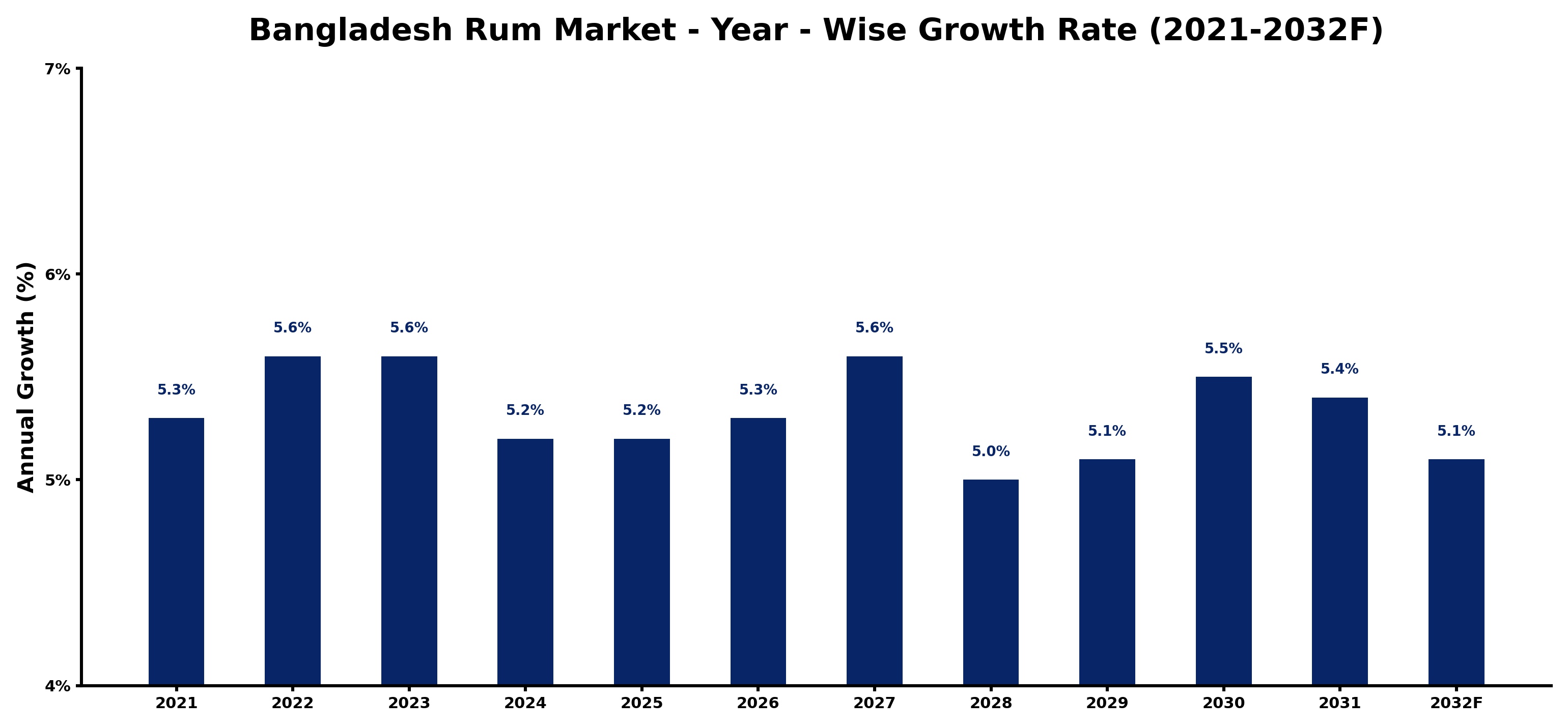
The table below presents the year‑wise growth rates along with the key drivers influencing the market
| Year | Growth Rate | Major Drivers |
| 2021 | 5.3% | Rapid growth in telecom and data center sectors |
| 2022 | 5.6% | Increasing adoption of advanced technologies |
| 2023 | 5.6% | Increasing adoption of advanced technologies |
| 2024 | 5.2% | Increasing adoption of advanced technologies |
| 2025 | 5.2% | Rapid growth in telecom and data center sectors |
| 2026 | 5.3% | Rising electricity demand across industries |
| 2027 | 5.6% | Increasing industrial infrastructure investments |
| 2028 | 5.0% | Expansion of transportation and logistics networks |
| 2029 | 5.1% | Expansion of transportation and logistics networks |
| 2030 | 5.5% | Rising electricity demand across industries |
| 2031 | 5.4% | Increasing smart city development projects |
| 2032 | 5.1% | Increasing industrial automation investments |
Note - Market size estimations and growth projections presented in this report are based on 6Wresearch’s advanced forecasting approach, validated with industry datasets as of June 2026.
Bangladesh Rum Market Synopsis
Recent trends in the Bangladesh rum market indicate a dynamic shift toward premium and craft offerings, yet the sector still grapples with challenges imposed by cultural norms and strict regulations. As consumer interest in high-quality spirits grows, the market's trajectory suggests an optimistic future, particularly for brands that can adeptly navigate local preferences and regulations.
While local brands have started to carve out their niche, international players remain key competitors, offering high-quality options that appeal to affluent consumers. The next few years are critical as market participants adapt to evolving tastes and engage a discerning audience, fostering a vibrant and competitive landscape.
Bangladesh Rum Market Key Takeaways
- The market is witnessing a demand surge for premium and flavored rums, driven by evolving consumer preferences.
- Younger, urban consumers are at the forefront of rum consumption, seeking new and exciting drinking experiences.
- Local brands are increasingly producing artisanal rums that resonate with the local palate and price sensitivity.
- High taxation and strict regulations continue to present challenges, limiting market growth potential.
- Partnerships with local distilleries and innovative marketing strategies are essential for tapping into new consumer segments.
Evaluation of Restraints in Bangladesh Rum Market
The growth potential of the Bangladesh rum market is tempered by a series of significant restraints. High taxation on alcoholic beverages poses a considerable barrier, inflating prices and affecting consumer accessibility. Moreover, the deeply rooted cultural and religious norms in Bangladesh often discourage alcohol consumption, restricting the market's reach. Distribution channels also face hurdles due to stringent licensing regulations and limited availability in retail outlets. Furthermore, counterfeit products add complexity, as they dilute brand trust and mislead consumers, hampering market development.
Bangladesh Rum Market Trends
The landscape of the Bangladesh rum market is evolving with several noteworthy trends. A marked shift toward premiumization is evident, with consumers increasingly gravitating towards high-quality, artisanal products that offer unique flavor profiles. The popularity of flavored rums, especially those infused with local fruits like mango and coconut, is also on the rise among younger drinkers seeking adventurous options. Additionally, a commitment to sustainability is shaping industry practices, with brands adopting eco-friendly sourcing and production processes to cater to a more environmentally conscious consumer base.
Bangladesh Rum Market Opportunities
Investment opportunities in the Bangladesh rum market are plentiful, particularly in the realm of premium and flavored rums. Brands looking to thrive must focus on marketing strategies that resonate with the growing young demographic while also exploring innovative flavors that align with local tastes. Furthermore, strategic partnerships with local distilleries can enhance product quality and bolster brand authenticity. Digital marketing is another avenue for reaching and engaging consumers effectively, alongside participation in local events and festivals to raise brand visibility.
Government Initiatives in the Bangladesh Rum Market
Government policies governing the Bangladesh rum market are primarily designed to regulate production, sale, and consumption. Strict licensing requirements ensure compliance with quality standards and tax regulations. There are also measures in place aimed at preventing underage alcohol consumption, alongside public campaigns promoting responsible drinking. The government's approach balances the promotion of legitimate alcohol markets while addressing public health concerns related to excessive consumption.
Future Insights of the Bangladesh Rum Market
Looking ahead to 2026-2032, the Bangladesh rum market is set to experience robust growth driven by a combination of rising disposable incomes and shifting consumer preferences toward premium spirits. The expansion of a cocktail culture in urban centers is likely to boost rum's popularity in various social settings. As brands innovate in flavor and presentation, the market will likely see the emergence of new consumption occasions, positioning rum as a favorable choice in the evolving beverage landscape.
Bangladesh Rum Market Latest Developments (May 2025 - June 2026)
Recent industry developments show an increased emphasis on local distillation practices, with brands launching new products that highlight regional flavors and traditional production methods. Additionally, there has been a noticeable uptick in sustainable practices among distilleries, aligning with consumer preferences for environmentally friendly products. Innovative marketing campaigns targeting younger consumers are also becoming more prominent, utilizing digital platforms to increase engagement and brand loyalty.
Bangladesh Rum Market - Key Attractiveness of the Report
- 10 Years of Market Numbers
- Historical Data Starting from 2022 to 2025
- Base Year: 2025
- Forecast Data until 2032
- Key Performance Indicators Impacting the Market
- Major Upcoming Developments and Projects
Key Highlights of the Report:
- Bangladesh Rum Market Outlook
- Market Size of Bangladesh Rum Market, 2025
- Forecast of Bangladesh Rum Market, 2032
- Historical Data and Forecast of Bangladesh Rum Revenues & Volume for the Period 2022-2032F
- Bangladesh Rum Market Trend Evolution
- Bangladesh Rum Market Drivers and Challenges
- Bangladesh Rum Price Trends
- Bangladesh Rum Porter's Five Forces
- Bangladesh Rum Industry Life Cycle
- Historical Data and Forecast of Bangladesh Rum Market Revenues & Volume By Type for the Period 2022-2032F
- Historical Data and Forecast of Bangladesh Rum Market Revenues & Volume By Golden for the Period 2022-2032F
- Historical Data and Forecast of Bangladesh Rum Market Revenues & Volume By Dark for the Period 2022-2032F
- Historical Data and Forecast of Bangladesh Rum Market Revenues & Volume By White for the Period 2022-2032F
- Historical Data and Forecast of Bangladesh Rum Market Revenues & Volume By Spiced for the Period 2022-2032F
- Historical Data and Forecast of Bangladesh Rum Market Revenues & Volume By Distribution Channel for the Period 2022-2032F
- Historical Data and Forecast of Bangladesh Rum Market Revenues & Volume By On-trade for the Period 2022-2032F
- Historical Data and Forecast of Bangladesh Rum Market Revenues & Volume By Off-trade for the Period 2022-2032F
- Bangladesh Rum Import Export Trade Statistics
- Market Opportunity Assessment By Type
- Market Opportunity Assessment By Distribution Channel
- Bangladesh Rum Top Companies Market Share
- Bangladesh Rum Competitive Benchmarking By Technical and Operational Parameters
- Bangladesh Rum Company Profiles
- Bangladesh Rum Key Strategic Recommendations






































