Bangladesh Scrap Metal Recycling Market Growth Rate
According to 6Wresearch internal database and industry insights, the Bangladesh Scrap Metal Recycling Market is growing at a compound annual growth rate (CAGR) of 7.5% during the forecast period (2026-2032).
Bangladesh Scrap Metal Recycling Market Year-wise Growth Rate and Key Drivers
This graph highlights how the Bangladesh Scrap Metal Recycling Market has steadily grown over the past five years, supported by major growth factors.
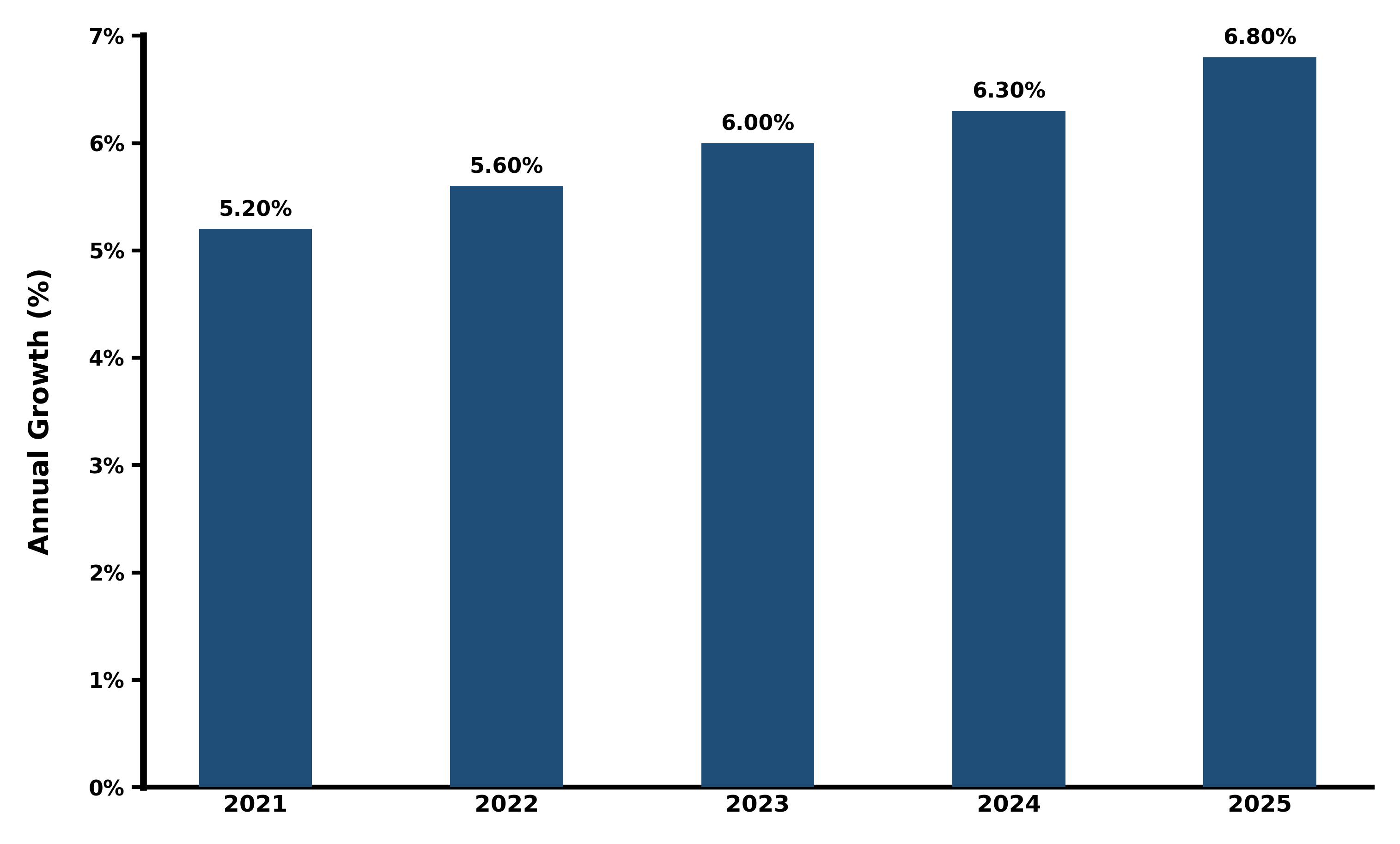 The table below presents the year‑wise growth rates along with the key drivers influencing the market
| Years | Est. Annual Growth in % | Growth Drivers |
| 2021 | 5.2% | Rising demand for metal-based products and raw materials for manufacturing. |
| 2022 | 5.6% | Expanding infrastructure in the construction and automotive industries. |
| 2023 | 6% | Government support for recycling technologies and waste management practices. |
| 2024 | 6.3% | Increase in industrial and residential demand for recycled metal products. |
| 2025 | 6.8% | Advancements in recycling technologies and rising awareness about sustainability. |
Topics Covered in the Bangladesh Scrap Metal Recycling Market Report
Bangladesh Scrap Metal Recycling Market report thoroughly covers the market by types and applications. The report provides an unbiased and detailed analysis of ongoing market trends, opportunities/high growth areas, and market drivers, which would help stakeholders devise and align their market strategies according to the current and future market dynamics.
Bangladesh Scrap Metal Recycling Market Highlights
| Report Name | Bangladesh Scrap Metal Recycling Market |
| Forecast period | 2026-2032 |
| CAGR | 7.5% |
| Growing Sector | Industrial |
Bangladesh Scrap Metal Recycling Market Synopsis
The Bangladesh Scrap Metal Recycling Market will experience major expansion as of rising demand for scrap metals which will be needed by industrial sectors and urban development projects and growing export markets. The government's waste management and recycling process improvements will create an environment that supports market expansion. The increasing public understanding of recycling environmental advantages together with the expanding automotive and construction and electrical sectors drives the need for recycled metals.
Evaluation of Growth Drivers in the Bangladesh Scrap Metal Recycling Market
Below mentioned are some growth drivers and their impact on market dynamics:
| Drivers | Primary Segments Affected | Why It Matters |
| Government Initiatives & Policies | Scrap Metal Recycling, Export | Facilitates recycling operations and boosts export of recycled metals. |
| Industrial Demand for Recycled Metals | Industrial Applications (Construction, Automotive, Electronics) | Lower raw material dependency and supports sustainable manufacturing. |
| Technological Advancements in Recycling | All Scrap Metal Types | It basically increases recycling efficiency and product quality. |
| Growing Construction Sector | Residential & Commercial Applications | More demand for metal-based products leads to more scrap collection and processing. |
| Awareness of Sustainability | All Scrap Metal Types | Increases demand for eco-friendly products, leading to higher recycling rates. |
The Bangladesh Scrap Metal Recycling Market is projected to grow significantly, with a CAGR of 7.5% during the forecast period of 2026-2032. The Bangladesh Scrap Metal Recycling Market develops as industrial sectors need recycled metals for their construction and automotive and electronics operations. Government initiatives that support recycling and waste management and environmentally friendly practices lead to market expansion. People now understand sustainability better which causes them to seek recycled metals as they know about the environmental damage that metal production creates. The growth of recycling plants and the development of new metal processing technologies are enhancing recycling processes and improving product standards. The scrap metal recycling industry in Bangladesh expands as of these factors which support industry development.
Evaluation of Restraints in the Bangladesh Scrap Metal Recycling Market
Below mentioned are some major restraints and their influence on market dynamics:
| Restraints | Primary Segments Affected | What This Means |
| Lack of Advanced Recycling Facilities | All Scrap Metal Types | Limits recycling efficiency and the ability to meet global market standards. |
| Insufficient Awareness of Recycling Benefits | Residential & Commercial Applications | Slows down the adoption of scrap metal recycling practices. |
| High Cost of Recycling Equipment | All Scrap Metal Types | Reduces profitability for smaller recycling operators. |
| Unstable Scrap Metal Supply | All Scrap Metal Types | Impacts the availability of materials for processing and recycling. |
| Export Barriers | Export | Trade regulations and tariffs can restrict access to international markets. |
Bangladesh Scrap Metal Recycling Market Challenges
The advanced recycling facilities which operate in Bangladesh Scrap Metal Recycling Market present major challenges which restrict recycling operations and decrease the quality of recycled materials. The manufacturers face production difficulties as they cannot obtain a consistent flow of materials which results from variations in scrap metal supply. The market expansion is restricted as recycling technology costs continue to rise while consumers have little knowledge about recycling benefits. The manufacturer needs to address these challenges as they are essential for maintaining industry growth.
Bangladesh Scrap Metal Recycling Market Trends
Some major trends contributing to the Bangladesh Scrap Metal Recycling Market Growth are:
- Health-Conscious Metal Products: The recycling of metals is encouraged due to the growing sustainability trends and demand for high-quality metal products.
- Halal & Kosher Metal Standards: The Halal & Kosher Metal Standards will increase the expansion of the industry, mainly in the countries with specific requirements.
- E-commerce Platforms for Scrap Metal Recycling: The growth of online retail platforms is encouraging market growth by providing ease of accessibility and a wide range of product offerings for consumers.
Investment Opportunities in the Bangladesh Scrap Metal Recycling Market
Here are some investment opportunities in the Bangladesh Scrap Metal Recycling Industry:
- Sustainable Recycling Technologies: The increased tech advancements in the recycling of scrap metals will improve the quality and cost-effectiveness of scrap metal processing.
- E-commerce Platforms: Investors can invest more in collaborations with e-commerce retail platforms, which can expand access to recycling services for both businesses and individuals.
- Recycling Infrastructure Expansion: Establishing state-of-the-art recycling plants in key industrial areas can help meet the rising demand for recycled scrap metal and reduce the reliance on virgin materials.
Top 5 Leading Players in the Bangladesh Scrap Metal Recycling Market
Here are some top companies contributing to Bangladesh Scrap Metal Recycling Market Share:
1. Abdul Monem Limited
| Company Name | Abdul Monem Limited |
| Headquarters | Dhaka, Bangladesh |
| Established | 1970 |
| Website | - |
Abdul Monem Limited is a prominent player in the Bangladesh Scrap Metal Recycling Market, known for its involvement in recycling scrap metal for industrial purposes. The company specializes in providing high-quality recycled metal for the construction and manufacturing industries.
2. Ratanpur Steel Re-Rolling Mills Ltd.
| Company Name | Ratanpur Steel Re-Rolling Mills Ltd. |
| Headquarters | Dhaka, Bangladesh |
| Established | 1980 |
| Website | - |
Ratanpur Steel Re-Rolling Mills is engaged in the recycling of scrap metal, mainly for steel manufacturing. Their focus is on quality control and meeting global standards for scrap metal processing.
3. KSR Steel Industries Ltd.
| Company Name | KSR Steel Industries Ltd. |
| Headquarters | Chittagong, Bangladesh |
| Established | 1995 |
| Website | - |
KSR Steel Industries is a key player in the scrap metal recycling industry, processing metals such as iron, aluminum, and copper. The company focuses on serving the local and international markets with high-quality recycled metals.
4. Bangladesh Steel Re-Rolling Mills (BSRM)
| Company Name | Bangladesh Steel Re-Rolling Mills (BSRM) |
| Headquarters | Dhaka, Bangladesh |
| Established | 1952 |
| Website | Click Here |
BSRM is a major player in Bangladesh’s recycling market, specializing in scrap metal processing for the production of steel products. The company has a strong focus on sustainability and improving recycling methods.
5. S. R. Steel Bangladesh
| Company Name | S. R. Steel Bangladesh |
| Headquarters | Dhaka, Bangladesh |
| Established | 1995 |
| Website | - |
S. R. Steel is involved in scrap metal recycling with a specialization in iron and steel production. Their commitment to sustainability and recycling efficiency has made them one of the leading companies in the market.
Government Regulations Introduced in the Bangladesh Scrap Metal Recycling Market
According to Bangladeshi government data, the market is well regulated by various government policies, ensuring the expansion of the industry. The Department of Environment (DoE) and the Bangladesh Standards and Testing Institute (BSTI) make sure that the recycling operations adhere to environmental safety standards, making it easier for recyclers to operate within compliance. Moreover, initiatives like the National Waste Management Strategy are focusing on improving the recycling infrastructure, encouraging both domestic recycling and exports of the scrap metal.
Future Insights of the Bangladesh Scrap Metal Recycling Market
The Bangladesh Scrap Metal Recycling Market maintains a positive forecast as industrial growth and sustainable practice adoption, which drive market demand, continue to increase. The construction and automotive industries will create ongoing demand for recycled metals, particularly iron and aluminum and copper. Moreover, the government programs that support recycling and waste management technologies together with the growing public awareness of environmental issues will create new business opportunities for the industry.
Market Segmentation Analysis
The report offers a comprehensive study of the subsequent market segments and their leading categories.
Iron to Dominate the Market – By Type
According to Guneet Kaur, Senior Research Analyst at 6Wresearch, iron dominates the market due to its widespread use in construction, manufacturing, and automotive industries. Its availability and recyclability make it a most significant choice for a variety of applications, boosting its demand in the scrap metal market.
Industrial to Dominate the Market – By Application
The industrial sector leads the market application segment. The industrial sector needs scrap metals which include iron and aluminum for its manufacturing and construction activities. The production processes of these metals make them essential for the industry which serves as a major contributor to the recycling market.
Key attractiveness of the Report
- 10 Years Market Numbers
- Historical Data Starting from 2022 to 2025
- Base Year: 2025
- Forecast Data until 2032
- Key Performance Indicators Impacting the Market
- Major Upcoming Developments and Projects
Key Highlights of the Report:
- Bangladesh Scrap Metal Recycling Market Outlook
- Market Size of Bangladesh Scrap Metal Recycling Market, 2025
- Forecast of Bangladesh Scrap Metal Recycling Market, 2032
- Historical Data and Forecast of Bangladesh Scrap Metal Recycling Revenues & Volume for the Period 2022-2032
- Bangladesh Scrap Metal Recycling Market Trend Evolution
- Bangladesh Scrap Metal Recycling Market Drivers and Challenges
- Bangladesh Scrap Metal Recycling Price Trends
- Bangladesh Scrap Metal Recycling Porter's Five Forces
- Bangladesh Scrap Metal Recycling Industry Life Cycle
- Historical Data and Forecast of Bangladesh Scrap Metal Recycling Market Revenues & Volume By Type for the Period 2022-2032
- Historical Data and Forecast of Bangladesh Scrap Metal Recycling Market Revenues & Volume By Iron for the Period 2022-2032
- Historical Data and Forecast of Bangladesh Scrap Metal Recycling Market Revenues & Volume By Copper for the Period 2022-2032
- Historical Data and Forecast of Bangladesh Scrap Metal Recycling Market Revenues & Volume By Aluminum for the Period 2022-2032
- Historical Data and Forecast of Bangladesh Scrap Metal Recycling Market Revenues & Volume By Lead for the Period 2022-2032
- Historical Data and Forecast of Bangladesh Scrap Metal Recycling Market Revenues & Volume By Applications for the Period 2022-2032
- Historical Data and Forecast of Bangladesh Scrap Metal Recycling Market Revenues & Volume By Residential & Commercial for the Period 2022-2032
- Historical Data and Forecast of Bangladesh Scrap Metal Recycling Market Revenues & Volume By Industrial for the Period 2022-2032
- Bangladesh Scrap Metal Recycling Import Export Trade Statistics
- Market Opportunity Assessment By Type
- Market Opportunity Assessment By Applications
- Bangladesh Scrap Metal Recycling Top Companies Market Share
- Bangladesh Scrap Metal Recycling Competitive Benchmarking By Technical and Operational Parameters
- Bangladesh Scrap Metal Recycling Company Profiles
- Bangladesh Scrap Metal Recycling Key Strategic Recommendations
Market Covered
The report subsequently covers the market by following segments and subsegments:
By Type
- Iron
- Copper
- Aluminum
- Lead
By Applications
- Residential & Commercial
- Industrial






































