Bangladesh Vitamin K Market Size, Share & Growth Rate
The Bangladesh Vitamin K Market was estimated at USD 211 Million in 2025 and is projected to reach USD 281 Million by 2032, growing at a CAGR of 4.2% from 2026 to 2032. This growth trajectory is primarily driven by increasing public awareness about the health benefits of vitamin K, especially in blood clotting and bone health, alongside a burgeoning demand for dietary supplements and fortified foods. With a significant aging population and rising health concerns regarding osteoporosis and cardiovascular diseases, the demand for vitamin K products is expected to expand rapidly.
Bangladesh Vitamin K Market Year-wise Growth Rate and Key Drivers
This graph highlights how the Bangladesh Vitamin K Market has steadily grown over the years, supported by major growth factors.
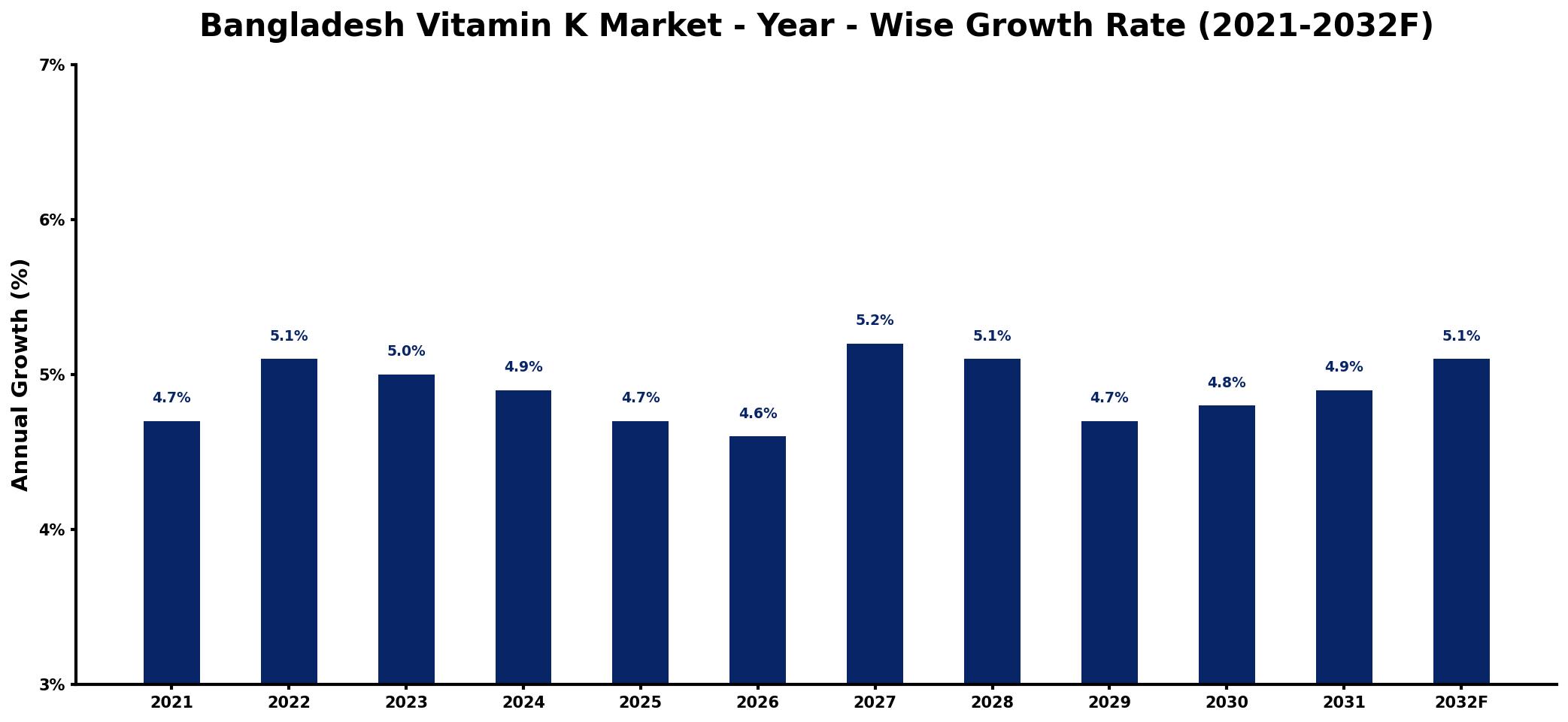
The table below presents the year‑wise growth rates along with the key drivers influencing the market
| Year | Growth Rate | Major Drivers |
| 2021 | 4.7% | Rising healthcare awareness initiatives |
| 2022 | 5.1% | Increased investment in R&D |
| 2023 | 5.0% | Growth in dietary supplement sector |
| 2024 | 4.9% | Expansion of health food stores |
| 2025 | 4.7% | Emerging e-commerce distribution channels |
| 2026 | 4.6% | Growing demand for organic products |
| 2027 | 5.2% | Increase in preventive healthcare adoption |
| 2028 | 5.1% | Focus on personalized nutrition solutions |
| 2029 | 4.7% | Surge in online health platforms |
| 2030 | 4.8% | Rising consumer health consciousness |
| 2031 | 4.9% | Increased collaborations with healthcare providers |
| 2032 | 5.1% | improved raw material availability |
Note: Market size estimations and growth projections presented in this report are based on 6Wresearch's proprietary forecasting methodology, utilizing the latest available industry data, government publications, and primary research inputs.
Bangladesh Vitamin K Market Synopsis
The most influential factor currently shaping the Bangladesh Vitamin K market is the escalating recognition of vitamin K's health benefits. As consumers become more health-conscious, there is a noticeable shift toward dietary supplements that support overall well-being, which is further enhanced by educational campaigns promoting the importance of nutrition.
Moreover, the increasing incidence of health issues linked to vitamin K deficiency, particularly among vulnerable populations, is propelling market demand. This phenomenon has led to the introduction of innovative products in the pharmaceutical and nutraceutical sectors, creating a favorable environment for sustained growth.
Bangladesh Vitamin K Market Key Takeaways
- The market is witnessing a substantial shift toward dietary supplements as consumers prioritize health.
- Government initiatives are fostering greater accessibility and awareness of vitamin K.
- There is a growing trend toward food fortification, addressing nutritional deficiencies.
- Challenges in regional availability and consumer awareness need to be addressed for maximum market potential.
- The aging population is increasingly seeking vitamin K for better bone and cardiovascular health.
Evaluation of Restraints in Bangladesh Vitamin K Market
Despite the promising growth, the Bangladesh Vitamin K market faces real limitations that could restrain its potential. One major concern is the limited public awareness regarding the importance of vitamin K, especially in the context of supplementation during pregnancy and infancy. Additionally, geographical disparities in access to vitamin K-rich foods and supplements further complicate the landscape. These factors create significant barriers to market penetration, highlighting the need for targeted educational campaigns and improved distribution networks to maximize reach and effectiveness.
Bangladesh Vitamin K Market Trends
One notable trend in the Bangladesh Vitamin K market is the increasing consumer preference for natural and organic vitamin K sources. As health-conscious consumers seek products with fewer synthetic additives, there is a growing interest in organic leafy greens and fermented foods as viable sources of vitamin K. Furthermore, advancements in food technology are enabling the development of innovative fortified products, expanding the market scope.
Additionally, the rise of e-commerce is reshaping purchasing habits, making vitamin K supplements more accessible to a broader audience. This shift not only caters to the growing demand but also provides consumers with a convenient means to research and purchase health-related products.
Bangladesh Vitamin K Market Opportunities
The Bangladesh Vitamin K market presents significant opportunities for growth, particularly through the development of fortified foods. With a governmental push toward addressing malnutrition, the opportunity to create partnerships with food manufacturers for vitamin K fortification is ripe. Furthermore, targeted marketing efforts aimed at educating specific demographics, such as pregnant women and the elderly, can open new channels of demand. Lastly, the expanding nutraceutical sector is primed for innovative vitamin K product offerings that cater to health-conscious consumers seeking preventative health solutions.
Government Initiatives in the Bangladesh Vitamin K Market
The Bangladeshi government has implemented various initiatives aimed at addressing nutritional deficiencies, particularly focusing on essential vitamins like vitamin K. Policies encourage public health campaigns that emphasize the importance of vitamin K for overall well-being, promoting both education and access to necessary supplements. Additionally, efforts are being made to support the food industry in fortifying products with vitamin K, thus enhancing the nutritional profiles of everyday foods consumed by the population.
Future Insights of the Bangladesh Vitamin K Market
Looking ahead to 2026-2032, the Bangladesh Vitamin K market is expected to maintain a robust growth trajectory. As consumer awareness continues to rise, alongside an aging demographic increasingly focused on health maintenance, the demand for vitamin K supplements and fortified foods will likely escalate. Furthermore, advancements in distribution channels, especially through digital platforms, will enhance accessibility. With ongoing governmental support and heightened public focus on health, the market appears well-positioned for sustained growth and innovation.
Bangladesh Vitamin K Market Latest Developments (2025 - 2026)
Recent developments in the Bangladesh Vitamin K market indicate a notable shift toward collaborative efforts between government agencies and private sectors. Initiatives have been launched aimed at boosting the availability of vitamin K supplements in rural areas, targeting educational programs that highlight its health benefits. Additionally, various nutraceutical firms are exploring innovative delivery formats to enhance consumer engagement and adherence to supplementation regimens.
Bangladesh Vitamin K Market - Key Attractiveness of the Report
- 10 Years of Market Numbers
- Historical Data Starting from 2022 to 2025
- Base Year: 2025
- Forecast Data until 2032
- Key Performance Indicators Impacting the Market
- Major Upcoming Developments and Projects
Key Highlights of the Report:
- Bangladesh Vitamin K Market Outlook
- Market Size of Bangladesh Vitamin K Market, 2025
- Forecast of Bangladesh Vitamin K Market, 2032
- Historical Data and Forecast of Bangladesh Vitamin K Revenues & Volume for the Period 2022-2032F
- Bangladesh Vitamin K Market Trend Evolution
- Bangladesh Vitamin K Market Drivers and Challenges
- Bangladesh Vitamin K Price Trends
- Bangladesh Vitamin K Porter's Five Forces
- Bangladesh Vitamin K Industry Life Cycle
- Historical Data and Forecast of Bangladesh Vitamin K Market Revenues & Volume By Type for the Period 2022-2032F
- Historical Data and Forecast of Bangladesh Vitamin K Market Revenues & Volume By Vitamin K1 for the Period 2022-2032F
- Historical Data and Forecast of Bangladesh Vitamin K Market Revenues & Volume By Vitamin K2 for the Period 2022-2032F
- Historical Data and Forecast of Bangladesh Vitamin K Market Revenues & Volume By Application for the Period 2022-2032F
- Historical Data and Forecast of Bangladesh Vitamin K Market Revenues & Volume By Osteoporosis for the Period 2022-2032F
- Historical Data and Forecast of Bangladesh Vitamin K Market Revenues & Volume By Vitamin-K Dependent Clotting Factor Deficiency for the Period 2022-2032F
- Historical Data and Forecast of Bangladesh Vitamin K Market Revenues & Volume By Prothrombin Deficiency for the Period 2022-2032F
- Historical Data and Forecast of Bangladesh Vitamin K Market Revenues & Volume By Vitamin K Deficiency Bleeding for the Period 2022-2032F
- Historical Data and Forecast of Bangladesh Vitamin K Market Revenues & Volume By Dermal Applications for the Period 2022-2032F
- Historical Data and Forecast of Bangladesh Vitamin K Market Revenues & Volume By Route of Administration for the Period 2022-2032F
- Historical Data and Forecast of Bangladesh Vitamin K Market Revenues & Volume By Oral for the Period 2022-2032F
- Historical Data and Forecast of Bangladesh Vitamin K Market Revenues & Volume By Parenteral for the Period 2022-2032F
- Historical Data and Forecast of Bangladesh Vitamin K Market Revenues & Volume By Topical for the Period 2022-2032F
- Bangladesh Vitamin K Import Export Trade Statistics
- Market Opportunity Assessment By Type
- Market Opportunity Assessment By Application
- Market Opportunity Assessment By Route of Administration
- Bangladesh Vitamin K Top Companies Market Share
- Bangladesh Vitamin K Competitive Benchmarking By Technical and Operational Parameters
- Bangladesh Vitamin K Company Profiles
- Bangladesh Vitamin K Key Strategic Recommendations






































