Bangladesh Whey Protein Market Size, Share & Growth Rate
The Bangladesh Whey Protein Market was estimated at USD 963 Million in 2025 and is projected to reach USD 1395 Million by 2032, growing at a CAGR of 5.4% from 2026 to 2032. This growth trajectory is primarily driven by increasing health awareness among consumers who are embracing dietary supplements for fitness and recovery. The burgeoning popularity of sports and fitness regimes, coupled with rising disposable incomes, is amplifying the demand for high-quality whey protein products across urban centers.
Bangladesh Whey Protein Market Year-wise Growth Rate and Key Drivers
This graph highlights how the Bangladesh Whey Protein Market has steadily grown over the years, supported by major growth factors.
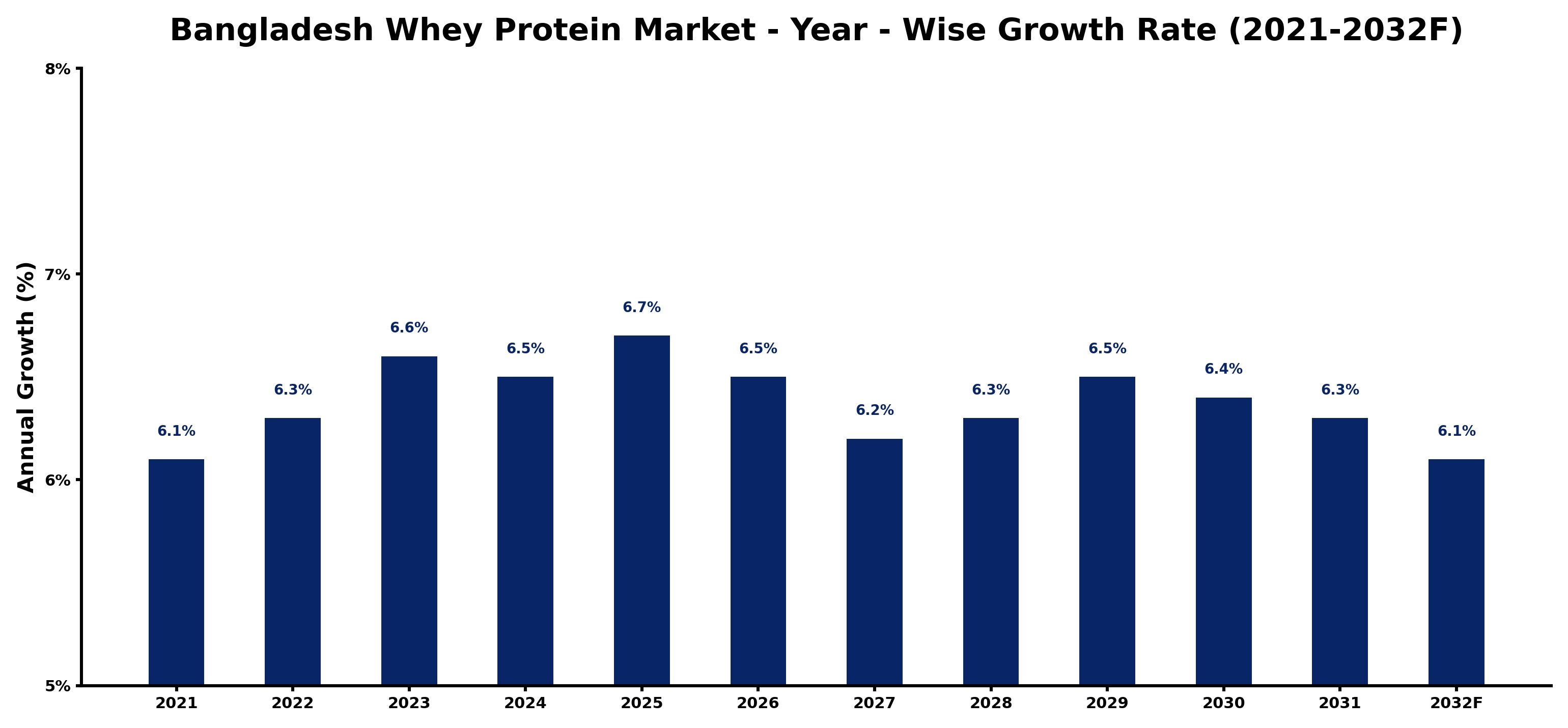
The table below presents the year‑wise growth rates along with the key drivers influencing the market
| Year | Growth Rate | Major Drivers |
| 2021 | 6.1% | Health awareness drove consumption |
| 2022 | 6.3% | Fitness trends increased demand |
| 2023 | 6.6% | E-commerce growth expanded reach |
| 2024 | 6.5% | Nutritional education enhanced sales |
| 2025 | 6.7% | Sports nutrition popularity surged |
| 2026 | 6.5% | Product innovation attracted consumers |
| 2027 | 6.2% | Dietary supplement acceptance increased |
| 2028 | 6.3% | Local sourcing improved availability |
| 2029 | 6.5% | Consumer preference for quality grew |
| 2030 | 6.4% | Brand loyalty strengthened market position |
| 2031 | 6.3% | Fitness influencer marketing expanded |
| 2032 | 6.1% | Sustainability trends influenced purchases |
Note - Market size estimations and growth projections presented in this report are based on 6Wresearch’s advanced forecasting approach, validated with industry datasets as of June 2026.
Bangladesh Whey Protein Market Synopsis
In recent years, Bangladesh has witnessed a notable shift towards health-centric lifestyles, significantly impacting the whey protein market. Consumers are increasingly seeking out whey protein supplements, recognizing their benefits for muscle recovery and overall wellness, leading to a marked rise in retail and online sales.
Moreover, the evolving retail landscape, spurred by enhanced e-commerce capabilities, has made it easier for consumers to access a wide variety of whey protein products. This accessibility is not only propelling sales but also fostering a greater understanding of nutritional supplements among the general public.
Bangladesh Whey Protein Market Key Takeaways
- The market is on a solid growth trajectory, fueled by rising health consciousness and disposable incomes.
- Whey protein is increasingly recognized not just by athletes, but by a broader consumer base interested in nutrition.
- E-commerce platforms are enhancing product accessibility, significantly impacting sales and market penetration.
- Government initiatives aimed at bolstering the dairy industry are expected to support whey protein production and quality.
- Challenges related to cost and consumer perceptions remain, but opportunities for education and outreach are expanding.
Evaluation of Restraints in Bangladesh Whey Protein Market
Despite the favorable growth conditions, the Bangladesh whey protein market faces significant constraints that could hinder its potential. A primary issue is the perceived high cost of whey protein products, which may deter a substantial segment of the population from adopting these supplements. This perception of whey as a premium offering confines it to a niche market, thereby limiting broader acceptance. Furthermore, the prevalence of counterfeit and substandard products in the market can undermine consumer trust and hinder overall growth. Ensuring quality and authenticity will be paramount for brands aiming to capture a larger share of the market.
Bangladesh Whey Protein Market Trends
Current trends within the Bangladesh whey protein market reveal a surge in product innovation, including the introduction of plant-based protein alternatives catering to a growing vegan population. Simultaneously, the rise of fitness influencers and health-oriented social media content is playing a pivotal role in shaping consumer preferences, driving demand for whey protein as a versatile ingredient in smoothies, snacks, and meal replacements. Moreover, the increasing prevalence of health and wellness programs in corporate sectors is also providing a boost, as organizations recognize the value of investing in employee health.
Bangladesh Whey Protein Market Opportunities
The landscape of opportunities in the Bangladesh whey protein market is vibrant and expanding. As awareness grows, there is substantial potential for brands to educate consumers about the benefits of whey protein beyond athletic applications, such as its role in weight management and general health. Additionally, the growing interest in e-commerce opens up avenues for niche brands to establish a foothold without the need for extensive retail distribution networks. Collaborations with fitness centers and health institutions to create educational programs can further drive consumer engagement and market growth.
Government Initiatives in the Bangladesh Whey Protein Market
The government of Bangladesh has recognized the potential of the dairy sector and, by extension, the whey protein market. Policies aimed at promoting dairy farming, including subsidies for local farmers and incentives for whey processing facilities, are in place to bolster production capacity. Additionally, there are regulatory measures being implemented to ensure the safety and quality of whey protein products, which will help in building consumer trust and expanding market accessibility.
Future Insights of the Bangladesh Whey Protein Market
Looking ahead to the period of 2026-2032, the Bangladesh whey protein market is poised for continued expansion. Factors such as rising disposable incomes, a greater emphasis on fitness and health, and increased penetration of whey protein in mainstream nutrition will drive this growth. Enhanced consumer education and supportive government policies are likely to create a more favorable environment for both local and international players, enabling the market to evolve rapidly into a robust sector of the nutritional landscape.
Bangladesh Whey Protein Market Latest Developments (May 2025 - June 2026)
In the past year, the Bangladesh whey protein market has seen a noticeable uptick in product launches and innovations, particularly in ready-to-drink formats catering to the busy urban population. Brands are increasingly focusing on transparency in sourcing and ingredient quality, responding to consumer demands for authenticity. Additionally, collaborations with health experts for marketing campaigns are becoming more common, aiming to educate consumers on the diverse benefits of whey protein supplements.
Bangladesh Whey Protein Market - Key Attractiveness of the Report
- 10 Years of Market Numbers
- Historical Data Starting from 2022 to 2025
- Base Year: 2025
- Forecast Data until 2032
- Key Performance Indicators Impacting the Market
- Major Upcoming Developments and Projects
Key Highlights of the Report:
- Bangladesh Whey Protein Market Outlook
- Market Size of Bangladesh Whey Protein Market, 2025
- Forecast of Bangladesh Whey Protein Market, 2032
- Historical Data and Forecast of Bangladesh Whey Protein Revenues & Volume for the Period 2022-2032F
- Bangladesh Whey Protein Market Trend Evolution
- Bangladesh Whey Protein Market Drivers and Challenges
- Bangladesh Whey Protein Price Trends
- Bangladesh Whey Protein Porter's Five Forces
- Bangladesh Whey Protein Industry Life Cycle
- Historical Data and Forecast of Bangladesh Whey Protein Market Revenues & Volume By Type for the Period 2022-2032F
- Historical Data and Forecast of Bangladesh Whey Protein Market Revenues & Volume By Whey Protein Isolates for the Period 2022-2032F
- Historical Data and Forecast of Bangladesh Whey Protein Market Revenues & Volume By Whey Protein Concentrates for the Period 2022-2032F
- Historical Data and Forecast of Bangladesh Whey Protein Market Revenues & Volume By Whey Protein Hydrolysates for the Period 2022-2032F
- Historical Data and Forecast of Bangladesh Whey Protein Market Revenues & Volume By Application for the Period 2022-2032F
- Historical Data and Forecast of Bangladesh Whey Protein Market Revenues & Volume By Nutritional Supplements for the Period 2022-2032F
- Historical Data and Forecast of Bangladesh Whey Protein Market Revenues & Volume By Personal Care for the Period 2022-2032F
- Historical Data and Forecast of Bangladesh Whey Protein Market Revenues & Volume By Food & Beverages for the Period 2022-2032F
- Historical Data and Forecast of Bangladesh Whey Protein Market Revenues & Volume By Animal Feed & Pet Food for the Period 2022-2032F
- Bangladesh Whey Protein Import Export Trade Statistics
- Market Opportunity Assessment By Type
- Market Opportunity Assessment By Application
- Bangladesh Whey Protein Top Companies Market Share
- Bangladesh Whey Protein Competitive Benchmarking By Technical and Operational Parameters
- Bangladesh Whey Protein Company Profiles
- Bangladesh Whey Protein Key Strategic Recommendations






































