Belgium Carnauba Wax Market Size (2020-2030)
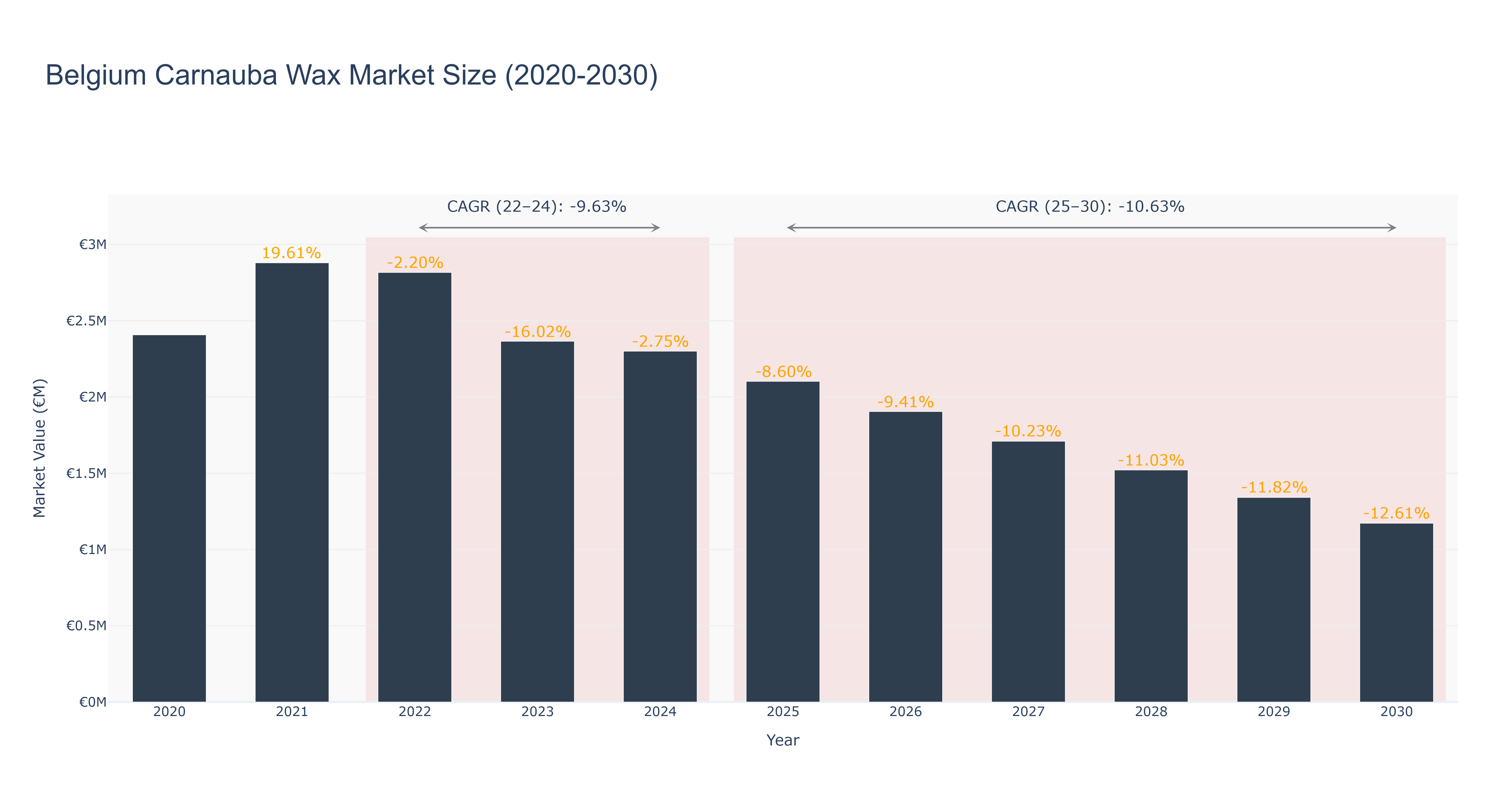
Belgium Carnauba Wax Market has seen a decline in recent years, with the peak market size of €2.88 million in 2021. The actual market size decreased to €2.30 million in 2024, showing a negative growth trend. Forecasted market size from 2025 to 2030 is expected to continue this decline, with a CAGR of -10.63%. The market faced challenges due to changing consumer preferences towards alternative products and a slowdown in industrial production. However, recent developments indicate a shift towards sustainable sourcing practices and innovative product formulations, which could potentially drive growth in the future. In the coming years, investments in research and development for eco-friendly wax alternatives and partnerships with cosmetic companies are expected to shape the market landscape.
Belgium Carnauba Wax Market: Production & Trade Performance (2019-2025)
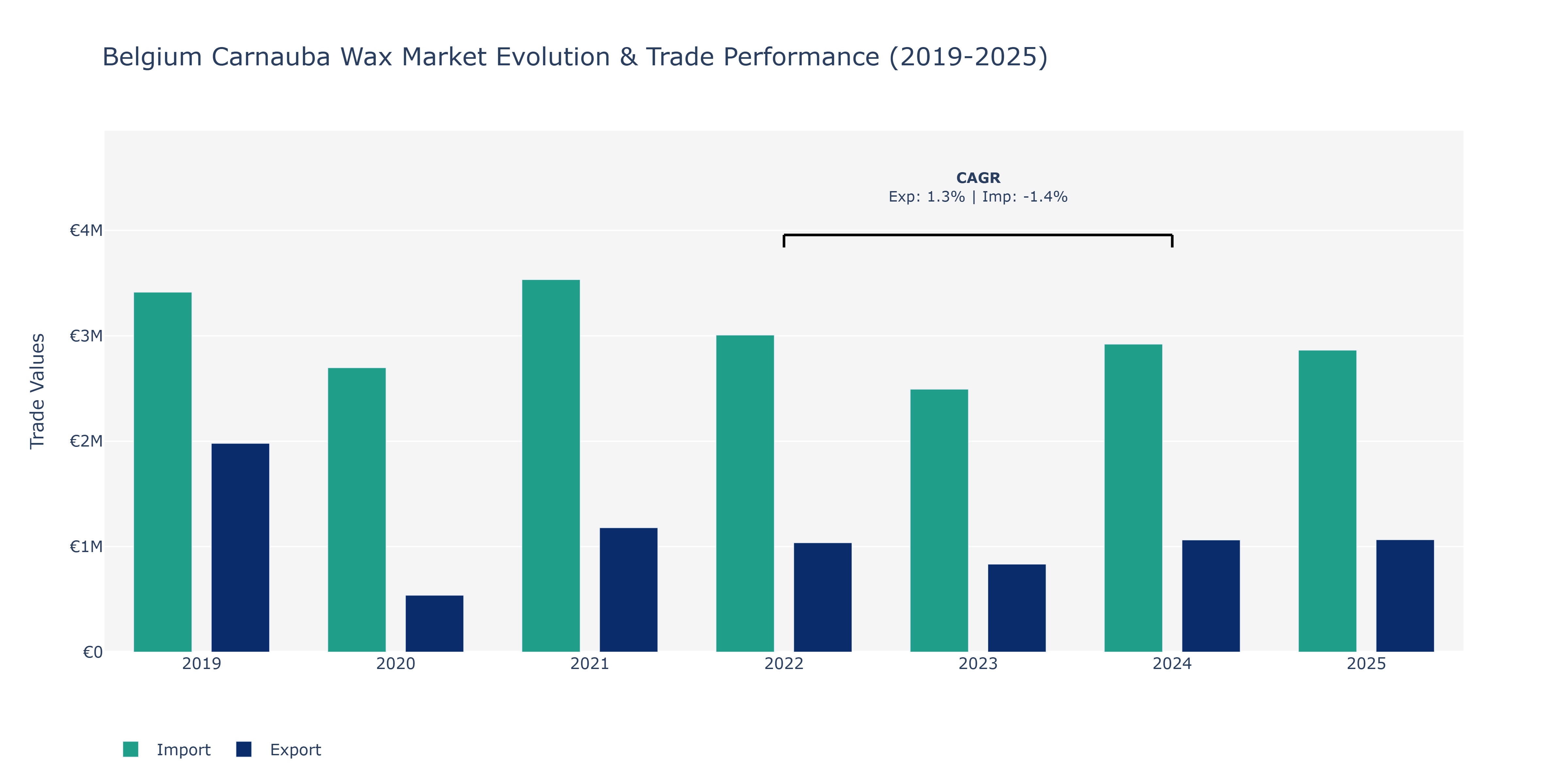
Between 2019 and 2025, Belgium's Carnauba Wax Market saw notable fluctuations in both exports and imports. Exports started at €1.98 million in 2019, sharply declined in 2020 to €538.31 thousand, rose in 2021, dropped again in 2023, and showed a recovery in 2024 and 2025, reaching around €1.06 million. In contrast, imports began at a higher value of €3.41 million in 2019, experienced a decrease in 2020, followed by an upward trend until 2021, and then fluctuated slightly in the following years, settling at around €2.86 million in 2025. These shifts could be attributed to various factors such as changes in consumer demand, global market dynamics, and economic conditions impacting production and trade. The decrease in imports in 2020 may reflect disruptions in supply chains due to the pandemic, while the subsequent recovery aligns with the gradual stabilization of international trade. To ensure sustainable growth, stakeholders in the Carnauba Wax Market should closely monitor market dynamics and adapt strategies to changing conditions.
Belgium Carnauba Wax Market Overview
Belgium`s carnauba wax market serves various industries, including food, cosmetics, pharmaceuticals, and automotive. Carnauba wax is valued for its natural properties, such as high melting point and excellent gloss. The market is driven by the demand for natural and sustainable ingredients, particularly in the cosmetics and food sectors. Regulatory support for natural products and increasing consumer awareness about eco-friendly ingredients boost market growth. However, supply chain constraints and price volatility of raw materials can impact the market.
Drivers of the market
The Belgium carnauba wax market is driven by its wide range of applications across various industries, including food, pharmaceuticals, cosmetics, and automotive. The natural and sustainable nature of carnauba wax makes it a preferred ingredient in products seeking eco-friendly alternatives. The demand for carnauba wax is also boosted by its excellent emulsifying, thickening, and binding properties. Additionally, the growing trend of using natural and organic ingredients in personal care and food products supports the market growth.
Challenges of the market
The Belgium carnauba wax market faces challenges related to the sustainability and ethical sourcing of raw materials, as carnauba wax is primarily harvested in Brazil. Ensuring a consistent and high-quality supply can be difficult due to variations in weather conditions and agricultural practices. Additionally, the market is impacted by the increasing availability of synthetic alternatives, which can offer similar properties at a lower cost. Another issue is the regulatory scrutiny regarding the use of natural waxes in various applications, which can limit market growth.
Government Policy of the market
The carnauba wax market in Belgium is regulated to ensure the safety and quality of this product, which is widely used in various industries, including food, cosmetics, and pharmaceuticals. Government policies require that all imports of carnauba wax comply with European Union regulations concerning contaminants and purity levels. The Belgian Food Safety Agency oversees the compliance of carnauba wax used in food products, ensuring it meets strict safety standards. There are also initiatives to promote the sustainable sourcing of carnauba wax, given its natural origin from palm leaves in Brazil, aligning with broader EU policies on sustainability and fair trade.
Key Highlights of the Report:
- Belgium Carnauba Wax Market Outlook
- Market Size of Belgium Carnauba Wax Market, 2024
- Forecast of Belgium Carnauba Wax Market, 2031
- Historical Data and Forecast of Belgium Carnauba Wax Revenues & Volume for the Period 2021-2031
- Belgium Carnauba Wax Market Trend Evolution
- Belgium Carnauba Wax Market Drivers and Challenges
- Belgium Carnauba Wax Price Trends
- Belgium Carnauba Wax Porter`s Five Forces
- Belgium Carnauba Wax Industry Life Cycle
- Historical Data and Forecast of Belgium Carnauba Wax Market Revenues & Volume By Product for the Period 2021-2031
- Historical Data and Forecast of Belgium Carnauba Wax Market Revenues & Volume By Type1 for the Period 2021-2031
- Historical Data and Forecast of Belgium Carnauba Wax Market Revenues & Volume By Type3 for the Period 2021-2031
- Historical Data and Forecast of Belgium Carnauba Wax Market Revenues & Volume By Type4 for the Period 2021-2031
- Historical Data and Forecast of Belgium Carnauba Wax Market Revenues & Volume By Application for the Period 2021-2031
- Historical Data and Forecast of Belgium Carnauba Wax Market Revenues & Volume By Cosmetics for the Period 2021-2031
- Historical Data and Forecast of Belgium Carnauba Wax Market Revenues & Volume By Food for the Period 2021-2031
- Historical Data and Forecast of Belgium Carnauba Wax Market Revenues & Volume By Automotive for the Period 2021-2031
- Historical Data and Forecast of Belgium Carnauba Wax Market Revenues & Volume By Pharmaceutical for the Period 2021-2031
- Historical Data and Forecast of Belgium Carnauba Wax Market Revenues & Volume By Others for the Period 2021-2031
- Belgium Carnauba Wax Import Export Trade Statistics
- Market Opportunity Assessment By Product
- Market Opportunity Assessment By Application
- Belgium Carnauba Wax Top Companies Market Share
- Belgium Carnauba Wax Competitive Benchmarking By Technical and Operational Parameters
- Belgium Carnauba Wax Company Profiles
- Belgium Carnauba Wax Key Strategic Recommendations






































