Belgium Ferrochrome Market Size (2020-2030)
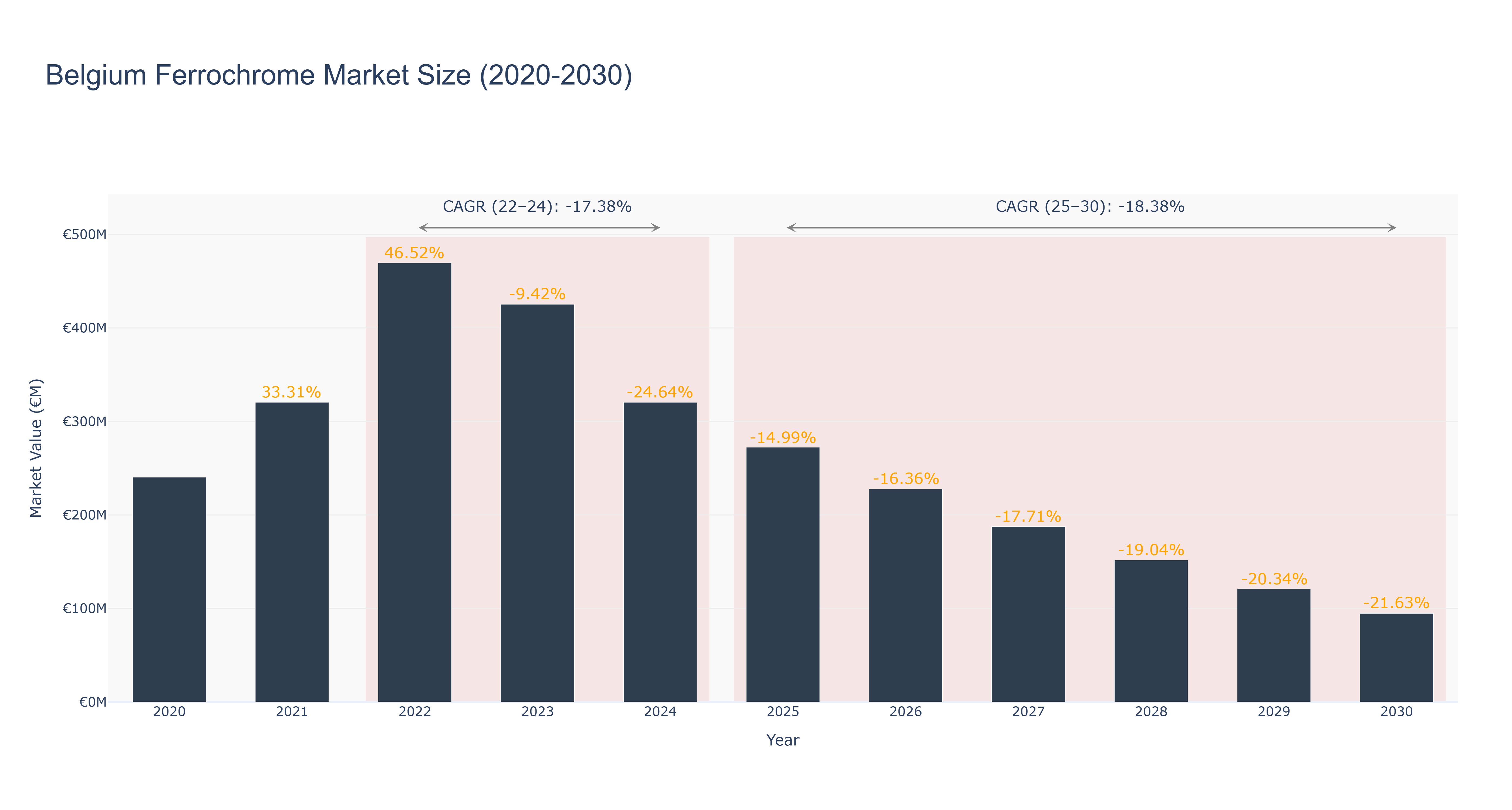
Belgium Ferrochrome Market has experienced fluctuations in market size over the years. The peak market size of €469.61 million was recorded in 2022, followed by a decline to €320.57 million in 2024. The forecasted trend shows a continued decrease in market size, with an expected value of €94.79 million in 2030. The market has seen a negative CAGR of -17.38% from 2022 to 2024 and is projected to have a CAGR of -18.38% from 2025 to 2030. The downturn in market size can be attributed to global economic uncertainties and shifts in consumer demand. Looking ahead, Belgium is set to invest in sustainable ferrochrome production technologies to enhance efficiency and reduce environmental impact, aligning with the industry's focus on sustainability and innovation. Industry drivers for the Belgium Ferrochrome Market include technological advancements, regulatory changes promoting sustainable practices, and evolving consumer preferences towards eco-friendly products. These factors are likely to shape the market's future trajectory, driving further innovation and adaptation to changing market dynamics.
Belgium Ferrochrome Market: Production & Trade Performance (2019-2025)
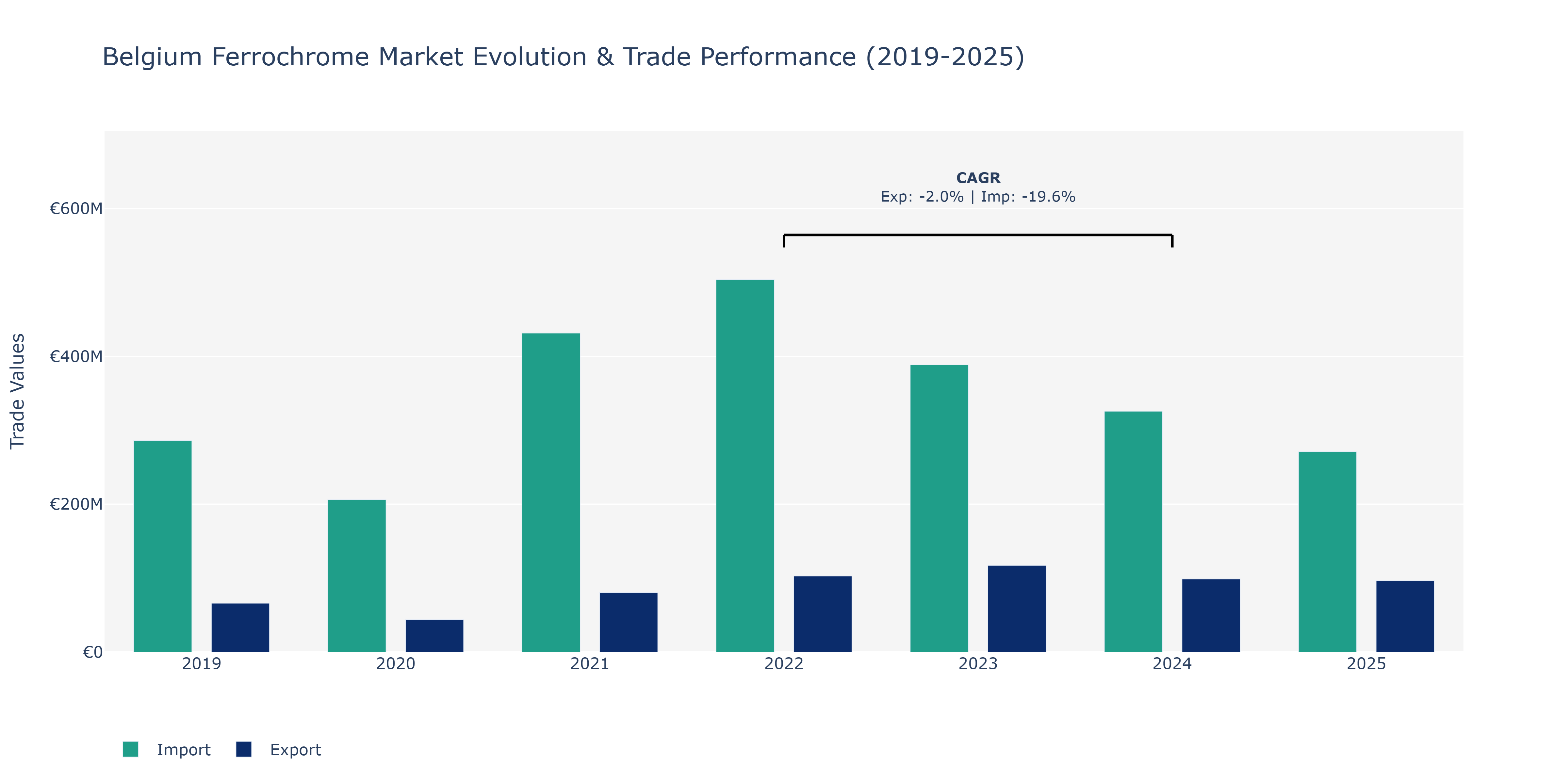
The Belgium Ferrochrome Market experienced fluctuations in both Exports and Imports from 2019 to 2025. Exports started at €66.09 million in 2019, dropped to €43.87 million in 2020, and then showed a significant increase to €117.28 million in 2023 before slightly decreasing to €96.52 million in 2025. On the other hand, Imports began at €286.12 million in 2019, decreased to €206.23 million in 2020, peaked at €503.85 million in 2022, and then gradually declined to €271.0 million in 2025. The fluctuations in Exports and Imports can be attributed to various factors such as global demand shifts, price volatility in the ferrochrome market, geopolitical tensions impacting trade, and changes in production capacities. The decline in Imports CAGR from 2022 to 2024 could be due to supply chain disruptions, changes in trade policies, or shifts in sourcing strategies influenced by economic conditions. To maintain market stability, stakeholders in the Belgium Ferrochrome Market may need to closely monitor these trends and adapt their strategies accordingly.
Key Highlights of the Report:
- Belgium Ferrochrome Market Outlook
- Market Size of Belgium Ferrochrome Market, 2025
- Forecast of Belgium Ferrochrome Market, 2032
- Historical Data and Forecast of Belgium Ferrochrome Revenues & Volume for the Period 2022 - 2032F
- Belgium Ferrochrome Market Trend Evolution
- Belgium Ferrochrome Market Drivers and Challenges
- Belgium Ferrochrome Price Trends
- Belgium Ferrochrome Porter`s Five Forces
- Belgium Ferrochrome Industry Life Cycle
- Historical Data and Forecast of Belgium Ferrochrome Market Revenues & Volume By Type for the Period 2022 - 2032F
- Historical Data and Forecast of Belgium Ferrochrome Market Revenues & Volume By High carbon for the Period 2022 - 2032F
- Historical Data and Forecast of Belgium Ferrochrome Market Revenues & Volume By Medium carbon for the Period 2022 - 2032F
- Historical Data and Forecast of Belgium Ferrochrome Market Revenues & Volume By Low carbon for the Period 2022 - 2032F
- Historical Data and Forecast of Belgium Ferrochrome Market Revenues & Volume By Applications for the Period 2022 - 2032F
- Historical Data and Forecast of Belgium Ferrochrome Market Revenues & Volume By Stainless steel for the Period 2022 - 2032F
- Historical Data and Forecast of Belgium Ferrochrome Market Revenues & Volume By Other steels for the Period 2022 - 2032F
- Belgium Ferrochrome Import Export Trade Statistics
- Market Opportunity Assessment By Type
- Market Opportunity Assessment By Applications
- Belgium Ferrochrome Top Companies Market Share
- Belgium Ferrochrome Competitive Benchmarking By Technical and Operational Parameters
- Belgium Ferrochrome Company Profiles
- Belgium Ferrochrome Key Strategic Recommendations






































