Belgium Physiological Saline Market Top 5 Importing Countries and Market Competition (HHI) Analysis
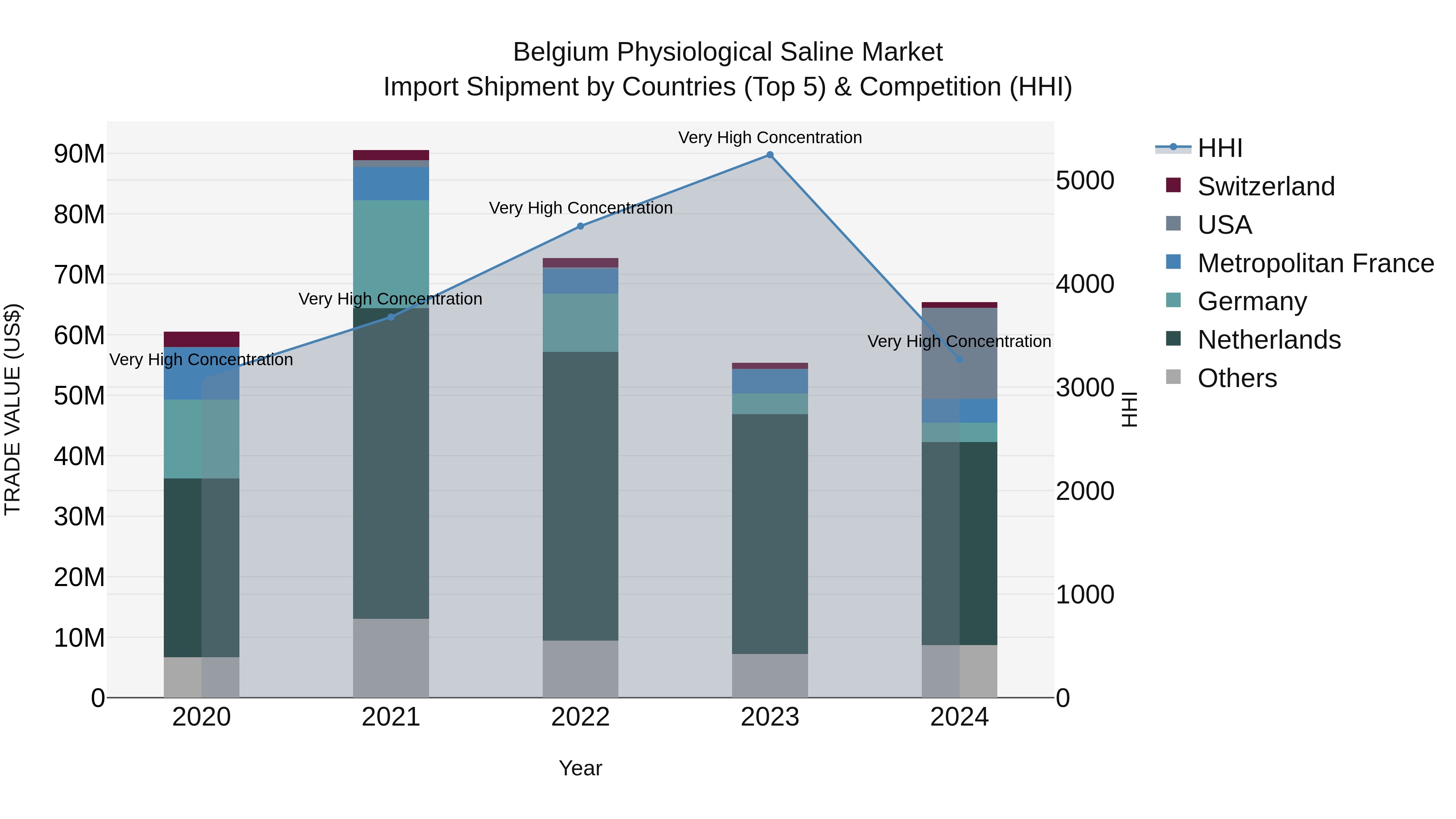
In 2024, Belgium continued to heavily rely on imports of physiological saline, with top exporters being Netherlands, USA, Metropolitan France, Australia, and Germany. The market remained highly concentrated, indicating limited competition among suppliers. The compound annual growth rate (CAGR) from 2020 to 2024 was steady at 1.95%, with a notable growth rate of 18.01% from 2023 to 2024. This suggests a growing demand for physiological saline in Belgium, potentially driven by various factors such as healthcare needs or technological advancements in the sector.
Belgium Physiological Saline Market Synopsis
The Belgium Physiological Saline Market is experiencing steady growth driven by factors such as increasing awareness about the importance of wound care, surgical procedures, and the rising prevalence of chronic diseases. Physiological saline, also known as normal saline, is widely used for wound irrigation, intravenous infusion, and as a nasal spray due to its isotonic properties. The market is characterized by the presence of key players offering a wide range of products, including sterile and non-sterile options. Hospitals, clinics, and ambulatory surgical centers are the primary end-users of physiological saline solutions in Belgium. Additionally, the growing emphasis on infection control measures and the rising healthcare expenditure are further propelling the demand for physiological saline in the country. Continuous product innovations and strategic collaborations among manufacturers are anticipated to drive the market`s growth in the foreseeable future.
Belgium Physiological Saline Market Trends
The Belgium Physiological Saline Market is experiencing growth due to the increasing awareness about the benefits of physiological saline solutions in various medical applications such as wound cleansing, nasal irrigation, and eye care. There is a rising demand for sterile and preservative-free saline products, driving manufacturers to innovate and expand their product offerings. The market is also witnessing a trend towards the development of advanced formulations that cater to specific medical needs, such as buffered saline solutions for sensitive skin or enhanced moisturizing properties for dry eyes. Opportunities exist for companies to capitalize on the growing healthcare sector in Belgium and the increasing adoption of saline solutions in both medical facilities and households. Strategic partnerships with healthcare providers and pharmacies, as well as investments in research and development for new product formulations, can further drive the growth of the physiological saline market in Belgium.
Belgium Physiological Saline Market Challenges
One of the key challenges faced in the Belgium Physiological Saline Market is the increasing competition from alternative products and solutions. As consumers become more health-conscious and seek natural or organic alternatives for their healthcare needs, the demand for physiological saline may be impacted. Additionally, the market also faces challenges in terms of pricing pressures, regulatory requirements, and the need for continuous innovation to differentiate products and stay ahead of competitors. Ensuring product quality, safety, and efficacy while navigating changing consumer preferences and market dynamics presents a significant challenge for companies operating in the Belgium Physiological Saline Market. Innovating packaging, distribution channels, and marketing strategies to reach target customers effectively are essential to address these challenges and maintain a competitive edge in the market.
Belgium Physiological Saline Market Investment Opportunities
The Belgium Physiological Saline Market is primarily driven by factors such as the increasing prevalence of chronic diseases, rising geriatric population, growing demand for safe and effective medical products, and advancements in healthcare infrastructure. Physiological saline is widely used in healthcare settings for various purposes, including intravenous infusions, wound cleansing, and medical device cleaning. Additionally, the expanding pharmaceutical and biotechnology industries in Belgium are also contributing to the growth of the physiological saline market by creating a demand for high-quality saline solutions for research and development purposes. The focus on maintaining high standards of patient care and hygiene in healthcare facilities further boosts the demand for physiological saline solutions in Belgium, driving market growth.
Belgium Physiological Saline Market Government Polices
Government policies related to the Belgium Physiological Saline Market primarily focus on ensuring the safety, quality, and efficacy of physiological saline products. The market is regulated by the Federal Agency for Medicines and Health Products (FAMHP), which oversees the licensing, manufacturing, and distribution of medical devices and pharmaceutical products, including physiological saline. Manufacturers are required to comply with Good Manufacturing Practices (GMP) and follow stringent quality control measures to ensure product safety and efficacy. Additionally, pricing and reimbursement policies are in place to ensure affordability and accessibility of physiological saline products for patients. The government also promotes research and innovation in the healthcare sector to drive advancements in physiological saline technology and improve patient outcomes.
Belgium Physiological Saline Market Future Outlook
The future outlook for the Belgium Physiological Saline Market appears promising, driven by factors such as the increasing prevalence of chronic diseases requiring medical treatments, the growth in the aging population, and the rising demand for healthcare services. Physiological saline is a fundamental product used in various medical applications such as wound cleaning, intravenous drips, and nasal irrigation, indicating a steady demand for the product in the healthcare sector. Moreover, the emphasis on infection control measures and the importance of maintaining proper hygiene standards in healthcare facilities will further boost the demand for physiological saline solutions. With technological advancements and the continuous innovation in healthcare practices, the Belgium Physiological Saline Market is expected to witness sustained growth in the coming years.
Key Highlights of the Report:
- Belgium Physiological Saline Market Outlook
- Market Size of Belgium Physiological Saline Market, 2024
- Forecast of Belgium Physiological Saline Market, 2031
- Historical Data and Forecast of Belgium Physiological Saline Revenues & Volume for the Period 2021- 2031
- Belgium Physiological Saline Market Trend Evolution
- Belgium Physiological Saline Market Drivers and Challenges
- Belgium Physiological Saline Price Trends
- Belgium Physiological Saline Porter's Five Forces
- Belgium Physiological Saline Industry Life Cycle
- Historical Data and Forecast of Belgium Physiological Saline Market Revenues & Volume By Product Type for the Period 2021- 2031
- Historical Data and Forecast of Belgium Physiological Saline Market Revenues & Volume By Flexible Bag for the Period 2021- 2031
- Historical Data and Forecast of Belgium Physiological Saline Market Revenues & Volume By Plastic Bottles for the Period 2021- 2031
- Historical Data and Forecast of Belgium Physiological Saline Market Revenues & Volume By Glass Bottles for the Period 2021- 2031
- Historical Data and Forecast of Belgium Physiological Saline Market Revenues & Volume By Application for the Period 2021- 2031
- Historical Data and Forecast of Belgium Physiological Saline Market Revenues & Volume By Chronic Diseases for the Period 2021- 2031
- Historical Data and Forecast of Belgium Physiological Saline Market Revenues & Volume By Acute Health Conditions for the Period 2021- 2031
- Historical Data and Forecast of Belgium Physiological Saline Market Revenues & Volume By Skin Abrasions and Burns for the Period 2021- 2031
- Historical Data and Forecast of Belgium Physiological Saline Market Revenues & Volume By End Users for the Period 2021- 2031
- Historical Data and Forecast of Belgium Physiological Saline Market Revenues & Volume By Hospitals for the Period 2021- 2031
- Historical Data and Forecast of Belgium Physiological Saline Market Revenues & Volume By Clinics for the Period 2021- 2031
- Historical Data and Forecast of Belgium Physiological Saline Market Revenues & Volume By Recovery Centers for the Period 2021- 2031
- Historical Data and Forecast of Belgium Physiological Saline Market Revenues & Volume By Others for the Period 2021- 2031
- Belgium Physiological Saline Import Export Trade Statistics
- Market Opportunity Assessment By Product Type
- Market Opportunity Assessment By Application
- Market Opportunity Assessment By End Users
- Belgium Physiological Saline Top Companies Market Share
- Belgium Physiological Saline Competitive Benchmarking By Technical and Operational Parameters
- Belgium Physiological Saline Company Profiles
- Belgium Physiological Saline Key Strategic Recommendations






































