Belgium Retinol Market Top 5 Importing Countries and Market Competition (HHI) Analysis
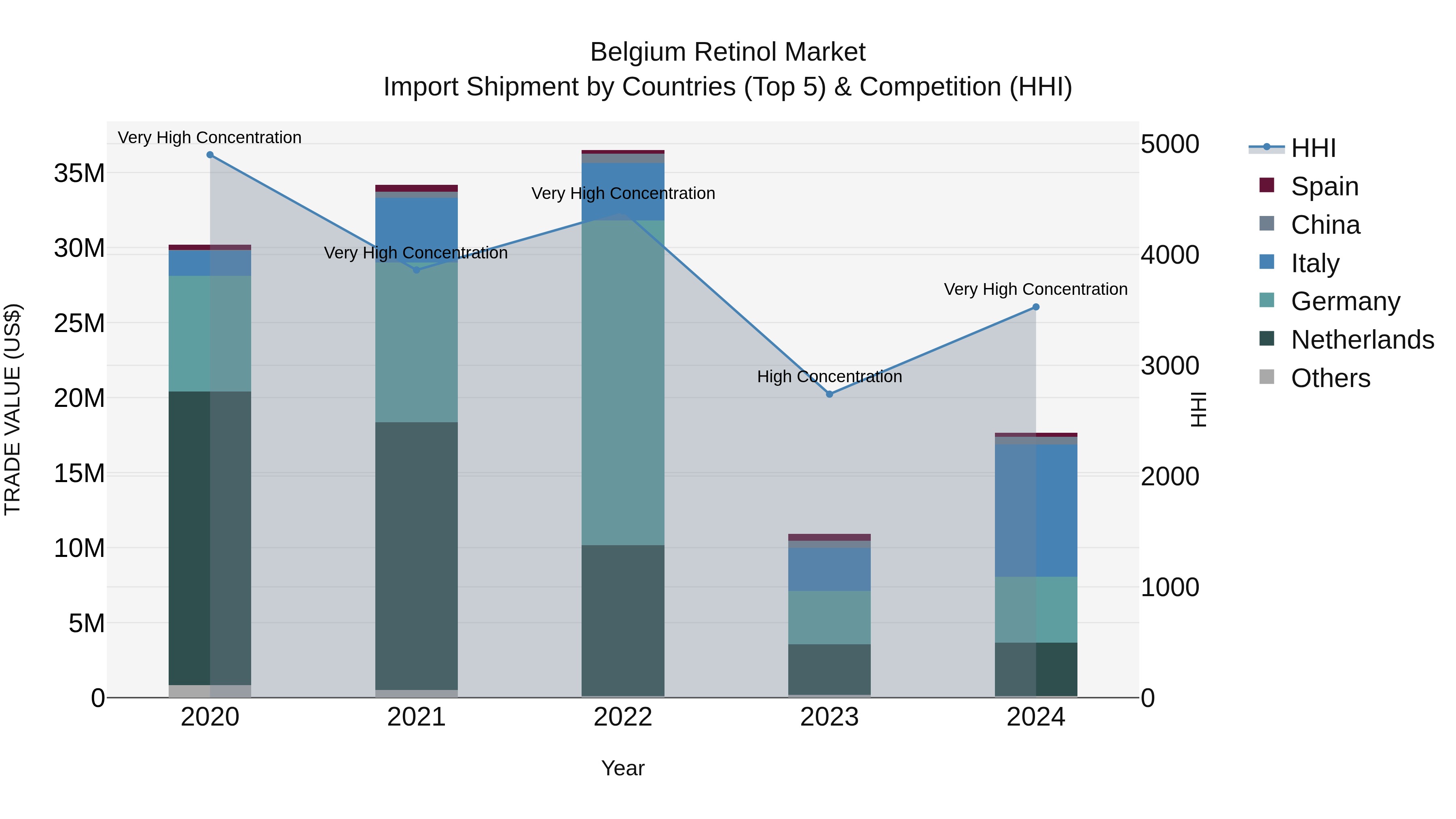
Belgium`s retinol import market saw a significant increase in concentration levels in 2024, with Italy, Germany, Netherlands, China, and Spain emerging as the top exporting countries. The high Herfindahl-Hirschman Index (HHI) in 2023 escalated to very high levels in 2024, indicating a more concentrated market landscape. Despite a negative compound annual growth rate (CAGR) of -12.56% from 2020 to 2024, the market experienced a remarkable growth spurt of 61.72% from 2023 to 2024. This data suggests a dynamic and evolving market for retinol imports in Belgium, driven by key exporting nations.
Belgium Retinol Market Synopsis
The Belgium Retinol market is experiencing steady growth due to increasing consumer awareness about the benefits of retinol in skincare products. Retinol, a derivative of vitamin A, is known for its anti-aging properties and ability to improve skin texture and tone. The market is driven by the rising demand for anti-aging skincare products among the aging population in Belgium. Key players in the market are focusing on product innovation and launching retinol-based products to cater to the growing consumer demand. The market is also witnessing a trend towards natural and organic retinol products as consumers become more conscious about the ingredients in their skincare products. Overall, the Belgium Retinol market is poised for further growth as consumers seek effective solutions for maintaining youthful and healthy skin.
Belgium Retinol Market Trends
The Belgium Retinol Market is witnessing a growing demand for anti-aging skincare products, driving the popularity of retinol-infused formulations. Consumers are increasingly seeking effective solutions for skin concerns such as fine lines, wrinkles, and uneven skin tone, leading to a surge in the adoption of retinol-based products. The market is also seeing a trend towards natural and organic skincare options, with brands incorporating retinol derived from plant-based sources to cater to the rising demand for clean beauty products. Opportunities lie in developing innovative retinol formulations that offer targeted solutions for specific skin concerns, as well as in expanding distribution channels to reach a wider consumer base. Additionally, educating consumers about the benefits and proper usage of retinol products can further drive growth in the Belgium Retinol Market.
Belgium Retinol Market Challenges
In the Belgium Retinol market, one of the key challenges faced is the saturation of the market with various brands and products, leading to intense competition. This makes it difficult for new or lesser-known brands to gain visibility and market share. Additionally, there is a lack of awareness among consumers about the benefits and proper usage of retinol products, which hinders the growth of the market. Regulatory hurdles and compliance requirements also pose challenges for companies operating in the Belgium Retinol market, impacting product development and marketing strategies. Overall, navigating these challenges requires companies to invest in effective marketing campaigns, education initiatives, and compliance measures to establish a strong presence and build trust among consumers in the competitive Belgium Retinol market.
Belgium Retinol Market Investment Opportunities
The Belgium Retinol Market is primarily driven by the increasing demand for skincare products with anti-aging benefits. Consumers in Belgium are becoming more conscious about their skin health and are seeking products that can help reduce the appearance of wrinkles and fine lines. Additionally, the growing popularity of beauty and wellness trends, as well as the influence of social media and beauty influencers, are further boosting the demand for retinol-based products. The availability of a wide range of retinol skincare products across various price points and distribution channels is also contributing to market growth. Moreover, the aging population in Belgium is another key driver, as older consumers are increasingly turning to retinol products to maintain youthful and healthy-looking skin.
Belgium Retinol Market Government Policie
Belgium has strict regulations regarding the sale and marketing of retinol products. The European Union`s Cosmetic Regulation sets guidelines for the use of retinol in cosmetics, limiting its concentration and requiring appropriate labeling to inform consumers about potential risks and proper usage. Furthermore, the Belgian government closely monitors the advertising of retinol products to ensure they adhere to the regulations and do not make exaggerated claims about their effectiveness. Compliance with these policies is essential for companies operating in the Belgium Retinol Market to avoid penalties and maintain consumer trust in the safety and efficacy of their products.
Belgium Retinol Market Future Outlook
The Belgium Retinol market is expected to witness steady growth in the coming years, driven by increasing consumer awareness about the benefits of retinol in skincare products, growing demand for anti-aging solutions, and the rising popularity of beauty and personal care products in the country. The market is likely to be influenced by the introduction of innovative retinol-based formulations, expansion of distribution channels, and the adoption of advanced marketing strategies by key players. Additionally, with the growing trend towards clean beauty and natural skincare products, there is a potential for the market to see an increase in the availability of organic and plant-based retinol alternatives. Overall, the Belgium Retinol market is poised for expansion, with opportunities for both domestic and international brands to capitalize on the evolving consumer preferences and trends in the beauty and skincare industry.
Key Highlights of the Report:
- Belgium Retinol Market Outlook
- Market Size of Belgium Retinol Market, 2024
- Forecast of Belgium Retinol Market, 2031
- Historical Data and Forecast of Belgium Retinol Revenues & Volume for the Period 2021- 2031
- Belgium Retinol Market Trend Evolution
- Belgium Retinol Market Drivers and Challenges
- Belgium Retinol Price Trends
- Belgium Retinol Porter's Five Forces
- Belgium Retinol Industry Life Cycle
- Historical Data and Forecast of Belgium Retinol Market Revenues & Volume By Type for the Period 2021- 2031
- Historical Data and Forecast of Belgium Retinol Market Revenues & Volume By Natural for the Period 2021- 2031
- Historical Data and Forecast of Belgium Retinol Market Revenues & Volume By Synthetic for the Period 2021- 2031
- Historical Data and Forecast of Belgium Retinol Market Revenues & Volume By Application for the Period 2021- 2031
- Historical Data and Forecast of Belgium Retinol Market Revenues & Volume By Personal Care & Cosmetics for the Period 2021- 2031
- Historical Data and Forecast of Belgium Retinol Market Revenues & Volume By Dietary Supplements for the Period 2021- 2031
- Historical Data and Forecast of Belgium Retinol Market Revenues & Volume By Food & Beverage for the Period 2021- 2031
- Historical Data and Forecast of Belgium Retinol Market Revenues & Volume By Animal Feed for the Period 2021- 2031
- Historical Data and Forecast of Belgium Retinol Market Revenues & Volume By Others for the Period 2021- 2031
- Belgium Retinol Import Export Trade Statistics
- Market Opportunity Assessment By Type
- Market Opportunity Assessment By Application
- Belgium Retinol Top Companies Market Share
- Belgium Retinol Competitive Benchmarking By Technical and Operational Parameters
- Belgium Retinol Company Profiles
- Belgium Retinol Key Strategic Recommendations






































