Benin Candles Market Growth Rate Analysis (2025 - 2031)
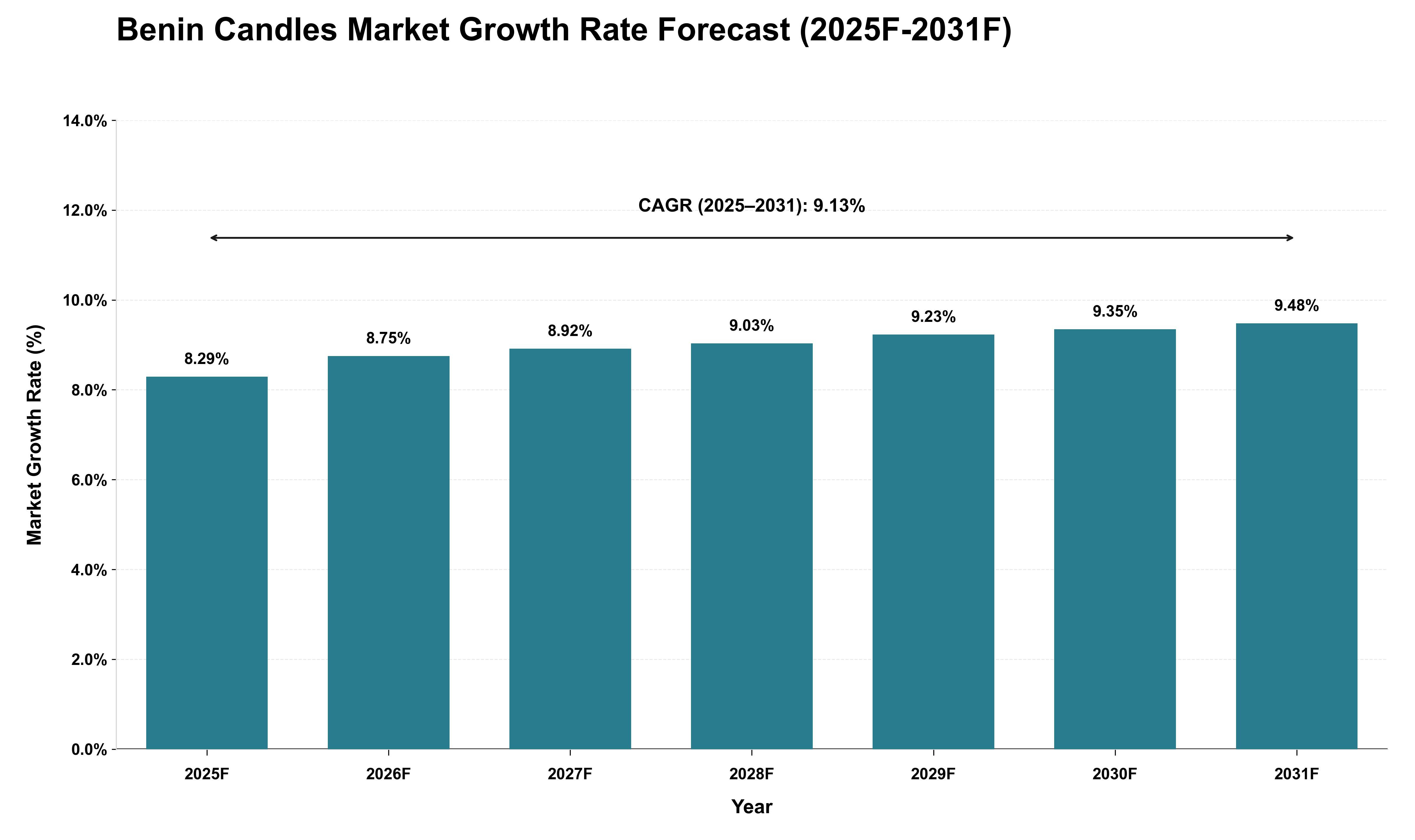
The Benin candles market will experience a notable transformation driven by evolving consumer preferences and increasing disposable incomes, which will enhance demand for decorative and scented candles. The projected CAGR of 9.13% from 2025 to 2031 indicates a robust growth trajectory, with annual growth rates gradually increasing from 8.29% in 2025 to 9.48% by 2031. This upward trend reflects anticipated shifts in the competitive landscape, as both local producers and international brands seek to capitalize on the expanding market. Import dependencies may also play a crucial role, as fluctuations in global supply chains could impact pricing and availability of raw materials, influencing production capacities. Additionally, cyclical trends associated with seasonal celebrations and cultural events will likely bolster sales during peak periods, further contributing to the overall growth dynamics within this sector throughout the forecast horizon.
Key Highlights of the Report:
- Benin Candles Market Outlook
- Market Size of Benin Candles Market, 2024
- Forecast of Benin Candles Market, 2031
- Historical Data and Forecast of Benin Candles Revenues & Volume for the Period 2021-2031
- Benin Candles Market Trend Evolution
- Benin Candles Market Drivers and Challenges
- Benin Candles Price Trends
- Benin Candles Porter's Five Forces
- Benin Candles Industry Life Cycle
- Historical Data and Forecast of Benin Candles Market Revenues & Volume By Product Type for the Period 2021-2031
- Historical Data and Forecast of Benin Candles Market Revenues & Volume By Scented Candles for the Period 2021-2031
- Historical Data and Forecast of Benin Candles Market Revenues & Volume By Unscented Candles for the Period 2021-2031
- Historical Data and Forecast of Benin Candles Market Revenues & Volume By Application for the Period 2021-2031
- Historical Data and Forecast of Benin Candles Market Revenues & Volume By Aromatherapy for the Period 2021-2031
- Historical Data and Forecast of Benin Candles Market Revenues & Volume By Lighting for the Period 2021-2031
- Historical Data and Forecast of Benin Candles Market Revenues & Volume By Material for the Period 2021-2031
- Historical Data and Forecast of Benin Candles Market Revenues & Volume By Paraffin Wax for the Period 2021-2031
- Historical Data and Forecast of Benin Candles Market Revenues & Volume By Soy Wax for the Period 2021-2031
- Historical Data and Forecast of Benin Candles Market Revenues & Volume By Scent Type for the Period 2021-2031
- Historical Data and Forecast of Benin Candles Market Revenues & Volume By Lavender, Rose for the Period 2021-2031
- Historical Data and Forecast of Benin Candles Market Revenues & Volume By Unscented for the Period 2021-2031
- Benin Candles Import Export Trade Statistics
- Market Opportunity Assessment By Product Type
- Market Opportunity Assessment By Application
- Market Opportunity Assessment By Material
- Market Opportunity Assessment By Scent Type
- Benin Candles Top Companies Market Share
- Benin Candles Competitive Benchmarking By Technical and Operational Parameters
- Benin Candles Company Profiles
- Benin Candles Key Strategic Recommendations






































