Benin Household Cleaning Products Market: Import Trend Analysis
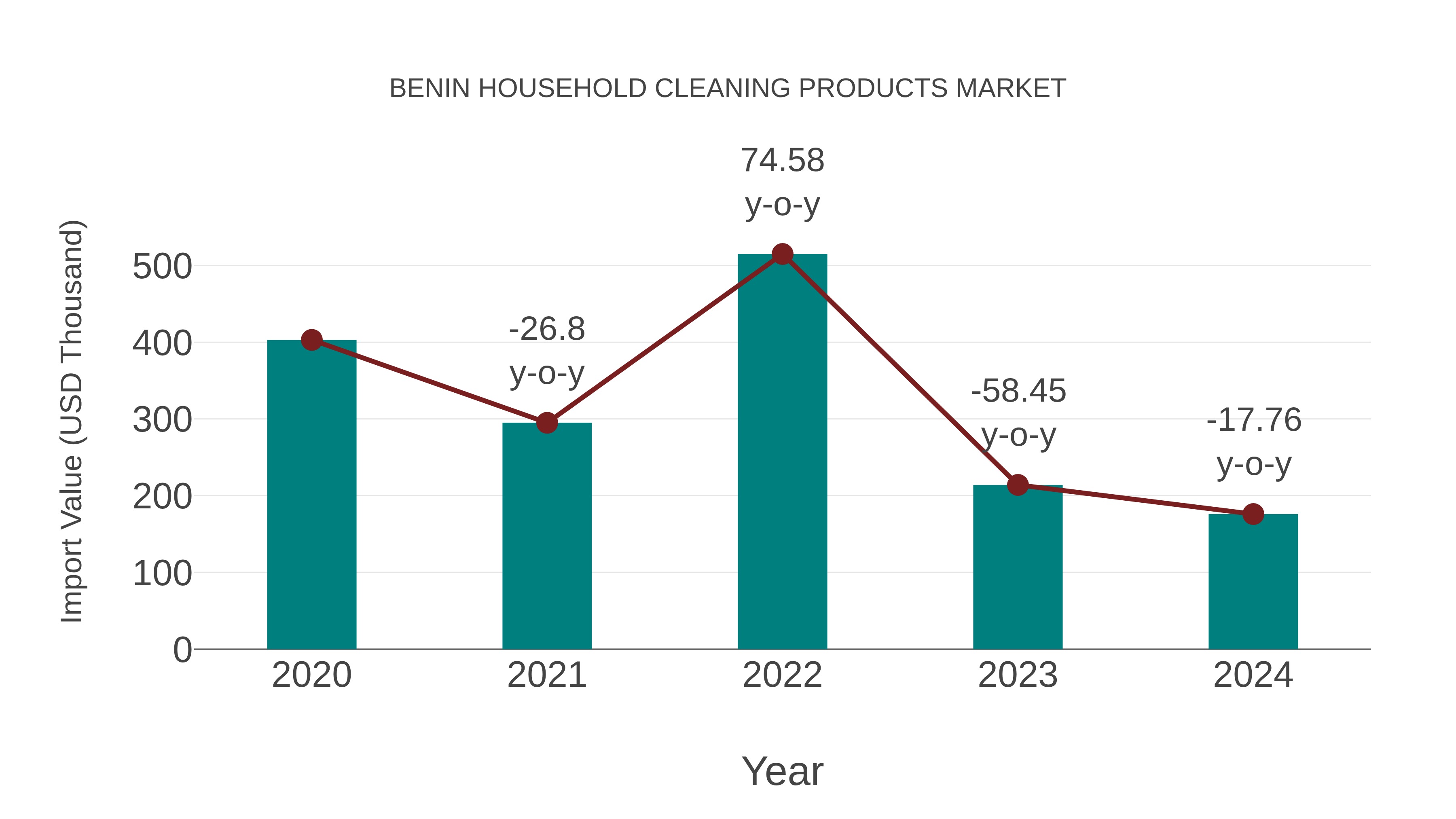
In the Benin household cleaning products market, imports experienced a decline, with a growth rate of -17.76% from 2023 to 2024 and a CAGR of -18.71% from 2020 to 2024. This downturn could be attributed to shifting consumer preferences or changes in trade policies affecting import dynamics.
Household Cleaning Products Market: Benin vs Top 5 Major Economies in 2027 (Africa)
The Household Cleaning Products market in Benin is projected to grow at a high growth rate of 12.02% by 2027, within the Africa region led by Egypt, along with other countries like South Africa, Ethiopia, Algeria and Nigeria, collectively shaping a dynamic and evolving market environment driven by innovation and increasing adoption of emerging technologies.

Benin Household Cleaning Products Market Overview
The household cleaning products market in Benin is expanding as consumers prioritize hygiene and cleanliness. The market includes products such as detergents, disinfectants, surface cleaners, and specialty cleaning products. Factors such as increasing awareness of health and hygiene, the growth of the retail sector, and the availability of a wide range of cleaning products are driving market growth. Additionally, government initiatives to promote public health and the adoption of eco-friendly cleaning products are contributing to market dynamics.
Drivers of the market
The household cleaning products market in Benin is driven by increasing awareness of hygiene and cleanliness among consumers. The rise in health concerns, particularly following the COVID-19 pandemic, has led to a higher demand for effective cleaning products, boosting market growth.
Challenges of the market
The household cleaning products market in Benin struggles with competition from informal and unregulated products, limited consumer awareness about branded products, and high costs of raw materials. Additionally, there are challenges related to the distribution and supply chain.
Government Policy of the market
Benin`s government supports the household cleaning products market by promoting local manufacturing, reducing tariffs on raw materials, and implementing regulations to ensure product safety and quality. Public health campaigns to raise awareness about hygiene also form part of the policy framework.
Key Highlights of the Report:
- Benin Household Cleaning Products Market Outlook
- Market Size of Benin Household Cleaning Products Market, 2025
- Forecast of Benin Household Cleaning Products Market, 2032
- Historical Data and Forecast of Benin Household Cleaning Products Revenues & Volume for the Period 2022-2032F
- Benin Household Cleaning Products Market Trend Evolution
- Benin Household Cleaning Products Market Drivers and Challenges
- Benin Household Cleaning Products Price Trends
- Benin Household Cleaning Products Porter`s Five Forces
- Benin Household Cleaning Products Industry Life Cycle
- Historical Data and Forecast of Benin Household Cleaning Products Market Revenues & Volume By Product Type for the Period 2022-2032F
- Historical Data and Forecast of Benin Household Cleaning Products Market Revenues & Volume By Laundry Detergents for the Period 2022-2032F
- Historical Data and Forecast of Benin Household Cleaning Products Market Revenues & Volume By Surface Cleaners for the Period 2022-2032F
- Historical Data and Forecast of Benin Household Cleaning Products Market Revenues & Volume By Dishwashing Products for the Period 2022-2032F
- Historical Data and Forecast of Benin Household Cleaning Products Market Revenues & Volume By Toilet Cleaners for the Period 2022-2032F
- Historical Data and Forecast of Benin Household Cleaning Products Market Revenues & Volume By Others for the Period 2022-2032F
- Benin Household Cleaning Products Import Export Trade Statistics
- Market Opportunity Assessment By Product Type
- Benin Household Cleaning Products Top Companies Market Share
- Benin Household Cleaning Products Competitive Benchmarking By Technical and Operational Parameters
- Benin Household Cleaning Products Company Profiles
- Benin Household Cleaning Products Key Strategic Recommendations






































