Benin Packaged Water Market: Import Trend Analysis
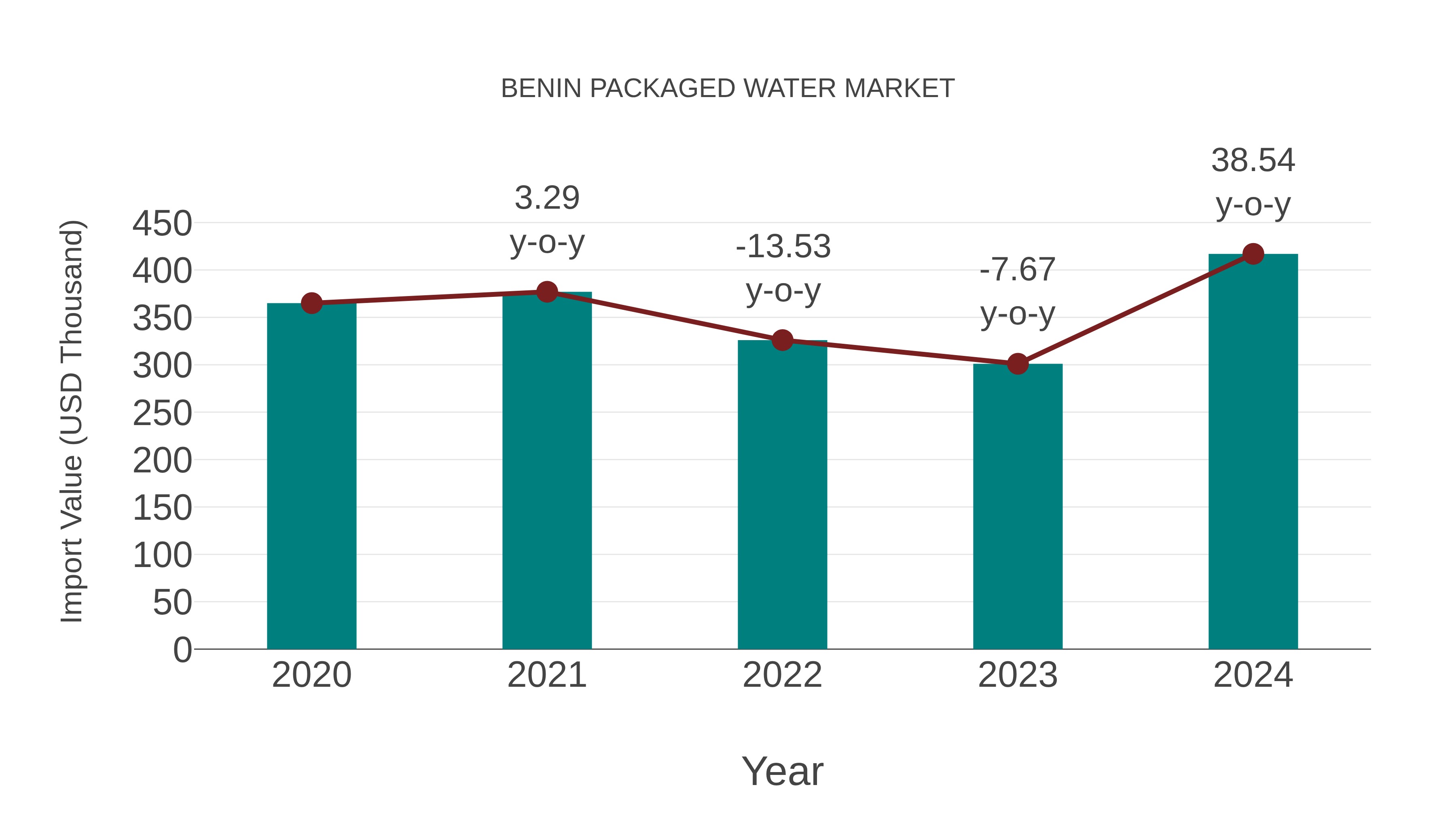
Benin`s import trend for the packaged water market showed significant growth from 2023 to 2024, with a growth rate of 38.54%. The compound annual growth rate (CAGR) for the period 2020-2024 stood at 3.39%. This increase can be attributed to rising consumer demand for convenient and hygienic drinking water options in the region.
Benin Packaged water Market Overview
The Benin packaged water market is experiencing steady growth driven by increasing urbanization, a growing middle class, and rising health consciousness among consumers. Packaged water is gaining popularity due to concerns over water quality and convenience, particularly in urban areas where access to clean drinking water may be limited. The market is characterized by a mix of local and international brands competing based on pricing, packaging innovation, and distribution networks. Regulatory standards for quality and safety are also shaping the market landscape, with consumers showing a preference for trusted brands that meet these requirements. As disposable incomes rise and awareness of health and wellness grows, the Benin packaged water market is expected to continue expanding, presenting opportunities for both existing players and new entrants.
Benin Packaged water Market Trends and Opportunities
The Benin packaged water market is experiencing steady growth due to increasing urbanization, rising disposable incomes, and growing health awareness among consumers. The market is witnessing a shift towards premium and eco-friendly packaging options, such as biodegradable bottles and sustainable packaging materials. Key opportunities in the market include innovative product offerings, such as flavored and functional waters, as well as expanding distribution channels to reach rural areas. Additionally, there is a growing demand for convenient and on-the-go packaging formats, driving manufacturers to invest in smaller pack sizes and packaging innovations. With a focus on quality, safety, and sustainability, the Benin packaged water market presents lucrative opportunities for companies to differentiate themselves and capture a larger market share.
Benin Packaged water Market Challenges
In the Benin packaged water market, some of the key challenges include intense competition among numerous local and international brands, fluctuating raw material prices, inadequate infrastructure for production and distribution, inconsistent quality standards, and issues related to water sustainability and scarcity. Regulatory hurdles, such as obtaining proper permits and meeting health and safety regulations, also pose challenges for businesses operating in this market. Additionally, the lack of consumer awareness about the importance of choosing safe and reliable packaged water brands can hinder market growth. Overcoming these challenges will require strategic marketing efforts, investment in technology and infrastructure, adherence to quality standards, and building trust with consumers through transparent business practices.
Benin Packaged water Market Drivers
The Benin packaged water market is primarily driven by factors such as increasing urbanization leading to a growing population in cities, rising disposable income levels, changing consumer lifestyles favoring convenient and safe drinking water options, and a growing awareness about the importance of staying hydrated for health. Additionally, concerns over water contamination and a lack of access to clean drinking water in some regions further boost the demand for packaged water as a safer alternative. The convenience of packaged water for on-the-go consumption, especially in a tropical climate like Benin, also plays a significant role in driving market growth. Overall, these factors contribute to the increasing demand for packaged water in Benin, driving market expansion and attracting new players to the industry.
Benin Packaged water Market Government Policy
The Benin government has implemented regulations governing the packaged water market to ensure the safety and quality of products. The Directorate General of Water Resources is responsible for issuing licenses to packaged water producers, overseeing compliance with hygiene standards, and conducting regular quality inspections. Producers are required to meet specific labeling requirements, including providing information on source water, production date, and expiration date. Additionally, there are stringent regulations on packaging materials to prevent contamination. The government aims to safeguard public health by enforcing these policies and promoting transparency within the packaged water sector.
Benin Packaged water Market Future Outlook
The future outlook for the Benin packaged water market appears promising, driven by factors such as increasing urbanization, growing disposable income levels, and a rising awareness of the importance of clean drinking water. As the population continues to expand and consumers seek convenient and safe hydration options, the demand for packaged water is expected to rise. Additionally, the government`s efforts to improve water infrastructure and quality standards will likely further boost market growth. Key players in the industry are anticipated to focus on product innovation, sustainable packaging solutions, and strategic marketing initiatives to capitalize on the expanding market opportunities. Overall, the Benin packaged water market is poised for steady growth in the coming years, offering attractive prospects for market players and investors.
Key Highlights of the Report:
- Benin Packaged water Market Outlook
- Market Size of Benin Packaged water Market, 2025
- Forecast of Benin Packaged water Market, 2032
- Historical Data and Forecast of Benin Packaged water Revenues & Volume for the Period 2022 - 2032F
- Benin Packaged water Market Trend Evolution
- Benin Packaged water Market Drivers and Challenges
- Benin Packaged water Price Trends
- Benin Packaged water Porter's Five Forces
- Benin Packaged water Industry Life Cycle
- Historical Data and Forecast of Benin Packaged water Market Revenues & Volume By Product for the Period 2022 - 2032F
- Historical Data and Forecast of Benin Packaged water Market Revenues & Volume By Still for the Period 2022 - 2032F
- Historical Data and Forecast of Benin Packaged water Market Revenues & Volume By Carbonated for the Period 2022 - 2032F
- Historical Data and Forecast of Benin Packaged water Market Revenues & Volume By Flavored for the Period 2022 - 2032F
- Historical Data and Forecast of Benin Packaged water Market Revenues & Volume By Functional for the Period 2022 - 2032F
- Benin Packaged water Import Export Trade Statistics
- Market Opportunity Assessment By Product
- Benin Packaged water Top Companies Market Share
- Benin Packaged water Competitive Benchmarking By Technical and Operational Parameters
- Benin Packaged water Company Profiles
- Benin Packaged water Key Strategic Recommendations






































