Benin Tableware Market: Import Trend Analysis
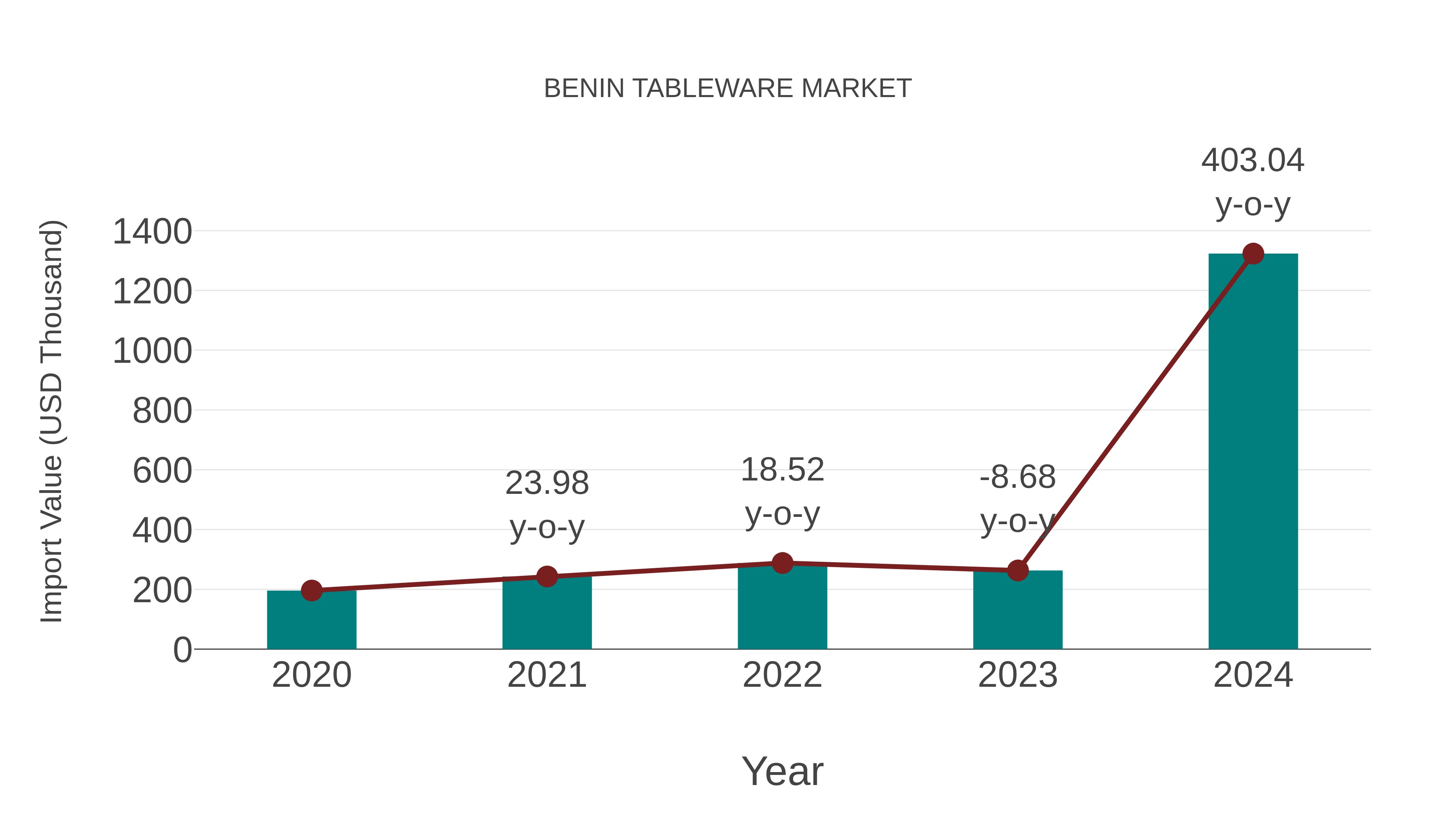
Between 2023 and 2024, Benin`s import trend for tableware experienced a notable growth rate of 403.04%, with a compound annual growth rate (CAGR) of 61.19% from 2020 to 2024. This substantial increase can be attributed to shifts in consumer preferences or expanding trade agreements within the region.
Benin Tableware Market Synopsis
The Benin tableware market is characterized by a growing demand for modern and aesthetically pleasing tableware products. Consumers in Benin are increasingly looking for high-quality and durable tableware items that reflect their personal style and taste. This has led to a rise in the popularity of ceramic, porcelain, and glass tableware products in the market. Additionally, there is a growing trend towards eco-friendly and sustainable tableware options, such as bamboo or recycled materials. The market is also influenced by factors such as urbanization, changing lifestyles, and increasing disposable income levels among the population. As a result, both local and international tableware brands are actively competing in the Benin market to cater to the diverse preferences of consumers.
Benin Tableware Market Trends
The Benin tableware market is experiencing a shift towards more sustainable and eco-friendly products, driven by increasing consumer awareness of environmental issues. There is a growing demand for products made from natural materials such as bamboo, recycled glass, and organic ceramics. Additionally, there is a trend towards unique and artisanal tableware designs that reflect the local culture and heritage of Benin. Opportunities exist for companies to tap into this trend by offering a wide range of sustainable and culturally-inspired tableware products. Collaborating with local artisans and incorporating traditional craftsmanship techniques can also be a key differentiator in this market, appealing to consumers looking for authenticity and quality in their tableware choices.
Benin Tableware Market Challenges
The Benin tableware market faces several challenges, including limited consumer purchasing power due to economic constraints, competition from cheaper imported products, and a lack of awareness about the benefits of using quality tableware. Additionally, inadequate distribution networks and infrastructure issues can hinder market growth and accessibility to potential customers. Cultural preferences and traditions also play a significant role in shaping consumer choices, making it challenging for companies to introduce new and innovative products. Overall, navigating these challenges requires a deep understanding of the local market dynamics, effective marketing strategies, and developing partnerships with local businesses to enhance visibility and reach in the Benin tableware market.
Benin Tableware Market Investment Opportunities
The Benin tableware market is primarily driven by factors such as rising disposable income levels, changing consumer lifestyles, and a growing preference for dining out and hosting social gatherings. As more consumers in Benin look to enhance their dining experiences and entertain guests, there is an increasing demand for stylish and functional tableware products. Additionally, the influence of social media and a desire for aesthetic presentation have also fueled the demand for unique and trendy tableware items among young consumers. Furthermore, the growing hospitality sector in Benin, including hotels, restaurants, and cafes, has led to a surge in the demand for high-quality and durable tableware products to cater to the needs of these establishments.
Benin Tableware Market Government Polices
The Benin government has implemented various policies to regulate the tableware market in the country. These policies include import tariffs and regulations to protect local tableware producers and promote domestic manufacturing. Additionally, there are quality standards and certifications required for tableware products to ensure consumer safety and satisfaction. The government also monitors and enforces market competition laws to prevent monopolies and promote fair trade practices within the industry. Overall, these policies aim to support the growth and development of the Benin tableware market while safeguarding the interests of both producers and consumers.
Benin Tableware Market Future Outlook
The Benin tableware market is expected to show steady growth in the coming years, driven by increasing disposable income, changing consumer preferences, and a growing urban population. The demand for tableware products such as dinnerware, glassware, and flatware is likely to rise as more Beninese households seek to upgrade and enhance their dining experiences. Additionally, the influence of western dining trends and the rise of social media-driven food culture are expected to fuel demand for aesthetically pleasing and high-quality tableware products. As a result, both local manufacturers and international brands are likely to expand their presence in the Benin market, offering a wide range of options to consumers. Overall, the future outlook for the Benin tableware market appears promising, with opportunities for growth and innovation in product offerings.
Key Highlights of the Report:
- Benin Tableware Market Outlook
- Market Size of Benin Tableware Market, 2025
- Forecast of Benin Tableware Market, 2032
- Historical Data and Forecast of Benin Tableware Revenues & Volume for the Period 2022 - 2032F
- Benin Tableware Market Trend Evolution
- Benin Tableware Market Drivers and Challenges
- Benin Tableware Price Trends
- Benin Tableware Porter's Five Forces
- Benin Tableware Industry Life Cycle
- Historical Data and Forecast of Benin Tableware Market Revenues & Volume By Type for the Period 2022 - 2032F
- Historical Data and Forecast of Benin Tableware Market Revenues & Volume By Cutlery for the Period 2022 - 2032F
- Historical Data and Forecast of Benin Tableware Market Revenues & Volume By Dinnerware for the Period 2022 - 2032F
- Historical Data and Forecast of Benin Tableware Market Revenues & Volume By Application for the Period 2022 - 2032F
- Historical Data and Forecast of Benin Tableware Market Revenues & Volume By Hotel for the Period 2022 - 2032F
- Historical Data and Forecast of Benin Tableware Market Revenues & Volume By Restaurant for the Period 2022 - 2032F
- Historical Data and Forecast of Benin Tableware Market Revenues & Volume By Others for the Period 2022 - 2032F
- Benin Tableware Import Export Trade Statistics
- Market Opportunity Assessment By Type
- Market Opportunity Assessment By Application
- Benin Tableware Top Companies Market Share
- Benin Tableware Competitive Benchmarking By Technical and Operational Parameters
- Benin Tableware Company Profiles
- Benin Tableware Key Strategic Recommendations






































